


What is the effective corporate tax rate?
The legal rate is the rate set by the government (law). The effective rate is what the business actually pays after deductions and credits. These two are usually different.
How is it different from the legal rate?
For example, a business may fall under a 21% legal rate. After deductions, it may pay only 14%. That 14% is the effective rate.
This matters because using the legal rate can give the wrong estimate. It shows a higher tax than what is actually paid.
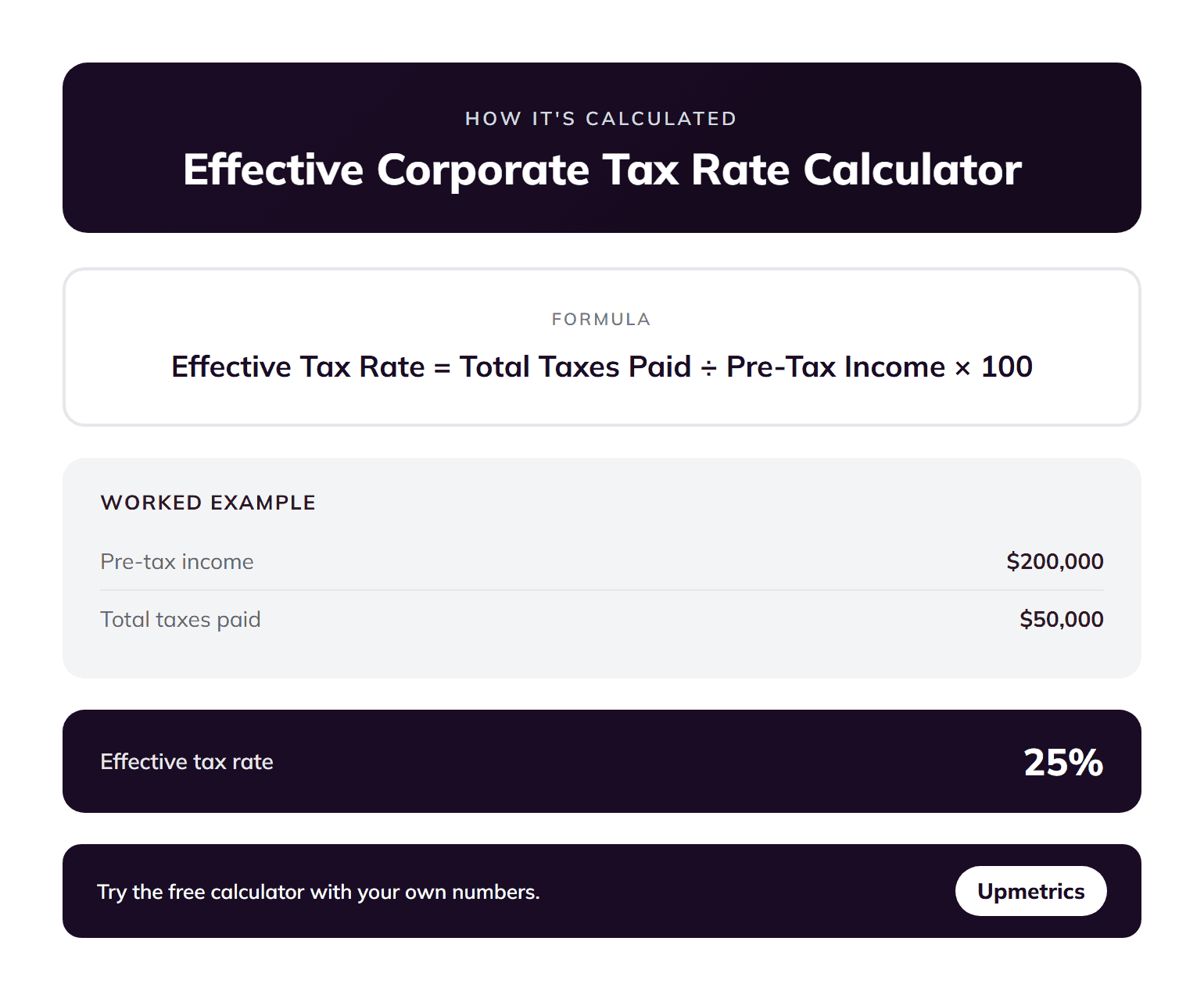
How to calculate your effective tax rate?
To calculate the effective tax rate, two numbers are needed: pre-tax income and total taxes paid.
- Pre-tax income is what the business earns before any tax comes out. It is on the income statement, sometimes listed as earnings before tax or EBT.
- Total taxes paid is the actual federal, state, and local income tax paid for the period. Not estimated. Not accrued. The real amount. If quarterly payments were made during the year, cross-check them against the final annual figure before plugging in the number.
Divide taxes paid by pre-tax income. A business that earns $200,000 and pays $34,000 in tax has an effective rate of 17%. Simple as that.
One thing to avoid: using the marginal rate instead. The marginal rate only applies to the top slice of income. The effective rate applies to all of it. Those are very different numbers.
Why does your effective rate actually matter?
The legal rate is a starting point. The effective rate is the result. Two businesses with identical revenue and the same legal rate can end up with very different effective rates depending on how well their deductions and credits are structured.
A business claiming home office expenses, vehicle use, Section 179 equipment deductions, and owner health insurance premiums will pay a meaningfully lower effective rate than one claiming none of these. The legal rate does not change. The effective rate does.
For cash flow planning, use the effective rate to estimate quarterly tax payments. Using the statutory rate to set aside taxes often leads to either overpaying throughout the year or facing a shortfall at filing. The effective rate gives a more accurate reserve.
It also matters when comparing financing options or evaluating the real cost of debt. Interest on business debt is tax-deductible. The after-tax cost of that debt depends directly on the effective rate, not the legal one. Getting this number right has an impact across several financial decisions.