


What is profit margin?
Profit margin indicates the fractional share of earnings remaining in the business after considering expenses. Revenue indicates the monetary amount of business activity that has occurred. Margin indicates how much was retained after expenses.
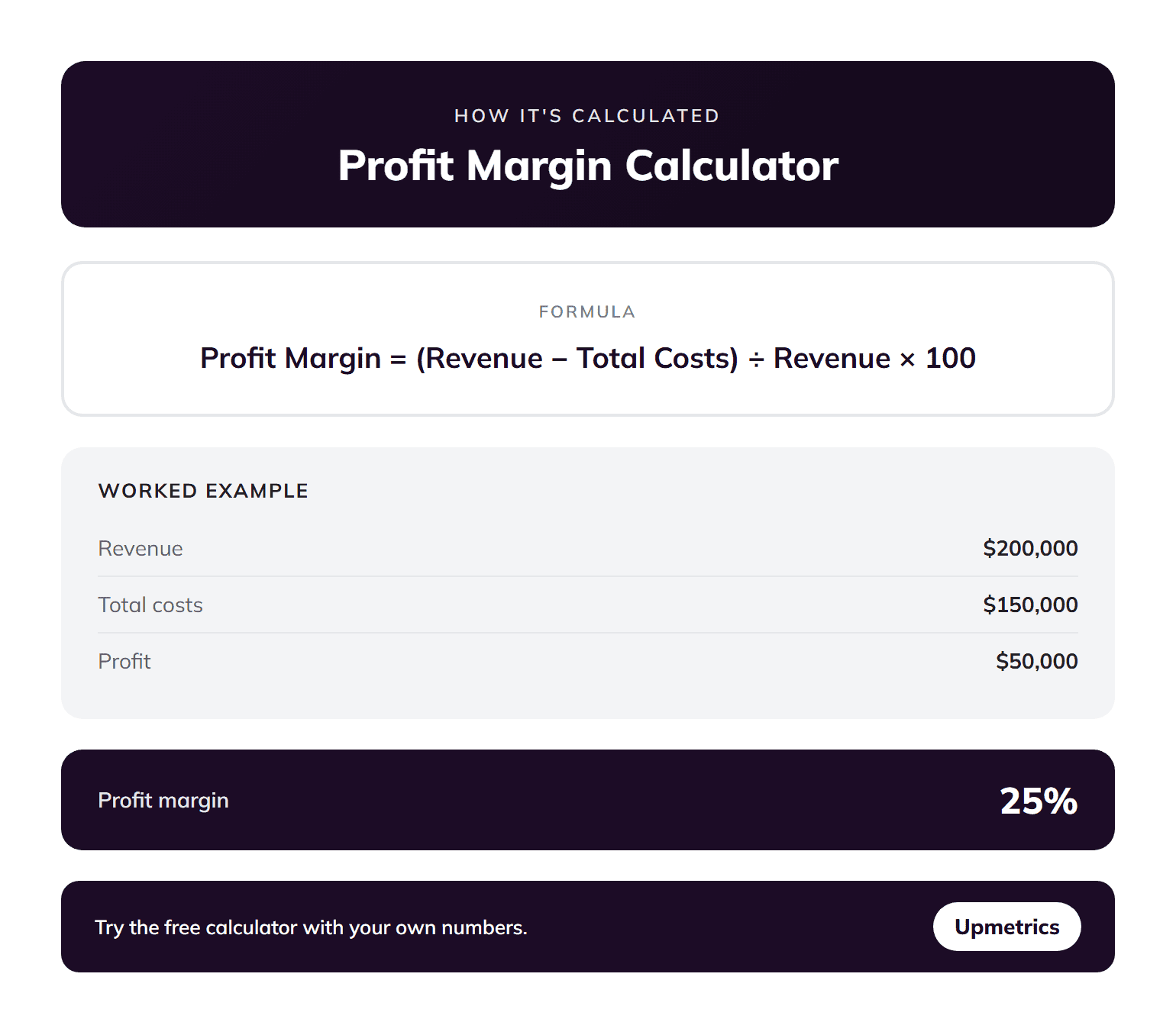
The formula is straightforward:
Profit Margin = (Revenue − Total Costs) ÷ Revenue × 100
Total costs include what it costs to make or deliver your product, your operating expenses, marketing, and any other outgoings.
For example, a food truck has a gross revenue of $20,000 per month, leaving $3,000 after deducting ingredient expense, employee wages, fuel costs, and permit fees.
Thus, this food truck has a net profit margin of 15%, which means that 85% of its gross revenues have been used to operate the business. Profit margins are significant indicators of business effectiveness rather than business activity alone.
How to calculate your profit margin using this calculator?
The calculator needs a few numbers from you. Each number is a part of the money that comes in and goes out of your business.
1. Revenue
Enter your revenue, the money a business earns from sales before any costs are deducted. Use the same time period for all inputs. If revenue is yearly, costs must also be yearly. Mixing yearly revenue with monthly costs will give incorrect results.
2. Cost of Goods Sold
This is what it costs you to make or deliver something to sell. For example, this includes things like the materials you need, packaging, and the money you pay workers who help make the product.
If you have a food truck, this includes the ingredients you buy and the money you pay to the cook. You should also include the fees charged for processing payments and the commissions you pay to delivery companies.
3. Operating expenses
These are all the costs you need to pay to keep your business running. Rent, insurance, software subscriptions, and your own salary if you pay yourself one.
These costs stay roughly the same whether you have a good month or a slow one, which is exactly why they matter so much to your margin.
4. Marketing expenses
Ads, agency fees, content, sponsorships. Keep this separate so you can see what you’re spending to acquire customers relative to the margin it produces. If your margin is thin and marketing costs are high, that’s usually the first place to audit.
5. Other expenses
Anything that doesn’t fit the above. Administrative costs, professional fees, interest/taxes, miscellaneous overheads. When in doubt, include it here rather than leave it out.
Once you enter all, the calculator shows your total cost, profit in dollars, and profit margin as a percentage. That percentage tells you how efficiently your business turns revenue into profit.
Here’s a quick way to read that result:
- Above 20%: Strong. Your business keeps a healthy share of what it earns.
- 10% to 20%: Solid. Most stable small businesses fall in this range.
- 5% to 10%: Tight but manageable. Worth watching your costs closely.
- Below 5%: Thin. One bad month or a cost increase can push you into the red.
If your margin isn’t where you want it, the next section covers the most practical ways to improve it.
How to improve your profit margin?
Profit margin improves in two ways: earn more without increasing costs, or reduce costs without losing revenue.
- Review pricing. Many businesses charge less than they should. Even a small increase can improve profit more than cutting costs. Check if prices reflect the value offered.
- Cut low-margin products or clients. Some sales add revenue but very little profit. Identify them and decide if they are worth keeping.
- Reduce COGS. For products, negotiate supplier prices or reduce waste. For services, check where time is being lost and fix it.
- Spread fixed costs. Rent, salaries, and software stay the same. More sales with the same costs improve the margin.
- Track margin regularly. Check monthly or quarterly. This helps catch problems early instead of finding them at year-end.