


What is the quick ratio?
The quick ratio measures whether your business can cover its short-term obligations using only its most liquid assets. Liquid means assets that can be converted to cash quickly, without selling inventory or waiting on prepaid expenses to run down.
Why is it called the acid test?
It is called the acid test because it is a harder test than the current ratio. It strips away the assets that take time to turn into cash and leaves only what you can actually use in a pinch. Cash, accounts receivable, and marketable securities are in. Inventory and prepaid expenses are out.
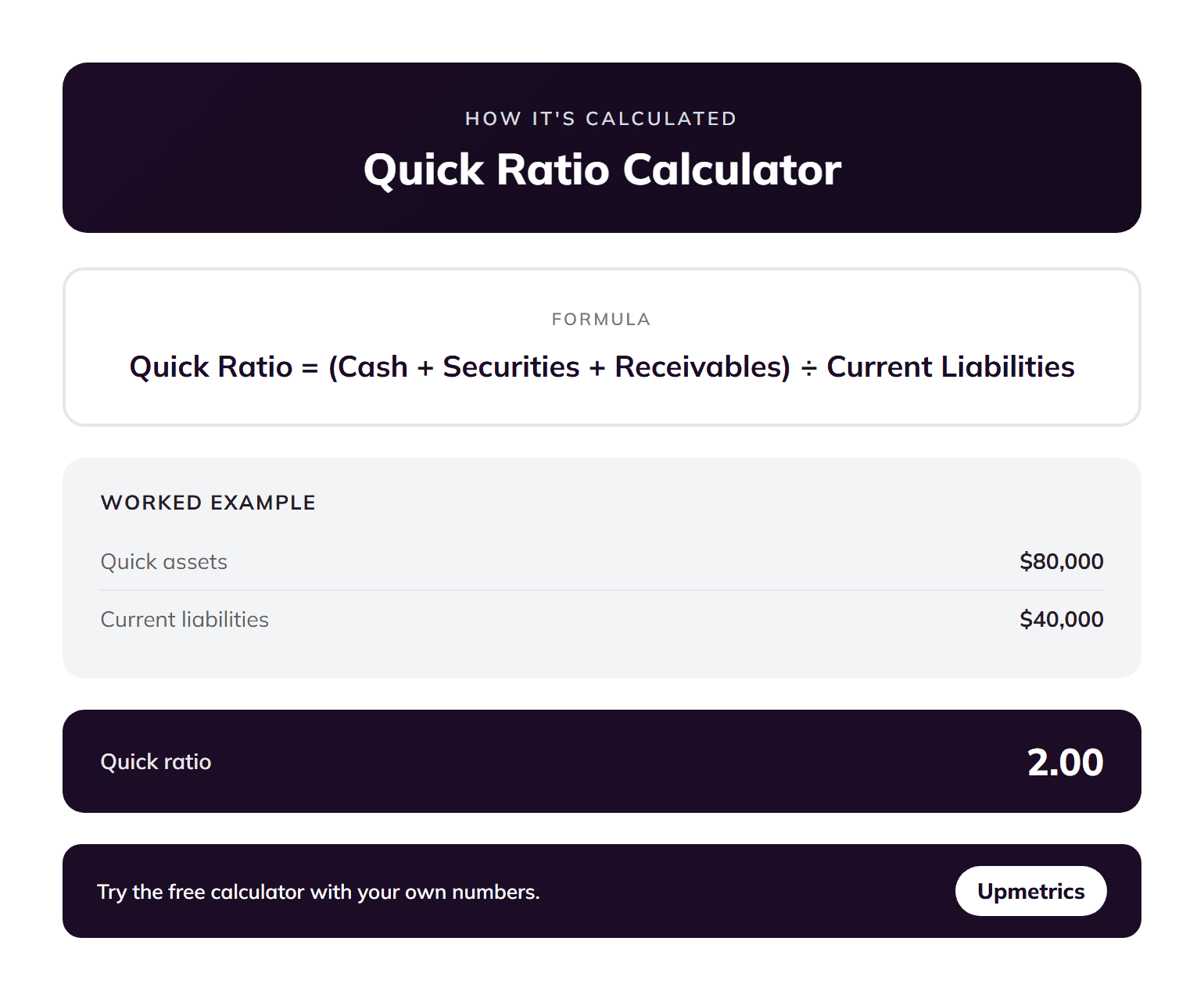
The formula is: quick assets divided by current liabilities. A clothing retailer with $60,000 in quick assets and $55,000 in current liabilities has a quick ratio of 1.09. That means for every dollar it owes short-term, it has $1.09 it can access quickly. That is a passing grade.
The quick ratio matters most for businesses that hold significant inventory. A hardware store might have a current ratio of 2.1 and look perfectly liquid. But if most of those assets are sitting in shelving stock that takes months to sell, the quick ratio might be 0.7. That gap tells a very different story.
How to calculate your quick ratio?
The calculator needs two numbers: quick assets and current liabilities.
- Quick assets cover three things: cash and cash equivalents, marketable securities, and accounts receivable. Nothing else. Inventory and Prepaid expenses stay out. The quick ratio is strict about what qualifies.
- One common mistake is counting overdue receivables. A customer owing $12,000 but 120 days past due with no payment plan is not liquid. Only count receivables that are realistically collectible soon.
- Current liabilities follow the same rule as the current ratio. Accounts payable, short-term loans, current portion of long-term debt, and accrued expenses due within 12 months.
Both numbers must come from the balance sheet on the same date. Mixed dates produce a result that does not reflect the real position.
What lenders and investors read into your quick ratio?
Lenders use the quick ratio to see real liquidity. Not the version that looks good because of slow-moving inventory. For retail or manufacturing businesses, they check both the quick ratio and the current ratio. A big gap between the two raises questions about inventory and how fast it actually moves.
A quick ratio below 1.0 does not kill a loan application. But it does bring questions. A business that can explain a low quick ratio with solid inventory turnover and reliable collections stands on much firmer ground.
Investors use it to check one thing: if sales slow down for 60 days, can the business still pay its bills? Above 1.0 means most likely yes. Below 0.5 means probably not without outside help.
Tracking the quick ratio each quarter tells you which direction you’re heading. Use the same balance sheet date and run this calculator again next quarter.
If your quick ratio is holding above 1.0 or trending upward, that’s a number worth showing a lender. If it keeps slipping below 0.5 quarter after quarter, that’s exactly the pattern they’ll catch during a review. Better to spot it yourself and fix it than to explain it in a funding meeting.