Starting a pest control business requires proper licensing, equipment, and strict safety compliance. Owners must invest in treatment tools, chemical storage, insurance, and regulatory approvals before launching operations. Because of these startup costs, many founders seek small business financing or personal capital.
Lenders and investors expect more than basic ideas. They want to see clear operations, realistic pricing, service capacity, and an understanding of the local pest control market.
This business plan presents Ironclad Pest & Exclusion Services, a residential and small-commercial pest control company in Columbus. The plan shows how the business will deliver services, manage operations, control costs, and build a stable customer base.
Executive Summary
Ironclad Pest & Exclusion Services provides structural pest elimination services for residential and small commercial properties across the Columbus area. The company’s core services focus on:
- Eliminating pest entry points
- Removing active infestations
- Preventing reinfestation through structural sealing
The service area covers residential and commercial properties within a 25-mile radius of Columbus. Ownership remains with Cade Vance and Elena Vance, a husband-and-wife team who manage all field and office operations.
The company operates from a home-based office that complies with Ohio state requirements for the storage and handling of pest control chemicals.
The Problem
Columbus ranks among the top 10 cities for commercial pest activity, based on Terminix data, where it holds the #9 position for commercial pest infestations. This ranking reflects high pest service demand across businesses such as restaurants, warehouses, and offices.
For residential pest activity, multiple industry reports confirm a strong pest presence. Columbus ranks #12 for bed bug infestations (Terminix, 2025) and #21 for rodent activity (Orkin, 2025). These rankings show that both residential and commercial properties face ongoing pest issues across the city.
Together, these data points confirm that pest control demand in Columbus remains high across all property types, which supports a strong and stable market for pest control services.
However, Columbus already has pest control companies, but they struggle to meet demand. Some face technician shortages. Others cannot maintain consistent service schedules. Many providers rely on quick spray treatments that kill visible pests but ignore entry points where pests enter buildings.
These problems cause recurring infestations. Homeowners often pay for repeated treatments without solving the root problem. The market needs a pest control service that focuses on reliable treatment, structural sealing, and long-term pest prevention.
Our Solution
Ironclad Pest & Exclusion Services solves pest problems at the source. The company addresses the service gaps that many pest control providers face in Columbus. The owners handle inspections, treatments, and customer communication directly. This hands-on approach improves service reliability and ensures consistent scheduling.
Ironclad also focuses on structural exclusion. Technicians inspect foundations, vents, crawlspaces, and plumbing gaps where pests enter buildings. The team seals these openings after treatment to stop reinfestation.
This approach allows Ironclad to deliver consistent service, solve pest problems at their source, and reduce the risk of repeat infestations for homeowners and businesses.
Target Market
Demand for pest control services remains consistent because pest issues affect nearly every type of property. Ironclad targets several reliable customer segments, which include:
- Single-family homeowners
- Property managers
- Restaurants and small retail stores
- Light commercial offices
- Real estate agents and home inspectors
Financial Outlook
The company operates under a lean startup model, keeping total startup costs under $85,000. The initial investment covers equipment, chemicals, monitoring technology inventory, marketing, and working capital reserves
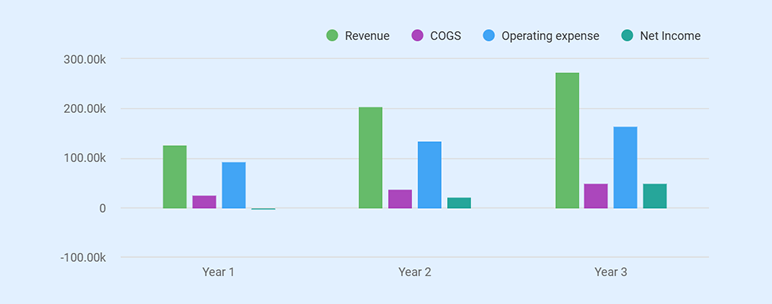
Financial projections indicate steady revenue growth as customer retention increases through quarterly protection plans and monitoring subscriptions.
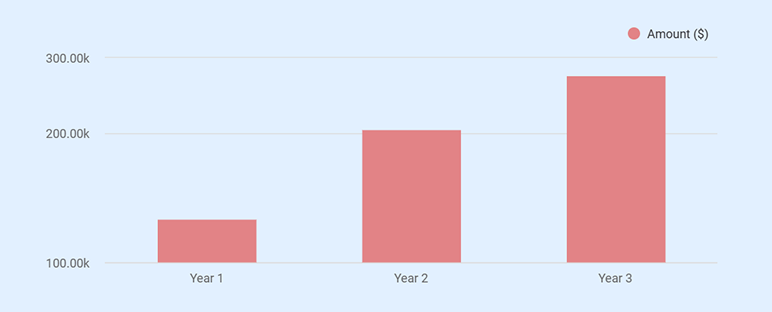
Projected revenue:
- Year 1: $126,582
- Year 2: $204,569
- Year 3: $273,602
Want a professional plan like this sample?
Upmetrics generate a complete, investor-ready plan for you

Business Overview
Pest control remains a necessary service. Homes, restaurants, rental properties, and offices can’t operate safely when pests spread through structures. Property owners don’t only want pests removed. They want the problem solved so it doesn’t return.
Ironclad Pest & Exclusion Services operates with this objective. The business focuses on eliminating infestations and preventing future pest entry through structural protection and targeted treatment. The company serves residential and small commercial properties within a 25-mile service area around Columbus, Ohio.
Ownership and Management
Cade Vance and Elena Vance own and manage Ironclad Pest & Exclusion Services. The business operates as a husband-and-wife-owned company with equal ownership and shared operational responsibility.
Cade Vance is a licensed pest control operator and leads all exterior service work. He performs:
- Property inspections
- Perimeter treatments
- Rodent trapping
- Sealing foundation gaps
- Sealing crawlspace openings
Elena Vance manages interior pest treatments and daily business operations. She handles:
- Kitchen and bathroom treatment areas
- Attic dust applications
- Customer communication
- Scheduling
- Billing
- CRM management
The owner-operated structure allows the company to maintain strict quality control, respond quickly to service requests, and build strong customer trust during the early growth stage.
Founders Background
| Founder | Previous Experience | Previous Company | Description |
| Cade Vance | 8+ years in residential and commercial pest control, rodent exclusion, and structural pest prevention | Orkin Pest Control | Worked as a field technician handling exterior treatments, rodent control, and structural inspections. |
| Elena Vance | 6+ years in interior pest treatment, customer coordination, and service scheduling | Terminix Pest Control | Managed interior treatment services for residential properties. |
Business Structure
Ironclad Pest & Exclusion Services operates as a limited liability company owned by Cade Vance and Elena Vance. The structure provides legal protection for the owners while allowing flexible management of daily operations.
Both owners hold equal ownership and share operational responsibility. The company manages field services, scheduling, customer communication, and financial decisions internally to maintain full control over service quality and customer relationships.
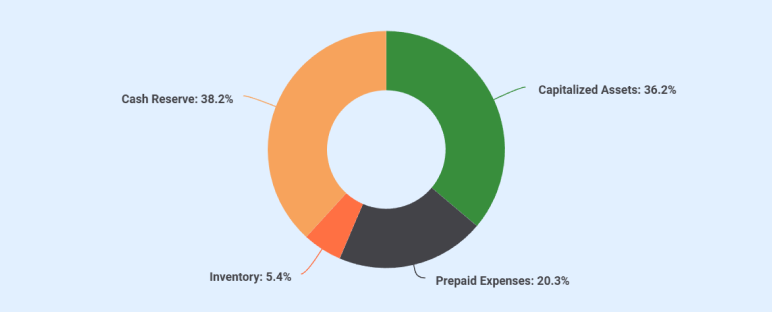
Startup Cost
| Category | Cost |
| Capitalized Assets | |
| Professional sprayers & bait systems | $6,000 |
| Exclusion tools & sealing materials | $6,500 |
| PPE & safety equipment | $2,000 |
| IoT monitoring starter kits | $10,000 |
| Vehicle wrap & branding | $4,500 |
| CRM & scheduling software | $1,500 |
| Subtotal – Capitalized Assets | $30,500 |
| Prepaid Expenses | |
| Licensing, bonding & insurance | $7,500 |
| Commercial auto insurance upgrade | $3,500 |
| Pre-launch marketing | $6,000 |
| Subtotal – Prepaid Expenses | $17,000 |
| Inventory | |
| Initial chemical inventory | $4,500 |
| Subtotal – Inventory | $4,500 |
| Cash Reserve | |
| Working capital reserve | $32,000 |
| Subtotal – Cash Reserve | $32,000 |
| TOTAL STARTUP COSTS | $84,000 |
Market Analysis
Pest control demand remains strong in areas where population growth and pest activity are high. Ohio shows both conditions. Homes, restaurants, offices, and rental properties require regular pest control to protect health and property. These factors create a steady demand for pest control services across the state.
Local Market Opportunity
The pest control industry in Ohio shows steady growth and strong demand. The pest control industry’s market size in Ohio is $619.8 million in 2026. The state currently has 824 pest control businesses, and the number of companies has grown at an average annual rate of 3.0% from 2021 to 2026.
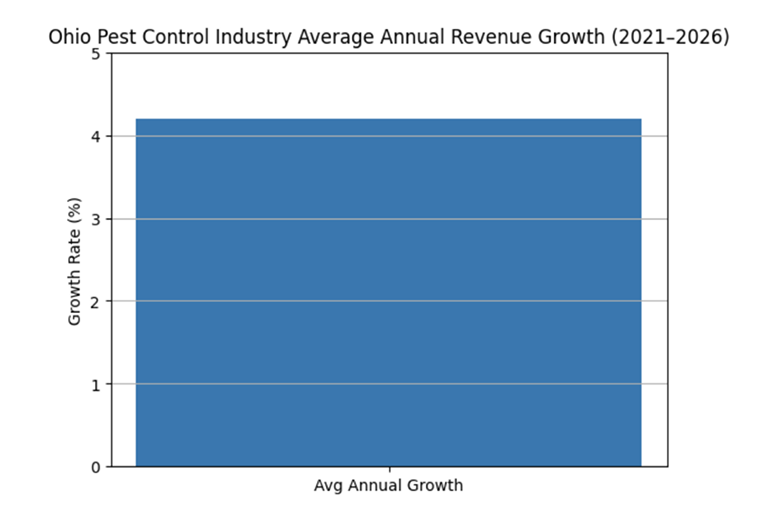
Industry revenue has also increased at an average annual rate of 4.2% during the same period. This growth shows that demand for pest control continues to rise as more homes and businesses require regular pest protection.
These trends create a clear opportunity for Ironclad Pest & Exclusion Services. Columbus already ranks among the buggiest cities in the country, which means pest activity remains high. Growing demand combined with service gaps creates room for reliable pest control providers that focus on long-term pest prevention.
Competitor Analysis
The Columbus pest control market includes national and regional providers that serve the same residential and commercial customers. These companies operate at scale and focus on recurring service models, which creates gaps in service consistency and long-term pest prevention. Here’s the list of our competitors:
Competitor 1: Orkin Pest Control
Orkin operates as a national pest control provider with a strong presence across the Columbus metro area. The company handles high service volume and assigns multiple technicians across routes.
- Service area: Covers the full Columbus metro, including a 25-mile radius
- Pricing: $150–$300 initial, $50–$90/month plans
- Strength: Large technician network and strong brand trust
- Weakness: Rotating technicians reduces service consistency
- Gap: Focuses on chemical treatments, limited structural sealing
Competitor 2: Terminix
Terminix operates nationwide and focuses on both residential and commercial pest control services. The company is well known for termite treatment and monitoring programs.
- Service area: Full Columbus coverage with commercial and residential reach
- Pricing: $150–$300 initial, $40–$80/month plans
- Strength: Strong termite expertise and nationwide systems
- Weakness: Service quality varies by technician
- Gap: Uses standardized plans with limited inspection depth and follow-up
Competitor 3: Scherzinger Pest Control
Scherzinger operates as a regional pest control company with a strong reputation in Ohio. The company serves residential and commercial customers across Columbus and nearby suburbs.
- Service area: Columbus and surrounding suburban areas
- Pricing: $120–$250 initial, $60–$100 recurring
- Strength: Strong local reputation and reliable service
- Weakness: The traditional service model focused on routine treatments
- Gap: Limited focus on structural exclusion and long-term prevention
How Ironclad Pest & Exclusion Services Differentiates
Ironclad Pest & Exclusion Services follows a different approach compared with many competitors in the Columbus market. Many companies rely mainly on chemical spraying to control pests. This method often requires repeated treatments because pests can re-enter buildings through structural gaps.
Ironclad focuses on solving the root cause of pest problems. The company combines pest treatment with structural exclusion work to block entry points. The owners also perform services directly, which improves service consistency and customer trust.
Key differences include the following:
- Owner-led service instead of rotating technicians
- Structural sealing that prevents pest entry
- Follow-up inspections after major treatments
- Smart monitoring technology for early pest detection
- Focus on long-term pest prevention instead of repeated spray treatments
Such an approach allows Ironclad to deliver reliable pest elimination while building long-term customer relationships in the Columbus market.
Market Growth Outlook
Pest control demand will likely continue to grow in Ohio as urban areas expand and pest activity increases. Moreover, due to aging housing stock, seasonal climate conditions, and high urban density in cities like Columbus, the demand for pest control is high.
For example, cities like Cleveland have 25% of older homes with structural gaps that allow pests to enter, while humid summers increase insect activity and colder months drive rodents indoors.
More homeowners and property managers now seek preventive pest protection instead of waiting for infestations to appear.
Businesses such as restaurants and property managers also require regular pest control services to maintain health and safety standards. These trends support stable demand and create long-term growth opportunities for pest control companies operating in the Columbus area.
Our Services
Ironclad Pest & Exclusion Services provides pest control solutions that eliminate active infestations and prevent their return. The company focuses on treatment, structural sealing, and monitoring to address pest problems at their source. Each service targets specific pest issues while also reducing the risk of reinfestation.
Core Services and Pricing
The core services and their pricing include:
| Service Category | Description | Price Range |
| Full-Envelope Protection Service | Interior hotspot treatment, attic or crawlspace dusting, exterior perimeter barrier, sealing of entry points, and follow-up inspection. | $425 – $575 |
| Quarterly Protection Plan | Scheduled pest control service every quarter to maintain pest protection and prevent infestations. | $125 per visit |
| Rodent Control and Exclusion | Rodent trapping combined with structural sealing to block entry points. | $750 – $2,000 |
| Termite Monitoring Installation | Installation of termite bait systems and monitoring stations. | $850 – $1,200 |
| Smart Monitoring Installation | IoT sensors installed to detect rodent or termite activity early. | $350 installation + $29/month |
| Bed Bug Eradication | Targeted chemical and physical treatment to eliminate bed bug infestations. | $1,100 average |
| Stinging Insect Removal | Removal of wasp, hornet, and yellow jacket nests. | $275 average |
| Mosquito Treatment | Yard barrier treatment to reduce mosquito activity. | $350 package |
Service Delivery Process
Ironclad Pest & Exclusion Services follows a clear, step-by-step process to solve pest problems and prevent them from returning. Here’s how our process works:
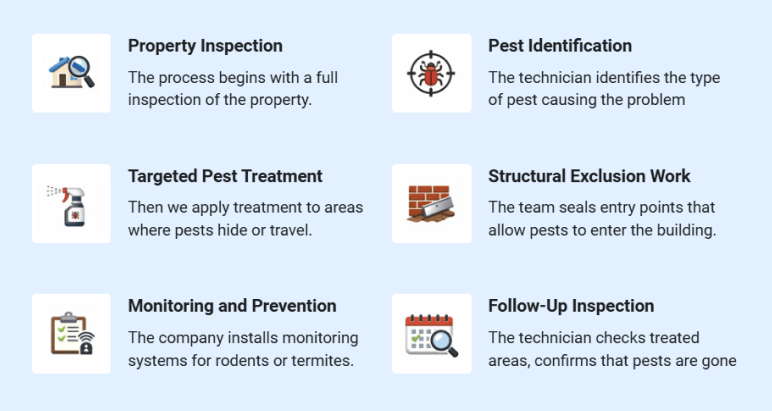
Let’s take a deep dive into our process. The technician first inspects the property to find pest activity and entry points.
Next, the team identifies the pest and applies targeted treatment in the areas where pests hide or travel. After removing the infestation, the technician seals cracks, vents, and gaps that allow pests to enter the building.
When needed, the team installs monitoring systems to detect pest activity early. A follow-up inspection confirms that the pests are gone and the property remains protected.
Warranty and Follow-Up
| Covered Under Warranty | Not Covered Under Warranty |
| Re-treatment if pest activity returns within the warranty period | New infestations caused by untreated neighboring properties |
| Follow-up inspection after major treatment services | Structural damage that creates new pest entry points after service |
| Additional treatment for pests is included in the original service | Pest issues caused by poor sanitation or food waste buildup |
| Inspection of previously sealed entry points | Pest activity from areas the technician could not access during service |
| Service support for customers enrolled in protection plans | Infestations caused by major structural changes or renovations |
Ironclad Pest & Exclusion Services provides follow-up support to ensure treatments work effectively. The company performs inspections after major services and offers re-treatment when pest activity returns within the warranty coverage period.
Operational Plan
Pest control work requires fast response, proper equipment, and consistent service. Ironclad Pest & Exclusion Services organizes its operations to inspect properties, treat infestations, and complete structural sealing efficiently.
The owners manage field services, scheduling, and customer coordination directly to maintain service quality.
Service Area Coverage
Ironclad Pest & Exclusion Services covers a 25-mile service radius around Columbus, Ohio. This coverage allows the company to reach residential neighborhoods and small commercial areas quickly. A focused service area also helps the team respond faster and maintain consistent service schedules.
Here are a few advantages of our area coverage:
- Faster response time for urgent pest problems
- Lower travel time between service locations
- Ability to serve more customers in a single day
- Strong local presence and neighborhood reputation
- Better route planning and operational efficiency
Working Hours
Ironclad Pest & Exclusion Services operates on a structured schedule to handle inspections, treatments, and follow-up visits across the Columbus service area. The schedule allows the team to serve both residential and commercial clients efficiently.
| Schedule Type | Days | Working Hours |
| Regular Working Hours | Monday – Friday | 8:00 AM – 6:00 PM |
| Half Day | Saturday | 9:00 AM – 3:00 PM |
| Holiday | Sunday | Closed (Emergency service available upon request) |
Scalability and Expansion Plan
Ironclad Pest & Exclusion Services will expand beyond the 25-mile service area once the current route reaches full capacity. The team will track job volume and service frequency to identify when travel time begins to reduce daily job efficiency.
The business will add a third technician when weekly service demand consistently exceeds capacity, typically around 35–40 service jobs per week. This step will allow the company to handle more customers without delaying service schedules.
In Years 4 and 5, the company will expand into nearby service areas by adding a second service vehicle and technician. This expansion will increase customer coverage, reduce route congestion, and support higher recurring service volume.
Equipment and Tools
Ironclad Pest & Exclusion Services uses professional pest control tools and safety equipment to inspect properties, treat infestations, and seal pest entry points. Here’s the list of tools and equipment we use:
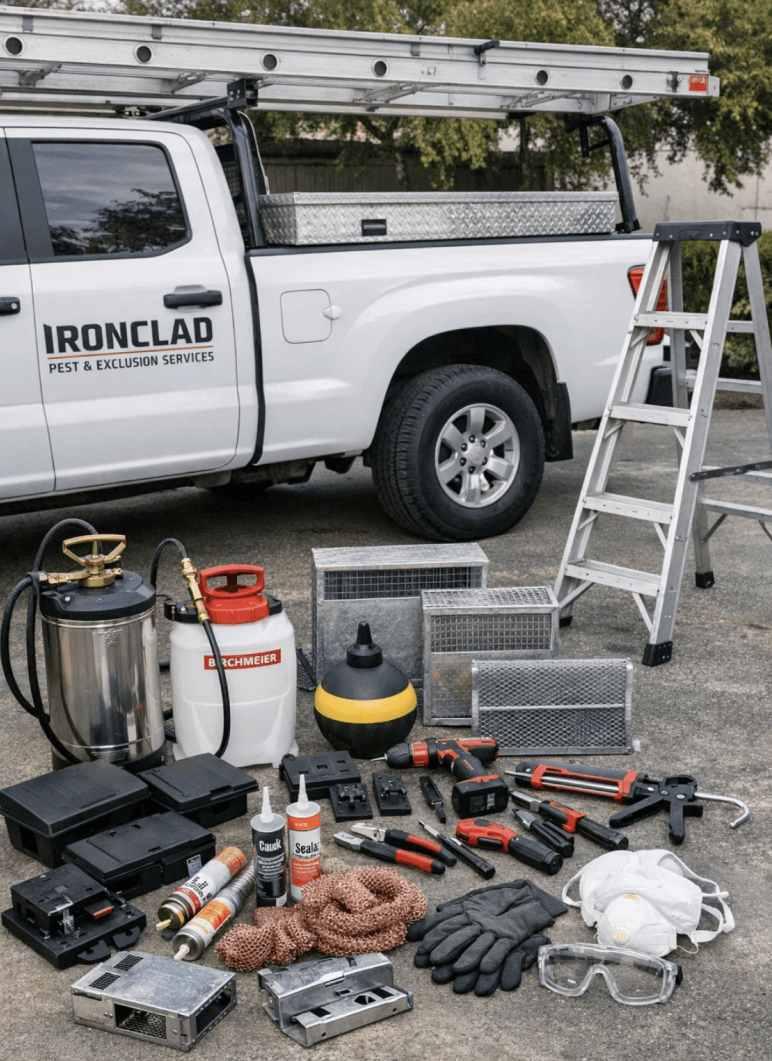
Ironclad Pest & Exclusion Services uses professional pest control equipment and exclusion tools to inspect properties, eliminate infestations, and prevent pests from entering buildings.
Technicians use sprayers and bait systems to apply treatments and control rodents, insects, and termites. Rodent traps, dust applicators, and monitoring tools help detect and remove pests from hidden areas such as attics, crawlspaces, and wall voids.
Copper mesh, sealants, vent screens, and hand tools allow the team to seal structural gaps and block pest entry points. Protective equipment ensures safe chemical handling, while the service pickup truck transports tools, materials, and equipment to customer locations for efficient field operations.
Safety Compliance
Ironclad Pest & Exclusion Services follows federal and Ohio state pesticide safety regulations for handling, transporting, and storing pest control chemicals.
Cade Vance operates as a licensed pesticide applicator, and the business complies with the Ohio Department of Agriculture (ODA) Pesticide Regulation Program and the U.S. Environmental Protection Agency (EPA) pesticide safety guidelines.
These regulations require proper labeling, safe storage, technician training, and controlled handling of chemicals during pest control operations.
Chemical Storage and Handling Guidelines
| Chemical Category | Where We Store | Where We Do Not Store |
| Liquid insecticides (general pest control) | Locked chemical cabinet in a dedicated storage area | Living spaces, kitchen areas, or near food storage |
| Rodent control products (bait and traps) | Locked storage bins in the pest control storage cabinet | Open shelves, vehicles overnight, or customer areas |
| Termite bait systems and monitoring chemicals | Secure storage cabinet separated from food or household items | Residential storage rooms or mixed storage areas |
| Dust insecticides for attic and wall void treatments | Airtight chemical containers inside the PPE storage cabinet | Open containers or humid environments |
| Mosquito treatment chemicals | Chemical-safe storage rack in a ventilated storage area | Near heat sources or sunlight exposure |
Technology and Software
Ironclad Pest & Exclusion Services uses simple technology tools to manage scheduling, customer records, and service operations efficiently. We use the following tech and software to simplify our process:
1) CRM Software
Ironclad Pest & Exclusion Services uses CRM software to keep track of every customer and service visit. The system stores:
- Customer names
- Property addresses
- Pest issues
- Treatment history
- Follow-up schedules
2) Billing and Invoicing Software
The company uses billing software to create and send invoices after completing a service. The system records service charges, tracks payments, and keeps financial records organized. Customers receive digital invoices that show the service performed, the price charged, and the payment status.
3) IoT Pest Monitoring System
Ironclad installs smart pest monitoring sensors for rodents and termites in selected properties. These sensors detect movement or activity and send alerts through a connected system. When the system detects pest activity, it notifies the technician so they can inspect the property before the infestation spreads.
4) Mobile Communication Tools
The team uses mobile communication tools to coordinate daily service work. Technicians receive:
- Appointment details
- Customer locations
- Service notes directly on their phones
The system also allows quick communication with customers for appointment confirmations, arrival updates, and follow-up messages.
Marketing Plan
Ironclad Pest & Exclusion Services uses a focused marketing strategy to attract homeowners and small businesses in the Columbus area. The company prioritizes local visibility, referral partnerships, and search-based customer acquisition because pest control customers usually search for services when they face an urgent problem.
Marketing Budget
The company allocates a structured marketing budget to support customer acquisition during the first three years of operation.
| Year | Marketing Budget |
| Year 1 | $12,000 (includes $6,000 launch marketing) |
| Year 2 | $10,000 |
| Year 3 | $9,000 |
Marketing Channels
Ironclad Pest & Exclusion Services focuses on marketing channels that reach customers exactly when they need pest control. Most homeowners search for help when they see pests, so the company prioritizes channels that appear during those moments.
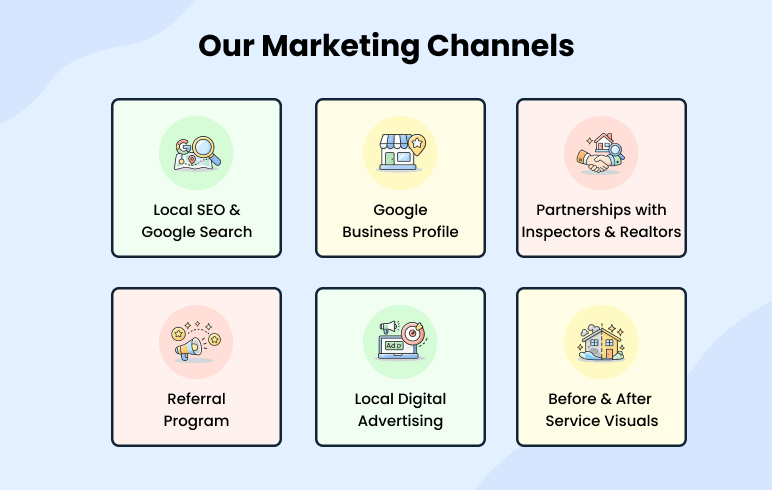
1) Local SEO and Google Search
Ironclad builds a website that targets search terms such as “pest control Columbus,” “rodent proofing near me,” and “bed bug treatment Columbus.” When homeowners search these terms, the website appears in results and directs them to book an inspection.
2) Google Business Profile
The company maintains a verified Google Business profile with service details, photos, and customer reviews. Google shows this listing in map results when users search locally, and strong reviews help the business rank higher and attract more calls.
3) Partnerships with Home Inspectors and Realtors
Real estate agents and home inspectors often find pest issues during property checks. Ironclad partners with them so they can recommend the service to buyers and sellers who need pest inspections before closing.
4) Referral Program
Satisfied customers refer services to friends and neighbors. The company offers small discounts or incentives to encourage referrals and turn existing customers into a steady source of new leads.
5) Local Digital Advertising
The company runs targeted online ads that reach homeowners within the 25-mile service area. These ads focus on specific services like rodent exclusion and termite monitoring to attract customers who need immediate help.
6) Before-and-After Service Visuals
Ironclad shares photos of sealed entry points, pest removal work, and treated areas. These visuals show real results and help customers understand how the service solves pest problems before they book.
Target Customer Outreach
The marketing plan focuses on customers who actively need pest control services. Our primary target groups include:
- Single-family homeowners
- Property managers and landlords
- Restaurants and small retail businesses
- Light commercial offices
- Real estate agents and home inspection professionals
Customer Retention Plan
Ironclad Pest & Exclusion Services keeps customers by solving pest problems properly and staying in regular contact after the first service. The company encourages ongoing protection instead of one-time treatments. This approach helps customers keep their homes pest-free and helps the business maintain steady service demand.
By Year 3, recurring revenue from quarterly plans and monitoring subscriptions is projected to reach $55,052, which is about 20% of total revenue. This recurring income provides a predictable cash flow and reduces reliance on one-time service jobs.
Key retention strategies include the following:
| Retention Strategy | How It Works | Benefit |
| Quarterly Pest Protection Plan | The company schedules pest control visits every three months to inspect and treat the property. | Prevents new infestations and keeps the property protected year-round. |
| Smart Pest Monitoring Subscription | Sensors detect rodent or termite activity and send alerts when movement occurs. | Detects pest problems early before infestations spread. |
| Follow-Up Inspection | The technician revisits the property after major treatments to confirm pest removal. | Ensures treatment worked and builds customer confidence. |
| Service Reminders | The system sends reminders before scheduled pest protection visits. | Helps customers maintain regular protection and avoid missed services. |
Licensing and Compliance
Pest control work involves chemicals, public safety, and environmental responsibility. Because of this, licensing and regulatory compliance remain critical to operating a pest control business.
Government agencies require pest control operators to follow strict rules for chemical use, technician training, storage procedures, and environmental safety. Ironclad Pest & Exclusion Services follows these requirements to ensure safe operations and maintain legal compliance.
Required Licenses and Certifications
| License / Certification | Issuing Authority | Purpose |
| Commercial Pesticide Applicator License | Ohio Department of Agriculture (ODA) | Allows the company to apply pesticide products for pest control services legally. |
| Pest Control Business License | Ohio Department of Agriculture | Authorizes the company to operate as a registered pest control service provider. |
| EPA Pesticide Handling Compliance | U.S. Environmental Protection Agency | Ensures safe pesticide use, compliance with labeling requirements, and environmental protection. |
| Category 10b – General Pest Control | Ohio Department of Agriculture (ODA) | Allows treatment of common household pests such as ants, roaches, spiders, and rodents in residential and commercial properties. |
| Category 11 – Termite and Wood-Destroying Insects | Ohio Department of Agriculture (ODA) | Allows inspection, treatment, and monitoring of termites and other wood-destroying insects. |
| General Liability Insurance | Licensed Insurance Provider | Protects the business against property damage or service-related liability claims. |
Safety Precautions
Ironclad Pest & Exclusion Services follows strict safety practices when handling pest control chemicals and equipment.
- Technicians wear protective equipment such as gloves, masks, and safety goggles.
- The company follows the manufacturer’s instructions for pesticide mixing and application.
- Chemicals remain stored in labeled containers and secured storage cabinets.
- Technicians avoid chemical exposure near food preparation areas and sensitive surfaces.
- The company keeps Safety Data Sheets (SDS) available for every pesticide product used.
Ongoing Compliance and Training
Ironclad Pest & Exclusion Services keeps its operations compliant by maintaining continuous training and staying updated with pest control regulations. Pest control laws and pesticide safety rules change regularly, so the owners follow industry updates and complete the required continuing education to maintain their applicator licenses.
Cade Vance participates in Ohio Department of Agriculture (ODA) continuing education programs required for licensed pesticide applicators. These programs include training sessions such as the following:
- Pesticide Safety and Environmental Protection
- Integrated Pest Management (IPM) Practices
- Rodent Control and Structural Exclusion Techniques
- Safe Handling and Storage of Restricted-Use Pesticides
These sessions help technicians understand proper pesticide application, environmental safety, and updated pest control practices.
To stay informed, the owners regularly review regulatory bulletins, industry newsletters, and compliance updates from pest control associations and chemical manufacturers. Safety Data Sheets (SDS), manufacturer product manuals, and pesticide label instructions also guide daily chemical handling and application procedures.
Financial Plan
The financial plan shows how Ironclad Pest & Exclusion Services will start operations, cover expenses, and maintain a steady cash flow. It explains where the startup funds come from, how the company spends them, and how service revenue supports daily operations.
Financial Assumptions
| Item | Assumption |
| Full-Envelope Protection | $500/job; Y1: 80 / Y2: 120 / Y3: 150 jobs |
| Quarterly Plan Visits | $125/visit; Y1: 60 / Y2: 193 / Y3: 304 visits |
| Rodent Exclusion | $1,200/job; Y1: 25 / Y2: 35 / Y3: 45 jobs |
| Termite Monitoring Install | $1,000/job; Y1: 15 / Y2: 22 / Y3: 28 jobs |
| Smart Monitoring Install | $350/install; Y1: 20 / Y2: 25 / Y3: 30 installs |
| Smart Monitoring Subscription | $29/month; Y1: 108 sub-months / Y2: 336 / Y3: 588 |
| Bed Bug Eradication | $1,100/job; Y1: 12 / Y2: 20 / Y3: 28 jobs |
| Stinging Insects | $275/job; Y1: 20 / Y2: 30 / Y3: 38 jobs |
| Mosquito Treatment | $350/package; Y1: 15 / Y2: 22 / Y3: 28 packages |
| Health Insurance | $12,000 Y1 / $12,600 Y2 / $13,200 Y3 |
| GL + Pest Bond Insurance | $7,500 Y1 / $7,875 Y2 / $8,269 Y3 |
| Commercial Auto Insurance | $3,500 Y1 / $3,675 Y2 / $3,859 Y3 |
| Fuel & Vehicle Maintenance | $6,000 Y1 / $7,200 Y2 / $8,400 Y3 |
| CRM Software | $1,800/year |
| IoT Platform | $2,400/year |
| Marketing | $12,000 Y1 (incl. $6K launch) / $10,000 Y2 / $9,000 Y3 |
| Office Supplies & Misc | $1,800/year |
| Phone & Internet | $2,400/year |
| Accounting & Bookkeeping | $3,000/year |
| Accounts Receivable | 5% of annual revenue |
| Accounts Payable | 2 weeks of total COGS (÷ 26) |
| Inventory (year-end) | 2 weeks of chemical COGS (÷ 26) |
| Growth Capex | $3,000 Y2 / $4,000 Y3 (7-year life) |
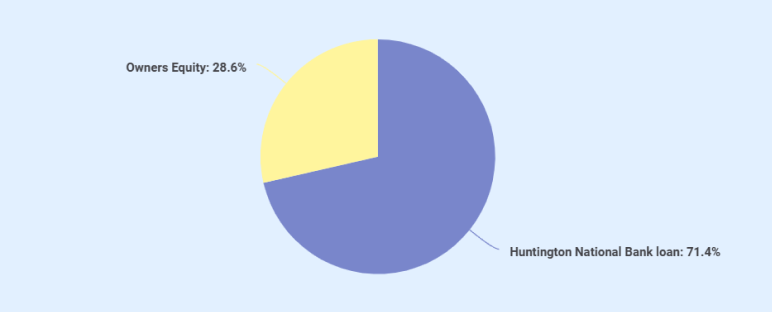
Source of Funding
| Sources of Funds | Amount |
| Huntington National Bank loan | $60,000 |
| Owner equity (savings) | $24,000 |
| Total Funding | $84,000 |
Profit & Loss Statement (3 Years)
| Line Item | Year 1 | Year 2 | Year 3 |
| Revenue | |||
| Full-Envelope Protection | $40,000 | $60,000 | $75,000 |
| Quarterly Plan Visits | $7,500 | $24,125 | $38,000 |
| Rodent Exclusion | $30,000 | $42,000 | $54,000 |
| Termite Monitoring Install | $15,000 | $22,000 | $28,000 |
| Smart Monitoring Install | $7,000 | $8,750 | $10,500 |
| Smart Monitoring Subscription | $3,132 | $9,744 | $17,052 |
| Bed Bug Eradication | $13,200 | $22,000 | $30,800 |
| Stinging Insects | $5,500 | $8,250 | $10,450 |
| Mosquito Treatment | $5,250 | $7,700 | $9,800 |
| Total Revenue | $126,582 | $204,569 | $273,602 |
| Cost of Goods Sold | |||
| Chemicals & Materials (15% of service revenue) | $18,518 | $29,224 | $38,483 |
| Smart Monitoring Hardware | $3,000 | $3,750 | $4,500 |
| Subcontractor Costs | $3,000 | $4,900 | $7,200 |
| Total COGS | $24,518 | $37,874 | $50,183 |
| Gross Profit | $102,064 | $166,695 | $223,419 |
| Gross Margin % | 80.6% | 81.5% | 81.7% |
| Operating Expenses | |||
| Owner Draws (Cade + Elena) | $36,000 | $72,000 | $96,000 |
| Self-Employment Tax | $5,508 | $11,016 | $14,688 |
| Health Insurance | $12,000 | $12,600 | $13,200 |
| GL + Pest Bond Insurance | $7,500 | $7,875 | $8,269 |
| Commercial Auto Insurance | $3,500 | $3,675 | $3,859 |
| Fuel & Vehicle Maintenance | $6,000 | $7,200 | $8,400 |
| CRM & Scheduling Software | $1,800 | $1,800 | $1,800 |
| IoT Monitoring Platform | $2,400 | $2,400 | $2,400 |
| Marketing (incl. $6K launch in Y1) | $12,000 | $10,000 | $9,000 |
| Office Supplies & Miscellaneous | $1,800 | $1,800 | $1,800 |
| Phone & Internet | $2,400 | $2,400 | $2,400 |
| Accounting & Bookkeeping | $3,000 | $3,000 | $3,000 |
| Total Operating Expenses | $93,908 | $135,766 | $164,816 |
| EBITDA | $8,156 | $30,929 | $58,603 |
| Depreciation | $5,472 | $5,901 | $6,472 |
| EBIT | $2,684 | $25,028 | $52,131 |
| Interest Expense | $4,605 | $3,748 | $2,822 |
| Net Income (Pre-Tax) | −$1,921 | $21,280 | $49,309 |
Cash Flow Statement (3 Years)
| Line Item | Year 1 | Year 2 | Year 3 |
| CASH FROM OPERATIONS | |||
| Net Income | −$1,921 | $21,280 | $49,309 |
| Add: Depreciation | $5,472 | $5,901 | $6,472 |
| Change in Accounts Receivable | −$6,329 | −$3,899 | −$3,452 |
| Change in Inventory | $3,787 | −$411 | −$356 |
| Change in Prepaid Expenses | $17,000 | $0 | $0 |
| Change in Accounts Payable | $943 | $514 | $473 |
| Cash from Operations | $18,952 | $23,385 | $52,446 |
| CASH FROM INVESTING | |||
| Capitalized Assets (startup) | −$30,500 | $0 | $0 |
| Prepaid Expenses (startup) | −$17,000 | $0 | $0 |
| Initial Inventory (startup) | −$4,500 | $0 | $0 |
| Growth Capex | $0 | −$3,000 | −$4,000 |
| Cash from Investing | −$52,000 | −$3,000 | −$4,000 |
| CASH FROM FINANCING | |||
| Loan Proceeds | $60,000 | $0 | $0 |
| Owner Equity Contribution | $24,000 | $0 | $0 |
| Loan Principal Repayment | −$10,023 | −$10,880 | −$11,806 |
| Cash from Financing | $73,977 | −$10,880 | −$11,806 |
| Net Change in Cash | $40,929 | $9,505 | $36,640 |
| Beginning Cash | $0 | $40,929 | $50,434 |
| Ending Cash | $40,929 | $50,434 | $87,074 |
Balance Sheet (3 Years)
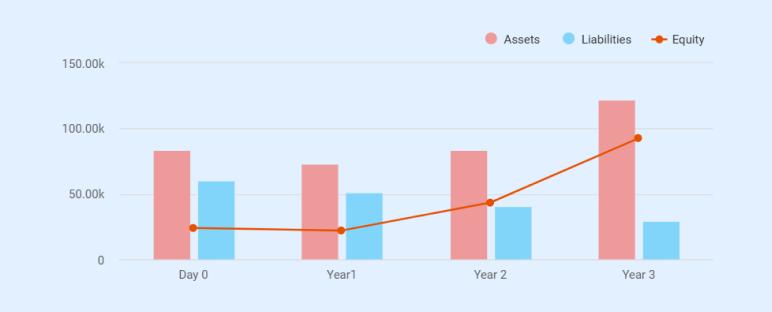
| Line Item | Day 0 | Year 1 | Year 2 | Year 3 |
| ASSETS | ||||
| Current Assets | ||||
| Cash | $32,000 | $40,929 | $50,434 | $87,074 |
| Accounts Receivable | $0 | $6,329 | $10,228 | $13,680 |
| Inventory | $4,500 | $713 | $1,124 | $1,480 |
| Prepaid Expenses | $17,000 | $0 | $0 | $0 |
| Total Current Assets | $53,500 | $47,971 | $61,786 | $102,234 |
| Fixed Assets | ||||
| Gross Fixed Assets | $30,500 | $30,500 | $33,500 | $37,500 |
| Less: Accumulated Depreciation | $0 | −$5,472 | −$11,373 | −$17,845 |
| Net Fixed Assets | $30,500 | $25,028 | $22,127 | $19,655 |
| TOTAL ASSETS | $84,000 | $72,999 | $83,913 | $121,889 |
| LIABILITIES | ||||
| Current Liabilities | ||||
| Accounts Payable | $0 | $943 | $1,457 | $1,930 |
| Current Portion of Loan | $10,023 | $10,880 | $11,806 | $12,802 |
| Total Current Liabilities | $10,023 | $11,823 | $13,263 | $14,732 |
| Long-Term Liabilities | ||||
| Long-Term Loan | $49,977 | $39,097 | $27,291 | $14,489 |
| Total Long-Term Liabilities | $49,977 | $39,097 | $27,291 | $14,489 |
| TOTAL LIABILITIES | $60,000 | $50,920 | $40,554 | $29,221 |
| EQUITY | ||||
| Contributed Capital | $24,000 | $24,000 | $24,000 | $24,000 |
| Retained Earnings | $0 | −$1,921 | $19,359 | $68,668 |
| Total Equity | $24,000 | $22,079 | $43,359 | $92,668 |
| TOTAL LIABILITIES + EQUITY | $84,000 | $72,999 | $83,913 | $121,889 |
Break-Even Summary
| Item | Value |
| Monthly Fixed Costs (at Year 2 levels) | $12,118 |
| Variable Cost Ratio (COGS ÷ Revenue) | 18.5% |
| Contribution Margin % | 81.5% |
| Monthly Break-Even Revenue | $14,869 |
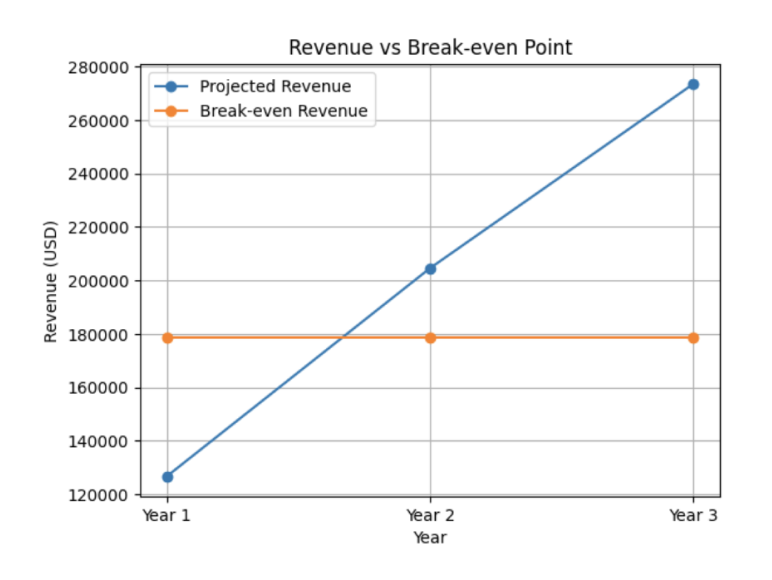
| Annual Break-Even Revenue | $178,428 |
| Year 1 Revenue (% of break-even) | $126,582 (70.9%) |
| Year 2 Revenue (% of break-even) | $204,569 (114.6%) |
| Year 3 Revenue (% of break-even) | $273,602 (153.3%) |
| Approximate break-even month | Month 5–6 of Year 2 |
| Break-even weekly job volume | ~7 service events/week |
Loan Amortization Summary
| Loan Detail | Value |
| Bank Name | Huntington National Bank |
| Loan Amount | $60,000 |
| Loan Type | Small Business Term Loan |
| Interest Rate | 8.10% Fixed |
| Loan Term | 5 Years |
| Monthly Payment | $1,219 |
| Total Interest Paid (Approx.) | $14,174 |
| Item | Year 1 | Year 2 | Year 3 | Year 4 | Year 5 |
| Opening Balance | $60,000 | $49,977 | $39,097 | $27,291 | $14,489 |
| Principal Paid | $10,023 | $10,880 | $11,806 | $12,802 | $14,489 |
| Interest Paid | $4,605 | $3,748 | $2,822 | $1,826 | $1,173 |
| Total Payment | $14,628 | $14,628 | $14,628 | $14,628 | $15,662 |
| Closing Balance | $49,977 | $39,097 | $27,291 | $14,489 | $0 |
Risk Analysis
| Risk | Impact | Mitigation Strategy |
| Lower Customer Acquisition (Year 1 below projections) | Reduced revenue may affect the ability to cover operating costs and the $1,219 monthly loan payment | Maintain working capital reserve, increase local marketing, and offer introductory packages to attract customers faster |
| Price Competition from National Chains | Lower pricing by competitors like Orkin or Terminix may reduce customer conversion | Focus on structural exclusion, owner-led service, and long-term pest prevention instead of competing on price |
| Seasonal Slowdown (Winter Months) | A drop in pest activity may reduce service demand and cash flow | Focus on rodent control, exclusion work, and smart monitoring services that remain in demand during winter |
| Changes in Licensing or Regulations | New rules may affect operations, chemical use, or compliance requirements | Stay updated with ODA and EPA guidelines, complete required training, and adjust operations as per regulations |
The Quickest Way to turn a Business Idea into a Business Plan
Fill-in-the-blanks and automatic financials make it easy.

Upmetrics
Upmetrics is the #1 business planning software that helps entrepreneurs and business owners create investment-ready business plans using AI. We regularly share business planning insights on our blog. Check out the Upmetrics blog for such interesting reads. Read more