Starting a waste management business requires heavy lifting: Both physically and financially. Because the upfront costs for trucks and containers are high, your first major hurdle is usually securing an SBA loan or equipment financing.
To get approved, lenders don’t want to see generic business jargon. They want to see that you understand your local unit economics: landfill tipping fees, fuel costs, route density, and container utilization rates.
Hence, here’s a complete sample of a dumpster rental company called ClearWay Roll-Off Services. We created this example to show you exactly what a bank-ready and highly operational plan looks like. You can use this Sample Plan to organize your plan your own way.
Waste Management Business Plan (ClearWay Roll-Off Services)
Executive Summary
ClearWay Roll-Off Services is a roll-off dumpster rental-based waste management company. We are located at 7420 Industrial Drive, Suite 3, Austin, TX 78744. The facility features an 800 sq ft office and a fenced yard for parking trucks and containers.
We rent dumpsters on a flat-rate basis, deliver them, pick them up, and haul the debris to a contracted landfill. Revenue comes from rental fees and disposal pass-through charges.
We don’t handle hazardous waste, medical waste, regulated materials, or recycling processing.
Problem
Austin produces over 136,713 tonnes of trash annually through residential services alone. Managing this massive quantity of waste needs an effective, practical, and consistent dumpster. However, homeowners and small contractors find it difficult to get quick and affordable dumpster rentals for temporary projects. The big waste companies usually favor larger business customers and provide slow service and ambiguous rates.
Solution
ClearWay Roll-Off Services provides fast delivery, flat-rate rentals, and direct owner communication. We focus on small jobs, short timelines, and clear pricing within a controlled 20-mile service area.
Target Market
ClearWay Roll-Off Services targets:
- Homeowners (completing renovations, roof replacements, garage cleanouts, and yard projects)
- Small contractors
These customers need short-term dumpster rentals, quick delivery, and clear pricing. Most projects last less than one week and require 10 to 15-yard containers.
Startup Capital & Funding
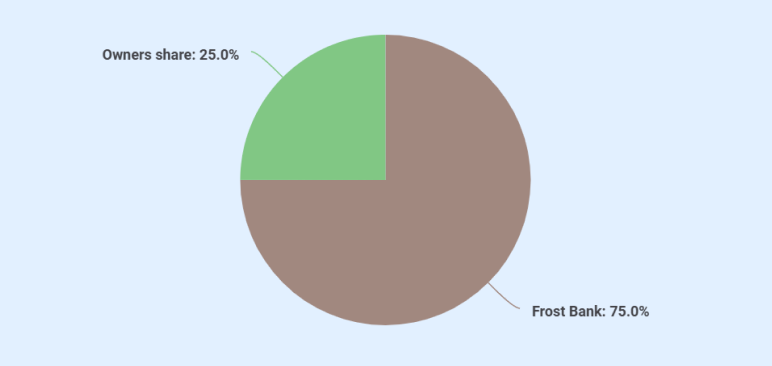
Total startup capital required is $160,000. The funding splits across two sources:
| Sources of Funds | Amount |
|---|---|
| Frost Bank Term Loan | $120,000 |
| Owner Equity Contribution | $40,000 |
| Total Funding | $160,000 |
Financial Overview
ClearWay generates revenue through dumpster rentals and landfill disposal charges. The company offers two container sizes. A 10-yard dumpster rents for $350, and a 15-yard dumpster rents for $425 for a 3–5 day rental period. Customers also pay disposal fees based on landfill weight tickets.
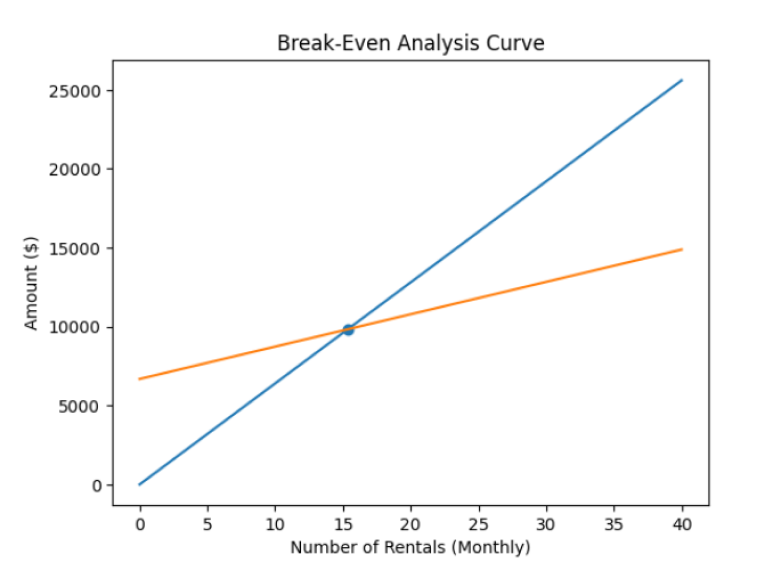
The business reaches break-even at about 184 rentals per year, or 15–16 rentals per month.
Financial projections show steady growth as the company builds contractor relationships and local awareness:
- Year 1: $80,000
- Year 2: $122,880
- Year 3: $130,560
This gradual increase in bookings supports stable cash flow and long-term operations.

Business Overview
ClearWay enters the market with a disciplined cost structure, defined service limits, and secured equipment assets from day one. The company is built around controlled risk, regulatory compliance, and simple operations to protect margins and maintain consistent service delivery.
Legal Structure and Ownership
ClearWay Roll-Off Services operates as a multi-member limited liability company. The LLC protects personal assets from business liabilities except where personal guarantees apply.
While ownership of ClearWay Roll-Off Services is shared among 2 partners:
| Owner Name | Ownership Percentage | Primary Role |
|---|---|---|
| John Root | 60% | Operations & Driver |
| Terry Compton | 40% | Administration & Billing |
Both owners participate in daily operations and provide personal guarantees for the business loan.
Business Address & Facility
The company is located at 7420 Industrial Drive, Suite 3, Austin, TX 78744. This property consists of an 800 sq ft office with a fenced yard that is big enough to accommodate the roll-off truck and four containers. The space operates on a shared yard lease, a viable arrangement that ensures low overheads and offers the business a physical location that allows dispatching, equipment staging, and simple truck maintenance.
The site is located in the industrial loop of Austin that allows direct access to the major roads and positions the company in the center of its 20-mile service area. Proximity to active residential neighborhoods and contractor zones cuts drive time and fuel costs on every job.
Business Model
We generate revenue by rotating one truck and four containers across short-term projects. Each container completes multiple cycles per week to increase utilization and maintain steady cash flow.
The business earns revenue from flat-rate rental fees and disposal charges based on landfill weight tickets. This structure keeps pricing clear and allows disposal costs to pass directly to the customer.
Operations focus on fast container turnover. Short rental periods allow containers to rotate across multiple jobs each week. Higher rotation improves asset use and supports steady cash flow.
Startup Summary
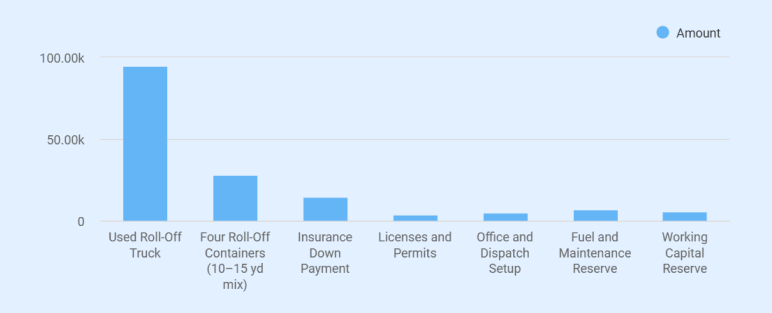
ClearWay requires $160,000 in total startup capital to purchase core equipment, secure insurance and permits, and maintain adequate working reserves during launch. The startup summary breakdown is as follows:
| Startup Cost Item | Amount |
|---|---|
| Used Roll-Off Truck | $95,000 |
| Four Roll-Off Containers (10–15 yd mix) | $28,000 |
| Insurance Down Payment | $15,000 |
| Licenses and Permits | $4,000 |
| Office and Dispatch Setup | $5,000 |
| Fuel and Maintenance Reserve | $7,000 |
| Working Capital Reserve | $6,000 |
| Total Startup Capital | $160,000 |
Market Analysis
The waste management sector is experiencing strong growth driven by rising waste generation and regulatory demand for proper disposal. Demand for roll-off dumpster rentals increases with construction and renovation activity.
National Market Analysis
The dumpster rental industry has experienced steady growth over the past five years in the USA. The growth is mainly driven by:
- Demand from construction
- Housing renovations
- Public infrastructure projects
Industry revenue is projected to reach $654 million by 2025, reflecting a 5.7% compound annual growth rate over the period, with 7.2% growth in 2025 alone.
Local Market Analysis
Austin is the fastest-growing area for households in the country over the past decade.
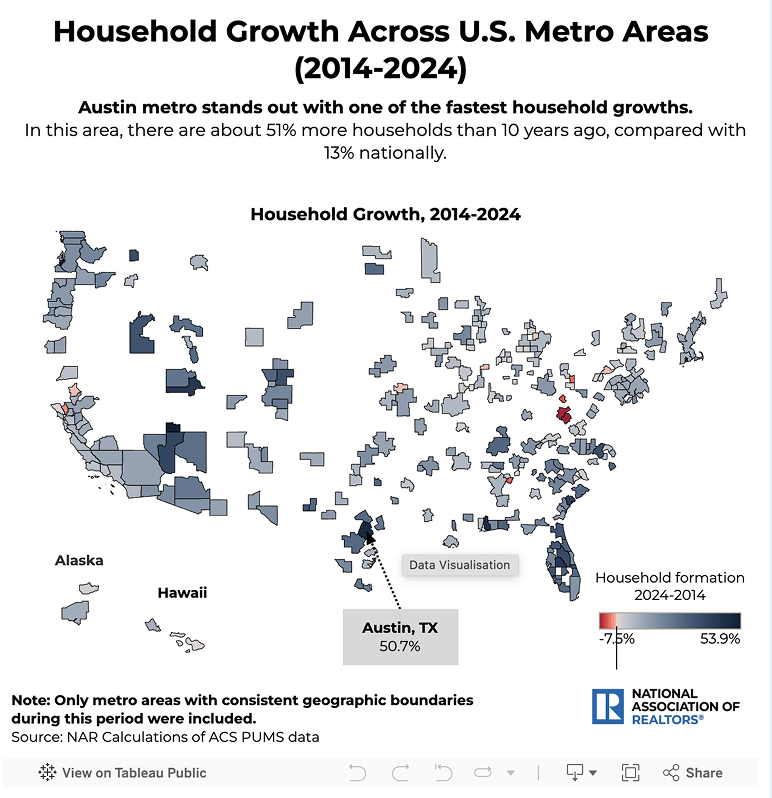
Moreover, Austin has a population of 1,007,435 in 2026 and is growing at roughly 0.69% annually. The Austin metro area population reached 2,348,000 in 2026, reflecting a 1.72% increase over the prior year.
As the population grows, the demand for housing grows with it. More homes mean more remodeling projects, property cleanouts, and construction debris.
Importantly, Austin generates a large volume of waste each year, which creates steady demand for waste hauling and dumpster services. The key numbers from FY 2024:
- Private haulers handle about 85% of the market, leaving strong room for small operators.
- Austin’s diversion rate is 37%, which is much higher than that of its peer cities
- Austin aims to reduce landfill waste with 90% waste diversion by 2040
Target Audience
ClearWay serves two main groups: Homeowners and contractors. Both have specific needs for dumpster rental services, but their requirements and project types differ:
| Target Group | Description | Needs & Requirements |
|---|---|---|
| Homeowners | People working on home renovation, cleanouts, or yard projects. | Need affordable, easy-to-use dumpsters for short-term use. They typically rent for 3–5 days. |
| Contractors | Small independent contractors or crews working on projects like home remodeling, roofing, and landscaping. | Need reliable, fast dumpster delivery with clear pricing. They often have recurring needs for projects that require larger containers or more frequent pickups. |
We address both by our roll-off dumpster rental service and timely, flat-rate pricing for short-term rentals, ensuring efficiency and reliability for both homeowners and contractors.
Competitive Landscape
The Austin dumpster rental market includes national corporations, regional operators, and small local providers. The list of competitors is as follows:
1) Waste Management, Inc.
| Component | Details |
|---|---|
| Service Focus | Full waste services, including dumpster rentals |
| Scale | National leader with a large infrastructure |
| Pricing Model | Tiered pricing based on service type and volume |
| Customer Base | Large-scale commercial and residential clients |
| Service Areas | Nationwide coverage |
Waste Management, Inc. competes with ClearWay by offering a broad range of waste services nationwide. While they have a larger infrastructure and coverage, ClearWay competes by providing faster, more personalized service and transparent pricing.
2) Texas Disposal Systems (TDS)
| Component | Details |
|---|---|
| Service Focus | Roll-off and front-load rental services |
| Scale | Regional waste provider, primarily in the Austin area |
| Pricing Model | Variable pricing based on container size and rental duration |
| Customer Base | Primarily residential, commercial, and small business clients |
| Service Areas | Austin and the surrounding areas |
TDS competes with ClearWay by being a major regional player with a solid presence in Austin. They focus on local services but tend to have longer response times and less flexibility compared to ClearWay’s quick, owner-operated service.
3) Dumpster Dogs
| Component | Details |
|---|---|
| Service Focus | Local Austin dumpster rental services |
| Scale | Small local operator |
| Pricing Model | Flat-rate pricing for dumpster rentals |
| Customer Base | Primarily residential customers |
| Service Areas | Austin and the surrounding areas |
Dumpster Dogs competes with ClearWay by offering personalized, small-scale service. However, their limited fleet can sometimes restrict availability, while ClearWay’s larger container options and quicker response times give it an edge in handling bigger and more urgent projects.
What Makes ClearWay Different
ClearWay competes on speed, cost control, and direct accountability rather than scale. Here’s what makes us different from competitors:
- Fully owner-operated, customers deal directly with decision-makers, not call centers.
- Strict 20-mile radius means faster delivery and pickup compared to providers covering large territories.
- Lean setup with one truck and four containers results in lower overhead than national operators.
- Clear flat-rate rentals plus documented landfill pass-through fees.
- No hazardous or regulated waste handling, which reduces compliance exposure and insurance risk.
Industry Trends Favoring ClearWay
1) Smart Waste Management and Technology Adoption
Waste companies now use technology like AI, sensors, and automation to manage waste more efficiently. These tools help plan routes, track containers, and reduce operating costs. ClearWay applies this trend in a simple way by using dispatch and scheduling software to manage bookings, deliveries, and pickups. The smart way helps the company plan routes better and run operations efficiently with a small team.
2) Circular Economy and Resource Recovery Focus
Many cities and companies now treat waste as a resource instead of something to throw away. They focus on recycling, reuse, and reducing landfill waste. While ClearWay does not process recycling, this shift increases construction and renovation waste diversion, which creates more debris that must be hauled from job sites. That demand supports dumpster rental services.
3) Regulatory and Policy Pressures
Environmental rules continue to change how waste is handled. Governments now require better landfill monitoring, waste tracking, and recycling programs. These rules mainly affect landfills and large waste operators. As regulations become stricter, construction companies and property owners rely more on licensed haulers like ClearWay to remove waste properly and stay compliant.
Our Services
ClearWay provides simple dumpster rental services for short-term cleanup and construction projects. Customers rent a container, fill it with debris, and ClearWay hauls the waste to an approved landfill. Here are more details on our services:
Dumpster Rental Services
ClearWay offers two container sizes designed for small construction jobs, home cleanouts, and yard projects.
| Service | Rental Price | Rental Period | Best For |
|---|---|---|---|
| 10-Yard Dumpster | $350 | 3–5 days | Small remodels, garage cleanouts, yard debris |
| 15-Yard Dumpster | $425 | 3–5 days | Roofing projects, medium renovations, contractor jobs |
Disposal fees depend on landfill weight tickets and are added to the final bill.
Rental Terms and Extensions
Each dumpster rental includes 3–5 days of container use. This time frame fits most residential cleanouts, roofing jobs, and small renovation projects.
If a customer needs more time, ClearWay allows rental extensions. The process stays simple and transparent. If the project takes longer:
- Customers request an extension from Terry
- A flat daily fee applies
- Terry updates the pickup schedule
Service Availability and Scheduling
Terry schedules most deliveries within 24 to 48 hours after booking. This gives enough time to organize routes and prepare the containers. Customers can request a morning or afternoon delivery when possible. Terry also confirms the pickup date during booking and reminds the customer before the scheduled pickup day.
ClearWay offers limited Saturday service for contractor projects or urgent cleanups. John plans delivery and pickup routes by location so he can reduce travel time and fuel use. This system keeps operations organized and helps customers finish their projects without delays.
Customer Support
ClearWay focuses on simple communication and reliable service throughout the rental process. We support customers from the moment they book a dumpster until the container leaves the job site.
Our customer support process is as follows:
- The customer receives a clear summary of the order once Terry confirms the rental details.
- We provide complete guidance on where the dumpster can sit safely.
- John contacts the customer before arrival if needed.
- For waste guidance, ClearWay provides a list of accepted and prohibited materials.
- During usage, if the customer needs help, Terry is always available on call to guide.
- We do follow-up communication after service and invite the customer to leave a review.
Operational Plan
ClearWay operates a lean, owner-managed roll-off rental system designed for cost control, fast turnaround, and regulatory compliance. We structure operations around one truck, four containers, and disciplined scheduling to maximize asset use and protect margins.
Business Location & Facility
ClearWay operates from 7420 Industrial Drive, Suite 3, Austin, TX 78744, within Austin’s industrial corridor.
The facility includes:
1) 800 sq ft Office Space
We handle dispatch, booking, billing, and recordkeeping from this location. Terry manages all administrative activity onsite. The office supports daily scheduling and vendor coordination.
2) Secured Fenced Yard
We store the roll-off truck at the yard and keep four containers ready between jobs. Fencing and a locked gate protect equipment after hours.
The shared yard lease keeps overhead low. Industrial zoning permits commercial vehicle parking and container storage.
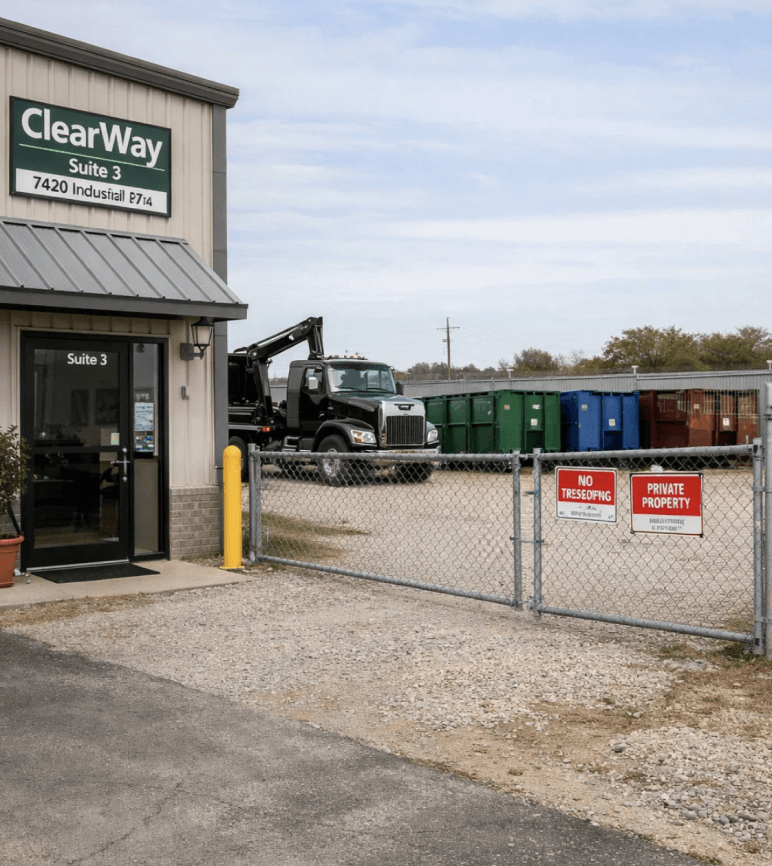
The advantage of the location is that it sits near US-183 and SH-71. John can reach most service areas within 25 to 40 minutes. Central positioning reduces fuel use and supports multiple deliveries or pickups per day.
Hours of Operation
- Primary schedule: Monday through Friday, 7:00 AM – 5:00 PM
- Saturday: Limited services
- Sunday: Non-service day
We’re available on Saturday for scheduled pickups and deliveries that can’t fit the weekday window.
Terry Compton answers calls and responds to booking requests Monday through Friday during business hours. After-hours inquiries receive a callback by 8:00 AM the next business day. Voicemail and email intake remain active at all times.
The current schedule balances workload, equipment wear, and the owner’s quality of life. A two-person operation can’t sustain seven-day coverage without burnout. The Monday–Friday core with limited Saturday flexibility gives ClearWay enough scheduling room to meet demand without overextending.
Daily Workflow
Every ClearWay rental follows a five-step cycle:
- Booking: Customer contacts ClearWay, and Terry confirms details (project type, container size, delivery date, and payment). Terry enters job info into the dispatch system.
- Delivery: John loads the container, delivers it to the site, confirms placement with the customer, and documents the drop location.
- Rental Period: The container stays at the customer’s site for 3–5 days. If needed, the customer arranges an extension with Terry.
- Pickup & Disposal: John picks up the full container, hauls it to the landfill, records tipping fees, and returns the empty container to the yard.
- Invoicing & Close-Out: Terry reconciles rental and disposal fees, issues the final invoice, and closes the job in the dispatch system.
Staffing Plan
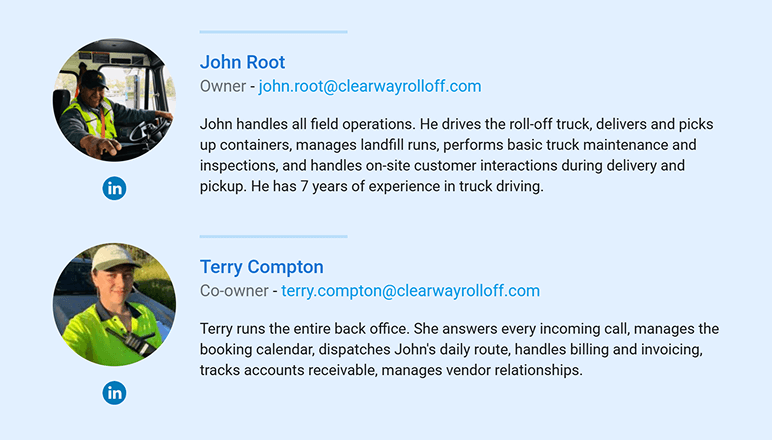
ClearWay starts as a fully owner-operated business with no employees, subcontractors, or part-time staff at launch.
Staffing Expansion Plan
ClearWay never hires until the revenue justifies it. The first hire, a part-time driver or helper, is triggered when the weekly usage of containers is at or above 90% on 60 consecutive days. That means all four containers are rented and rotating, with a waitlist forming. At that point, ClearWay evaluates adding a second truck and a part-time driver rather than turning away bookings.
Waste Handling Procedures
ClearWay accepts:
- Construction Debris: Drywall, lumber, shingles, tile, concrete (limited weight), brick, framing, demolition waste.
- Household Junk: Furniture, appliances (non-refrigerant), mattresses, clothing, boxes, cleanouts.
- Yard Waste: Branches, brush, soil, sod, landscaping debris, storm cleanup.
Prohibited Materials
Solvents, pesticides, liquid paint, asbestos, tires, medical waste, batteries, appliances with refrigerant, electronics that contain hazardous materials, and regulated materials per the TCEQ (Texas Commission on Environmental Quality) regulations.
At booking, Terry informs the customers about these restrictions and provides a printed list with delivery confirmations. In case of the discovery of prohibited waste, John will contact the customer to organize the removal.
Landfill Disposal
ClearWay uses contracted landfills based on proximity, tipping fees, accepted materials, and hours of operation. Landfill agreements ensure fixed tipping rates and accepted material types. John follows all safety and unloading procedures and maintains landfill access credentials.
Terry reconciles the weigh tickets daily to ensure accurate billing for disposal costs.
Equipment Backup and Contingency Plan
ClearWay has a single roll-off truck. Deliveries and pickups can be interrupted by a breakdown, and therefore, we have a clear backup plan that covers cases where an operation is at risk.
To keep the truck running reliably:
- John checks tires, brakes, hydraulic systems, and fluid levels before starting routes.
- We follow a regular maintenance schedule to reduce the risk of sudden breakdowns.
- If the truck requires repair, we rent a compatible truck from local commercial truck rental providers.
- We maintain relationships with local repair shops for quick service and priority repairs.
- Terry updates customers immediately if delays occur and adjusts the delivery schedule.
Marketing Plan
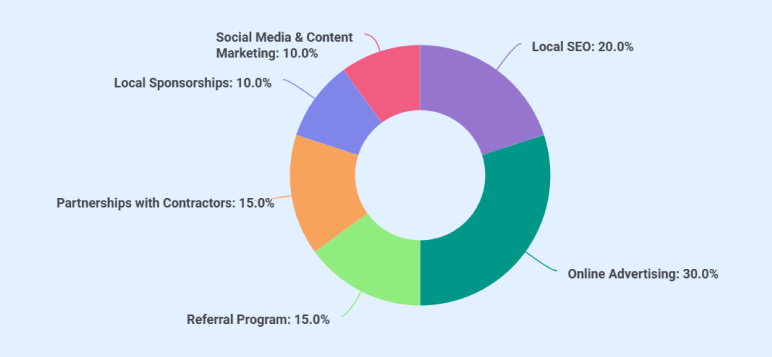
To effectively reach our target market and drive growth, ClearWay will leverage a mix of digital and conversational marketing channels. Below is an overview of the marketing channels, budget allocation, and the strategic reasons for using them:
| Channel | % of Budget | How We Will Use This Channel |
|---|---|---|
| Local SEO | 20% | Maximize the site on search terms such as “dumpster rental Austin”, and keep a running Google Business Profile. |
| Online Advertising | 30% | Place GEO-targeted Google Ads and social media advertisements to advertise to homeowners. |
| Referral Program | 15% | Provide small rewards or discounts to customers who refer new clients once they have done a rental. |
| Partnerships with Contractors | 15% | Establish contacts with local contractors and property managers, and provide preferred booking status to frequent bookings |
| Local Sponsorships | 10% | Sponsor local events, renovation expos, or community events to raise local brand awareness. |
| Social Media & Content Marketing | 10% | Share post project images, clean-up tips, and service updates on social media such as Facebook and Instagram to appeal to local customers. |
Customer Acquisition Plan
ClearWay attracts two main customer groups, homeowners and contractors. Each group follows a different path before booking a dumpster.
Residential Customer Funnel
Homeowners usually find ClearWay while searching online or through neighborhood platforms. Strong reviews and simple pricing help them decide quickly.
How the process works:
- Homeowner searches “dumpster rental Austin” or sees ClearWay on Nextdoor. They visit the Google Business Profile or website.
- They read reviews, check prices, and compare one or two local providers. Flat pricing and strong reviews help ClearWay stand out.
- The customer calls Terry or submits a request online. Terry confirms the details, gives the price, and collects payment. The job is scheduled within 24–48 hours.
- John delivers the container on time and returns for another pickup on schedule.
- Terry sends a follow-up message and asks for a Google review. Satisfied customers often recommend ClearWay to neighbors.
Contractor Customer Funnel
Contractors usually come through direct outreach and relationship building. Reliable service turns them into repeat customers.
How the process works:
- John visits job sites or contacts contractors directly. He shares a business card and explains ClearWay’s flat pricing and owner-operated service.
- The contractor books one dumpster to test reliability. ClearWay delivers and picks up on time.
- The contractor adds ClearWay to their vendor list and books containers for projects as needed.
- Terry maintains the relationship through clear invoices and proactive scheduling. She confirms container reservations before new projects start.
Referral Program
ClearWay initiates a referral program that is simple for both residential and contractor clients.
Residential referral: Any client who makes a new booking referral will be given a $25-credit on their next rental. The mentioned customer will obtain a discount of $25 on the initial booking. In the dispatch system, Terry manually records referrals and credits them at the subsequent invoice.
Contractor referral: Every contractor making a referral of another contractor earns a credit of $50 on his or her subsequent rental. The contractor in question receives a $50 discount on their initial job. Credits accumulate—the greater the number of referrals, the greater the discount on future bookings.
Referrals, respectively, offer better conversion rates at the same or lower cost and built-in trust, as opposed to paid advertising, which costs $30+ per lead.
Key Performance Indicators (KPIs)
ClearWay tracks six marketing KPIs monthly; here’s more detail below in a table:
| KPI | Metric | Target/Insight |
|---|---|---|
| Inbound leads per month | Total phone calls, form submissions, and email inquiries | Aim for 40–53 leads per month |
| Lead-to-booking conversion rate | Percentage of leads that convert to bookings | Target 30–40% conversion rate |
| Cost per acquired customer | Total marketing spend divided by new bookings | Target $40–$60 per customer acquisition |
| Container utilization rate | Percentage of available container-days rented | Target 75–85% utilization rate |
| Repeat booking rate | Percentage of customers booking a second time within 12 months | Target 25–30% repeat rate |
| Google review count and rating | Total reviews and average star rating | Aim for 50+ reviews with an average of 4.5 stars |
Licensing and Permits
Licensing and permits are essential to ensure ClearWay operates legally and meets all regulatory requirements. Without the proper licenses, the business cannot legally provide dumpster rental services. Here’s a detailed outline of the necessary licenses and permits for ClearWay’s operations:
| License / Permit | Why It Matters |
|---|---|
| Texas LLC Registration (Secretary of State) | Legally establishes the business. Required for bank accounts, contracts, and owner liability protection. |
| Employer Identification Number (EIN) (IRS) | Acts as the company’s federal tax ID. Required for bank accounts, loan applications, and tax filings. |
| Commercial Driver’s License — Class B (Texas DPS) | Legally required for John Root to operate the roll-off truck. Without it, no deliveries, no revenue. |
| USDOT Number (FMCSA) | Federal ID for commercial vehicles. Must be displayed on the truck. Operating without it triggers fines. |
| Private Hauler License | This license allows ClearWay to legally collect and transport solid waste within the Austin city limits. |
| TCEQ Transporter Registration (Texas Commission on Environmental Quality) | State-level registration confirms that ClearWay transports non-hazardous waste. Protects from disposal liability. |
Insurance Requirements
The insurance plays a very important role in safeguarding ClearWay against operations, accidents, and legal liabilities. The main categories of insurance guaranteeing compliance and protection of the business are highlighted below.
1) Commercial auto insurance
Protects the truck against physical damage and provides liability coverage for accidents that occur during hauling.
2) General liability insurance
Covers ClearWay against property damage, personal injury, or accidental injury or accidents arising during operations.
3) Workers’ compensation insurance
Covers medical care and missed wages in case an employee (John or Terry) is hurt during work. It is imperative for the safety of workers and the company.
4) Property insurance
Covers damages related to the office, yard, or equipment (such as dumpsters and containers) in case of accidents, theft, or natural disasters. It protects the business from financial loss caused by these events.
5) Pollution liability insurance
Protects against environmental damage that can be incurred during the conveyance of waste, such as spillage or poor disposal of waste. It ensures that the environmental laws are followed and the company is not charged huge fines.
Financial Plan
ClearWay’s financial plan focuses on disciplined spending, steady container utilization, and predictable rental revenue. The plan outlines startup investment, operating costs, and revenue expectations to support stable operations and gradual growth.
Profit & Loss Statement (3 Years)
| Line Item | Year 1 | Year 2 | Year 3 |
|---|---|---|---|
| REVENUE | |||
| Dumpster Rental Fees | $48,000 | $73,728 | $78,336 |
| Disposal Service Fees | $28,125 | $43,200 | $45,900 |
| Extension Fees | $3,875 | $5,952 | $6,324 |
| Total Revenue | $80,000 | $122,880 | $130,560 |
| COST OF SALES (COGS) | |||
| Landfill Tipping Fees | $15,625 | $24,000 | $25,500 |
| Fuel — Hauling | $6,875 | $10,560 | $11,220 |
| Variable Maintenance (per haul) | $3,125 | $4,800 | $5,100 |
| Total COGS | $25,625 | $39,360 | $41,820 |
| GROSS PROFIT | $54,375 | $83,520 | $88,740 |
| Gross Margin % | 68.0% | 68.0% | 68.0% |
| OPERATING EXPENSES | |||
| Yard Lease | $12,000 | $14,832 | $15,277 |
| Insurance — Commercial Auto | $14,400 | $15,120 | $15,876 |
| Insurance — General Liability | $3,600 | $3,780 | $3,969 |
| Truck Maintenance — Base (non-volume) | $5,000 | $6,000 | $6,000 |
| Marketing & Advertising | $6,000 | $4,800 | $4,800 |
| Licenses & Permits | $4,000 | $2,000 | $2,000 |
| Dispatch Software | $1,200 | $1,200 | $1,200 |
| Phone & Communications | $2,400 | $2,400 | $2,400 |
| Bookkeeping / Accounting | $3,600 | $3,600 | $3,600 |
| Office Supplies & Miscellaneous | $1,200 | $1,200 | $1,200 |
| Total Operating Expenses | $53,400 | $54,932 | $56,322 |
| EBITDA | $975 | $28,588 | $32,418 |
| Depreciation | $14,476 | $17,371 | $17,371 |
| EBIT (Operating Income) | ($13,501) | $11,217 | $15,047 |
| Interest Expense | $9,710 | $7,888 | $5,899 |
| Net Income (Pre-Tax) | ($23,211) | $3,329 | $9,148 |
Cash Flow Statement (3 Years)
| Line Item | Year 1 | Year 2 | Year 3 |
|---|---|---|---|
| CASH FROM OPERATIONS | |||
| Net Income | ($23,211) | $3,329 | $9,148 |
| Add: Depreciation | $14,476 | $17,371 | $17,371 |
| Decrease in Prepaid Expenses | $19,000 | $0 | $0 |
| Increase in Accounts Payable | $1,562 | $438 | $125 |
| Cash from Operations | $11,827 | $21,138 | $26,644 |
| CASH FROM INVESTING | |||
| Purchase of Roll-Off Truck | ($95,000) | $0 | $0 |
| Purchase of Roll-Off Containers | ($28,000) | $0 | $0 |
| Purchase of Office & Dispatch Equipment | ($5,000) | $0 | $0 |
| Prepaid Insurance (startup) | ($15,000) | $0 | $0 |
| Prepaid Licenses (startup) | ($4,000) | $0 | $0 |
| Cash from Investing | ($147,000) | $0 | $0 |
| CASH FROM FINANCING | |||
| Loan Proceeds | $120,000 | $0 | $0 |
| Owner Equity Contributions | $40,000 | $0 | $0 |
| Loan Principal Repayments | ($20,007) | ($21,830) | ($23,819) |
| Owner Distributions | $0 | $0 | $0 |
| Cash from Financing | $139,993 | ($21,830) | ($23,819) |
| NET CHANGE IN CASH | $4,820 | ($692) | $2,825 |
| Beginning Cash | $0 | $4,820 | $4,128 |
| Ending Cash | $4,820 | $4,128 | $6,953 |
Year 1 Cash from Operations includes a $19,000 source of cash from the consumption of prepaid expenses (insurance $15,000 + licenses $4,000) purchased at startup. This is a one-time, non-recurring item. The corresponding cash outflow appears in Cash from Investing as startup spending. To avoid misinterpreting Year 1 operating cash generation, the normalized CFO is shown below:
| Metric | Year 1 ($) | Year 2 ($) | Year 3 ($) |
|---|---|---|---|
| Reported Cash from Operations (CFO) | $11,827 | $21,138 | $26,644 |
| Less: Prepaid consumption (one-time) | ($19,000) | $0 | $0 |
| Normalized Cash from Operations (CFO) | ($7,173) | $21,138 | $26,644 |
Year 1 insurance expense of $18,000 was funded from two sources: $15,000 from the startup prepaid (months 1-10 at $1,500/month) and $3,000 from operating cash (months 11-12). Starting Year 2, the full annual premium is paid from operating cash flow.

Don’t waste time using spreadsheets
Simplify financial forecasting & reporting w/ Upmetrics
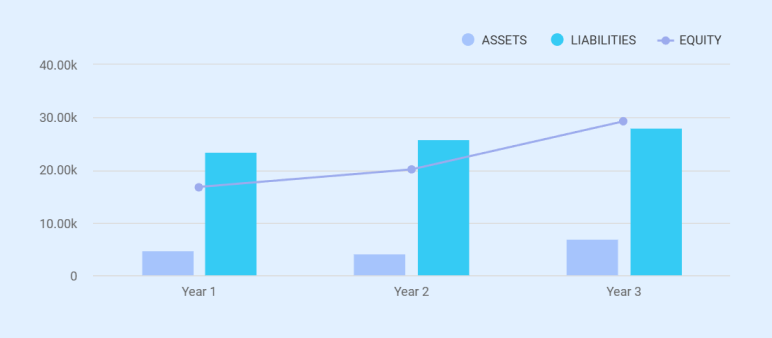
Balance Sheet (3 Years)
| Line Item | Year 1 | Year 2 | Year 3 |
|---|---|---|---|
| ASSETS | |||
| Current Assets | |||
| Cash | $4,820 | $4,128 | $6,953 |
| Accounts Receivable | $0 | $0 | $0 |
| Prepaid Expenses | $0 | $0 | $0 |
| Total Current Assets | $4,820 | $4,128 | $6,953 |
| Fixed Assets | |||
| Roll-Off Truck (Cost) | $95,000 | $95,000 | $95,000 |
| Roll-Off Containers (Cost) | $28,000 | $28,000 | $28,000 |
| Office & Dispatch Equipment (Cost) | $5,000 | $5,000 | $5,000 |
| Gross Fixed Assets | $128,000 | $128,000 | $128,000 |
| Less: Accumulated Depreciation | ($14,476) | ($31,847) | ($49,218) |
| Net Fixed Assets | $113,524 | $96,153 | $78,782 |
| TOTAL ASSETS | $118,344 | $100,281 | $85,735 |
| LIABILITIES | |||
| Current Liabilities | |||
| Accounts Payable | $1,562 | $2,000 | $2,125 |
| Current Portion of Loan | $21,830 | $23,819 | $25,988 |
| Total Current Liabilities | $23,392 | $25,819 | $28,113 |
| Long-Term Liabilities | |||
| Loan Payable — Long-Term | $78,163 | $54,344 | $28,356 |
| Total Long-Term Liabilities | $78,163 | $54,344 | $28,356 |
| TOTAL LIABILITIES | $101,555 | $80,163 | $56,469 |
| EQUITY | |||
| Contributed Capital | $40,000 | $40,000 | $40,000 |
| Retained Earnings | ($23,211) | ($19,882) | ($10,734) |
| Total Equity | $16,789 | $20,118 | $29,266 |
| TOTAL LIABILITIES + EQUITY | $118,344 | $100,281 | $85,735 |
Break-Even Summary
| Metric | Value |
|---|---|
| Monthly fixed costs (Year 2 basis, incl. depreciation & interest) | $6,683 |
| Variable cost per rental (COGS) | $205 |
| Revenue per rental | $640 |
| Contribution margin per rental | $435 |
| Contribution margin % | 68.0% |
| Monthly break-even revenue | $9,832 |
| Monthly break-even rentals | 15.4 |
| Annual break-even revenue | $117,982 |
| Annual break-even rentals | 184 |
| Year 2 actual rentals | 192 |
| Year 2 Net Income | $3,329 |
Loan Amortization Schedule
| Category | Year 1 | Year 2 | Year 3 | Year 4 | Year 5 |
|---|---|---|---|---|---|
| Opening Balance | $120,000 | $99,993 | $78,163 | $54,344 | $28,356 |
| Interest Paid | $9,710 | $7,888 | $5,899 | $3,729 | $1,362 |
| Principal Paid | $20,007 | $21,830 | $23,819 | $25,988 | $28,356 |
| Total Payment | $29,718 | $29,718 | $29,718 | $29,718 | $29,718 |
| Closing Balance | $99,993 | $78,163 | $54,344 | $28,356 | $0 |
The Quickest Way to turn a Business Idea into a Business Plan
Fill-in-the-blanks and automatic financials make it easy.

Vinay Kevadia
Vinay Kevadiya is the founder and CEO of Upmetrics, the #1 business planning software. His ultimate goal with Upmetrics is to revolutionize how entrepreneurs create, manage, and execute their business plans. He enjoys sharing his insights on business planning and other relevant topics through his articles and blog posts. Read more