


What makes a slogan actually work?
A slogan’s job is to say, in a handful of words, why someone should care. The best ones do one thing well instead of trying to cover everything: Nike’s “Just Do It” doesn’t mention shoes. It sells a feeling, not a product list.
Most slogans fail because they try to pack too much in. “Quality service, affordable prices, fast delivery, 24/7 support” isn’t a slogan, it’s a bullet list wearing a slogan’s clothes. Pick the one thing that actually differentiates you and build the line around that.
How to use this generator
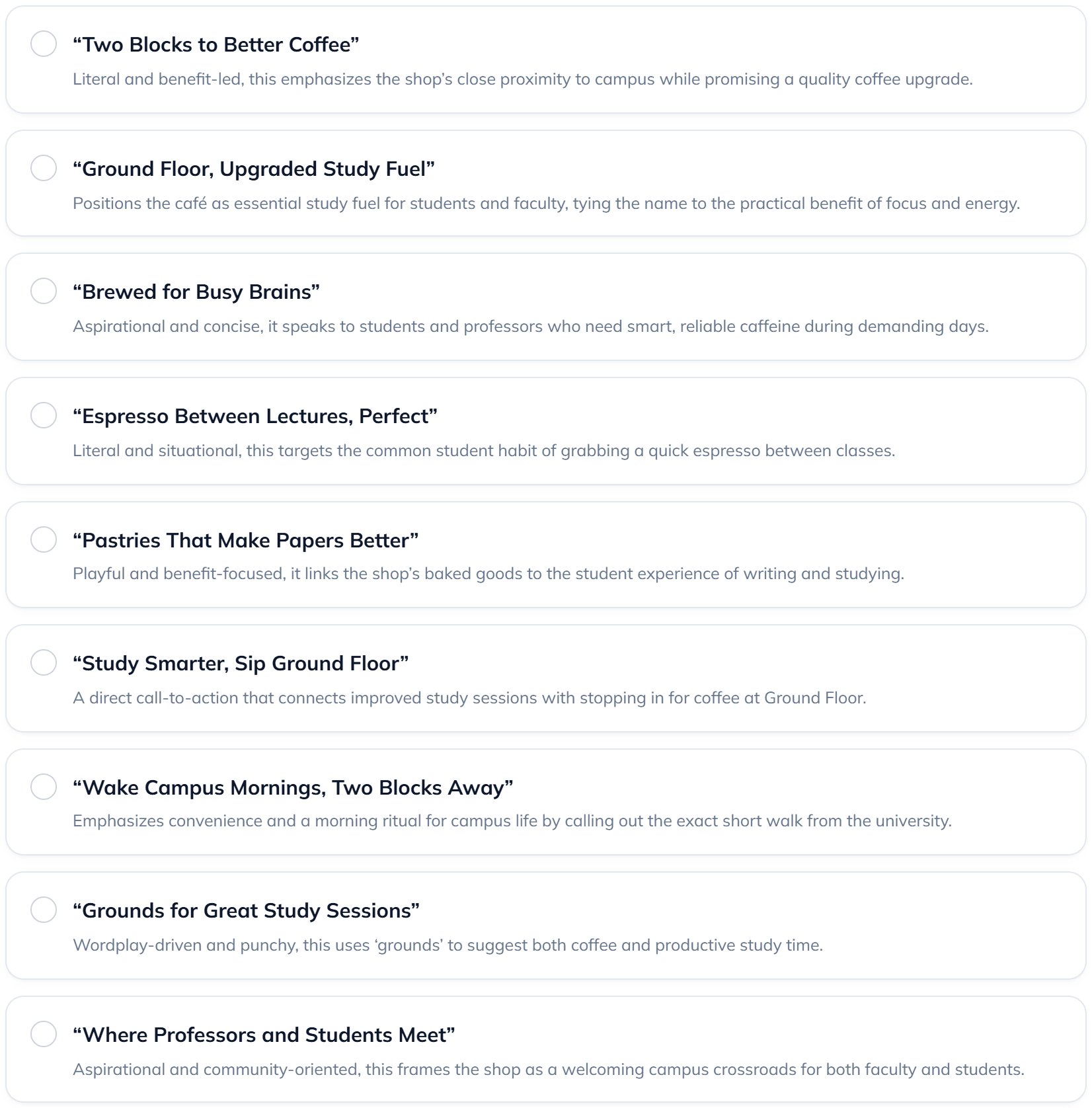
Describe your business and, if you can, what makes it different from competitors. “A bakery that only uses local, organic ingredients” gives the generator a real angle to work with. A generic description like “a bakery” will get you generic slogans back.
You’ll get several options. Read them out loud, not just on screen; a slogan that reads fine but is awkward to say rarely gets used in practice.
How to choose between your options
1. Say it out loud to someone else
If you have to explain what it means, it’s not working yet. A slogan should land on first hearing, without context.
2. Check it fits everywhere you’ll use it
A slogan that works on a storefront sign might be too long for a social media bio or a business card. Test it in the actual places it needs to live before you commit.
3. Make sure it ages with you
Avoid slogans tied to a trend, a specific year, or a product you might discontinue. “Cold Brew Done Right” is a problem if you stop selling cold brew.
Common slogan mistakes
Copying the structure of a famous slogan
“Just Grill It” next to “Just Do It” reads as derivative, not clever. Borrowed structure is obvious to anyone who’s seen the original.
Trying to be funny at the expense of being clear
A clever pun that requires explanation isn’t doing its job. If a slogan needs a follow-up sentence to land, it’s not ready.
Describing the business instead of the benefit
“We Sell Coffee” describes what you do. “Your Morning, Sorted” describes what the customer gets. The second one is a slogan; the first is a label.
A slogan works best alongside a clear value proposition that spells out in more detail what you offer and why it matters, and a business name it can sit next to on a sign or packaging.