


How to pick a business name that actually works
A good business name does three things: it’s easy to say and spell, it doesn’t box you into one product line if you plan to expand, and the matching domain or handle is actually available. Most failed name searches fail on that third point, not the first two.
Before you fall in love with a name, check it against your state’s business registry, the US Patent and Trademark Office’s trademark database, and the domain registrars. A name can be clever and still be unusable if someone else already owns it.
How to use this generator
Describe what your business does and who it serves in a sentence or two. “A mobile dog grooming service for busy pet owners” gives the generator more to work with than “dog business.” Industry and tone both shape the suggestions, so mention if you want something playful, professional, or somewhere in between.
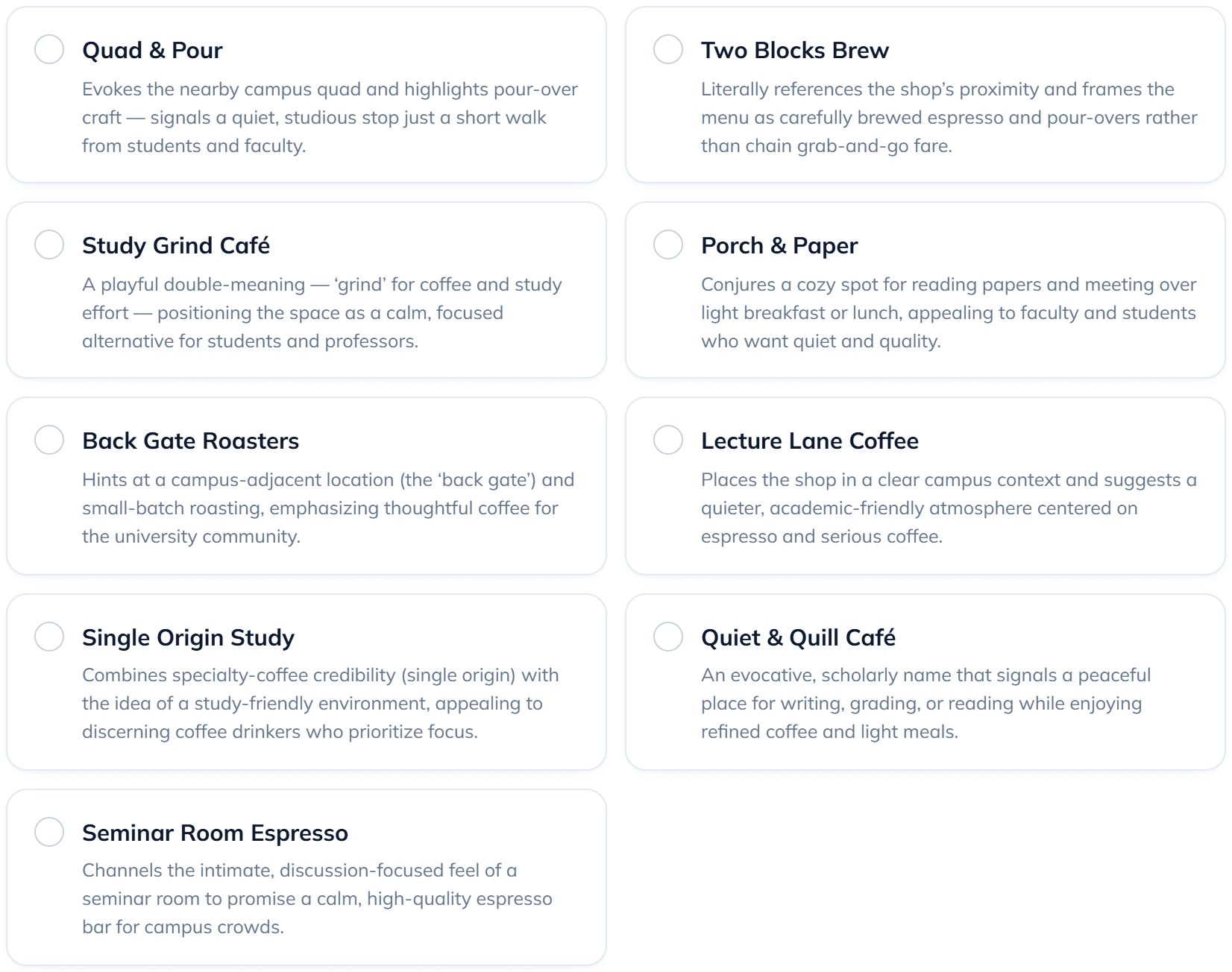
The generator returns a list of name options. Treat it as a shortlist to test, not a final answer; run your top 3-4 picks through the checks below before committing.
What to check before you commit to a name
1. Domain availability
A name with no reasonable .com or industry-appropriate domain available is harder to market online. Check this early, before you get attached to a name you can’t actually use as your web address.
2. Trademark conflicts
A quick search on the USPTO’s trademark database can save you from a rebrand six months in. This matters more if you plan to sell nationally or build a recognizable brand, less if you’re a strictly local service business.
3. How it sounds out loud
Say the name to someone who’s never seen it written down. If they ask you to spell it or mishear it as something else, that’s friction every customer will run into when trying to recommend you.
4. Room to grow
A name like “Portland Pizza Co.” works until you open a second location in a different city. A more general name gives you room to expand without a rebrand.
Common naming mistakes
Choosing a name that’s hard to spell from hearing it
If a customer who heard your name from a friend can’t find you by typing what they heard, you’re losing referral traffic before it reaches you.
Picking something too close to a competitor
Beyond the legal risk, a name too similar to an established competitor means customers may credit your work to them, or find them instead when searching for you.
Skipping the social handle check
A business name is unusable in practice if the matching handle is taken on every platform you plan to use. Check this alongside the domain, not after.
Once you have a name, the next step is usually pairing it with a slogan that explains what you do, and writing a mission statement that explains why.