


What a buyer persona is actually for
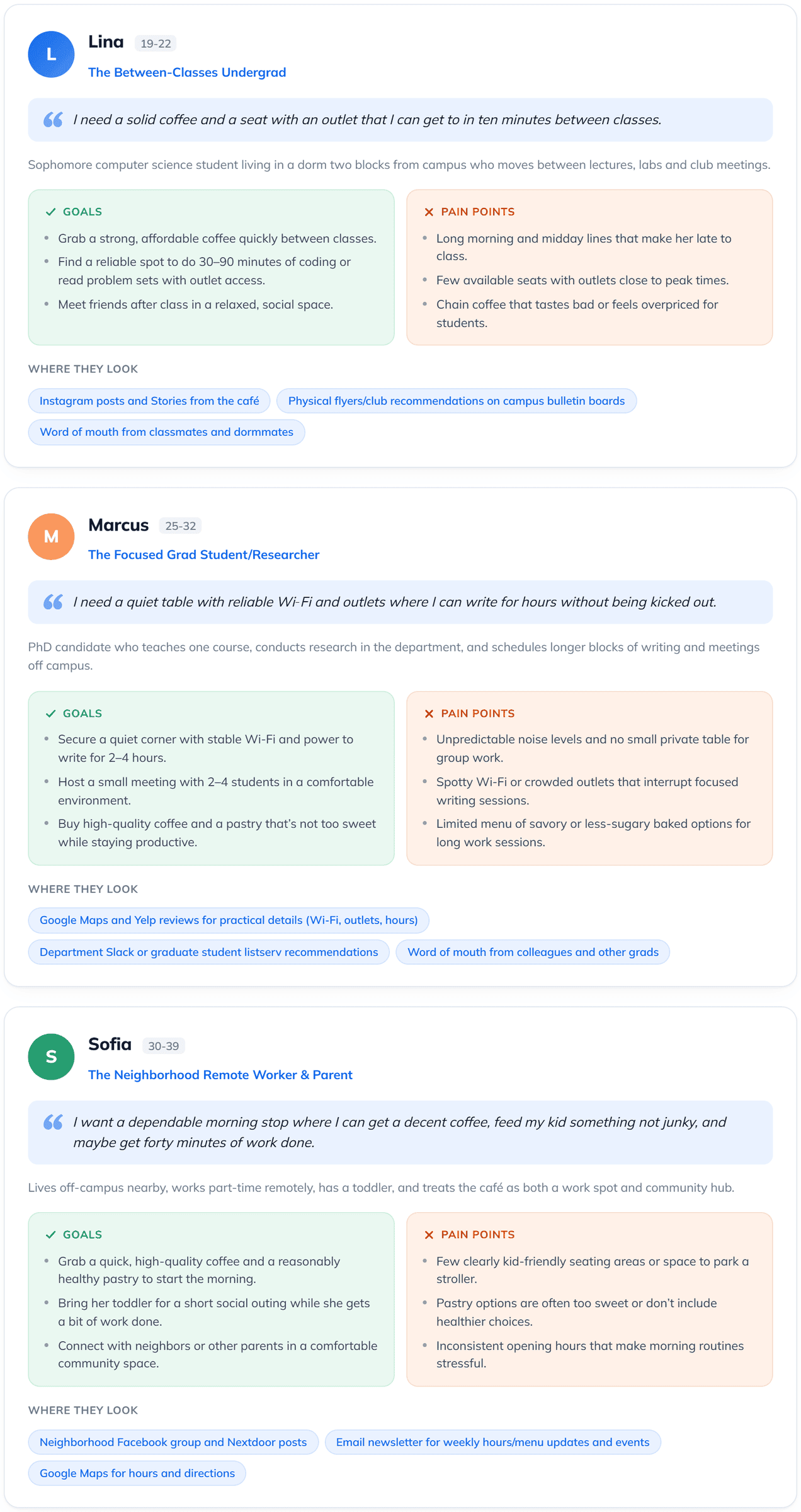
A buyer persona is a composite sketch of your real customer, built from actual data and conversations, not a guess. Its job is to make marketing and product decisions easier by giving everyone on the team the same specific person to think about, instead of a vague idea of “our customers.”
A persona that just lists demographics, age, income, location, isn’t very useful on its own. The useful part is behavior: what problem are they trying to solve, what have they already tried, what makes them decide to buy, and what makes them hesitate.
How to use this generator
Describe who you believe your typical customer is: their role, their situation, and the problem that brings them to you. “A small restaurant owner with 1-3 locations who’s frustrated with manual inventory tracking” gives the generator a real starting point.
The output is a draft persona to refine with real data over time, not a finished profile. If you already have customers, check the persona against what you actually know about them and adjust anything that doesn’t match.
How to build out a persona with real data
1. Talk to 5-10 actual customers
Ask what problem they were solving, what else they considered, and what almost stopped them from buying. These answers matter more than demographic details and are usually where the real insight is.
2. Look for patterns, not individuals
A persona isn’t one real customer, it’s the common thread across many. If your customers split clearly into two different groups with different needs, that’s often a sign you need two personas, not one blended one.
3. Update it as your business changes
Your earliest customers are often different from the customers you serve once the business matures. A persona built in year one and never revisited can send year-three marketing in the wrong direction.
What to do with a buyer persona once you have one
Write marketing copy to the persona, not to everyone
Copy written for “small business owners” in general is vague. Copy written for “a restaurant owner tired of counting inventory by hand at midnight” is specific enough to actually connect. Use it to shape the channels and messaging in your marketing plan.
Use it to sharpen your value proposition
Once you know specifically who you’re serving and what they’re frustrated by, your value proposition gets easier to write, because you’re no longer guessing what matters to them.
Use it to guide product decisions
When you’re unsure whether a new feature is worth building, ask whether your persona actually needs it, not whether it’s technically interesting to build. This keeps the roadmap tied to real demand.