


What a competitor analysis actually tells you
A competitor analysis isn’t about copying what others do well. It’s about finding the gap between what customers want and what’s currently available, so you know where to position your business. The useful output isn’t a list of competitor features; it’s a list of what none of them are doing yet.
Looking at three competitors who all offer “fast, friendly service” tells you that’s table stakes, not a differentiator. The real finding is usually in what customers complain about across all of them in reviews, since that’s the gap an new entrant can actually win on.
How to use this generator
Enter your business or industry and, if you know them, the names of a few direct competitors. The more specific the input, the more useful the comparison; “mid-size CRM software for real estate agents” works better than “software company.”
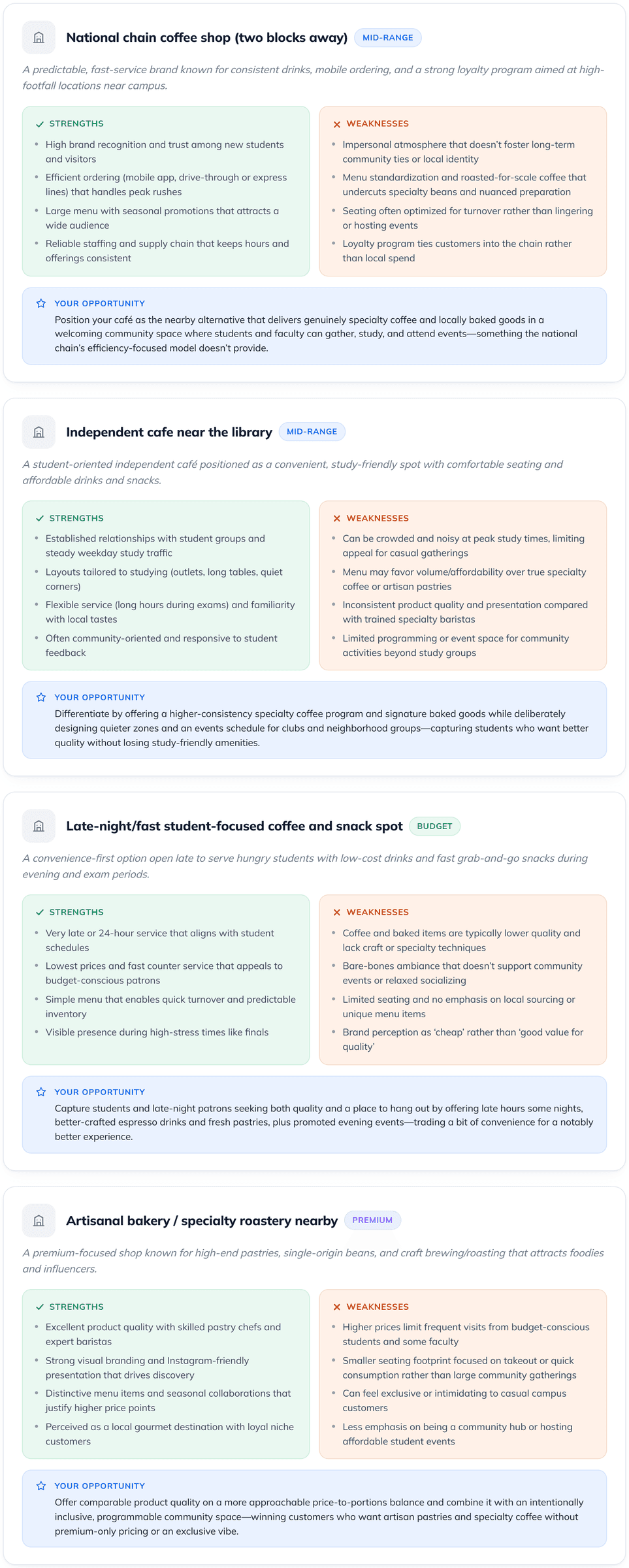
The generator returns a structured comparison across common factors like pricing, positioning, and apparent strengths and weaknesses. Treat this as a starting framework, then go verify the specifics yourself. The generator can’t read a competitor’s actual customer reviews or pricing page in real time.
How to do deeper competitor research
1. Read their negative reviews, not just their website
A competitor’s marketing tells you what they want you to believe. Their 2 and 3-star reviews tell you what’s actually true for real customers, which is usually the most useful research you can do.
2. Check their pricing structure, not just the headline price
Many businesses advertise a low starting price that doesn’t reflect what most customers actually pay once add-ons, tiers, or minimums are factored in. Compare total realistic cost, not headline numbers.
3. Look at what they’re not offering
A gap in a competitor’s offering, a customer segment they ignore, a feature they don’t have, a price point they skip, is often more valuable to find than a feature you could copy.
What to do with the analysis
Position against the gap, not the competitor
“Better than Competitor X” is a weak position because it’s relative and can change. “Built specifically for solo founders” is a strong position because it’s about your own clear identity, regardless of what competitors do next.
Revisit it regularly
Competitor positioning shifts. A business that has gaps in its targeting today may close them in six months. Treat competitor analysis as something to repeat, not a one-time exercise. The gaps you find here are exactly what feeds the opportunities and threats side of a SWOT analysis.
Feed it into your pricing and positioning decisions
If your competitor analysis shows everyone charging a similar price, that’s a signal about what the market will bear, useful whether you choose to match it, undercut it, or charge more and justify why.
Once you understand where you stand against competitors, a clear value proposition helps turn that position into language customers actually respond to.