


How to actually evaluate a business idea
A business idea is only as good as the demand behind it. Before you get attached to an idea, ask three questions: Does a real problem exist that people are already trying to solve another way? Can you reach the people who have that problem? Can you deliver the solution for less than people are willing to pay for it?
An idea can sound exciting and still fail all three tests. A mobile app for a problem nobody actively searches for, or a product that requires a sales channel you don’t have access to, rarely survives contact with the market, no matter how good the execution is.
How to use this generator
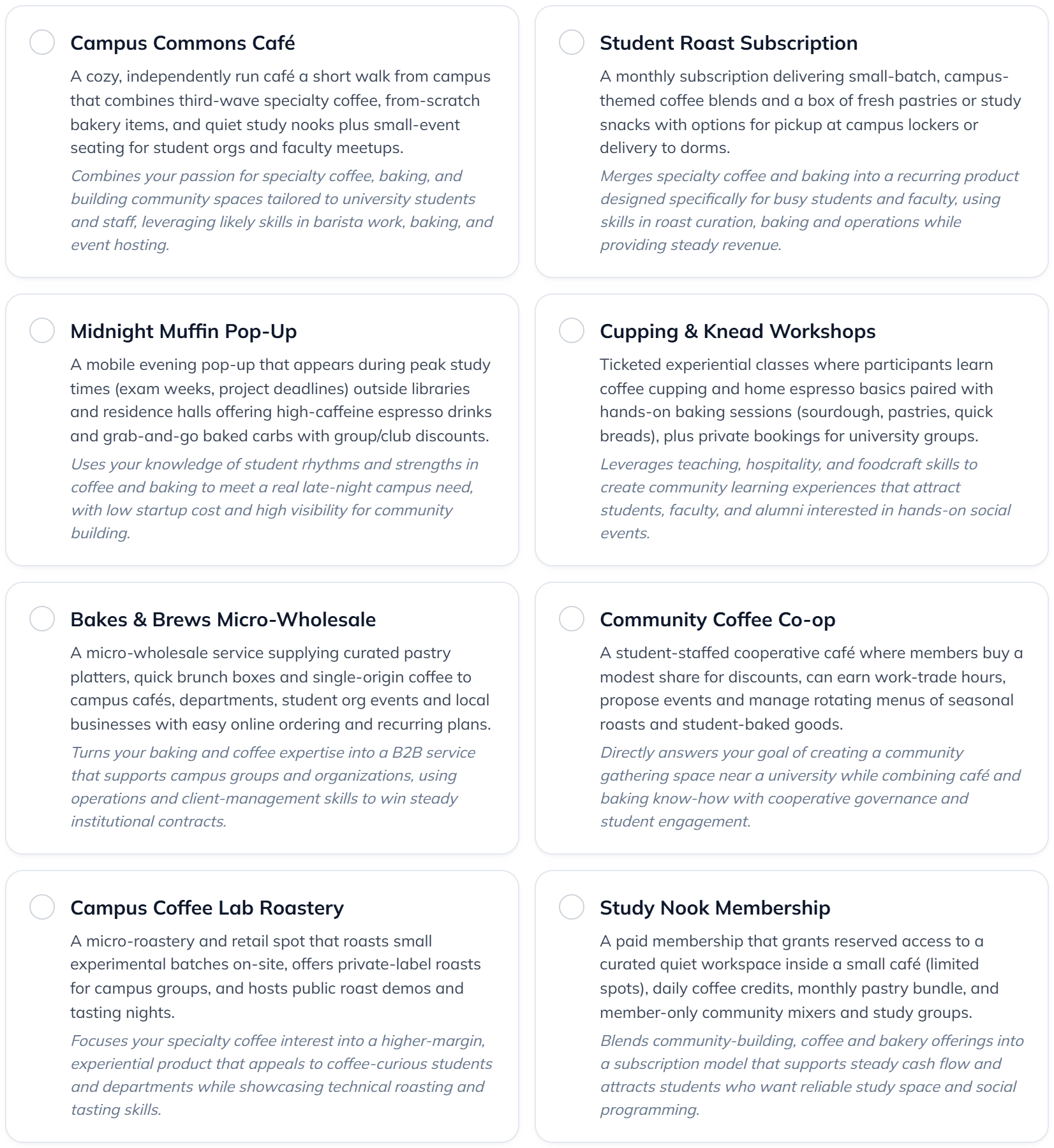
Tell the generator your interests, skills, or the type of business you’re considering, as specifically as you can. “Something in sustainable fashion for a solo founder with a design background” returns more useful ideas than “a business.”
Use the output as a starting list to research, not a decision. Pick two or three ideas that interest you and run them through the evaluation steps below before committing time or money.
How to validate an idea before you commit
1. Check if people are already searching for it
Tools like Google Trends or a basic keyword search tell you whether people are actively looking for a solution like yours. No search volume at all is a warning sign, not proof the idea is bad, but it means you’ll need to create demand, not just capture it.
2. Talk to 10 potential customers before building anything
Not friends and family. People who actually fit your target customer. Ask about the problem, not your solution; let them tell you how they currently solve it (or don’t) and what they’d pay for something better.
3. Estimate your startup costs before you fall in love with the idea
Some ideas that sound cheap on paper require licensing, equipment, or inventory that changes the math entirely. Know the real number before you decide.
4. Find your break-even point
Once you have rough costs and a price in mind, calculate how many sales you’d need to cover your costs each month. If that number is wildly out of line with realistic demand, that’s worth knowing now. Once an idea clears these checks, turn it into a business name so you can start testing it with real people.
Common mistakes when picking a business idea
Chasing a trend instead of a problem
Trendy categories attract a lot of competition fast. A smaller, less exciting idea solving a real, specific problem often has an easier path to actual customers.
Skipping the math
An idea that’s fun to work on but doesn’t clear a reasonable profit margin after costs isn’t a business, it’s a hobby with invoices. Run the numbers before you commit.
Assuming you need to be first
Being first to a market matters less than being better at solving the specific problem. Plenty of successful businesses entered crowded markets and won on execution, not novelty.