


What is labor cost?
Labor cost is the total amount a business spends on an employee. It includes wages and all other costs needed to keep that person working.
Why is it more than just wages?
An employee paid $22/hour usually costs $28 to $32/hour. The extra $6 to $10 comes from added costs, not just wages.
There is a 7.65% payroll tax on every paycheck. That is about $1.68/hour on $22 wages. Workers’ compensation adds around 1–2%. Health insurance can cost $500 to $700 per month. Paid time off adds about 4–6%. Retirement benefits add more.
In the first year, hiring also includes extra costs. Job ads, interview time, and onboarding can cost $3,000 to $5,000 before the employee starts producing work.
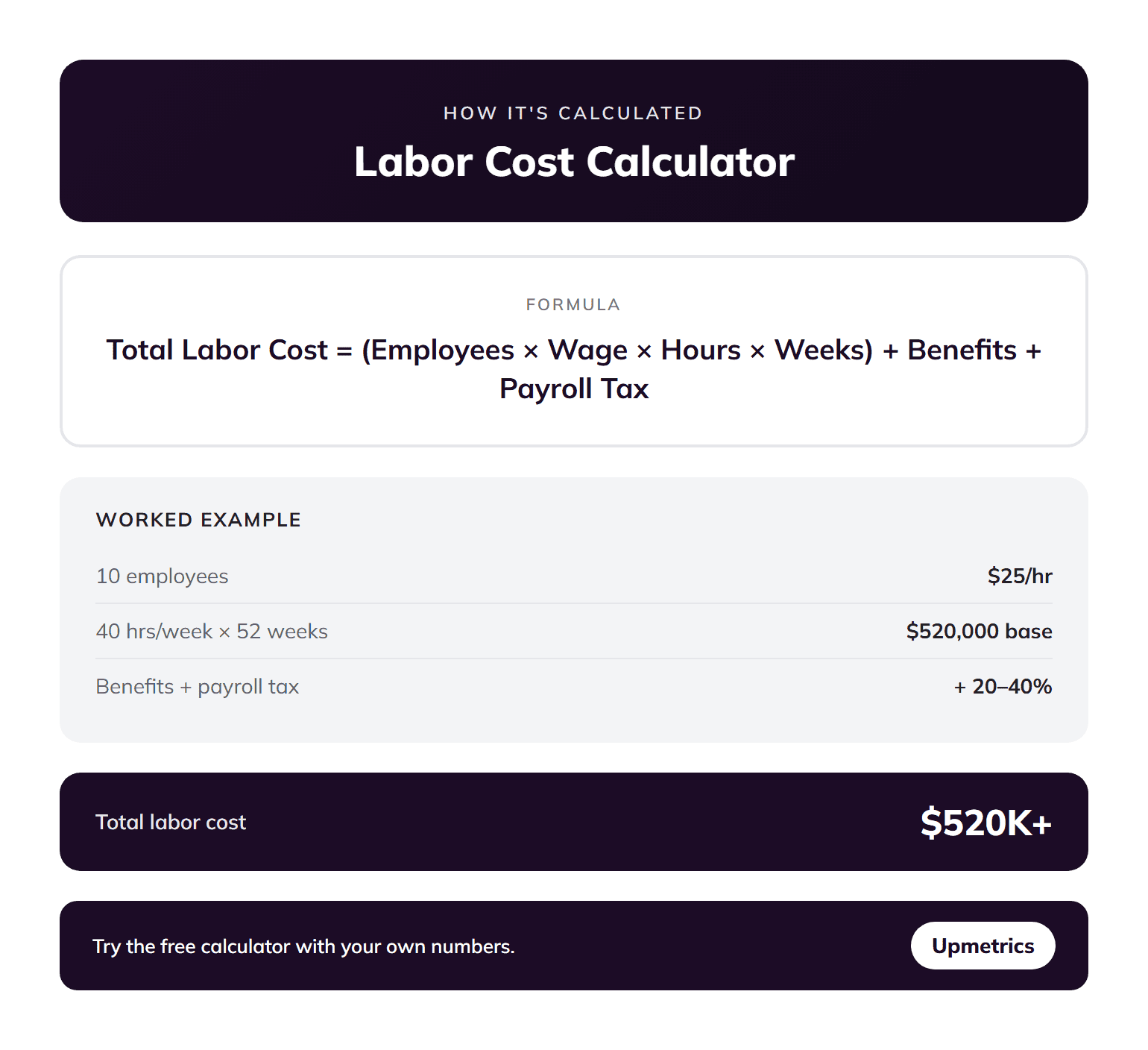
How to use this calculator?
Calculate the total cost of your employees using the inputs below.
- Number of employees: Add the total number of employees. The calculator result will show the total cost and the cost per employee.
- Average hourly wage: Enter the hourly pay. For salary, divide yearly pay by 2,080 hours.
- Hours per week and weeks per year: Use actual work hours. Full-time is usually 40 hours and 52 weeks. Adjust if part-time or seasonal.
- Overtime pay: Enter yearly overtime per employee. Overtime is paid at 1.5× the hourly rate for hours above 40 per week.
- Benefits percentage: Enter benefits as a percentage of wages. Most businesses fall between 20% and 30%, depending on coverage.
- Payroll tax rate: Start with 7.65% for FICA. Add state unemployment tax, which varies by state and business history.
How to manage labor costs without cutting staff?
When labor costs climb, most businesses look at headcount first. That is rarely where the real problem sits.
Check overtime before anything else. A team regularly working overtime usually points to a shift structure issue, not a shortage of staff. Adjusting how hours are spread across the week often brings overtime down without touching the payroll.
Cross-training is another practical option. An employee who can cover two roles means the business does not need outside help every time someone is absent. Temporary staff cost more per hour and take time to settle in before they are useful.
Where workload shifts week to week, running a mix of full-time and part-time staff gives better cost control. Full-time staff carry the full benefits load. Part-time staff usually do not. That difference has a real impact on the cost per hour worked.
For short-term or specialist work, a contractor often works out cheaper than a full-time hire even at a higher hourly rate. No benefits, no payroll taxes, no paid leave. The total for a defined piece of work tends to come in lower. If you are planning staffing, tools like Upmetrics let you model different combinations and see the cost impact before making any commitments.