


How to use the startup cost calculator
The startup cost calculator will help you estimate how much money you need to start your business.
Here is what you have to do:
- Enter the costs that you have to pay one time for your business like the equipment you need to buy the cost to set up your business and the licenses you have to get for your business.
- Then enter the costs that you have to pay every month for your business like the rent for your office the salaries of your employees and the software you have to buy for your business.
- You should also add any costs that you will have to pay for your business like the money you will spend on marketing or the cost of the inventory you need to buy for your business.
The startup cost calculator will then show you the startup cost, for your business and how much money you need to start your business before you actually begin your business with the startup cost calculator.
How to estimate your startup costs?
Startup costs are the expenses you pay before your business opens. These costs help you get the business ready to start.
The calculator groups startup costs into four parts.
Business setup costs are one-time expenses before opening. This includes equipment, furniture, registration fees, licenses, permits, and your website. For example, a food truck owner may spend $15,000 on the truck, $800 on permits, and $500 on a website.
Product and inventory costs include items needed before the first sale. This may include starting inventory, packaging, supplies, and shipping setup. Service businesses may not have these costs.
Marketing and launch costs are the expenses used to bring in your first customers. This can include early promotions and starting advertising.
Monthly operating costs are expenses your business pays every month after opening, such as rent, employee pay, software, and utilities.
The calculator shows your total one-time costs, monthly costs, and the minimum money needed before starting.
What counts as a startup cost?
Startup costs are the expenses needed to prepare your business before it begins operating.
Common startup costs include:
- Business registration and legal fees
- Licenses and permits
- Equipment and tools
- Computers or software
- Initial inventory or supplies
- Website or branding setup
- Lease deposits or office setup
- Initial marketing or advertising
What doesn’t count as a startup cost?
Not every expense is considered a startup cost.
Some expenses are ongoing operating costs, which means they happen after the business starts running. Examples include:
- Monthly rent
- Employee salaries
- Utilities
- Regular inventory restocking
- Ongoing marketing costs
Startup costs happen before or at the launch of the business, while operating expenses continue during normal operations.
What to do with your startup cost estimate?
Once you know your estimated startup costs, you can use that number to plan your next steps.
1. Plan your funding
Your startup cost estimate indicates the amount of money that you require before the business begins. Knowing this number will enable you to determine the funding source, whether it’s personal savings, a bank loan, investors, or family aid.
2. Determine if your idea is viable
Analysis of your startup costs will show whether your business idea fits your budget. When it is expensive, it might require you to switch plans, cut some costs, or start small and then expand later.
3. Prepare your financial plan
The start-up costs are a major aspect of your financial plan. They indicate the amount of money required to start the business and where the money will be spent initially.
4. Set financial expectations
Knowing your startup costs helps you plan how long the business may take to recover those expenses. This will assist you in setting your sales target and budgeting within the initial months.
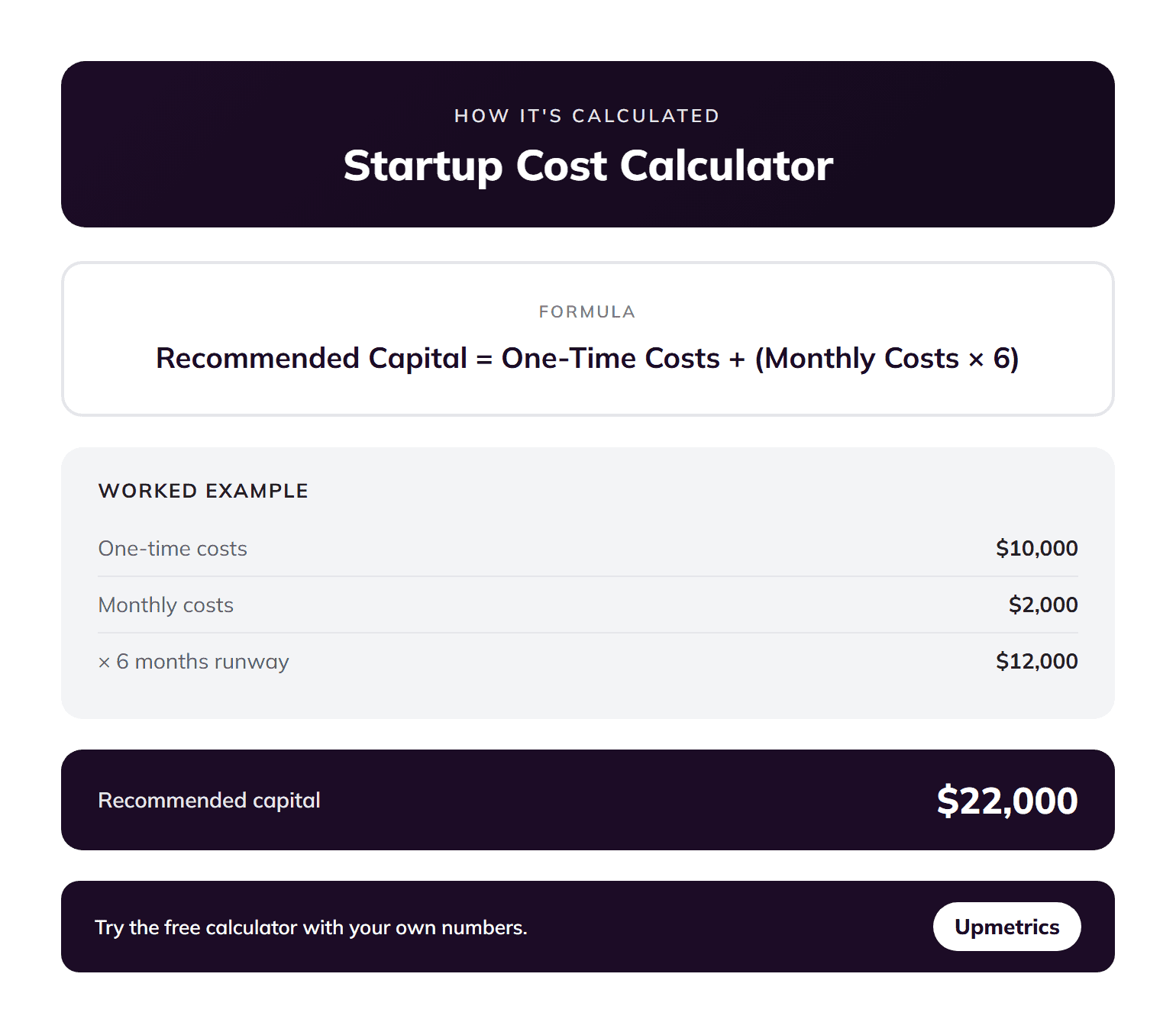
Startup cost formula
You can also calculate your startup cost manually:
Total startup cost = One-time costs + (Monthly costs × Number of months)
For example:
- One-time costs = $10,000
- Monthly costs = $2,000
- Runway = 6 months
Total startup cost = 10,000 + (2,000 × 6) = $22,000. You need $22,000 to start and run your business for 6 months.