


What a value proposition actually is
A value proposition answers one specific question for a customer: why should I buy from you instead of doing nothing, or instead of going to a competitor? It’s not your mission, and it’s not a tagline. It’s the clearest, most specific statement of the benefit you deliver.
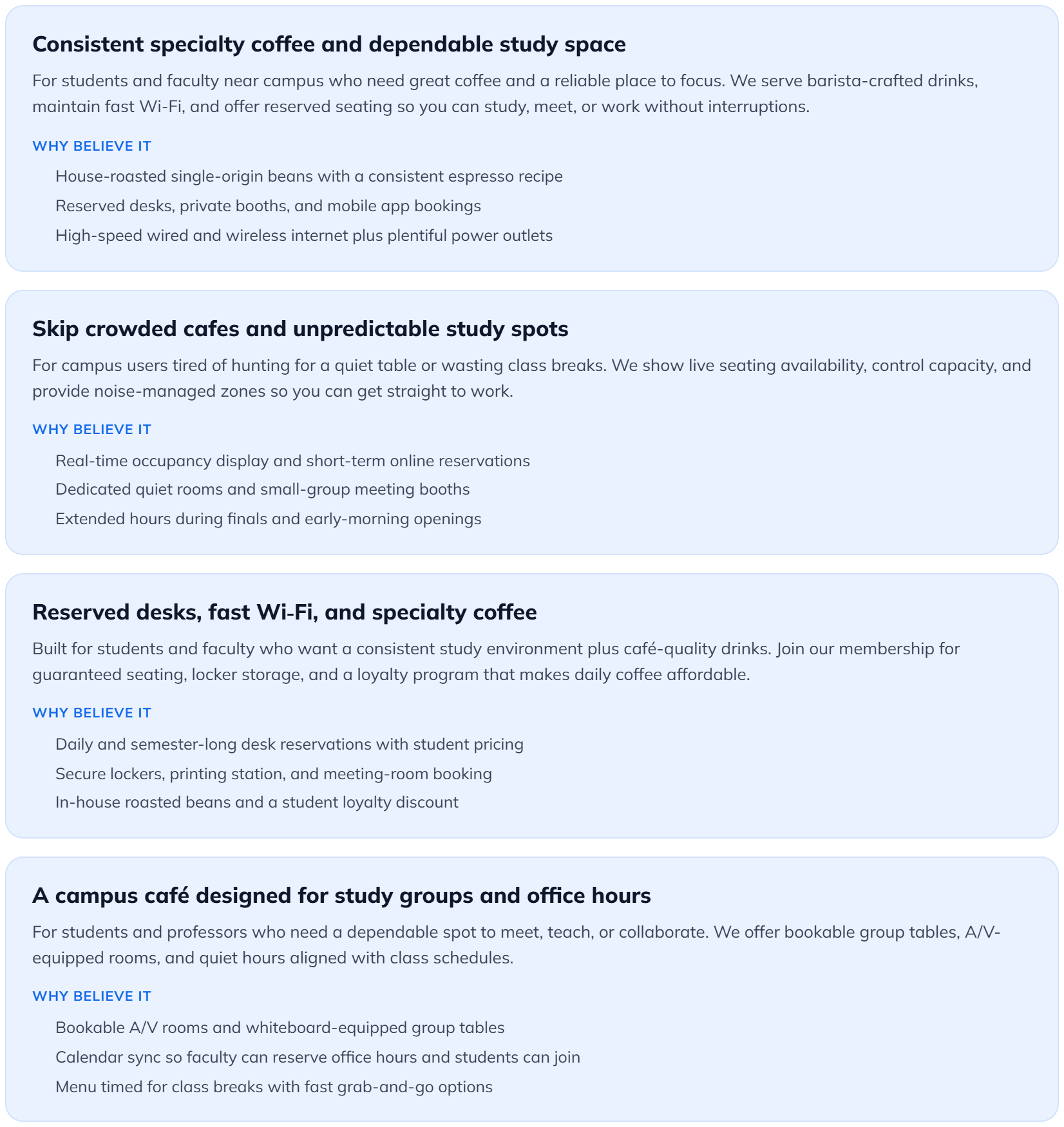
A strong value proposition names the customer, the problem, and the outcome. “We help overwhelmed small business owners get their books done in under an hour a month” does all three. “We provide quality accounting services” does none of them.
How to use this generator
Describe your product or service, who it’s for, and what problem it solves. The more specific you are about the customer and the problem, the sharper the result. “Meal kits for busy parents who want to cook but run out of time” gives the generator more to work with than “a food delivery business.”
You’ll get a few draft options. Pick the one that sounds most like something a real customer would say back to you if you asked “why did you buy this,” and refine from there.
How to sharpen a value proposition
1. Name the specific customer, not everyone
A value proposition trying to appeal to “anyone who needs X” usually appeals to no one strongly. Naming a specific customer, their situation, their frustration, makes the message land harder with the people who actually match it.
2. Lead with the outcome, not the process
Customers care less about how your product works than what it does for them. “AI-powered scheduling software” describes the process. “Never double-book a client again” describes the outcome. Lead with the second one.
3. Make it specific enough to be falsifiable
“We’re fast” means nothing. “We respond to support tickets in under 2 hours” is a real claim a customer can test, which makes it both more persuasive and more honest.
Where to put your value proposition
Above the fold on your homepage
This is the first thing a visitor should read, before scrolling. If someone leaves your site after 5 seconds, your value proposition is the only thing they’ll have seen.
In your sales conversations
Your value proposition should be the answer you give in the first 30 seconds when someone asks what you do, not buried three sentences into a longer explanation.
In your business description and investor materials
A business description explains what you do broadly. Your value proposition is the sharper, customer-facing version of that same idea, built to persuade rather than just inform. Once it’s sharp, compress it further into a slogan for anywhere you don’t have room for a full sentence.