


When you’re starting or running a small business, I know it can feel like there’s always something else you’re supposed to have in place. A business plan, funding, a website, accounting software, insurance, marketing tools, employees, and the list keeps growing.
But the reality is, you probably don’t need everything at once. And when time and money are limited, trying to do too much can mean spending on things that are not important yet while overlooking what the business actually needs.
What matters is knowing what you need now, what will help you get started and operate better, and what can reasonably wait.
In this guide, I’ll break down the essential needs of a small business and help you decide what to focus on based on where your business is today.
Small business needs at a glance
Every small business is different, but the basics it needs to work are largely the same. What changes is how much attention each one needs and when.
Here are the 9 essentials to have on your radar:
| Your business needs | Why it matters |
| Customer demand | To know there are enough people who genuinely want what you sell |
| A workable offer | To sell something customers value at a price that works for the business |
| A practical business plan | To understand how the main parts of the business fit together |
| Enough cash | To cover startup costs and keep operating while sales build |
| The right legal, tax, and insurance setup | To operate properly and avoid preventable risks |
| A reliable way to deliver what you sell | To deliver your product or service consistently |
| A clear path to attract and keep customers | To generate enough sales and repeat business |
| System for keeping control of the money | To know where the money is going and whether the business is healthy |
| Enough help to handle the workload | To keep important work from falling behind as the business gets busier |
So focus on the areas that matter most for your business right now.
The 9 essential needs of a small business
Let’s look at what each of these needs means in practice, what you should check, and when it deserves your attention.
Enough customer demand
Before you spend too much time or money on the business idea, check that enough people genuinely want what you plan to sell.
At this stage, the goal is simple: confirm that a real market exists and is big enough to make the business worth pursuing. Full validation comes later.
How do I know there’s enough demand for my business?
If you’re still validating the idea, look for real signs that enough potential customers already have this need, or already buy similar products or services elsewhere.
Four ways to check that:
- Talk to potential customers. Ask how they solve the problem today. What do they use? What frustrates them? What would make them switch?
- Study similar businesses. Read their customer reviews. What are people praising? What are they complaining about? Complaints are often the clearest opportunities.
- Test on a small scale. Run a pilot, a limited launch, or a preorder if it fits your business. I’d rather see 10 real preorders than 500 people saying they’d “definitely buy” in a survey.
- Check the size of your reachable market. Are there enough potential customers in the area or market you can realistically serve?
The SBA recommends looking at market size, customer characteristics, location, and market saturation when you assess an opportunity. All four questions come back to the same thing: is there room for you here?
If you’re already operating, your own results give you stronger evidence than any of the above. Look at enquiries, sales, repeat purchases, customer feedback, and any clear seasonal patterns.
A workable offer
Once you know there is enough demand, make sure your particular offer gives customers a good reason to buy and can make enough money for the business.
Start with the customer side. They should be able to understand:
- What they are getting
- What value they get from it
- Why they would choose it over others
- Whether the price feels reasonable for the value they receive
Then check the business side. Estimate the main cost of making or delivering each sale.
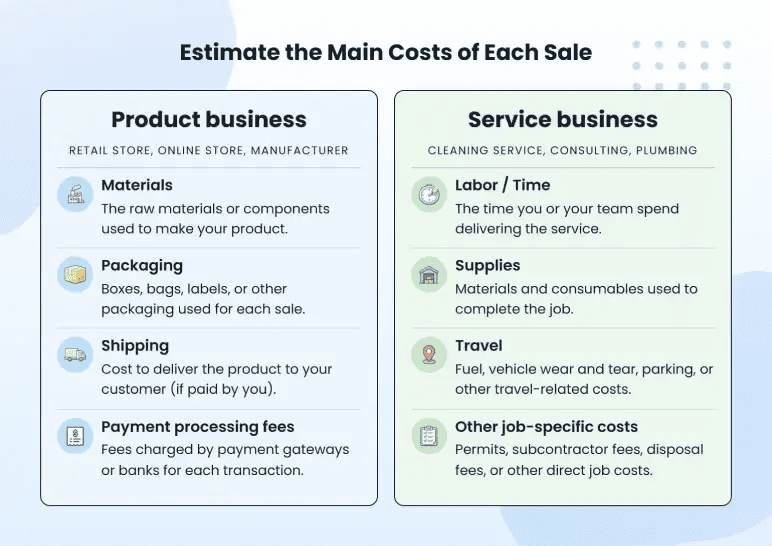
Once you have a rough idea of the offer and its costs, see how customers actually respond to it.
If you are pre-launch, look for real buying signals. A booking, deposit, preorder, or purchase tells you much more than someone simply saying they like the idea.
If you are already operating, you have better evidence. Look at whether customers are actually buying at your current price and how much money is left after you cover the main cost of delivering each sale.
For example, a cleaning service charges $150 per visit and spends about $120 on labor, supplies, and travel. Only $30 is left for the other costs of running the business. That may be a sign to rethink the price, what is included in the service, or how much it costs to deliver.
A practical business plan
Once the basic idea and offer look promising, you need a way to bring the main parts of the business together and see whether they actually work as a whole.
That is the practical purpose of a business plan.
It does not have to be long or complicated. A small owner-run business may only need a short working plan, while someone applying for a loan or seeking investors may need much more detail.
At a minimum, it should help you answer:
- What are you trying to achieve?
- Who do you plan to serve?
- What are you selling and how will the business make money?
- What major costs and resources will you need?
- How do you expect to attract customers?
- What sales and financial results do you want to achieve?
The important part is checking whether those decisions support each other.
Suppose you expect to serve 100 customers a month, but your current setup may only allow you to handle 60. Or the sales you expect may not be enough to cover the costs you have planned for.
That is where planning becomes useful. It helps you spot gaps early and adjust before they become bigger problems.
Enough cash to start and keep operating
A business needs enough cash not only to get started, but also to keep paying its bills while sales build or customer payments are still coming in.
Start by separating your cash needs into two parts:
(1) Startup costs
What you need to spend to get the business ready to operate, such as equipment, deposits, licenses, initial inventory, initial marketing, or website setup.
(2) Working capital
Cash you keep available to pay regular expenses when the money coming into the business is not enough yet, or does not arrive at the same time as your bills.
To get a realistic idea of how much cash you may need:
- Estimate what you need to spend upfront.
- Work out what the business normally costs to run each month.
- Estimate how much cash you realistically expect to come in and when.
- Allow some room for slower sales or unexpected costs.
If the money coming in does not cover what you need to pay, the difference is the cash gap you need to cover with your own funds or financing.
This matters after launch too. A slow season, late customer payments, a large purchase, or an unexpected expense can temporarily leave an otherwise healthy business short on cash.
Here, I’d add: a simple cash flow forecast can help you see when money is expected to come in, when bills are due, and where those shortages might happen. Hence, make sure the business has enough cash to keep operating smoothly.
The right legal, tax, and insurance setup
Every small business needs to follow the rules that apply to it. But those rules are not the same for everyone.
What you need depends on what your business does, where it operates, and whether you have employees. For example, a home-based consultant has far fewer requirements than a restaurant or a retail store.
Here’s what to check:
Business setup: Pick the right business structure like a sole proprietorship or LLC, and register it if your state requires it.
Taxes: Find out if you need an EIN, whether you have to collect sales tax, and what federal, state, or local tax responsibilities apply.
Licenses and permits: Check whether you need permission to operate based on your location or type of business.
Insurance: Get insurance coverage for the risks your business actually faces. Skip the ones that don’t apply.
Employment requirements: If you hire people, expect additional payroll, tax, insurance, and employment rules.
Contracts and industry rules: Some businesses need contracts with customers or suppliers, or industry-specific rules to follow.
You should also review these requirements as your business changes. Moving to a new location or adding a new service can create new legal, tax, insurance, or licensing responsibilities.
If you’re unsure about something important, I’d recommend you pay for an accountant, attorney, insurance professional, or the relevant government agency rather than guess.
A reliable way to deliver what you sell
Once customers start buying, you need a simple and reliable way to make sure they get what you promised.
What this looks like depends on the business. For example:
- A cleaning service needs supplies, transportation, scheduling, and job tracking.
- An online store needs inventory, packaging, shipping, and a return process.
- A consultant may only need scheduling, contracts, and invoicing.
The easiest way to check your setup is to follow one order or job from start to finish:
Customer places an order or books → work is prepared → product or service is delivered → payment is collected→ follow-up happens
Then look for anywhere the process regularly slows down or breaks. That’s the spot to fix first.
You do not need complicated systems from day one. calendar, checklist, spreadsheet, or basic software may be enough while the business is small.
But if appointments get missed, orders run late, stock keeps running out, invoices get forgotten, or customers are getting inconsistent service, your delivery process probably needs attention.
A clear path to attract and keep customers
Even if people want what you sell, they still need to discover your business, feel confident buying from you, and know how to take the next step.
Start with where your target customers are most likely to find a business like yours. That could include:
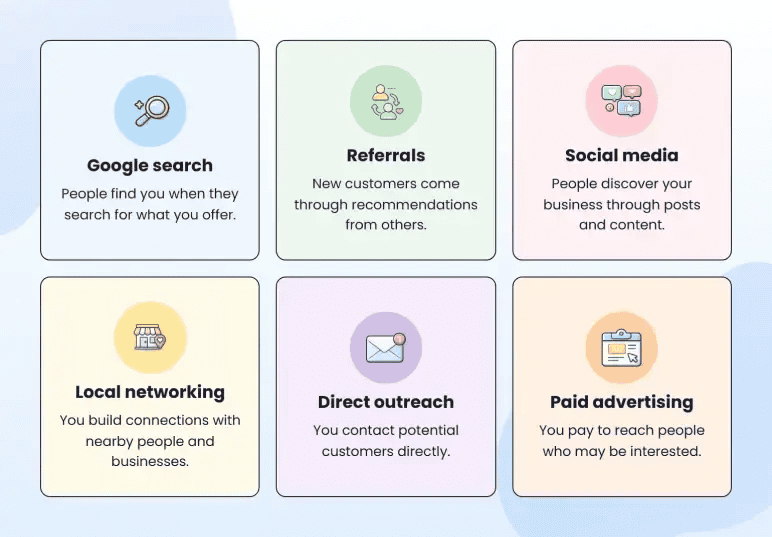
For many small businesses, a simple website can also help. It can show what you offer, where you operate, how to contact you, and how to buy, book, or request a quote.
But you may not always need a full website from the beginning. Depending on the business, a Google Business Profile or marketplace listing may be enough to get started.
So, pick one or two channels most likely to reach your customers, and track which ones actually bring enquiries or sales. Trying to be everywhere at once is how most first-year businesses waste their marketing budget.
How to make it easy for interested people to buy?
Look at what happens after someone finds you. Can they easily understand what you offer, what it costs, and what they should do next?
Make sure the basics are in place:
- Clear pricing or quotes
- Reviews or proof
- Quick responses to enquiries
- Easy booking, checkout, or follow-up
If plenty of people find your business but very few actually buy, the problem is usually the offer or the buying process rather than attracting more people.
Once customers start coming in, don’t put all your energy into finding new ones. Good service, follow-up, reviews, referrals, reminders, and making it easy to buy again all bring in more business from the customers you’ve already won.
System for keeping control of the money
Having enough money to start a business is one thing. Knowing what happens to that money once the business is running is another.
You should know how much money is coming in, where it is going, whether the business is making a profit, and how much cash is available to pay upcoming bills.
Start by keeping business and personal money separate and recording your sales and expenses. If you send invoices, keep track of what customers still owe you. You should also know what bills and taxes are coming up so they do not catch you by surprise.
You do not need to track dozens of financial figures. For most small businesses, it is enough to keep a close eye on:
| Watch | What it tells you |
| Sales | How much the business is bringing in |
| Expenses | What the business is spending money on |
| Profit | What is left after expenses are paid |
| Cash balance | What money you actually have available |
Checking these numbers regularly helps you spot problems earlier. For example, sales may be increasing, but higher costs or late customer payments could still leave the business short of cash.
The aim is not to become a finance expert. It is to understand your numbers well enough to know how the business is doing and make better decisions about spending, pricing, hiring, or growth.
Enough support to handle the workload
A small business does not automatically need employees. Many businesses can start and operate successfully with just the owner.
But as the workload increases, you need to recognize when doing everything yourself is starting to hurt the business.
Some signs include:
- You are turning away work you could take on
- Customer replies or important tasks keep getting delayed
- Quality starts slipping when things get busy
- Admin work takes too much time away from customers or paid work
- You are doing specialist work that would be better handled by someone with the right skills
When that happens, first identify what work is creating the problem.
Then decide what kind of help makes sense. You might use a freelancer or contractor for specialist work, outsource routine admin tasks, bring in part-time help, or hire an employee if the need is ongoing.
Together, these nine areas cover the main foundations a small business relies on to operate, serve customers, manage its money, and keep moving forward.
Which small business need should you focus on first?
What deserves your attention first depends on where your business is today and what still needs to be figured out.
If you have not launched yet
Start by making sure there is enough demand and that your offer gives people a good reason to buy.
Once the idea looks promising, I’d say shift your attention to getting the business ready to operate. That usually means putting together a practical plan, working out how much cash you need, completing the required legal setup, and making sure you can actually deliver what you plan to sell.
You do not need every tool, system, or employee in place before opening. Focus first on what is necessary to start serving customers properly.
If the business is already operating
At this point, look at what is causing the biggest problem in the business.
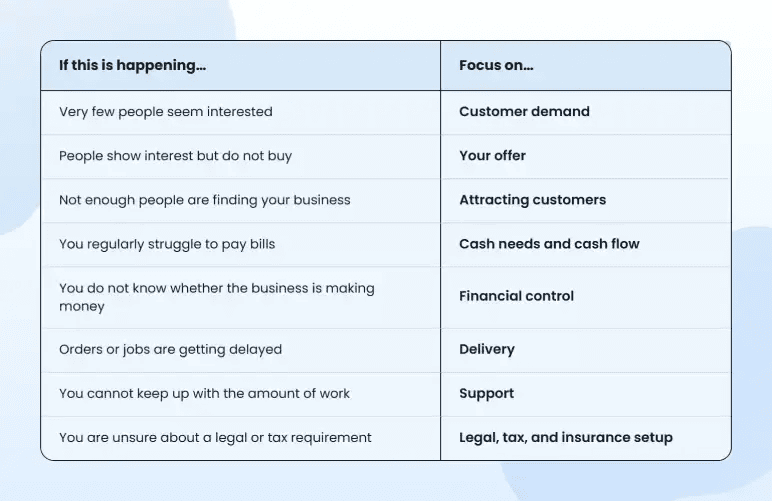
If several of these apply, start with the one that could hurt the business most if you leave it unresolved.
Conclusion
Overall, these nine needs cover the main foundations a small business depends on, from proving there is enough demand and making the numbers work to serving customers reliably and keeping the workload manageable.
But you do not need to fix everything at once. Start by looking at each area and ask yourself:
Is this working well, does it need attention, or can it wait?
Then choose one clear action for the area that needs attention most.
Work on that first, then revisit the other needs as the business changes. That way, you can keep improving the business without adding more cost, complexity, or work than you actually need.
Turn Your Small Business Needs Into a Clear Plan
Plan your goals, resources, and finances in one place with easy-to-use tools.

Frequently Asked Questions
Do online and local small businesses need the same things?
What does a small business not need from day one?
What if I can’t afford everything my business seems to need?

William Ranieri
William Ranieri is an experienced business consultant specializing in entrepreneurship, executive training, and leadership development. He helps clients find better ways to improve communication, balance growth with budget demands, and build stronger teams. With 40 years of interviewing and coaching, he shares practical strategies that make business challenges easier to handle and support long-term success. Read more