You have an idea for your Etsy shop. Maybe you’ve already made a few products, checked what similar shops are charging, and thought about selling your own.
But before you launch, there are a few things to figure out:
- How much inventory should you prepare?
- What should you charge after Etsy fees, materials, and shipping?
- And how many orders will you need to make a profit?
That’s where a business plan can help.
To show you what one looks like, I’ve created a sample plan for GoodHour Craft Kits, a fictional Etsy shop selling beginner needlepoint kits from a home studio in Raleigh, North Carolina.
You can use it as a reference to plan your own Etsy shop’s products, operations, and finances.
Executive Summary
Jenna Marlowe taught art in Wake County middle schools for 12 years. Since 2022, she has also taught about 110 adults to stitch needlepoint in evening classes.
In January 2027, she will open GoodHour Craft Kits, an Etsy shop that sells needlepoint and craft kits adults can finish on their own. She will run it from a home studio in Raleigh, North Carolina.
GoodHour’s mission is to make needlepoint easy to start and satisfying to finish for adults who have never stitched before. Its buyers will be first-time stitchers who want a calm, screen-free hobby, gift buyers, and hosts planning a group night at home.
Demand for a First Kit
More adults are looking for a first kit. Etsy saw a 175% rise in U.S. shopper activity for beginner needlepoint kits in the three months to February 10, 2026, compared with a year earlier.
This is why GoodHour leads with a beginner kit instead of canvases for experienced stitchers.
The shop will sell three products, each with free U.S. shipping:
- Beginner Needlepoint Kit ($58): A small design with everything needed to finish it
- Themed DIY Kit ($38): A quick seasonal project, such as a set of ornaments
- Craft-Night Bundle ($189): Six matching coaster kits for a group, or $31.50 per guest
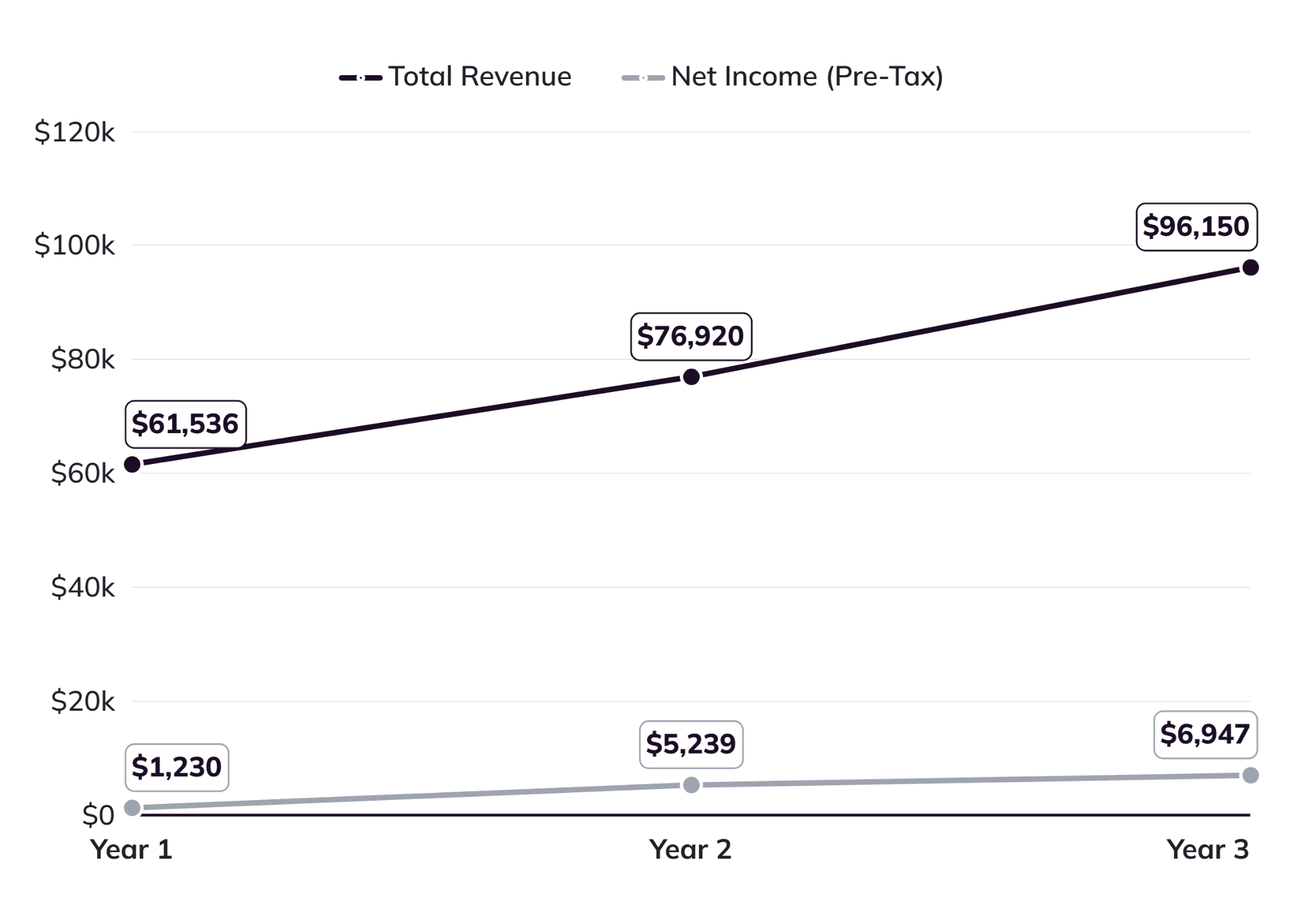
Sales, Profit & Cash
| Category | Year 1 | Year 2 | Year 3 |
|---|---|---|---|
| Kits sold | 960 | 1,200 | 1,500 |
| Total Revenue | $61,536 | $76,920 | $96,150 |
| Gross Profit | $36,430 | $45,323 | $56,384 |
| Net Income (Pre-Tax) | $1,230 | $5,239 | $6,947 |
| Ending Cash | $10,640 | $12,983 | $16,523 |
Loan & Use of Funds
Jenna is asking for an $18,000, 6-year SBA microloan from Larkfield Community Loan Fund at 10.5% interest, or $338.02 per month. The loan covers the whole startup budget:
- $3,150 of studio, shipping, and photo equipment
- $3,000 of components for the first kits
- $5,400 of designs, branding, shop setup, launch ads, and legal work
- $480 of insurance and a $5,970 cash reserve
GoodHour has not sold a kit yet. It will open with a 75-kit test batch and buy more stock only after each test passes. Jenna adds no cash of her own, and she will personally guarantee the loan.
Writing Building business plans takes weeks?
Let AI write your first draft in minutes

Company Overview
GoodHour Craft Kits is a home-based Etsy business in Raleigh, North Carolina. Jenna Marlowe registered the company as a single-member LLC in December 2026. This keeps business debts separate from her family’s assets. Jenna will run the business with help from a part-time assembler.
Here are the main business details:
- Owner: Jenna Marlowe owns 100% of the business.
- Address: Private mailbox at Fairbrook Commons, 2016 Fairview Road, Suite 104, Raleigh, NC 27608
- Studio: A converted spare bedroom in the family’s Five Points home
- Sales channel: GoodHour sells only on Etsy, to buyers across the U.S.
About the Founder
Jenna has stitched needlepoint for 15 years. Her six-week beginner classes taught her why most new stitchers quit: the thread tangles, the colors are hard to tell apart, the canvas warps without a frame, and the instructions assume too much.
Jenna designed GoodHour’s kits around those problems. Thread comes cut and wound on numbered cards, stretcher bars come in the box, and a QR code links to short video lessons. Jenna keeps each beginner design small enough to finish in a few evenings.
Jenna’s vision is for GoodHour to become a go-to brand for people trying needlepoint for the first time, whether they’re stitching alone or with friends.
Launch Plan & Demand Tests
GoodHour will start with a small batch of kits before spending more money on inventory. Jenna will use early sales and customer feedback to decide when to expand.
January–February 2027: Test the market
After finalizing three beginner designs, Jenna will launch the Etsy shop with 75 kits. By February 28, she aims to sell at least 45 and check whether buyers can complete the projects without extra help. She will also host two small craft nights to test the kits with beginners.
March–August 2027: Expand carefully
If the first test goes well, Jenna will introduce eight beginner designs, three themed kits, and a bundle. In August, she will review summer sales before buying inventory for the holidays.
December 2027–2029: Grow sales
GoodHour aims to sell 960 kits in 2027, 1,200 in 2028, and 1,500 in 2029, while keeping inventory purchases in line with demand.
Market Analysis
Most people who buy a GoodHour kit will never have stitched before. The shop’s market is adults across the U.S. who want an easy first project, people who buy kits as gifts, and friends who want to craft together.
Market Demand
As mentioned earlier, Etsy shoppers’ interest in beginner needlepoint kits rose 175% in early 2026. These buyers want a simple way to start, which is why GoodHour sells small printed designs with the tools included.
People also want the whole project in one box. At Michaels, the national craft store chain, guided craft kit sales rose 86% year over year, and searches for craft nights rose 103%. GoodHour answers both with complete kits and a bundle made for a group night.
Online craft sales are a large, steady market. U.S. online hobby and craft supply sales are expected to reach $25.3 billion in 2026, and online sellers have been moving from raw materials toward all-in-one kits like GoodHour’s.
Etsy gives a new shop access to buyers it couldn’t reach on its own. The marketplace had 86.5 million active buyers and 5.6 million active sellers at the end of 2025. With that many sellers, GoodHour keeps to one clear niche: adults who are new to needlepoint.
Target Customers
GoodHour sells to people trying needlepoint for the first time, shoppers looking for creative gifts, and those planning craft activities with friends. The shop also hopes to bring customers back with new and seasonal designs.
GoodHour’s four main customer groups are:
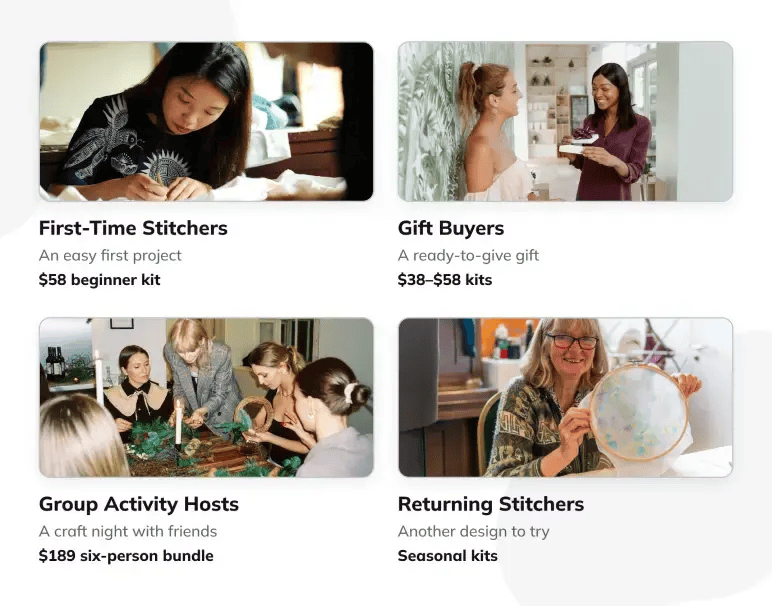
First-Time Stitchers
These buyers are mostly women aged 25 to 45 who want something calm to do with their hands in the evening instead of scrolling. They often find needlepoint through a video.
They need a project they can finish without a class. Jenna designed the $58 beginner kit for them, with video help for each stitch.
Gift Buyers
Gift buyers shop for a friend, sister, or mother who has always wanted to try needlepoint. They buy mostly from October to December and before birthdays and Mother’s Day.
They choose between the $38 and $58 kits and want the box to look like a gift when it arrives. To make sure it does, every kit ships in a kraft box with tissue and a care card.
Group Activity Hosts
Hosts plan a book club, birthday, bridal shower, or team social at home and want an activity every guest can do.
They usually order two to three weeks ahead. The $189 Craft-Night Bundle gives them six matching kits, a host guide, and a video to stitch along with.
Returning Stitchers
These are buyers who finished a first kit and want the next design or a seasonal project. GoodHour expects them to bring about 8% of shop visits in 2027. A code for the next kit in every box and a simple email list will help this group grow each year.
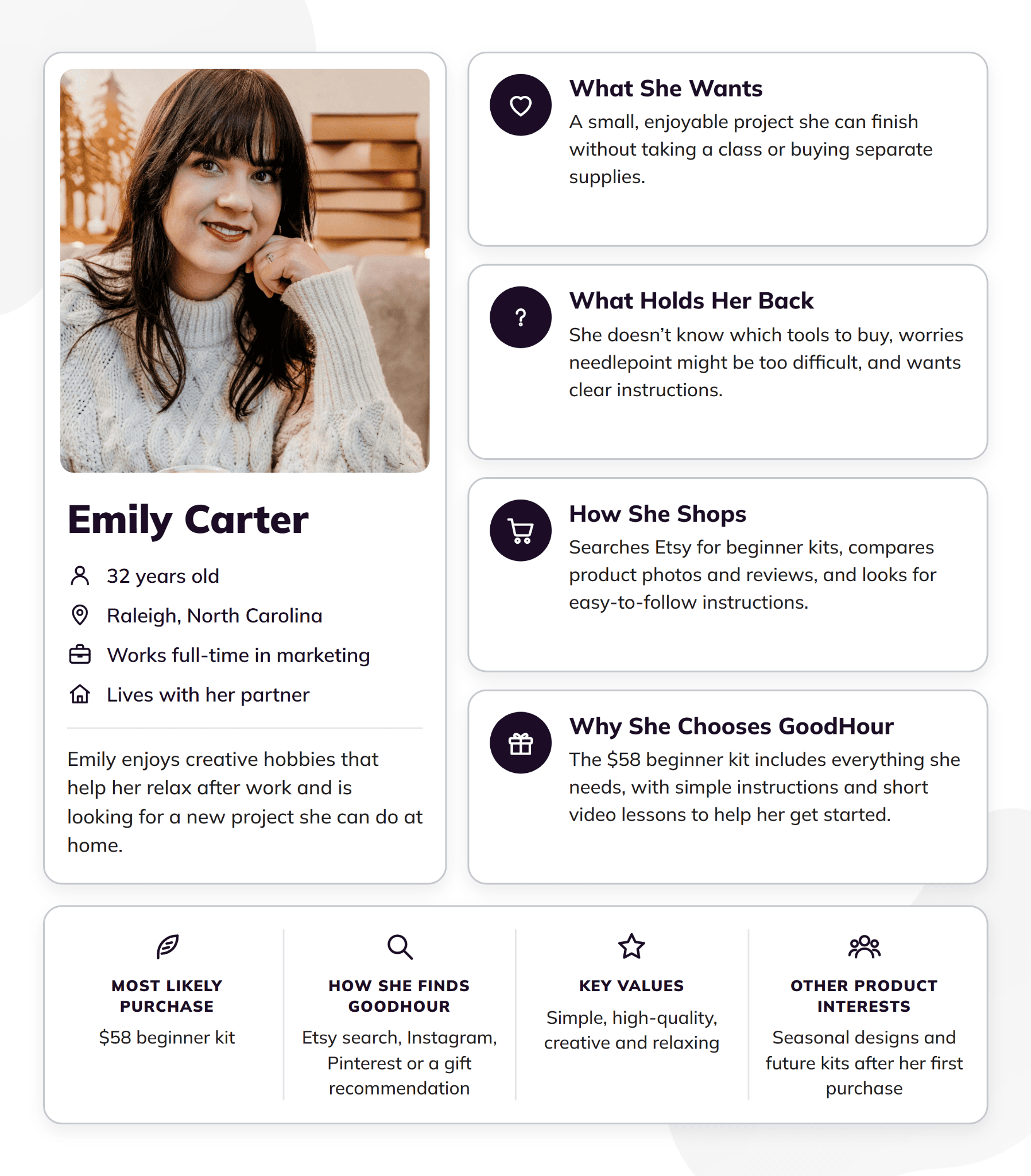
To understand how these customers might choose a kit, Jenna has developed a sample buyer profile based on the type of shopper GoodHour wants to reach.
Buying Seasons
Craft kits are gifts and winter projects, and their sales follow the calendar. GoodHour expects October to December to bring 52% of its 2027 kits, 500 of 960, with 219 in December alone.
The rest of the year has smaller peaks:
- January and February, when people start a new hobby (from 2028, once the shop has reviews)
- April and May, for Mother’s Day gifts and spring designs
- June to August, the slowest months
These seasons set GoodHour’s ordering calendar. Jenna starts ordering holiday components in mid-September, a month before sales rise.
Competitive Analysis
A first-time stitcher on Etsy can choose between kits under $20 and hand-painted canvases over $100.
GoodHour’s direct competitors are other sellers of beginner needlepoint kits. Its indirect competitors are other ways people take up a calm, hands-on hobby, from store-bought kits to stitch events.
Here’s how the three main competitors compare.
| Competitor | Price Range | Strengths | Weaknesses |
|---|---|---|---|
| Thimblecrest Kits | $38-$48 | Thousands of Etsy reviews Strong search visibility |
No frame included Printed instructions without video lessons |
| Ivywick Needlepoint | $60-$70 | Well-known designs Attractive packaging |
Larger projects take around 20 hours Less suitable for first-time stitchers |
| Mossgate Canvas Studio | From $100 | High-quality hand-painted canvases Offers some beginner designs |
Thread and stretcher bars sold separately Beginners must choose supplies themselves |
Buyers can also meet the same need in other ways:
- Mass-market cross-stitch, embroidery, and needlepoint kits at big craft stores and online marketplaces, for $15 to $30
- Local needlepoint shops and classes, which offer in-person help but sell hand-painted canvases
- “Sip and stitch” events at bars and studios, for $40 to $65 per person
- Other screen-free hobby kits, such as paint-by-number, punch needle, and crochet
Competitive Positioning
GoodHour sits between cheap kits that frustrate beginners and premium canvases priced for experienced stitchers. Jenna sizes its designs for a first project, and the frame, carded thread, and video lessons come in every box.
The bundle gives hosts a craft night at $31.50 per guest, below the $40 to $65 of a hosted event. Jenna’s four years of teaching beginners shape every kit and video. GoodHour won’t sell hand-painted canvases or try to match the lowest Etsy prices.
Thimblecrest will stay cheaper and better known for years, and Ivywick has the stronger name among experienced stitchers. GoodHour aims at a narrower group: buyers who want a first project they can finish. It needs about 100 kit sales a month from them by 2028.
Kits & Pricing
GoodHour sells three kinds of kits, each built for a different buyer and designed to be finished. Every kit includes free U.S. shipping and leaves the studio within one to three business days.
(1) Beginner Needlepoint Kit
This is GoodHour’s main product, designed for people trying needlepoint for the first time.
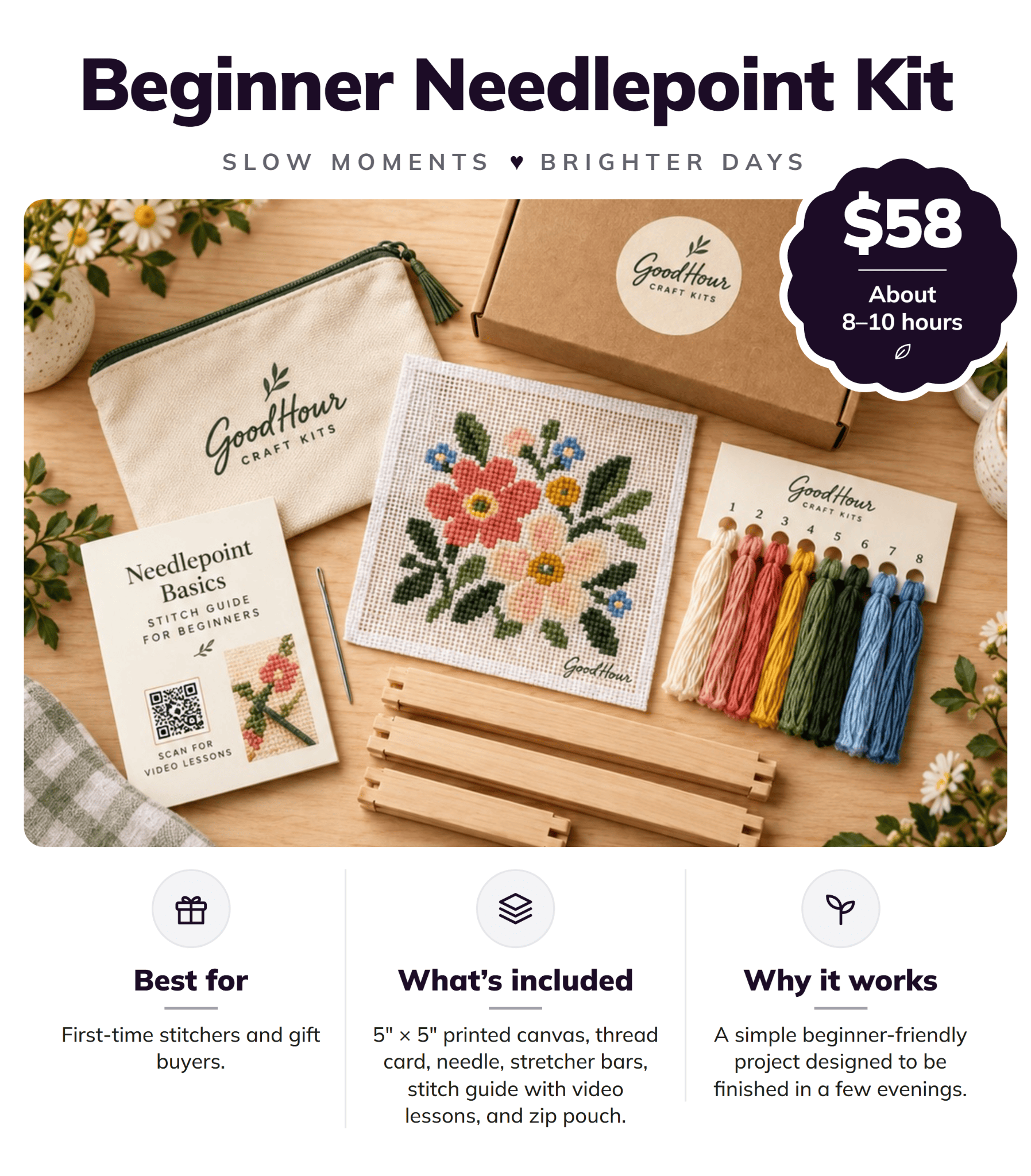
Jenna keeps the designs small and uses simple stitches so beginners can finish their first project without feeling overwhelmed. The kit comes with everything they need, including video lessons for anyone who gets stuck.
(2) Themed DIY Kit
These kits give customers a quicker, lower-priced project and a reason to return for new designs.
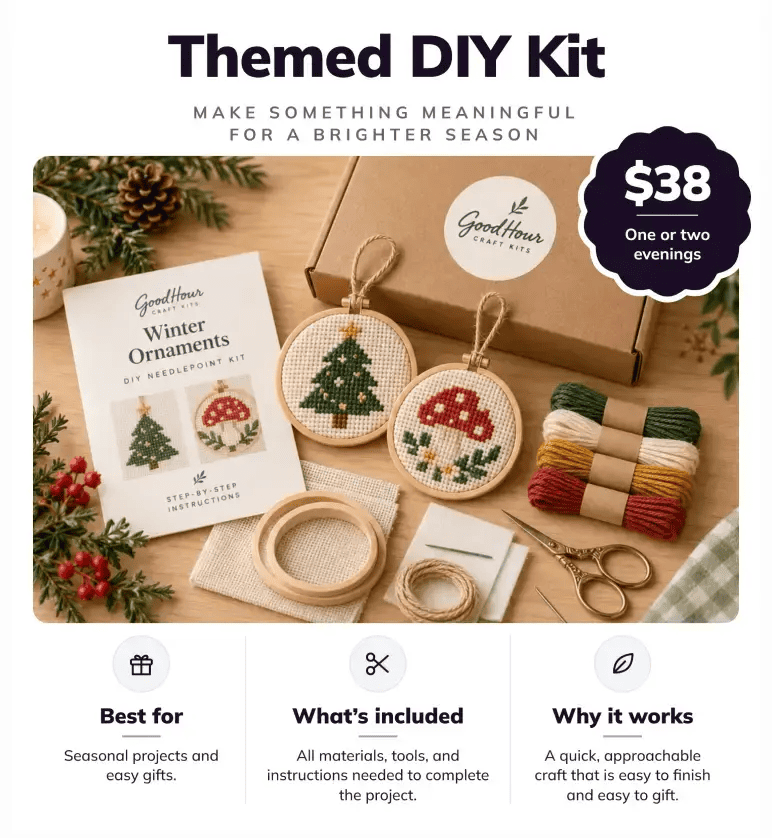
GoodHour launches with needlepoint ornaments, punch-needle coasters, and felt wildflower garlands. The selection changes throughout the year, with holiday-themed projects introduced before the gift-buying season.
(3) Craft-Night Bundle
This bundle is designed for people planning birthdays, book clubs, bridal showers, or small gatherings.
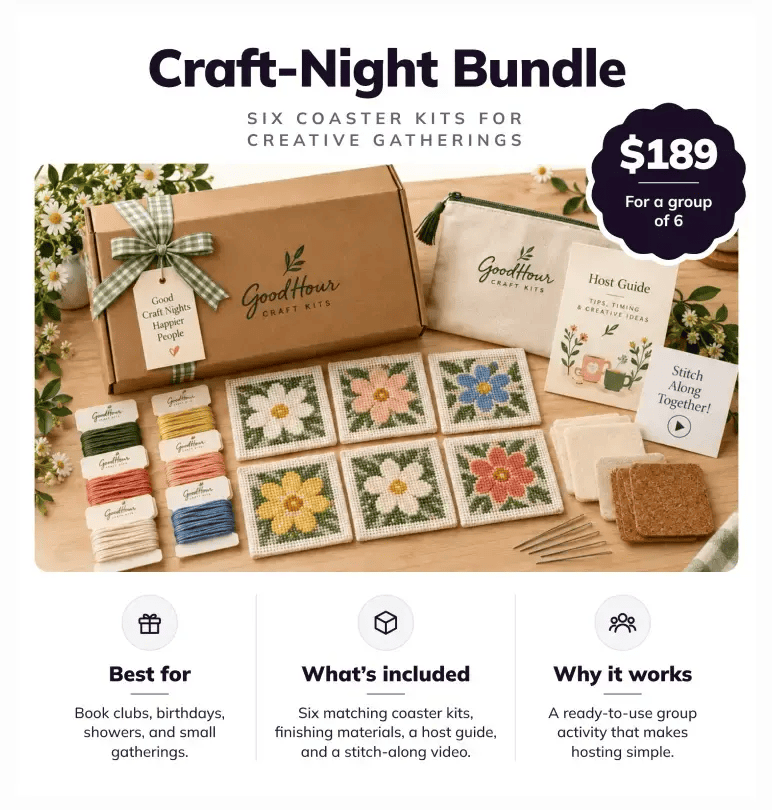
Instead of asking guests to bring their own supplies, the host receives six matching kits and a video everyone can follow together. This makes it easier to organize an activity, even when guests have never tried needlepoint.
Beginner Support
Jenna films the beginner lessons herself, showing customers how to start, stitch, change colors, correct mistakes, and finish their projects. Buyers can also message her through Etsy when they need help.
The kit prices cover the planned costs of materials, packaging, Etsy fees, and shipping, with the expected profit from each sale detailed in the Financial Plan.
Marketing & Sales Plan
A new Etsy shop starts with no reviews and no search ranking. GoodHour will pay for early visibility through Etsy Ads and Pinterest, then rely more on Etsy search, videos, and repeat buyers as reviews build.
Pricing Strategy
A common craft pricing rule doubles the cost for wholesale and doubles it again for retail. That would put a beginner kit near $84, above every designer kit in its range. Jenna priced each kit just under designer-printed kits instead, at a level that still covers its share of GoodHour’s costs.
GoodHour offers free shipping, so it pays the $6.75 label out of each $58 sale, and Etsy charges its fees on the full price.
The Craft-Night Bundle earns the most per order because six small canvases share one box, one label, and one set of fees. Prices stay the same through 2029.
Marketing Channels
In 2027, Jenna plans for about 48,000 shop visits. She will track visits and sales each month in Etsy Stats and move her time and budget to the channels that sell the most kits.
1. Etsy search
Etsy search should bring about half of all visits. Jenna writes titles and all 13 tags around beginner phrases such as “needlepoint kit for beginners,” and every listing has open-kit photos and a short video.
2. Etsy Ads
A small daily budget runs from launch and rises from October to December, when gift buyers search most. Ads matter most in the first months, before the shop has reviews.
3. Pinterest
Every design gets a pin that links to its listing. Jenna pays to promote only the three best-selling designs.
4. Instagram and TikTok
Jenna posts two or three short stitch-along videos a week. They show new stitchers what the first evening with a kit looks like.
5. Repeat buyers and referrals
Every box includes a code for the next kit, and the host guide invites each guest to visit the shop.
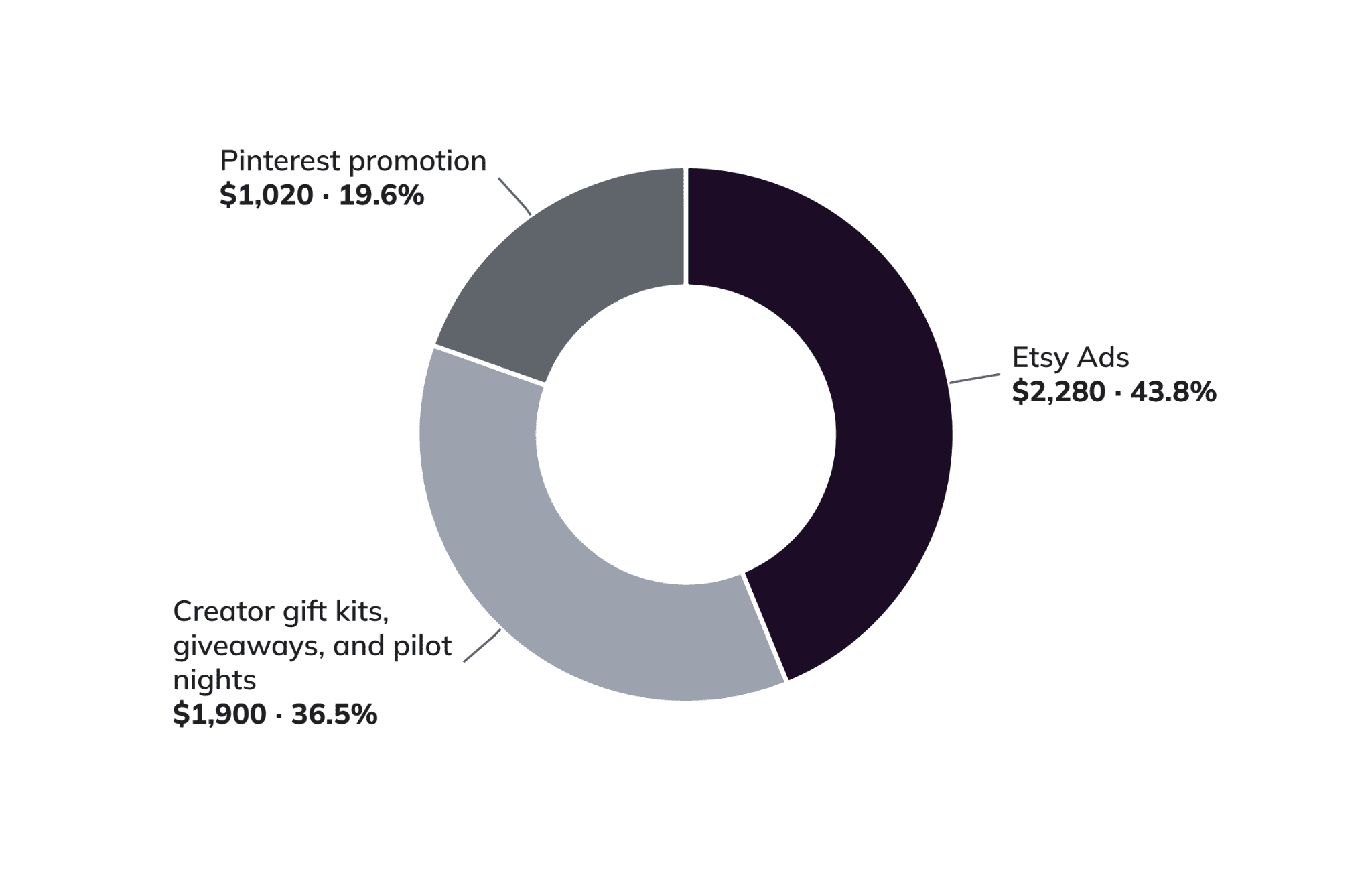
The paid marketing budget for 2027 is $5,200, split this way:
Launch Promotion
Jenna’s first buyers will come from people who already know her teaching. About 110 adults have taken her classes since 2022, and she will invite them to join the shop’s email list before it opens. They will hear about the test batch first and see the kits before anyone else.
The $1,900 for launch activities covers:
- Gift kits for about 10 stitching creators on Instagram and TikTok
- Two giveaways, in January and March
- The two pilot craft nights, whose photos and videos become the bundle’s first listing photos
GoodHour won’t run opening discounts because each kit’s margin has to cover the shop’s costs and the loan payment.
Reviews & Repeat Buyers
GoodHour starts with no reviews, and Jenna will work to earn the first ones quickly. Every order includes a thank-you card, and on day 10 she sends a message offering help with the kit. She answers stitch questions with short videos, which buyers can share with friends.
The next-kit code and the email list give buyers who finish a kit a reason to come back. Repeat buyers should grow from about 8% of 2027 visits as the list builds.
Operations Plan
Jenna runs GoodHour Craft Kits from her home studio with help from her 19-year-old son, Owen Marlowe. he works part-time assembling and packing kits. Together, they prepare and ship every Etsy order, using standard supplies and packaging to keep the process simple.
Home Studio & Schedule
The studio has an assembly table, wire shelves with labeled bins for each component, a thread winder, and cutting mats.
A laptop, a thermal label printer, and a shipping scale sit on a side desk. Jenna films listing photos and stitch videos with an overhead phone rig and two LED panels.
GoodHour operates from a spare bedroom in Jenna’s Raleigh home. Only Jenna and Owen work there, and customers do not visit the property. Jenna will keep the studio compliant with Raleigh’s home-business rules. The pilot craft nights take place at partner venues.
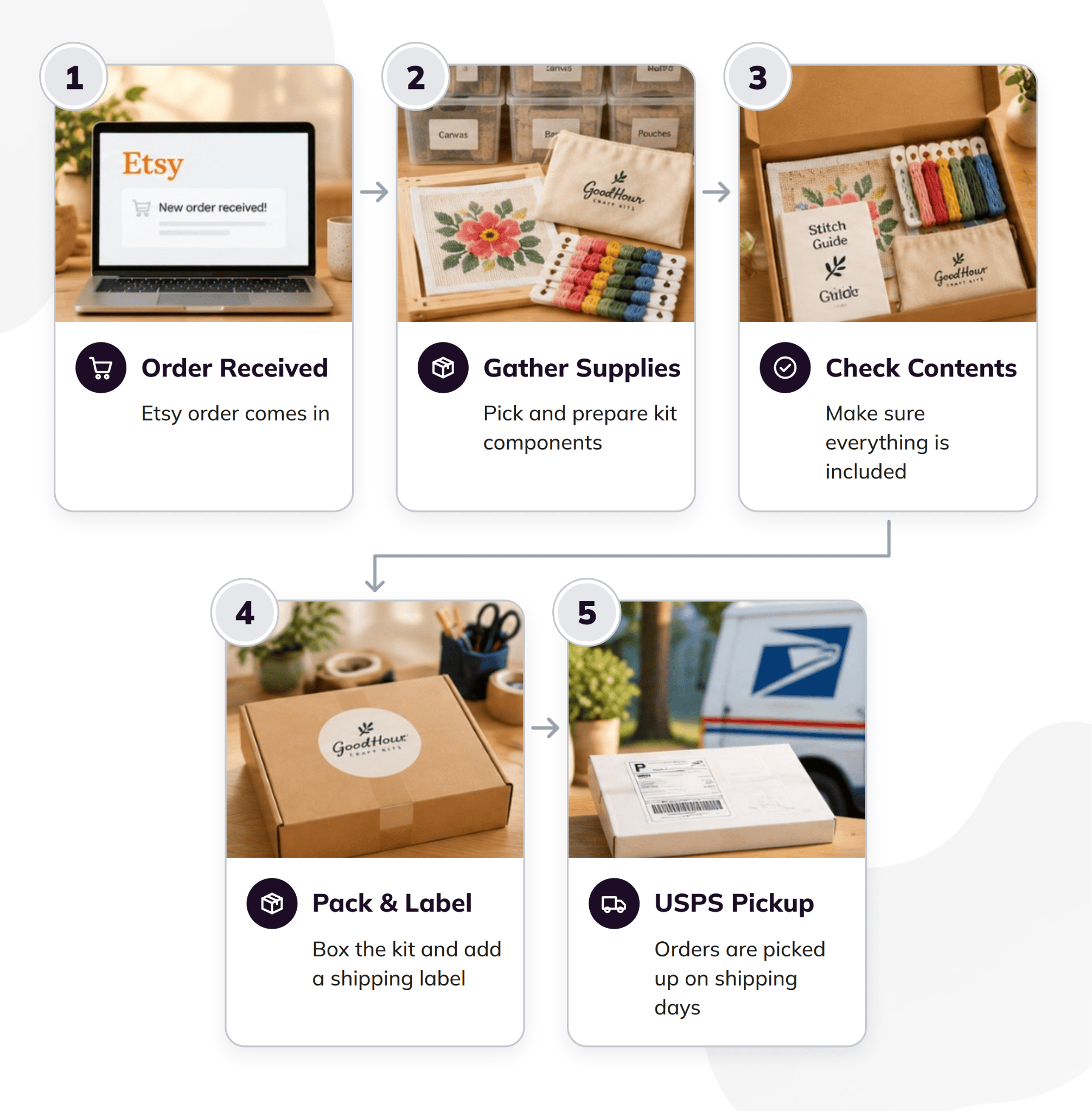
Orders are assembled and shipped Monday through Friday. Jenna schedules USPS pickups from the house each weekday. The shop’s Etsy processing time is one to three business days.
The process for preparing each order is straightforward:
Team
Jenna works about 30 hours a week on GoodHour. She designs the kits, manages listings and buyer messages, orders components, and runs the marketing. She adds about 6 hours a week of assembly from October to December.
Owen works as a part-time W-2 assembler, earning $16.00 per hour in 2027, rising to $17.00 by 2029. He works about 10 hours a week during college semesters and more in the summer and over his December break.
Owen cuts and cards thread, bags each kit, and packs the day’s orders. Jenna also helps with assembly when orders increase, especially during the holiday season.
GoodHour plans no other hires in its first three years, because the home rules don’t allow outside employees.
Suppliers & Stock
Printed canvases come from a U.S. canvas printer using Jenna’s design files. Thread and stretcher bars come from needlework distributors, pouches from a wholesale importer, and boxes and labels from packaging vendors. No supplier gives a new business credit, and GoodHour pays for each order when it places it.
Jenna buys components about two months ahead and reorders before stock runs low. Holiday stock arrives in stages from mid-September to early November, which keeps cash free until holiday sales begin.
Thread carries extra stock because a single color can go on backorder for weeks, and every design has an approved substitute shade.
Owen’s hours cover assembly in 2027, including December. By 2029, November will need more hours than he has. He will build those kits ahead from August to October.
Licenses, Taxes & Insurance
GoodHour filed its Articles of Organization with the North Carolina Secretary of State in December 2026 for $125, and it files an annual report each April for $200.
As the marketplace facilitator, Etsy collects and pays North Carolina sales tax on Etsy orders, and GoodHour doesn’t collect it.
GoodHour pays Owen through payroll and covers state unemployment insurance, while Jenna takes member draws and pays her own self-employment tax. A home-business policy with general and product liability costs $480 for the first year, paid at launch.
Financial Plan
GoodHour’s only funding is the $18,000 SBA microloan from Larkfield Community Loan Fund, at 10.5% over six years. The shop expects a small profit in each of its first three years, with cash lowest in September 2027, just before holiday sales.
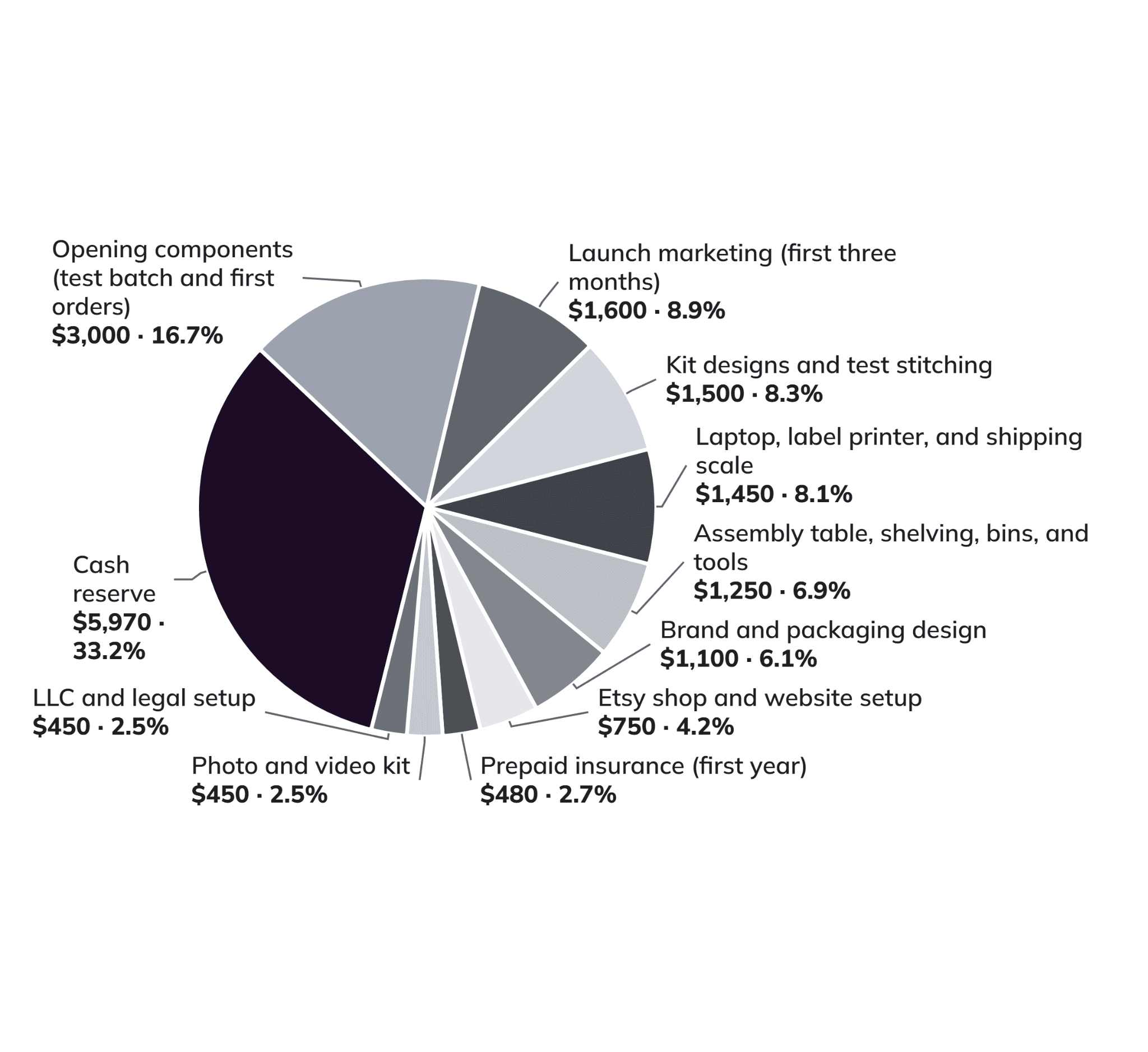
Startup Costs
| Category | Amount |
|---|---|
| Equipment | |
| Laptop, label printer, and shipping scale | $1,450 |
| Assembly table, shelving, bins, and tools | $1,250 |
| Photo and video kit | $450 |
| Opening Stock and Prepaid Costs | |
| Opening components (test batch and first orders) | $3,000 |
| Prepaid insurance (first year) | $480 |
| One-Time Launch Costs | |
| Kit designs and test stitching | $1,500 |
| Brand and packaging design | $1,100 |
| Etsy shop and website setup | $750 |
| Launch marketing (first three months) | $1,600 |
| LLC and legal setup | $450 |
| Working Capital | |
| Cash reserve | $5,970 |
| Total Startup Costs | $18,000 |
Financial Assumptions
| Assumption | Year 1 | Year 2 | Year 3 |
|---|---|---|---|
| Beginner Needlepoint Kits sold | 528 | 660 | 825 |
| Themed DIY Kits sold | 336 | 420 | 525 |
| Craft-Night Bundles sold | 96 | 120 | 150 |
| Total kits sold | 960 | 1,200 | 1,500 |
| Average kits per month | 80 | 100 | 125 |
| Shop visits | 48,000 | 50,000 | 60,000 |
| Share of visits that buy | 2.0% | 2.4% | 2.5% |
| Beginner kit price | $58.00 | $58.00 | $58.00 |
| Themed kit price | $38.00 | $38.00 | $38.00 |
| Bundle price | $189.00 | $189.00 | $189.00 |
| Materials and packaging (share of revenue) | 31.8% | 31.8% | 31.8% |
| Assembly hours | 318 | 397 | 496 |
| Owen’s pay per hour | $16.00 | $16.50 | $17.00 |
| Payroll tax on Owen’s pay | 8.65% | 8.65% | 8.65% |
| Etsy fees (share of revenue) | 11.4% | 11.4% | 11.4% |
| Jenna’s member draw | $6,000 | $12,000 | $16,000 |
| Components on hand at year-end (60 days) | $3,219 | $4,024 | $5,030 |
| Etsy payments in transit (3 days of sales) | $506 | $632 | $790 |
| Loan payment per month | $338.02 | $338.02 | $338.02 |
Projected Profit & Loss
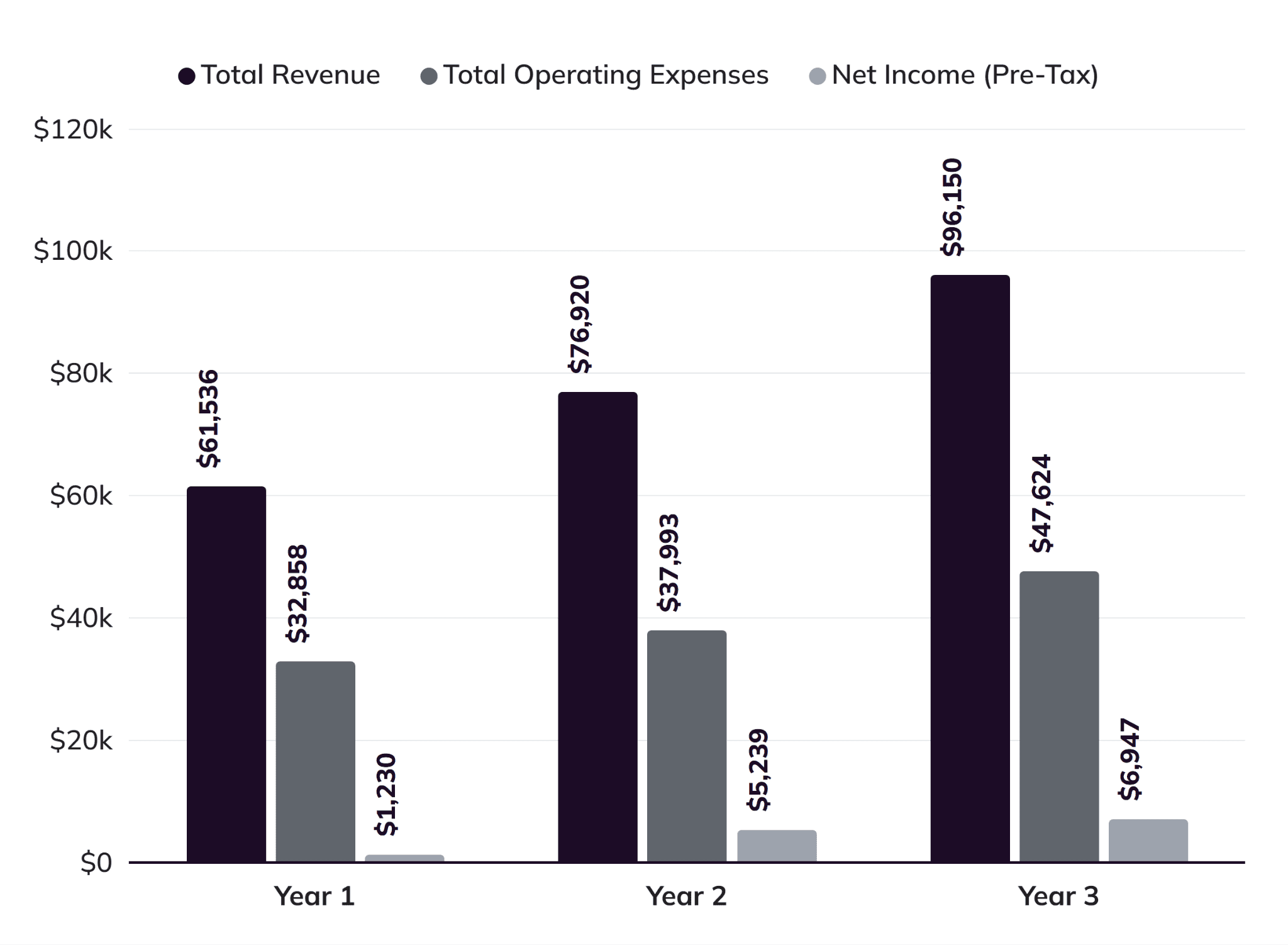
| Category | Year 1 | Year 2 | Year 3 |
|---|---|---|---|
| Revenue | |||
| Beginner Needlepoint Kits | $30,624 | $38,280 | $47,850 |
| Themed DIY Kits | $12,768 | $15,960 | $19,950 |
| Craft-Night Bundles | $18,144 | $22,680 | $28,350 |
| Total Revenue | $61,536 | $76,920 | $96,150 |
| Cost of Goods Sold | |||
| Kit materials and packaging | $19,584 | $24,480 | $30,600 |
| Assembly labor (Owen) | $5,082 | $6,550 | $8,436 |
| Payroll tax on assembly labor | $440 | $567 | $730 |
| Total COGS | $25,106 | $31,597 | $39,766 |
| Gross Profit | $36,430 | $45,323 | $56,384 |
| Gross Margin | 59.2% | 58.9% | 58.6% |
| Operating Expenses | |||
| Jenna’s member draw | $6,000 | $12,000 | $16,000 |
| Etsy fees | $7,016 | $8,770 | $10,963 |
| Shipping labels | $6,842 | $8,553 | $10,691 |
| Marketing | $3,600 | $4,200 | $5,000 |
| Insurance | $480 | $500 | $520 |
| Accounting and annual report | $900 | $950 | $1,000 |
| Phone and internet (business share) | $480 | $480 | $480 |
| Software | $840 | $900 | $960 |
| New designs and samples | $600 | $800 | $1,000 |
| Studio supplies | $420 | $520 | $650 |
| Fuel and supply runs | $180 | $200 | $220 |
| Repairs and maintenance | $100 | $120 | $140 |
| One-time launch costs | $5,400 | – | – |
| Total Operating Expenses | $32,858 | $37,993 | $47,624 |
| EBITDA | $3,572 | $7,330 | $8,760 |
| Depreciation | $559 | $559 | $559 |
| Interest expense | $1,783 | $1,532 | $1,254 |
| Net Income (Pre-Tax) | $1,230 | $5,239 | $6,947 |
| Net Margin | 2.0% | 6.8% | 7.2% |
Projected Balance Sheet
| Category | Opening | Year 1 | Year 2 | Year 3 |
|---|---|---|---|---|
| Assets | ||||
| Cash | $11,370 | $10,640 | $12,983 | $16,523 |
| Etsy payments in transit | $0 | $506 | $632 | $790 |
| Kit components | $3,000 | $3,219 | $4,024 | $5,030 |
| Prepaid insurance | $480 | $0 | $0 | $0 |
| Equipment, net | $3,150 | $2,591 | $2,032 | $1,473 |
| Total Assets | $18,000 | $16,956 | $19,671 | $23,816 |
| Liabilities | ||||
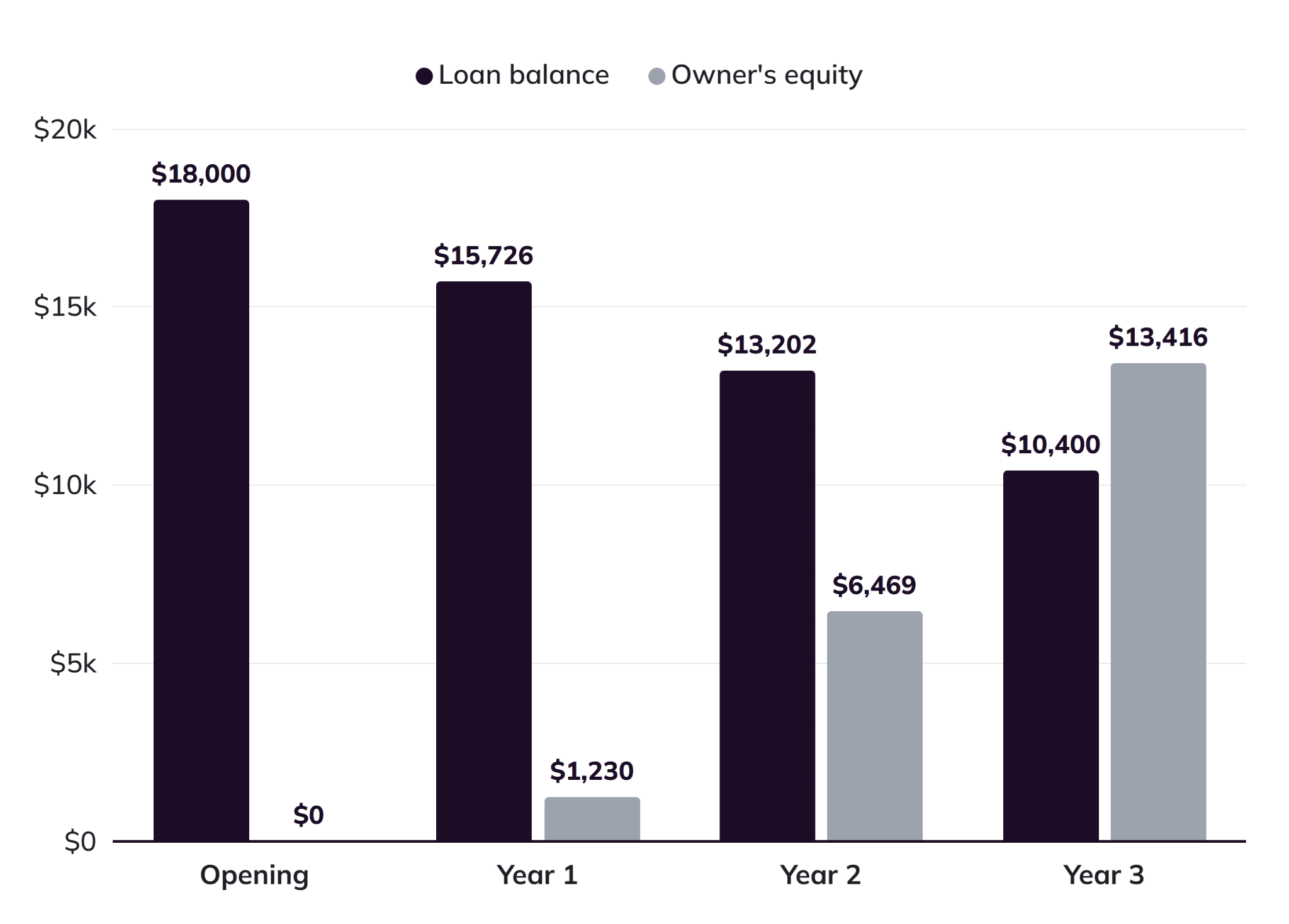
| SBA microloan | $18,000 | $15,726 | $13,202 | $10,400 |
| Total Liabilities | $18,000 | $15,726 | $13,202 | $10,400 |
| Equity | ||||
| Retained earnings | $0 | $1,230 | $6,469 | $13,416 |
| Total Equity | $0 | $1,230 | $6,469 | $13,416 |
| Total Liabilities & Equity | $18,000 | $16,956 | $19,671 | $23,816 |
Projected Cash Flow
| Category | Year 1 | Year 2 | Year 3 |
|---|---|---|---|
| Beginning Cash | $11,370 | $10,640 | $12,983 |
| Operating Activities | |||
| Net income (pre-tax) | $1,230 | $5,239 | $6,947 |
| Depreciation | $559 | $559 | $559 |
| Change in Etsy payments in transit | ($506) | ($126) | ($158) |
| Change in kit components | ($219) | ($805) | ($1,006) |
| Change in prepaid insurance | $480 | $0 | $0 |
| Net Cash from Operations | $1,544 | $4,867 | $6,342 |
| Financing Activities | |||
| Loan principal repaid | ($2,274) | ($2,524) | ($2,802) |
| Net Cash from Financing | ($2,274) | ($2,524) | ($2,802) |
| Net Change in Cash | ($730) | $2,343 | $3,540 |
| Ending Cash | $10,640 | $12,983 | $16,523 |
Break-Even Analysis
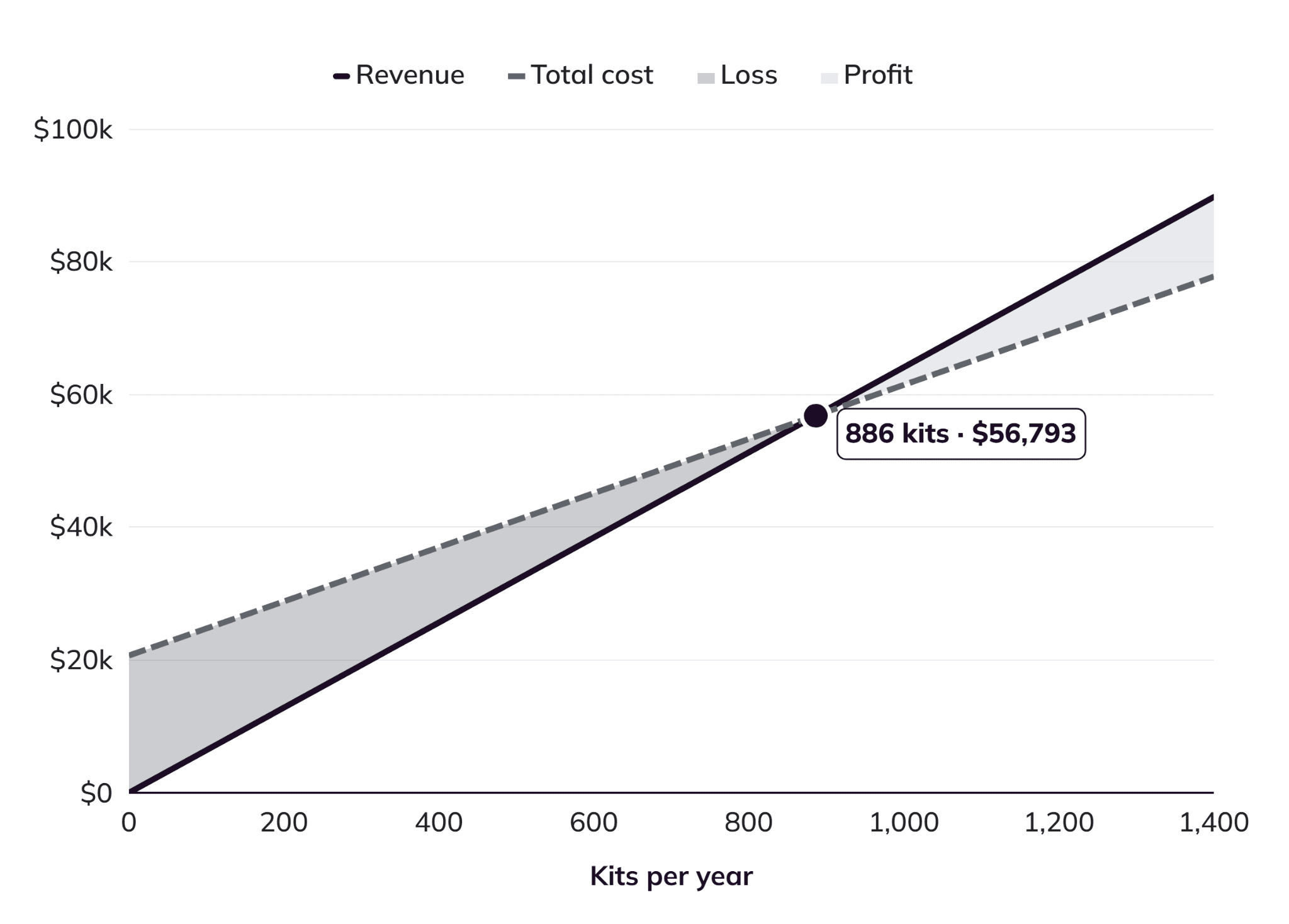
| Metric | Value |
|---|---|
| Average price per kit (Year 2) | $64.10 |
| Variable cost per kit (Year 2) | $40.77 |
| Contribution per kit (Year 2) | $23.33 |
| Annual fixed costs (Year 2) | $20,670 |
| Break-even kits per year | 886 |
| Break-even kits per month | 74 |
| Break-even revenue | $56,793 |
| Yearly loan payments | $4,056 |
| Kits per month to cover fixed costs and the loan | 88 |
| Planned kits per month (Year 2) | 100 |
Loan Repayment & Debt Coverage
| Category | Year 1 | Year 2 | Year 3 |
|---|---|---|---|
| Interest | $1,783 | $1,532 | $1,254 |
| Principal | $2,274 | $2,524 | $2,802 |
| Ending loan balance | $15,726 | $13,202 | $10,400 |
| EBITDA | $3,572 | $7,330 | $8,760 |
| EBITDA before one-time launch costs | $8,972 | $7,330 | $8,760 |
| Debt coverage (EBITDA ÷ $4,056 of payments) | 0.88x | 1.81x | 2.16x |
| Debt coverage before launch costs | 2.21x | 1.81x | 2.16x |
Sales Risk & Backup Plan
GoodHour has no sales history, and its biggest risk is that kits sell more slowly than expected. Jenna tested what happens if sales from March 2027 come in 25% below target, with component orders cut to match.
With no other changes, cash would fall to $2,640 in October 2027 and end the year at $5,693. GoodHour would still make every $338.02 payment on time. But 2028 EBITDA would drop to $330, enough to cover only 0.08 times the loan payments.
Jenna’s written backup plan for that case has two steps:
- Cut her 2027 draw to $3,000 and hold her 2028 draw at $6,000
- Trim marketing by a quarter and move ad spend to the best-selling listings
With those changes, cash stays at or above $4,968 in 2027 and ends December at $9,490. Debt coverage in 2028 returns to 1.82 times.
Two other risks could also affect GoodHour:
1. Etsy changes its fees or search rules.
The forecast uses today’s fees, about 11.4% of revenue. Jenna will start a simple website and email list in 2027 to reach repeat buyers directly if Etsy becomes more expensive.
2. A new shop is hard to find.
Etsy Ads run from the first day. Every listing has clear product photos, short listing videos, and relevant search terms. After Etsy’s initial 15-day waiting period, Jenna will test ads on selected products and use Pinterest to reach people interested in beginner craft projects.
More importantly, Jenna will review sales and advertising results regularly. If orders stay below target, she will reduce inventory purchases and marketing costs before using more of the cash reserve.
The Quickest Way to turn a Business Idea into a Business Plan
Fill-in-the-blanks and automatic financials make it easy.


Upmetrics
Upmetrics is the #1 business planning software that helps entrepreneurs and business owners create investment-ready business plans using AI. We regularly share business planning insights on our blog. Check out the Upmetrics blog for such interesting reads. Read more