You may already be taking pet photos for friends, getting a few paid bookings, or thinking about opening your own studio. But turning that into a full-time business takes more planning.
You need to find enough clients, set prices for your sessions, and decide how to earn more from prints and photo packages. If you’re opening a studio, there’s also rent, equipment, and other monthly costs to cover, even when bookings are slow.
That’s why I’ve created this sample plan for Pawlight Pet Photography, a fictional studio in Plaza Midwood, Charlotte, to help you plan.
Use it as a reference when writing your own pet photography business plan.
Executive Summary
Pawlight Pet Photography is a new pet portrait studio in Charlotte’s Plaza Midwood neighborhood. It opens on Tuesday, March 2, 2027, in a 750-square-foot ground-floor studio at the Larkmoor Building, 1514 Central Avenue, Suite 104, Charlotte, NC 28205.
Its owner, Maren Ashby, has eight years of portrait experience, including three running her own freelance pet photography business.
The studio photographs dogs, cats, and other small pets in a calm, gated room, with their owners in the picture when they like. Clients choose one of four sessions:
- Studio Portrait Session for one or two pets
- Pet & Owner Session for owners, couples, and families
- Senior & Legacy Session for older or seriously ill pets
- Seasonal Mini Session on themed spring and holiday days
Why Charlotte Owners Will Book
Americans spent $158 billion on their pets in 2025, and 95 million households own at least one pet. For many of these families, a portrait of the pet is now a family photo.
Pawlight serves dog and cat owners who treat their pet as family, couples and families who want a photo with their pet, owners of senior pets, and holiday clients who start with a mini session. These clients will choose Pawlight for:
- Patient handling at the pet’s own pace
- A gated, pet-safe studio with real studio lights
- Finished prints they choose in person
- A written promise of real photos, with no AI-made pets
Funding & Financial Results
We are asking for a $50,000, 6-year SBA microloan from Fernbrook Community Loan Fund at 10.5% interest. Maren will add $20,000 of her savings, for $70,000 in all.
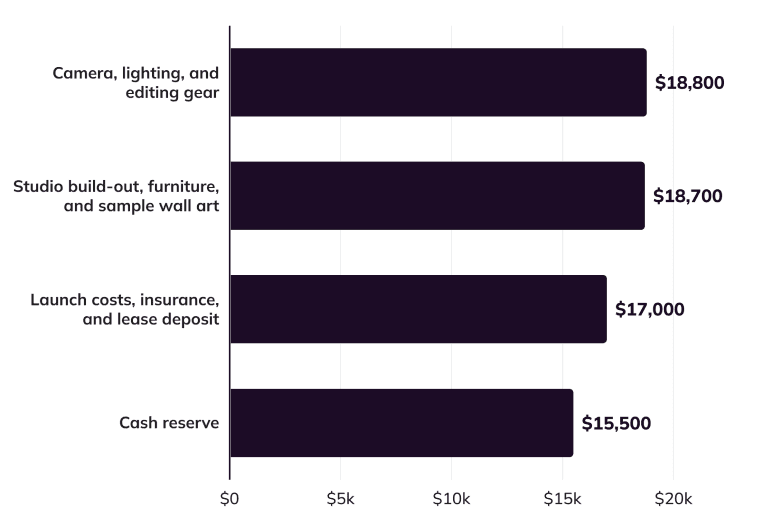
The money pays for camera and lighting gear, the studio build-out, launch costs, and a $15,500 cash reserve for the slower summer months.
With this funding, Pawlight expects steady growth:
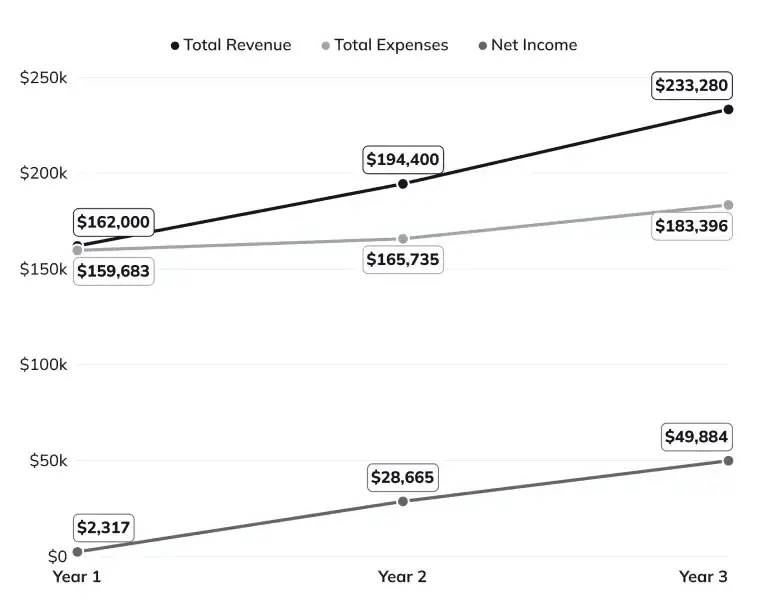
- 125 full sessions and 150 mini sessions, $162,000 in the year 1 revenue, and $2,317 of net income after $10,300 of one-time launch costs
- $194,400 in year 2 revenue and $28,665 of net income
- $233,280 in year 3 revenue and $49,884 of net income
Most of this revenue comes after the shoot. At a viewing appointment, clients choose prints, wall art, albums, and digital images, and these orders bring in nearly two-thirds of the total.
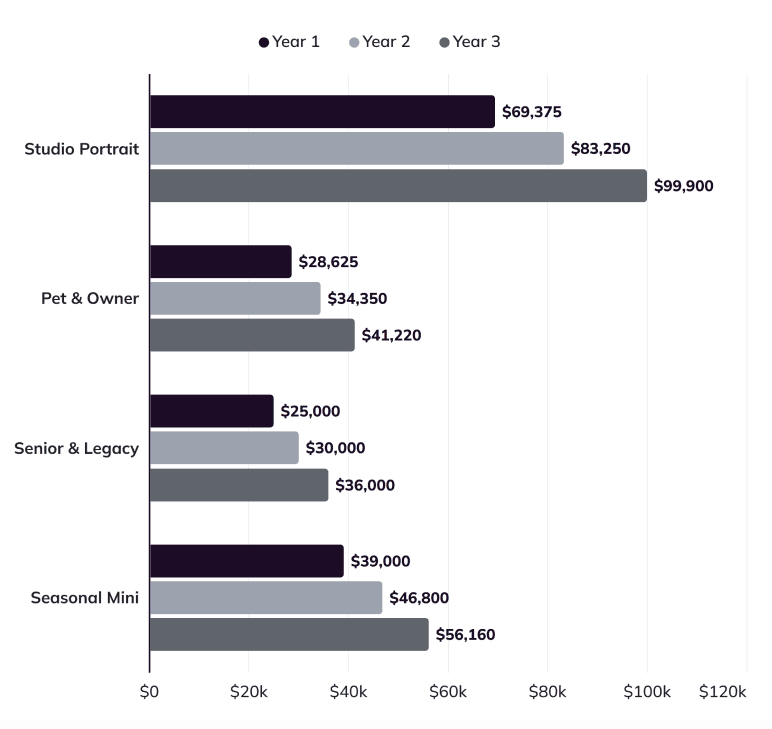
Prices stay the same for all three years, so growth comes from more sessions in the same studio. Here is revenue by session type:

Company Overview
Pawlight Pet Photography will photograph pets and their people, with no weddings, events, or commercial shoots. Its mission is to give Charlotte pet owners real photos of the animals they love, taken at the pet’s own pace.
Its vision is to be the studio Charlotte families call when they want a photo of their pet that they will still hang on the wall in ten years.
Maren will register Pawlight in November 2026 as a North Carolina single-member limited liability company (LLC), and she will own all of it.
Studio Location
Pawlight’s studio is in Plaza Midwood, a walkable neighborhood about 2 miles east of Uptown Charlotte. The area has many dog owners, especially around Central Avenue. Street parking and a small shared lot make it easier for clients to bring large dogs or cats in carriers.
Most clients will come from Plaza Midwood, NoDa, Elizabeth, Dilworth, Myers Park, and South End. Some will also drive from Matthews and Mint Hill.
The 750-square-foot studio has:
- A shooting area of about 400 square feet with a backdrop wall, studio lights, and non-slip floors.
- A viewing lounge holds a large screen and sample wall art.
- The back of the unit has an office, storage, and a pet rinse sink.
- A gate inside the front door keeps any pet from slipping out to the street.
Pawlight plans to sign a 5-year lease with an option to renew for another 5 years. Monthly rent starts at $1,900, including common-area charges, and increases by 3% each year.
About Owner
Maren Ashby, aged 31, grew up in Greensboro and has lived in Charlotte since 2017. For five years, she worked as a client coordinator at a family portrait studio in South Charlotte. She booked sessions, ran viewing appointments, and handled print orders, so she already knows how a portrait studio sells.
She then spent three years as a freelance pet photographer, shooting in parks and clients’ homes. In her last year, she photographed about 90 pets and had a waiting list every November.
Without a studio, Maren turned down rainy-day and winter bookings. She also lost print orders because clients couldn’t see sample wall art in person. Pawlight is her first studio, and it solves both problems.
Goals for the First Three Years
Pawlight has set five targets for its first three years:
| Goal | Target | By When |
|---|---|---|
| Open the studio | First sessions booked | March 2, 2027 |
| Build a referral network | 20 vets, groomers, and daycares | February 2028 |
| Add on-location gear | Second camera body and portable lights | March 2028 |
| Grow full sessions | 180 a year | Year 3 |
| Fill the holiday mini days | A waiting list for November | Year 3 |
Market Analysis
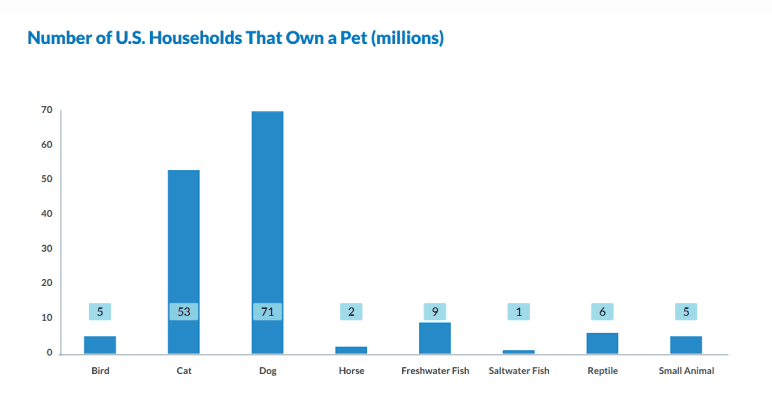
Pet owners spend $158 billion in 2024, and it is expected to reach $165 billion in 2026. But they still choose and spend carefully. In 2025, 71 million U.S. homes had a dog, and 53 million had a cat.
More than half of dog owners now groom at home to save money. This tells Pawlight that owners pay for what they can’t do well on their own.
Everyday pet photos are no longer one of those things, because a phone takes them well. U.S. pet photography is a $140.5 million industry in 2026, spread across 2,643 businesses. It shrank 3.2% a year from 2020 to 2025, partly because of competition from smartphone cameras.
This means the paid market is now for what a phone can’t make: studio-lit portraits, photos with the owner in them, and finished wall art.
Charlotte has plenty of these owners. The city has 381,274 households, with a median household income of $86,416 (2024). At the national rates of 53% for dogs and 39% for cats, roughly 200,000 of these homes would have a dog and roughly 150,000 would have a cat.
About half of Charlotte’s occupied homes are rented, and renters here can keep pets more easily than in most cities.
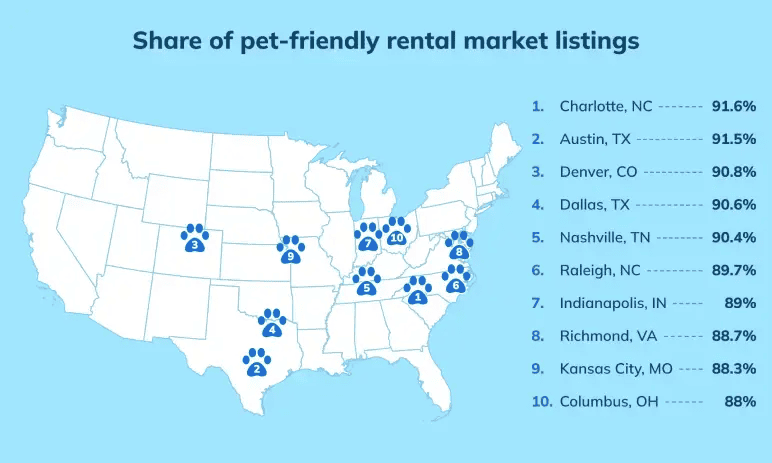
Charlotte is the most pet-friendly rental market among the 50 largest U.S. metros in 2026, with 91.6% of rental listings allowing pets.
Many homes also have more than one animal. North Carolina households have 1.7 pets on average, and more U.S. cat owners now keep two or more cats.
These local numbers shape Pawlight’s plan in three ways:
- Many pet owners in Plaza Midwood, NoDa, and South End live in apartments, where a small, dim living room makes a poor photo set. A gated studio with real lights gives them a better option close to home.
- The Studio Portrait Session covers one or two pets, so a two-pet home pays a single session fee.
- The local income level supports an average full-session order of about $1,000.
Pawlight needs 275 sessions in Year 1, a very small share of these homes, before counting nearby towns such as Matthews and Mint Hill.
Target Customers
Pawlight serves four groups of clients. The first group books most of the full sessions, and the studio’s marketing starts with them.
(1) Dog and cat owners
These are adults aged about 28 to 55 in Charlotte’s close-in neighborhoods and suburbs, often with no children at home. They spend on their pet’s care and see a portrait as a family photo. A smaller number own rabbits, guinea pigs, or birds.
From a session, they want three things:
- A relaxed pet, whether a bouncy dog or a shy cat
- A true likeness, from the gray muzzle to the odd ear
- A framed print for the living room
Pawlight gives them a session at the pet’s own pace, and many will come back every year or two.
(2) Couples and families
Couples, new parents, and families want their dog or cat in the family photo, often around a new home, an engagement, or a new baby. They need someone to manage the pet while they pose.
The Pet & Owner Session includes an assistant for this, which lets the owners relax in front of the camera.
(3) Senior pet owners
These owners have a dog or cat past about 8 to 10 years old, or a pet with a serious diagnosis. Their vet often refers to them, and they need a gentle pace, short breaks, and sometimes a session at home.
Pawlight saves dates within two weeks for vet referrals. Many of these clients order albums for family members and come back later with their next pet.
(4) Holiday and first-time clients
These pet owners want a low-cost photo for holiday cards or gifts, or they want to try a studio before a full session. A 20-minute mini session gives them five edited images, and many return for a full session once they have seen the studio.
Market Trends
Pet photography has changed in a few clear ways, and Pawlight built its sessions around them:
- Senior and legacy portraits: More owners book photos of senior or seriously ill pets while there is still time. Pawlight makes these a main offer, at home when a pet can’t travel.
- Mini sessions: Short, low-cost sessions on themed days have become the usual first step for new clients.
- Short video clips: Many clients want a clip of their pet to post next to the photos, and Pawlight includes one with every full session.
AI has changed the work behind the camera, too. AI tools now sort and clean up photos inside editing software, which saves hours per session.
At the same time, apps can turn a phone photo into a stylized pet picture, and many clients now ask whether a photo is real. Pawlight uses AI for the first job and answers the second with a written promise of real photos.
Competitive Analysis
Charlotte pet owners have several ways to get photos of their pets. Pawlight competes with other photographers for paid sessions and with cheaper options for customers who mainly want a digital image.
Direct Competitors
These businesses offer photography services that customers may choose instead of Pawlight.
Freelance pet photographers
This is the largest group, and many work part-time. They shoot in parks and clients’ homes, usually charge less than a studio, and often deliver digital files only. They can’t work in bad weather or show wall art in person.
Family portrait studios
Studios in South Charlotte and Ballantyne also photograph pets, with good lighting and strong print products. They plan their sessions around people, though, and their staff rarely know how to calm a nervous dog or a hiding cat.
Holiday photo events
Pet stores and shelters run quick, fun photos with Santa for a small fee or a donation. Each pet gets only a few minutes in a busy store, and owners usually leave with a digital file instead of a print.
Indirect competitors
These are the free and low-cost options people use instead.
Most pet photos today come from the owner’s phone, and Portrait mode on a recent iPhone or Android phone costs nothing. Companies such as Shutterfly let turn that photo into prints or holiday cards within days.
AI tools such as ChatGPT can also turn a phone photo into a painting-style picture in a minute. Painted and illustrated pet portraits sold on Etsy are another choice, often bought as a memorial or a gift.
Among paid photography options, Pawlight positions itself between lower-cost freelancers and full-service portrait studios. Its main advantage is combining pet-focused photography, the option to include owners, and professionally finished artwork in one service.
How Pawlight Competes With Phones and AI
The free and low-cost options above raise a fair question for any pet studio: why would people still pay for photos?
Phones take good pet photos, and AI apps can now turn one into a painting or costume picture for a few dollars. For a social media post, many owners won’t pay a photographer. Pawlight doesn’t try to beat an app on price or speed.
Clients do care whether a photo is real. In a global survey of more than 30,000 adults published in 2024, nearly 90% wanted to know whether AI had made an image.
This matters most when a pet is old or ill, because the owner wants its real face, gray muzzle and all.
Pawlight puts its answer in writing, on its website and in every client contract. Its policy is simple:
- Every image is a real photograph of the client’s pet, taken during the session.
- AI tools work only behind the scenes to sort frames and remove a leash, a stray hair, or a smudge on the backdrop.
- AI never creates, replaces, or changes the animal.
Here is how the three choices compare for a pet owner:
| What the Owner Gets | Phone Photo | AI Portrait App | Pawlight Session |
|---|---|---|---|
| Cost | Free | Free to a few dollars | $225 session fee, plus prints and images |
| A real photo of your own pet | Yes | No, the app’s version of it | Yes |
| Owner in the photo | Hard to take | Only if generated | Yes, posed and lit |
| Help with a nervous or old pet | None | None | A patient session with a handler |
| Finished print to hang | Retail print shop | Rarely | Pro-lab wall art and albums |
Pawlight sets its prices around this difference. Clients pay for what is real and lasting, which a quick image from an app can’t give them.
Sessions & Collections
Pawlight earns money from two parts of each client visit: the session itself, and the prints and images the client chooses afterward.
Every full session starts with a session fee paid at booking. About two weeks later, the client chooses an order at a viewing appointment.
Session Types
Pawlight offers four sessions, one for each kind of client:
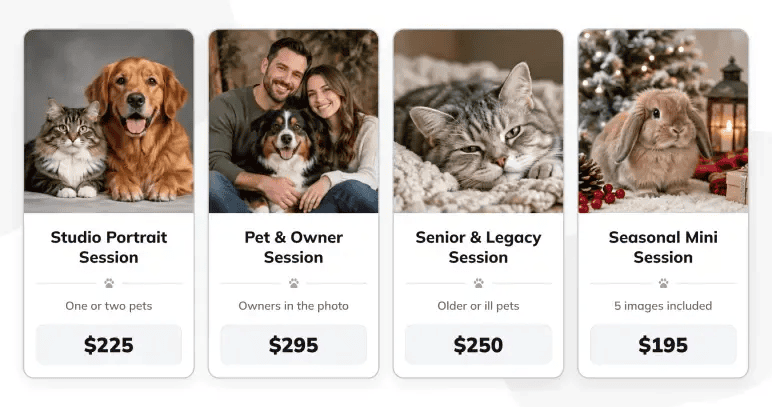
Here is a detailed look at those sessions:
Studio Portrait Session
This session is for one or two pets, from dogs and cats to rabbits and other small pets. It lasts up to 90 minutes, at the pet’s pace, with two or three backdrops.
Pet & Owner Session
This one is for owners, couples, and families who want to be in the photos. It lasts up to two hours, in the studio or at one outdoor spot in Charlotte, such as Freedom Park.
Senior & Legacy Session
This session is for dogs and cats past about 8 to 10 years old, or with a serious illness. It takes place in the studio or at the client’s home within 15 miles, with extra time to rest.
Seasonal Mini Session
This is a 20-minute session on a themed day in spring, at Halloween, before the holidays, or before Valentine’s Day. It includes five edited digital images, and clients can add more for $40 each.
Every full session includes a planning call, a viewing appointment, and a short behind-the-scenes video clip for social media. Prices don’t include North Carolina sales tax.
Collections & Wall Art
Most full-session clients order a collection. These three collections cover small, medium, and large orders:
| Collection | What’s Included | Price |
|---|---|---|
| Keepsake | 10 edited digital images and two 8×10 prints | $595 |
| Gallery | 20 edited digital images, one framed 16×20 print, and two 11×14 prints | $1,095 |
| Heirloom | All edited digital images, a framed 24×36 print or three-piece wall set, and a 20-page 10×10 album | $1,995 |
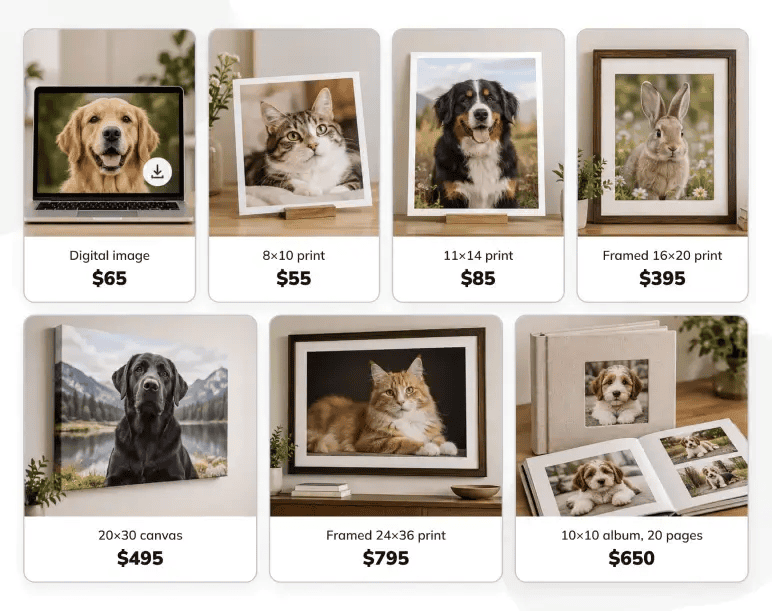
A professional lab makes every print on archival paper, and framed pieces arrive ready to hang. Clients can also order single pieces, and the viewing lounge shows a sample of each one:
Sessions Away From the Studio
Most sessions take place in the studio, where the light, backdrops, and gated room make the work easier for pets. Pawlight goes out when it helps the pet.
Cats, which often feel calmer at home, and older pets that don’t travel well can have their session there. Pet & Owner Sessions can also move to a park or the client’s own yard.
From May to September, outdoor sessions run in the early morning or late afternoon to keep pets out of the heat. Pawlight includes travel within 15 miles and quotes longer trips separately.
Marketing & Sales Strategy
Pawlight’s marketing focuses on trust. Most pet owners book a photographer that their vet, groomer, or a friend recommends, after seeing real photos of real pets. Maren’s past clients will give the studio its first bookings.
At Launch
Online booking opens on February 1, 2027, a month before the studio opens. Maren will email her past freelance clients, about 250 households, with an early-booking offer for the first month.
In February, she will visit about 30 vets, groomers, daycares, and pet stores near the studio. Each one gets a small referral kit with sample prints, referral cards, and a free session for a staff member’s own pet.
The first spring mini days in April double as the studio’s open house for neighbors. The $4,000 launch budget covers these days, the referral kits, and the first local ads.
Finding New Clients
After opening, Pawlight spends $9,000 on marketing in Year 1, most of it in the weeks before the spring, Halloween, and holiday mini days.
New clients come from six places:
Referral partners
Vets (including cat-only clinics), groomers, daycares, and trainers hand out Pawlight’s cards. Vets matter most for senior and legacy sessions. Each partner gets a free session for its own pet once a year.
A rescue partnership
Once a month, Pawlight holds a free adoption-photo day for a local rescue. Better photos help shelter dogs and cats find homes and show Pawlight’s work to new owners.
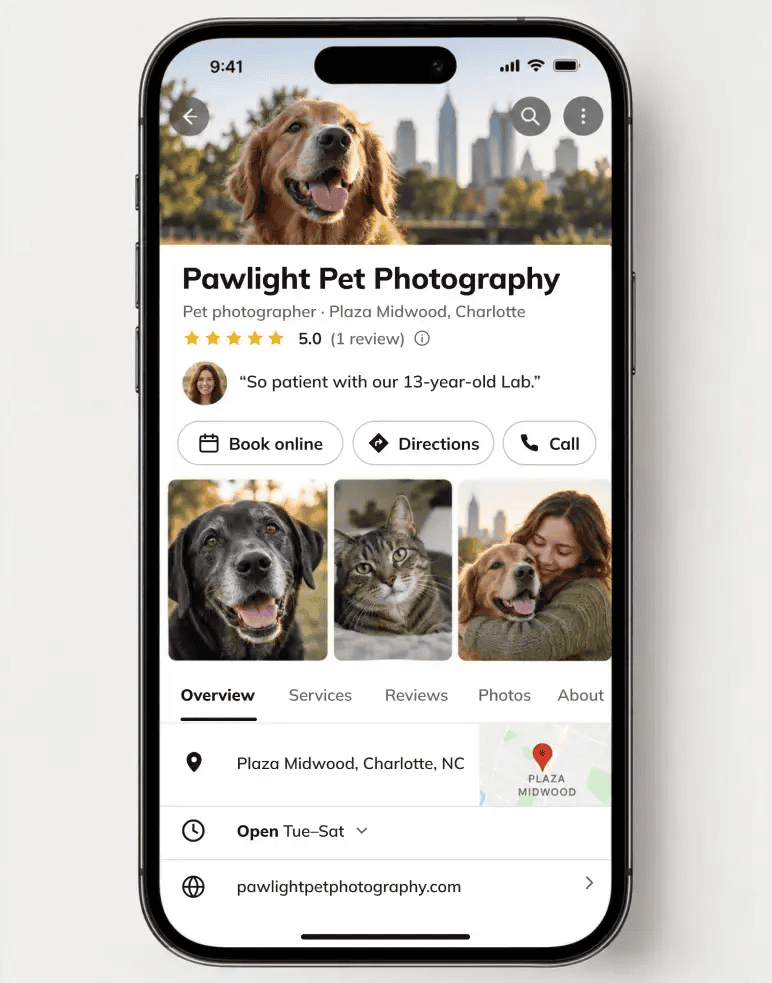
Google Business Profile and reviews
The profile carries the booking link, recent portraits, and reviews. Every client gets a review request after the order arrives.
Instagram and Facebook
Pawlight posts short behind-the-scenes clips and finished portraits, with each owner’s permission, and runs small ads before each mini day.
Apartment communities
Pawlight offers free mini days at resident events in pet-friendly apartment buildings in South End and NoDa, where many owners have no good spot for photos at home.
Mini days
Low-cost themed days let new clients try the studio before a full session.
Whichever way they hear about Pawlight, most pet owners will check its Google profile before they book. On a phone, it will look like this:
Viewing Appointments
The viewing appointment is where most of Pawlight’s revenue comes in.
About two weeks after a full session, the client comes back to the studio, or joins by video, to see 25 to 40 edited photos on the large screen.
Maren shows the print sizes on the wall and helps the client choose. There’s no pressure to buy a collection, and single prints are always available. Clients pay for their order in full at the appointment, and the lab delivers it within two to three weeks.
Clients who see their photos large, with help choosing, tend to order more than clients who only get a link. This is why the average full-session sale is $984. Mini-session clients order from an online gallery instead.
Repeat Clients
A thank-you card and a print-care note come with every order. Past clients get a reminder before each mini day, a birthday note for their pet, and 15% off a new session within 12 months.
When a senior pet dies, its owner gets a handwritten card from Maren and no sales emails. Partners who refer five clients in a year receive a framed print for their front desk.
These small touches help Pawlight stay in mind when a client adopts a new pet or wants a fresh portrait.
Operations Plan
Pawlight runs on appointments. This keeps the studio calm when a pet is in it, and it leaves the quiet days for editing, viewing appointments, and office work.
Hours & Booking
Pawlight’s session hours are:
- Tuesday to Friday: 10 AM to 6 PM, with Thursday open until 7 PM for after-work Pet & Owner sessions
- Saturday: 9 AM to 4 PM
- Sunday and Monday: Closed for editing and office work, apart from a few Sunday mini days
In-home sessions take place on Tuesday and Wednesday mornings, when the studio is usually quiet.
Clients book online. They choose a session and a time, sign the contract, and pay the session fee. The contract includes the AI policy and a model release. Pawlight posts a client’s photos only with written permission.
The studio books no more than two full sessions a day. This gives each pet an unhurried session and leaves time to clean between visits.
Rescheduling is free with 48 hours’ notice, and always free when a pet is sick, because a sick pet has a hard session.
Staffing
Pawlight opens with two people:
| Role | Who | Hours | Year 1 Pay | Main Duties |
|---|---|---|---|---|
| Owner and photographer | Maren Ashby | Full time | $42,000 salary | Photographs and edits every session, runs viewing appointments, and manages partners and marketing |
| Studio assistant and pet handler | Part-time hire | About 20 hours per week, Tuesday to Saturday, plus mini days | $18.00 per hour | Handles pets during sessions, sets up and cleans the studio, answers booking messages, and packs orders |
The assistant’s pay rises to $19.50 per hour by Year 3, which helps Pawlight keep a steady handler that pets get to know.
How a Session Runs
A planning call a week before covers the pet’s temperament, health, favorite treats, and what the client wants to hang.
On the day, the pet gets about ten minutes to explore the studio before the first photo, with the lights on and the camera down.
Maren photographs while the assistant handles the pet, gets its attention, and moves it between setups. The owner joins for the pet-and-owner photos, and breaks come whenever the pet needs one.
Within the week, AI culling software sorts the session’s frames, and Maren picks and edits the best 25 to 40. AI tools also remove leashes and stray hairs, which cuts editing time without changing the animal. The viewing appointment follows about two weeks after the session.
All in, a full session takes 4.5 to 5 hours of Maren’s time, once the planning call, editing, and viewing appointment are counted. This means her hours, not the room, set how many sessions Pawlight can take. Even in Year 3, 180 full sessions fill only about a third of the two-a-day booking limit.
Pet Safety
Maren designed the studio for animals. A gate at the entry, non-slip floors, and no cords on the floor keep pets safe, and soft studio lights keep the room calm. Every session also follows a few simple rules:
- Treats are always the owner’s choice, so no pet gets something its diet doesn’t allow.
- Cats and small pets get the first session of the morning, with the door closed and no dog in the studio.
- The team never forces a pet into a pose, lifts it onto a high prop, or leaves it alone.
- Maren and the assistant both hold pet first aid and CPR certificates, and a first aid kit stays in the studio.
Staff clean the floors and backdrops between sessions and reschedule any pet that shows signs of illness. A calm pet also makes better photos, which is one more reason the studio puts safety first.
Equipment & Software
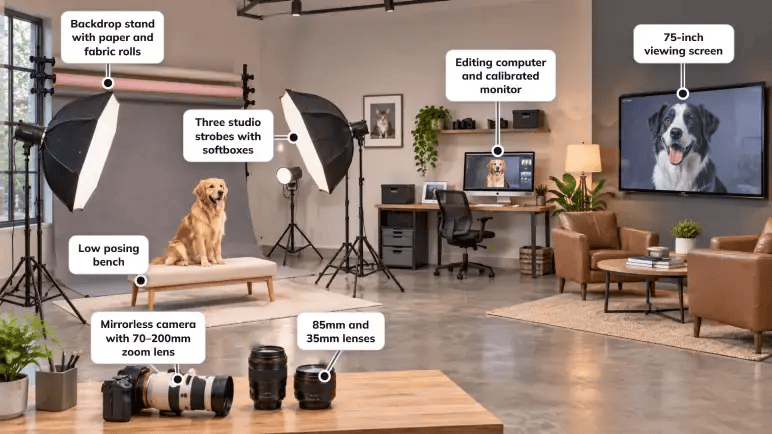
Pawlight’s gear decides how the photos look. This is why most of the equipment budget goes into the camera, lenses, and lights.
Maren’s current camera and 24–70mm lens become the backup kit, so a broken camera never cancels a session. Here is the main gear in the studio:
The software covers online booking and contracts, client galleries with a print store, Lightroom and Photoshop, and an AI culling service. Pawlight backs up every session to the cloud within 24 hours.
Busy and Slow Months
October to December bring 38% of Year 1 revenue, as holiday cards, gifts, and the November mini days fill most weekends. Spring is the second busy season, and July and August are the slowest months.
Pawlight plans for the summer in three ways. The $15,500 cash reserve covers the gap, Maren books more in-home senior sessions on summer mornings, and marketing for the fall mini days starts in August.
Licenses & Insurance
Pawlight will register with the North Carolina Department of Revenue to collect sales tax on session fees, digital images, and prints. The Mecklenburg County rate rose to 8.25% on July 1, 2026, and an outside accountant will file these returns and run payroll.
Charlotte has no general business license, but Pawlight will list its equipment with the Mecklenburg County Assessor each January for business property tax.
Before opening, the studio needs a building permit and a certificate of occupancy from Mecklenburg County for the upfit, plus a City of Charlotte sign permit.
Pawlight’s insurance covers general liability, pets in its care, professional liability, equipment insurance, and workers’ compensation as required by law.
Financial Plan
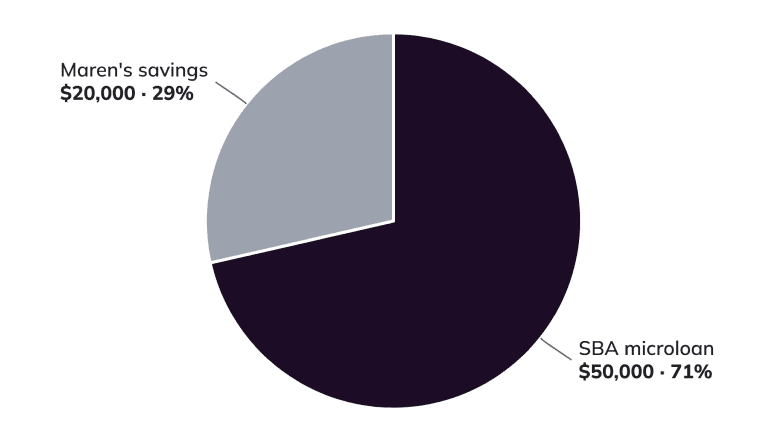
Pawlight needs $70,000 to open: a $50,000 SBA microloan from Fernbrook Community Loan Fund and $20,000 of Maren’s savings.
The studio earns a small profit in Year 1 after its launch costs, and its profit grows as sessions rise.
Startup Costs
| Category | Amount |
|---|---|
| Cameras & lenses | $8,500 |
| Studio lighting & backdrops | $4,800 |
| Computer & viewing screen | $5,500 |
| Leasehold improvements | $12,000 |
| Furniture & fixtures | $4,200 |
| Display wall art & sample albums | $2,500 |
| First-year insurance (prepaid) | $2,900 |
| Lease security deposit | $3,800 |
| LLC formation & lease review | $1,800 |
| Brand, website & booking setup | $3,500 |
| Launch marketing | $4,000 |
| Permits & opening fees | $600 |
| Assistant hiring & training | $400 |
| Working capital reserve | $15,500 |
| Total Startup Costs | $70,000 |
Funding Sources
| Category | Amount |
|---|---|
| SBA microloan (Fernbrook Community Loan Fund) | $50,000 |
| Owner equity (Maren Ashby) | $20,000 |
| Total Funding | $70,000 |
Financial Assumptions
| Assumption | Year 1 | Year 2 | Year 3 |
|---|---|---|---|
| Studio Portrait Sessions | 75 | 90 | 108 |
| Pet & Owner Sessions | 25 | 30 | 36 |
| Senior & Legacy Sessions | 25 | 30 | 36 |
| Seasonal Mini Sessions | 150 | 180 | 216 |
| Average sale, Studio Portrait | $925 | $925 | $925 |
| Average sale, Pet & Owner | $1,145 | $1,145 | $1,145 |
| Average sale, Senior & Legacy | $1,000 | $1,000 | $1,000 |
| Average sale, Seasonal Mini | $260 | $260 | $260 |
| Print lab and frames (share of print sales) | 32% | 32% | 32% |
| Assistant pay per hour | $18.00 | $18.75 | $19.50 |
| Assistant paid hours | 1,000 | 1,100 | 1,250 |
| Owner salary | $42,000 | $48,000 | $54,000 |
| Studio rent | $22,800 | $23,484 | $24,189 |
| Payroll taxes (share of wages) | 8.8% | 8.8% | 8.8% |
| Card processing (share of revenue) | 2.9% | 2.9% | 2.9% |
| Loan payment per month | $938.95 | $938.95 | $938.95 |
Projected Profit & Loss
| Category | Year 1 | Year 2 | Year 3 |
|---|---|---|---|
| Revenue | |||
| Session fees | $59,750 | $71,700 | $86,040 |
| Digital images | $48,500 | $58,200 | $69,840 |
| Prints, wall art & albums | $53,750 | $64,500 | $77,400 |
| Total Revenue | $162,000 | $194,400 | $233,280 |
| Cost of Sales | |||
| Print lab, frames & packaging | $17,200 | $20,640 | $24,768 |
| Session supplies | $1,650 | $1,980 | $2,376 |
| Assistant session hours | $7,200 | $9,000 | $11,232 |
| Payroll taxes on session hours | $634 | $792 | $988 |
| Total Cost of Sales | $26,684 | $32,412 | $39,364 |
| Gross Profit | $135,316 | $161,988 | $193,916 |
| Operating Expenses | |||
| Owner salary | $42,000 | $48,000 | $54,000 |
| Assistant admin hours | $10,800 | $11,625 | $13,143 |
| Payroll taxes on salaries | $4,646 | $5,247 | $5,909 |
| Studio rent | $22,800 | $23,484 | $24,189 |
| Utilities, phone & internet | $3,600 | $3,700 | $3,800 |
| Insurance | $2,900 | $3,000 | $3,100 |
| Marketing | $9,000 | $9,500 | $10,000 |
| Software | $3,000 | $3,100 | $3,200 |
| Accounting, payroll service & legal | $2,400 | $2,500 | $2,600 |
| Equipment repairs | $1,000 | $1,300 | $1,600 |
| Studio supplies & cleaning | $1,200 | $1,300 | $1,400 |
| Vehicle mileage | $1,000 | $1,200 | $1,400 |
| Memberships & training | $700 | $700 | $700 |
| Property tax & annual report | $410 | $380 | $350 |
| Card processing | $4,698 | $5,638 | $6,765 |
| One-time launch costs | $10,300 | $0 | $0 |
| Total Operating Expenses | $120,454 | $120,674 | $132,156 |
| EBITDA | $14,862 | $41,314 | $61,760 |
| Depreciation | $7,593 | $8,393 | $8,393 |
| Interest Expense | $4,952 | $4,256 | $3,483 |
| Net Income (Pre-Tax) | $2,317 | $28,665 | $49,884 |
Opening Balance Sheet (at Launch)
| Line Item | Amount ($) |
|---|---|
| Assets | |
| Cash (reserve $15,500 + one-time expense float $10,300) | 25,800 |
| Prepaid insurance (first-year premium) | 2,900 |
| Lease security deposit | 3,800 |
| Gross PP&E (cameras and lenses, lighting and backdrops, computer and viewing screen, leasehold improvements, furniture, display samples) | 37,500 |
| Total Assets | 70,000 |
| Liabilities & Equity | |
| SBA microloan | 50,000 |
| Owner’s capital (paid-in) | 20,000 |
| Total Liabilities + Equity | 70,000 |
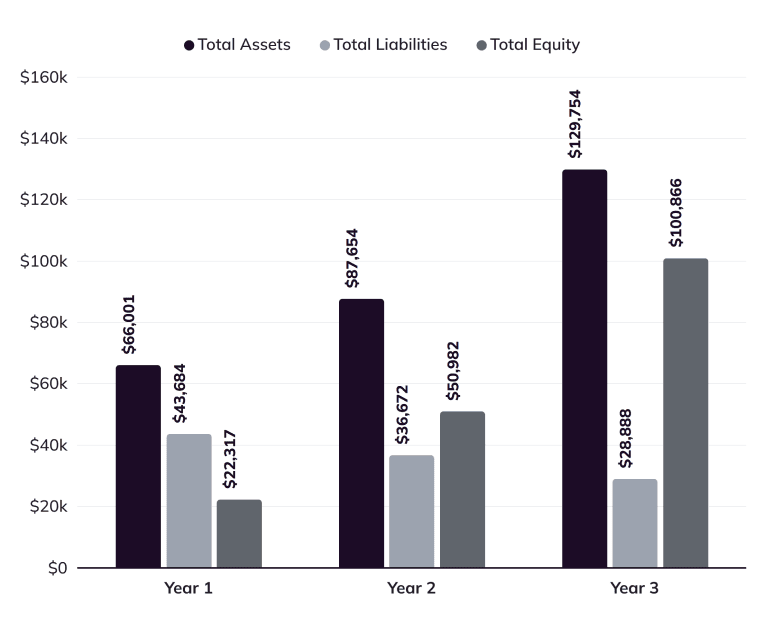
Balance Sheet (Years 1-3)
| Category | Year 1 ($) | Year 2 ($) | Year 3 ($) |
|---|---|---|---|
| Assets | |||
| Cash | 32,294 | 58,340 | 108,833 |
| Prepaid insurance | 0 | 0 | 0 |
| Lease security deposit | 3,800 | 3,800 | 3,800 |
| Net PP&E | 29,907 | 25,514 | 17,121 |
| Total Assets | 66,001 | 87,654 | 129,754 |
| Liabilities | |||
| SBA microloan | 43,684 | 36,672 | 28,888 |
| Total Liabilities | 43,684 | 36,672 | 28,888 |
| Equity | |||
| Paid-in capital | 20,000 | 20,000 | 20,000 |
| Retained earnings (cumulative net income) | 2,317 | 30,982 | 80,866 |
| Owner’s Equity | 22,317 | 50,982 | 100,866 |
| Total Liabilities + Owner’s Equity | 66,001 | 87,654 | 129,754 |
Depreciation Schedule
| Asset | Cost | Useful Life | Annual Dep. | Acc. Dep. Y1 | Net PP&E Y1 |
|---|---|---|---|---|---|
| Cameras & lenses | $8,500 | 5 years | $1,700 | $1,700 | $6,800 |
| Studio lighting & backdrops | $4,800 | 5 years | $960 | $960 | $3,840 |
| Computer & viewing setup | $5,500 | 5 years | $1,100 | $1,100 | $4,400 |
| Leasehold improvements | $12,000 | 5 years | $2,400 | $2,400 | $9,600 |
| Furniture & fixtures | $4,200 | 7 years | $600 | $600 | $3,600 |
| Display wall art & sample albums | $2,500 | 3 years | $833 | $833 | $1,667 |
| Year 2 equipment | $4,000 | 5 years | $800 | — | — |
| TOTAL | $41,500 | — | $7,593 / $8,393 / $8,393 | $7,593 | $29,907 |
Projected Cash Flow
| Category | Year 1 | Year 2 | Year 3 |
|---|---|---|---|
| Beginning Cash | $25,800 | $32,294 | $58,340 |
| Operating Activities | |||
| Net income | $2,317 | $28,665 | $49,884 |
| Depreciation | $7,593 | $8,393 | $8,393 |
| Change in prepaid insurance | $2,900 | $0 | $0 |
| Net Cash from Operations | $12,810 | $37,058 | $58,277 |
| Investing Activities | |||
| Equipment purchases | $0 | ($4,000) | $0 |
| Net Cash from Investing | $0 | ($4,000) | $0 |
| Financing Activities | |||
| Loan principal repayment | ($6,316) | ($7,012) | ($7,784) |
| Net Cash from Financing | ($6,316) | ($7,012) | ($7,784) |
| Net Change in Cash | $6,494 | $26,046 | $50,493 |
| Ending Cash | $32,294 | $58,340 | $108,833 |
Break-Even Analysis
| Metric | Value |
|---|---|
| Fixed costs per year (Year 2) | $115,036 |
| Average revenue per session (Year 2) | $589.09 |
| Variable cost per session (Year 2) | $115.30 |
| Contribution margin per session | $473.79 |
| Break-even sessions per year | 243 |
| Break-even revenue | $143,032 |
| Sessions to also cover loan payments | 267 |
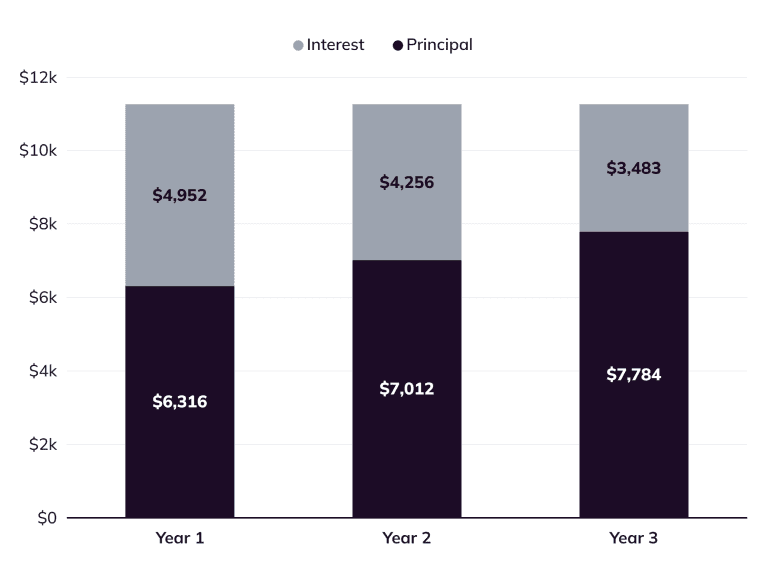
Loan Repayment & Debt Coverage
| Category | Year 1 | Year 2 | Year 3 |
|---|---|---|---|
| Interest | $4,952 | $4,256 | $3,483 |
| Principal | $6,316 | $7,012 | $7,784 |
| Ending loan balance | $43,684 | $36,672 | $28,888 |
| EBITDA | $14,862 | $41,314 | $61,760 |
| Debt service coverage | 1.32x | 3.67x | 5.48x |
Risk Analysis & Stress Test
Pawlight covers its loan payments in every year of the forecast. Year 1 debt coverage is 1.32x, or 2.23x before the one-time launch costs.
Fewer bookings would hurt Pawlight more than smaller orders. If Year 2 sessions fell 20%, debt coverage would drop from 3.67x to 0.89x. If clients ordered 25% less instead, coverage would stay at 1.48x.
The difference comes from fixed costs. Each lost session takes its fee and its order with it, while rent and Maren’s salary stay the same.
Pawlight watches four risks most closely:
(1) Fewer bookings
If bookings fall short, Maren will defer a quarter of her salary and cut marketing by 30%. With those two steps, a 20% drop in Year 2 sessions still leaves debt coverage at 2.30x.
(2) Smaller orders
If clients buy only a few digital images, the session fee still arrives at booking. The average sale already assumes that many clients choose a small collection.
(3) A pet hurt in the studio
The gated, non-slip room, the trained handler, and the no-forced-poses rule keep this risk low. If it happens, the care, custody, and control part of Pawlight’s insurance covers the vet bill.
(4) One photographer
Pawlight keeps a backup camera kit and cloud copies of every session. Maren also carries term life and disability insurance assigned to the lender, which she pays for personally.
The Quickest Way to turn a Business Idea into a Business Plan
Fill-in-the-blanks and automatic financials make it easy.


Vinay Kevadia
Vinay Kevadiya is the founder and CEO of Upmetrics, the #1 business planning software. His ultimate goal with Upmetrics is to revolutionize how entrepreneurs create, manage, and execute their business plans. He enjoys sharing his insights on business planning and other relevant topics through his articles and blog posts. Read more