Executive Summary
BrightSteps Preschool LLC is an early childhood learning center in Franklin, Tennessee, which was established and run by Emily Watson and is a privately-owned LLC. BrightSteps provides children aged 2.5 to 5 years with a safe, structured, and nurturing preschool setting that is valued by working parents who cherish small class size and uniform care. Daily routines and activities are designed to prepare children academically, socially, and emotionally for kindergarten.
Moreover, the preschool will be a childcare-zoned, leased premise and will start with one classroom, increasing to two or three classrooms as enrollment increases and licensing permits. The on-site director will be Emily Watson, who will be responsible for the daily operations, staff supervision, enrollment, and compliance with regulations. Such an owner-based strategy will result in accountability, stability, and good family relations.
BrightSteps is concerned with quality early learning, effective communication with parents, and a relaxed, well-managed classroom atmosphere as opposed to fast-tracked growth. The goal is to develop a financially stable preschool reaching break-even in the third year of operation, ensure responsible repayment of SBA loans, and create a reliable local preschool with the possibility to develop a stable, long-term growth.
Problem
Most Franklin working parents are having a hard time locating preschool opportunities that are comfortable and intimate. Moreover, many working families are not just looking for childcare, but for a preschool that helps prepare their child for kindergarten. In larger centers, there is a tendency to be overcrowded, with changing staff members and minimal communication. Smaller programs are filled fast or are not well structured.
Parents would like to know who takes care of their child day by day, whether the child is not fine, and that the rules of safety are observed without exception. Their waitlists are also long, schedules are not clear, and abrupt closures interfere with work and family schedules. Such loopholes cause families to be stressed and uncertain, particularly in the sensitive formative years when stability, routine, and reliable caretakers are of utmost importance.
Solution
BrightSteps Preschool has an owner who is present daily, and this provides the school with equal leadership and direct oversight. Classroom sizes are kept low, staff assignments are kept constant, and children have a routine during the day, which makes them feel safe and secure. Parents are updated regularly and can communicate directly with the Director, as opposed to communicating with the changing managers of intermediaries.
The school is situated in a childcare-approved and licensed facility, and enrollment is done gradually to ensure that the school is not congested. The strategy will offer quality care, expectations, and offer the families a preschool they can rely on in the initial learning of the child and their daily routine.
Market Trends
More parents are returning to work, and many households now rely on two incomes or a single working parent. This shift continues to increase the need for reliable child care and preschool services. At the same time, families place greater importance on early childhood education.
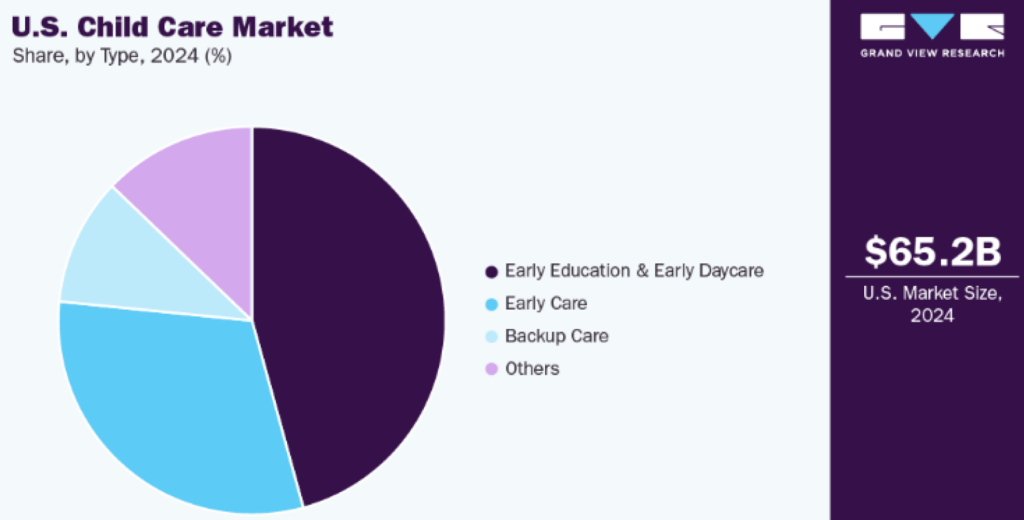
The U.S. child care market reached $65.15 billion in 2024 and is projected to grow to $109.88 billion by 2033.
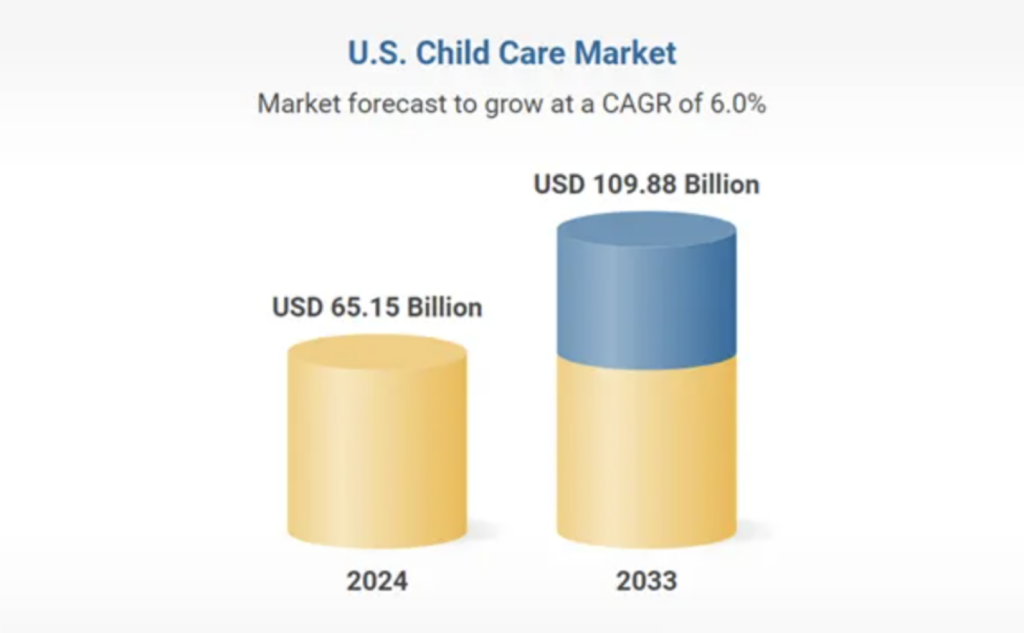
The market is expected to expand at an average annual rate of 6.02%, reflecting steady, long-term demand for preschool and early learning programs.
Financials
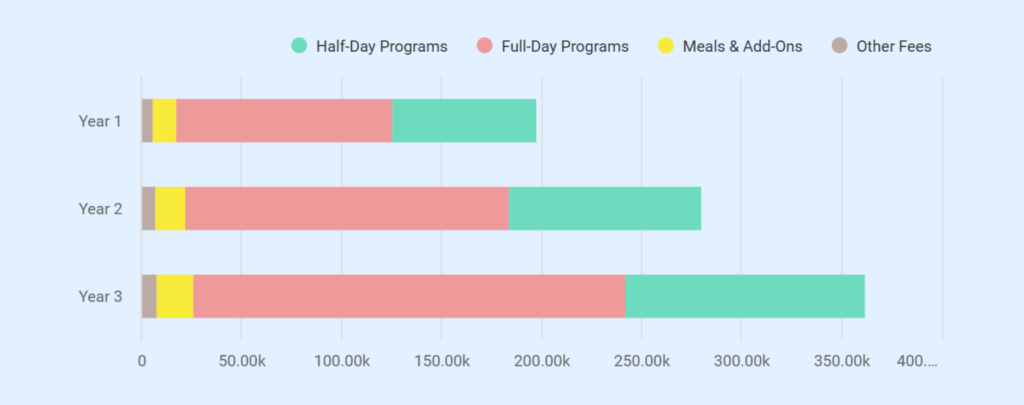
BrightSteps Preschool has conservative financial assumptions and a working capital store to fund a slow enrollment growth. The business estimates revenue of $198,000 at Year 1, $280,000 at Year 2, and $362,000 at Year 3, with the opening of more classrooms and a stabilization of enrollment. It is estimated that at steady state, the annual operating costs will be $1,27,500 and include payroll, rent, insurance, supplies, and debt service.
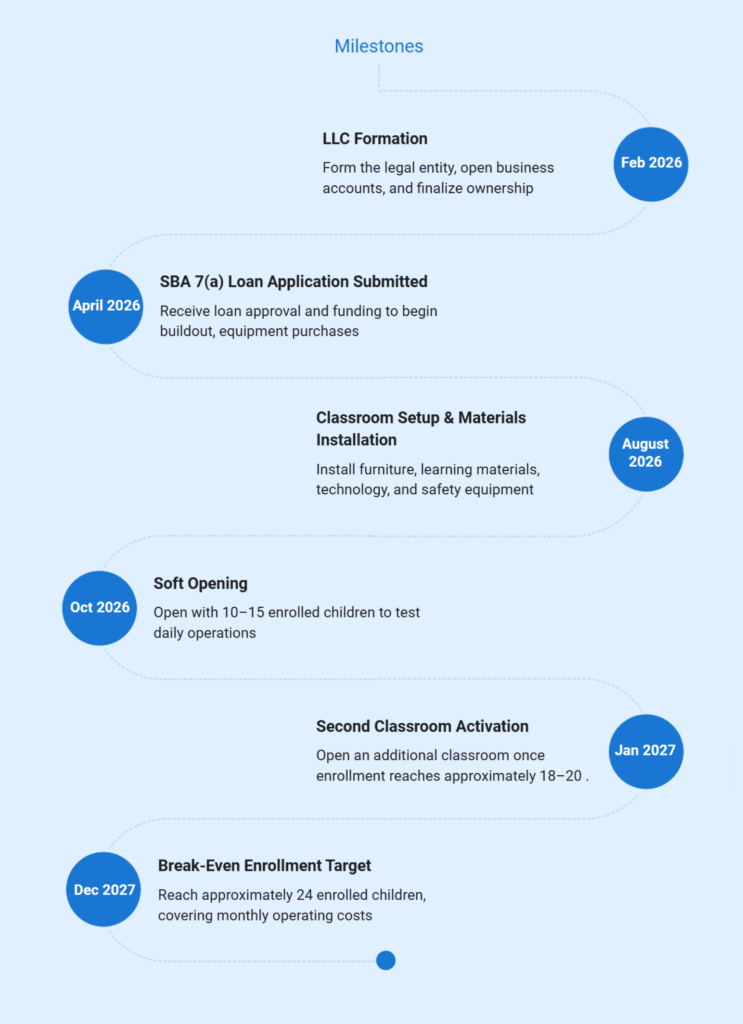
The preschool reaches break-even at approximately 24 enrolled children, which management expects during the Year 3. Working capital set aside at launch allows the business to operate comfortably before reaching this level.
The long-term financial goal is to maintain steady profitability, support on-time SBA loan repayment, and operate two to three fully enrolled classrooms with predictable cash flow and controlled expenses.
Funding Requirements
For classroom setup, licensing, early marketing, and working capital, this plan requests $216,000 through an SBA 7(a) term loan from Northeast Bank with a 10-year repayment period.
The financing supports the launch of a single-location preschool operating from a leased facility in Franklin, Tennessee.
The owner, Emily Watson, will contribute $24,000 in personal funds, representing 10% of the total project cost. This equity injection covers a portion of startup expenses and shows a direct financial commitment to the business.
Business Overview
BrightSteps Preschool LLC operates as a single-owner limited liability company (LLC). This structure keeps ownership and decision-making clear while protecting the owner’s personal assets. It also allows simple tax reporting and flexible operations, which fit a first-time preschool startup.
The preschool will operate as a private early childhood learning center focused on children ages 2.5 to 5 years. The business will open at a manageable scale with one classroom, serving a limited number of children to meet licensing rules and maintain daily consistency. As enrollment stabilizes, the program will expand to two or three classrooms.
The owner will manage daily operations, compliance, enrollment, and staff oversight. This hands-on approach supports quality control, stable staffing, and clear communication with parents. The business prioritizes steady enrollment, predictable routines, and long-term sustainability rather than rapid growth.
Business Location
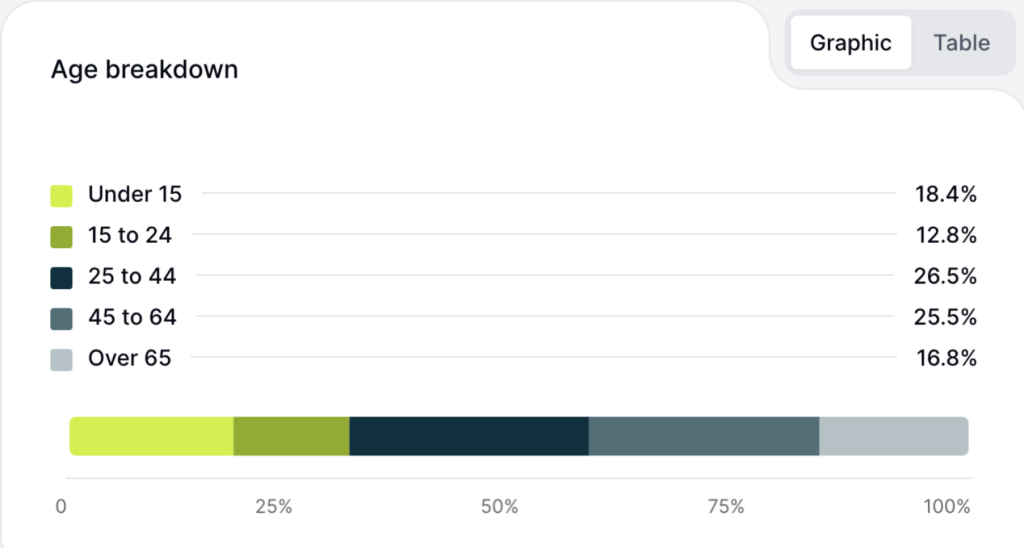
The preschool is at 7421 Willow Creek Drive, Suite A, Franklin, Tennessee 37064, and occupies a family-oriented location in Franklin. The area has a good combination of young families and commuters who have jobs in the Nashville-Franklin metro region, and there are over 18.4% children in the area below the age of 15, indicating that most families have children of school-going age.
Franklin residents also indicate the presence of good childcare and preschool facilities as one of the local needs in the community surveys, which means that parents are seeking good early learning programs.
The Franklin residents are zoned in childcare and situated in proximity to residential streets and close to the major commuter roads, making it convenient for working parents who drop off and pick up their children.
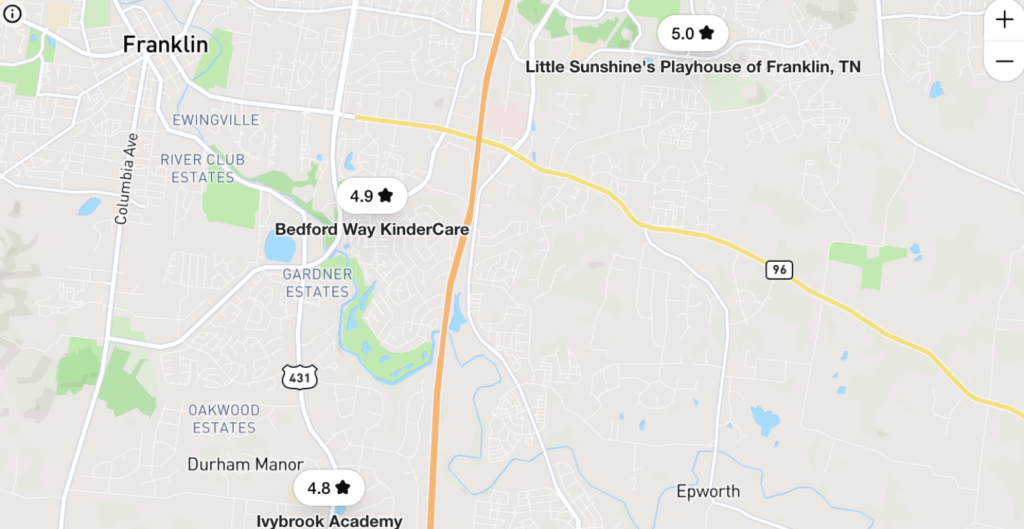
Little Sunshine Playhouse of Franklin, Ivybrook Academy, and Bedford Way KinderCare are several preschools located in the area, indicating a current demand and a community used to using preschool services.
Ownership
BrightSteps Preschool LLC is 100% owned by Emily Watson, who serves as the Founder and Director. The company is operated as an LLC, which means that the owner has complete authority over the decisions made concerning the business operations, staffing, enrollment, compliance, and financial management.
Emily Watson has early childhood education support and child-related community programs experience. She has taken the necessary childcare qualification and training in directorship and is still very much active in day-to-day running. Such practical leadership makes it consistent, accountable, and compliant with the licensing regulations.
Starting with a leased facility and a few classrooms is a deliberate choice to ensure quality, follow regulations, and maintain financial stability rather than focusing on rapid expansion. No external partners or investors will be engaged at the start, which will enable clear leadership, management, and effective relationships with families from the first day.
Operating Principles
Every decision we make is guided by what best supports each child’s growth, safety, and happiness. Here’s how we put these principles into daily practice:
- Focus on what benefits the children in every decision.
- Keep daily activities structured yet flexible.
- The founder actively oversees classrooms and staff to ensure quality and consistency.
- Limit enrollment to ensure personal attention for each child.
- Maintain open communication with parents about progress and activities.
- Ensure all classrooms, playgrounds, and materials meet safety standards.
- Train staff regularly and update curriculum based on feedback.
Start-up Summary
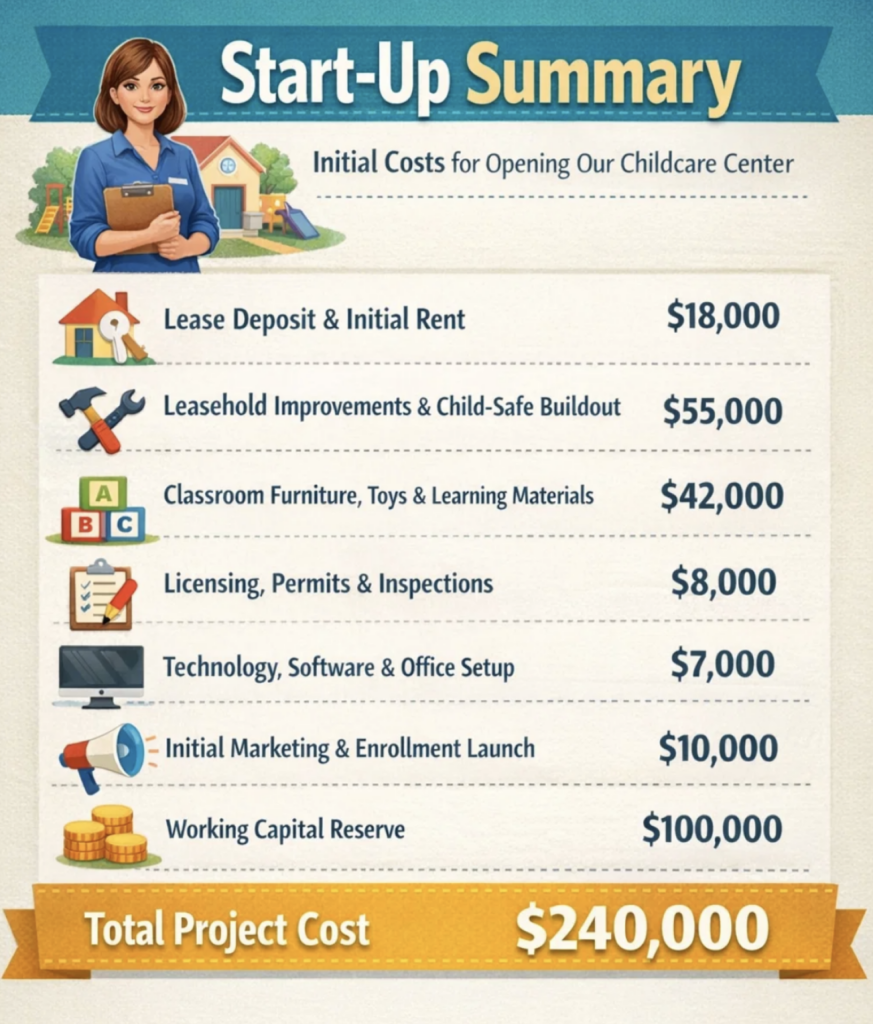
We will operate from a leased, childcare-zoned facility with one classroom. The founder, Emily Watson, will manage day-to-day operations, enrollment, and staff.
Long-Term Goals
We intend to be a reputable, quality early childhood education center within the Franklin community. We intend to go up to three classrooms without using large classes and making sure that every child gets personal attention. In the first three years, we aim to maintain stable enrollment and predictable revenue while keeping management hands-on and fostering close relationships with parents. In the long run, we will be able to introduce programs that enhance early learning and help all children under our care grow and develop.
Market Analysis
Franklin is supported by a strong working population, with 45,402 residents actively employed. This creates consistent demand for dependable kindergarten and childcare services, particularly for families that rely on full-day care to maintain work schedules. For many households, preschool is not optional—it is essential.
County-level data reinforces this need. There are 2,258 infants and toddlers in the area, with 1,383 children living in households where all parents work. Yet only 267 licensed infant–toddler childcare spaces are available. Even with a 16% vacancy rate, supply remains far below demand, leaving many families with limited or delayed access to care.
At the national level, the U.S. child care market reached an estimated $65.15 billion in 2024 and is projected to grow to $109.88 billion by 2033. This reflects steady annual growth of about 6% over the next several years. This growth reflects long-term demand rather than short-term trends.
Locally, parents often choose between large centers with limited personal attention or small programs with long waitlists. This imbalance leaves room for well-run, small preschools that offer consistency, clear communication, and stable staffing. A focused, owner-led preschool aligns well with the needs of Franklin’s working families and growing early education demand.
Target Audience
The focus is on local families who want a trusted preschool where children feel known, supported, and comfortable every day.
- Working parents with children ages 2.5–5 seeking structured early learning
- Dual-income households that need reliable, full-day preschool care
- Families who prefer small class sizes and personal attention
- Parents who value safety, routine, and consistent teachers
- Local families looking for a neighborhood-based preschool they can trust
Barrier To Entry
Starting a preschool involves navigating strict regulations, significant costs, and building trust with families—creating natural barriers for new entrants. Here’s what makes barrier for BrightSteps Preschool:
- Tough state childcare licensing and inspection standards.
- Large initial investments in child-safe construction, machinery, and working capital.
- Inadequate childcare in zoned residential properties.
- The constant need for staff and the required teacher-to-child ratios.
- Good parental trust that is developed over time.
- Observance of health, safety, and insurance laws.
Emerging Trends
The preschool and early childhood education market is evolving, with new trends shaping how families choose programs and how schools deliver care and learning.
Technology-Enabled Communication
Parents require real-time updates, photos, and effective communication in the form of apps and digital tools. The attendance, billing, and parent messaging have become more efficient with the use of software in the preschools.
Greater Emphasis on Social-Emotional Skills
Programs are more focused on assisting children in overcoming emotions, gaining a sense of confidence, and communicating well with their peers. These are skills that parents appreciate more and more than early academics do.
Smaller, High-Trust Preschools are in Demand
Within the families, preference is growing towards smaller centers with regular teachers and leadership that is directly accessible. Enrollments are fuelled by trust, stability, and familiarity.
Flexible Program Structures
Flexible program structures let children adapt to individual needs while following the standard schedule. The half-day/full-day mix is sought after by more parents who require a flexible work schedule.
Increased Expectations of Safety and Cleanliness
Parents prefer safety regulations and secure drop-off processes & easily cleaned classrooms. The centers that directly convey these standards are unique.
Play-Based Structure Early Learning
Kids desire to learn by playing rather than by studying. Balance programs that incorporate creativity and structure are the ones that are attractive to contemporary families that require all-rounded development of their kids.
Competitors
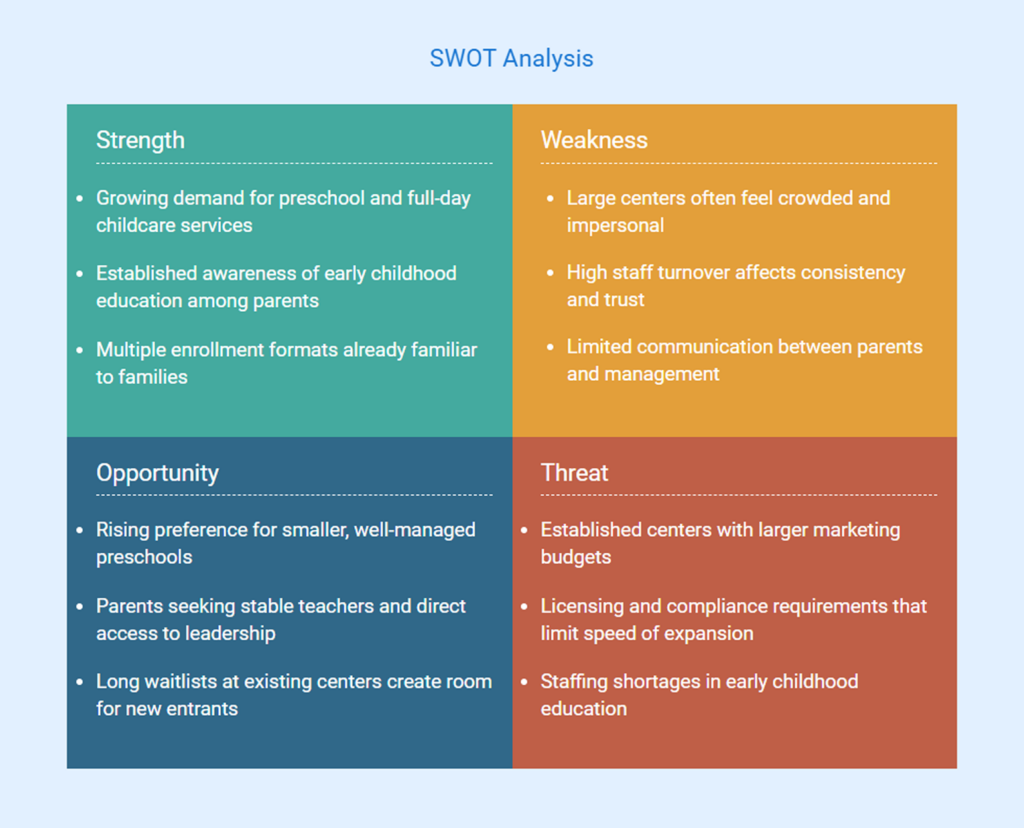
The local preschool market consists of a combination of large childcare centers, small provider privately-owned preschools, church programs, and in-home providers. All of the options fulfill a need, but there is none that fulfills the demand of small classes, regular staffing, and management by the owner. The SWOT analysis below is a reflection of the competitive environment in which the preschool will be operating.
SWOT Analysis
Here’s a SWOT analysis of the BrightStep Preschool’s current position and growth potential:
Differentiation Strategy
The BrightSteps Preschool competes through its small and under control operations. It is not concerned with rapid growth, staffing, low child-teacher ratios, and daily routine are sustained. It is a model that has an owner at the helm, a model that facilitates quick decision making, supervision, and direct contact with parents, and this is what bigger centers can hardly provide.
The strategy revolves around trustworthiness and reliability. A less demanding environment, a schedule, frequent teachers, and a slower enrollment rate make the lives of children less intense and the lives of families less difficult. The preschool can leverage on its size-neutral position, in which it focuses on quality and safety to build relationships with parents and market itself as a trusted local service to working parents. This allows parents to regard it as a replacement for short-term expediency.
Programs and Services
The issue of concern in BrightSteps Preschool is to ensure that secure, interactive, and purposeful learning conditions are created among young children. The preschool focuses on structured early learning that prepares children socially, emotionally, and academically for kindergarten.
There are a small number of students in the classes, the routine is normal, the practice of studying under various circumstances is practical, and it is also beneficial to every child.
The combination of directed work and free play will give all children an individual approach and care. The owner-led control ensures high standards and strong parent communication, and gives a background of life-long learning. The description of the detailed services and curriculum is as follows:
Programs & Pricing
| Program / Service | Description | Monthly Tuition (USD) |
|---|---|---|
| Toddler / Pre-K Classroom | Initial classroom at launch; hands-on learning in small groups | Varies based on half-day or full-day enrollment. |
| Half-Day Preschool Program | Structured early learning curriculum with guided activities | $650–$750 |
| Full-Day Preschool Program | Full-day care with curriculum, meals/snacks | $900–$1,050 |
| Meals & Snacks | Daily meals and snacks, parent-paid or included option | Included in tuition |
| Curriculum | Early learning programs focus on social, cognitive, and motor skills | Included in tuition |
Program Delivery Approach
Our programs focus on providing a balanced, hands-on learning experience tailored to young children. Each classroom maintains small groups to ensure personal attention and consistent teacher-child interactions. Days follow structured routines that include guided learning activities, creative play, storytime, and outdoor exploration, allowing children to develop social, cognitive, and motor skills in a safe environment.
Owner-led oversight ensures staff follow curriculum standards, maintain safety protocols, and adapt activities based on each child’s needs. Meals and snacks are incorporated into the daily schedule, and the owner will communicate regularly with parents about progress and daily experiences. Programs expand gradually, adding classrooms as enrollment grows, while always preserving quality and individualized care.
Child Safety & Well-being
In all our programs, the first consideration is the safety and well-being of children. There are classrooms and play areas that meet or surpass all state licensing and safety standards. The employees receive first aid, CPR, and child supervision best practices training.
Secure drop-off and pick-up processes, frequent cleaning and sanitizing of the premises, and attentive observation of meals and snacks against allergies or choking hazards are a part of the daily routine.
We ensure that teacher-to-child ratios are kept low so that each child gets an opportunity to be attended to. There is always supervision of outdoor play, and exploration is done safely with equipment that is appropriate to the age of the children.
Employees share day-to-day updates with parents regarding the child and his/her progress and worries, which constitutes a powerful collaboration, contributing to safety, as well as emotional well-being.
Marketing Strategy
The marketing strategy aims to target local working families that are actively seeking good preschool facilities. Focus is made on visibility, trust, and word-of-mouth as opposed to aggressive advertising.
Marketing Channels
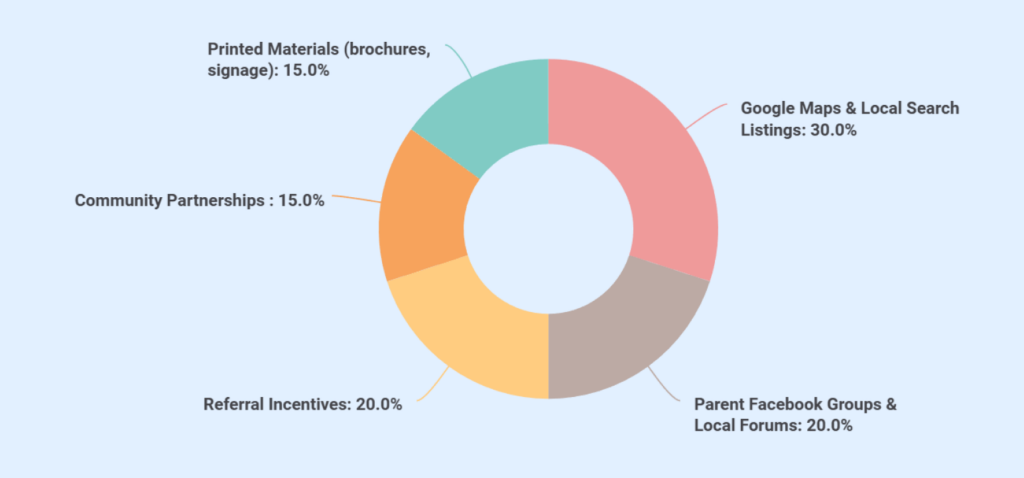
The marketing is directed toward the local exposure and the parent trust, and not the expensive advertising. The preschool allocates a small monthly budget of about $500 on marketing, which is adequate to sustain a steady flow in the community, sustain the growth of enrollment, and depend on referrals as the main booster in the long run.
| Marketing Channel | Purpose | Monthly Spend |
|---|---|---|
| Google Maps & Local Search Listings | Improve visibility for parents searching nearby | $150 |
| Parent Facebook Groups & Local Forums | Reach neighborhood families directly | $100 |
| Referral Incentives | Encourage word-of-mouth from enrolled families | $100 |
| Community Partnerships (flyers, events) | Build relationships with clinics and centers | $75 |
| Printed Materials (brochures, signage) | Support local outreach and tours | $75 |
| Total Monthly Marketing Budget | $500 |
Brand Positioning & Communication
We position ourselves as a high-quality and trusted preschool where children are given personal attention, and parents have no worries. We emphasize safety, small learning groups, practical education, and care provided by the owners of the brand.
To target this message, we apply marketing channels in a strategic way. Our classrooms, activities, and child-centered environment are highlighted in social media posts, local Facebook groups, and listings on Google Maps. Referral schemes and partnerships with the community strengthen trust and credibility.
All interactions, including online advertisements or even emails to parents, are uniform, precise, and representative of our core values, and make families know what is different about us and why we are the best place to send their children.
Enrollment Strategy
To ensure that all children and families have a pleasant experience, our enrollment strategy is based on the balance of a gradual increase in growth and the quality of care.
- Soft Opening: The number of children should be limited at the beginning to avoid any challenges in the running of the business and quality care.
- Gradual Ramp-Up: Use progressive enrollment within 6-9 months as the number of classrooms grows and families enroll.
- Retention Focus: Focus on retention of families who are pleased with great communication, personal attention, and stability in care rather than hard selling.
Performance Metrics
We use important metrics to evaluate success and make needed improvements:
- Enrollment Numbers: Keep track of monthly and annual enrollment to make sure the growth is as projected.
- Retention Rate: Monitor the number of families that stick around year after year to remain stable.
- Parent Satisfaction: Gather parent comments by use of surveys and face-to-face interactions to enhance services.
- Staff Performance: Measure teacher effectiveness, engagement, and progress of professional development.
- Financial Health: Track revenues, expenditures, and cash flow to remain within the business plan.
Such measures assist us in making decisions that are informed, provide quality care, and be sustainable in the long run.
Overwhelmed by business planning?
Try Upmetrics AI to Generate Your Plan in Minutes
Operations & Staff Planning
All the preschool activities will be operated in one leased building, which will ensure simple and to-the-point management. To make sure that all children are provided with the same level of care and attention, we will hire a small but hardworking group of teachers and other support personnel.
The recruitment of the staff will be based on experience, certifications, and congruence with our child-centered approach. Through the team being lean and owner-led, we will be able to ensure quality and supervise classrooms closely and responsively to the needs of children and families.
Facilities and Security
We are based in a childcare-approved facility that is designed safely and visibly. The location of the building is a family-friendly community that enjoys a high level of foot traffic, close to houses, and a serene residential environment. This will ensure a safer drop-off and pick-up schedule and provide an additional level of comfort to the families.
The security measures are controlled access points, secure door locks when the center is operating, and the presence of distinct sign-in and sign-out procedures for all kids. Child-safe furnishing and age-related equipment, and well-maintained play, are applied in the classroom. The outdoor areas are completely closed and monitored.
Children are closely monitored by the staff during the day, and daily cleaning, compliance, and safety checks are ensured by the Director. Such steps provide a safe and comfortable environment in which children learn, and families feel safe.
Hours of Operation
- Monday – Friday: 7:30 AM – 5:30 PM
- Saturday & Sunday: Closed
- Drop-Off / Pick-Up Windows: Flexible within operating hours to accommodate working parents
- Holidays & Closures: Closed on major public holidays; schedule shared in advance with families
Day-to-Day Operations
Every day is characterized by a strict and regular regimen to help children and employees.
- The day begins with a secure drop-off and classroom setup.
- Structured learning tasks and moderated play all day long in the morning.
- Breaks and meals are on a routine.
- Educators oversee learning, attendance, and the cleanliness and safety of classes.
The Director handles the schedules of staff, classroom ratios, licensing, and parent communications. Pick-up is conducted in controlled measures to promote safety. Everyday cleaning, supply check, and staff check-ins maintain the order and responsiveness of the operations.
Staffing Plan
The BrightSteps preschool will hire and operate with a small, well-structured team to ensure consistent care, safety, and compliance with licensing ratios. Staffing levels align with the initial classroom setup and will expand as enrollment grows.
| Role | Number of Staff | Monthly Pay (USD) | Total Monthly Cost (USD) |
|---|---|---|---|
| Owner / Director | 1 | $0 | $0 |
| Lead Teacher | 2 | $3,200 | $6,400 |
| Assistant Teacher | 1 | $2,400 | $2,400 |
| Floater / Part-Time Assistant | 1 | $1,200 | $1,200 |
| Total Monthly Payroll | $10,000 |
Training and Development
At BrightSteps, we have invested in the development of our personnel on the understanding that a competent teacher creates a better learning process. The staff are also constantly having training on early childhood education, safety, communication, and classroom management. We facilitate professional development, certification, and create an atmosphere where teachers are encouraged and valued. It is stronger due to this focus on lifelong learning, and retention is improved, and there is consistency in the classroom.
Risk Mitigation Strategy
The preschool manages the major operational and financial risks by means of reliable planning and proactive management.
- Enrollment Risk: We start with small enrollment and grow over time with the aid of working capital to bridge the initial months of operation.
- Staffing Risk: We employ a few trusted individuals and keep busy in the day-to-day operations in order to minimize staff turnover and ensure uniformity.
- Licensing and Compliance Risk: We abide by state requirements and ensure that we have early schedules of inspections, and also keep track of all documentation.
- Operational Disruptions: Consistent routines, back-up staffing plans, and regular maintenance mitigate the occurrence of daily disruptions.
- Financial Risk: The low risk-taking, cost containment, and savings in the cash management enable operations to run smoothly and debt repayment in good time.
This strategy will ensure the business is not put at risk but quality care and stability in the long run.
Regulatory and Compliance
We also work on a full legal basis and comply with all state requirements in terms of childcare. Our standards of compliance secure children, guarantee parents and make operations secure and reliable.
Licensing
All the necessary local, state, and/or federal licenses will be obtained to allow our company to work legally and professionally. This includes:
- Business Registration: Permit that enables us to conduct business within our territory regarded as legal.
- Employer Identification: Registration to meet income tax, payroll tax, and employment laws.
- Industry-Specific Operating License: Any registration or license needed by the industry to provide services or to sell goods.
- Professional Certifications: We will make sure that all the staff and the management acquire any licenses or certifications required to go along with their job and tasks.
- Child Care License: Approval from the Tennessee Department of Human Services (DHS) to operate a licensed preschool, ensuring compliance with safety, staffing, and childcare standards.
Industry Standards & Certifications
We will adhere and work towards pertinent industry guidelines to reflect quality, safety, and operational excellence. This involves adherence to accepted structures, voluntary standards, and best-practice qualifications that build our credibility, confidence, and improve trust between us and our clients and partners.
Milestone and Timeline
Financial Plan
The financial plan is constructed with low assumptions and a slow enrollment process. It is concerned with operating cash flow, limited spending, and proper debt repayments. This solution will enable the company to stay stable in the long term and sustain quality care and full regulatory compliance.
Revenue Forecast ( By Services)
| Program/Revenue Stream | Year 1 | Year 2 | Year 3 |
|---|---|---|---|
| Half-Day Programs | $72,000 | $96,000 | $120,000 |
| Full-Day Programs | $108,000 | $162,000 | $216,000 |
| Meals & Add-Ons | $12,000 | $15,000 | $18,000 |
| Other Fees | $6,000 | $7,000 | $8,000 |
| Total Revenue | $198,000 | $280,000 | $362,000 |
Annual Revenue Summary
| Metric | Year 1 | Year 2 | Year 3 |
|---|---|---|---|
| Annual Revenue | $198,000 | $280,000 | $362,000 |
| Average Monthly Revenue | $16,500 | $23,333 | $30,167 |
Profit and Loss Statement
| Category | Year 1 | Year 2 | Year 3 |
|---|---|---|---|
| Revenue | |||
| Half-Day Program Tuition | $72,000 | $96,000 | $120,000 |
| Full-Day Program Tuition | $108,000 | $162,000 | $216,000 |
| Meals Program Revenue | $10,000 | $13,000 | $16,000 |
| Extended Care Add-Ons | $2,000 | $2,000 | $2,000 |
| Registration Fees | $3,000 | $4,000 | $4,500 |
| Activity & Supply Fees | $3,000 | $3,000 | $3,500 |
| Total Revenue | $198,000 | $280,000 | $362,000 |
| Cost of Goods Sold (COGS) | |||
| Teaching Staff Payroll | $78,000 | $96,000 | $114,000 |
| Payroll Taxes & Benefits | $9,000 | $11,000 | $13,000 |
| Meals (Food Cost) | $10,000 | $13,000 | $16,000 |
| Classroom Supplies | $6,000 | $7,500 | $9,000 |
| Total COGS | $103,000 | $127,500 | $152,000 |
| Gross Profit | $95,000 | $152,500 | $210,000 |
| Gross Margin (%) | 48% | 54% | 58% |
| Operating Expenses | |||
| Director / Admin Salary | $42,000 | $45,000 | $48,000 |
| Rent | $54,000 | $54,000 | $54,000 |
| Utilities | $9,000 | $10,500 | $12,000 |
| Insurance | $6,000 | $6,300 | $6,600 |
| Marketing | $7,500 | $6,500 | $6,000 |
| Software & Office Expenses | $4,800 | $5,200 | $5,600 |
| Maintenance & Cleaning | $4,200 | $4,800 | $5,400 |
| Total Operating Expenses | $127,500 | $132,300 | $137,600 |
| EBITDA | -$32,500 | $20,200 | $72,400 |
| Depreciation | $18,000 | $18,000.00 | $18,000 |
| Interest Expense | $14,500 | $13,200 | $11,800 |
| Net Income | -$65,000 | -$11,000.00 | $42,600 |
Monthly Financial Breakdown (Year 1)
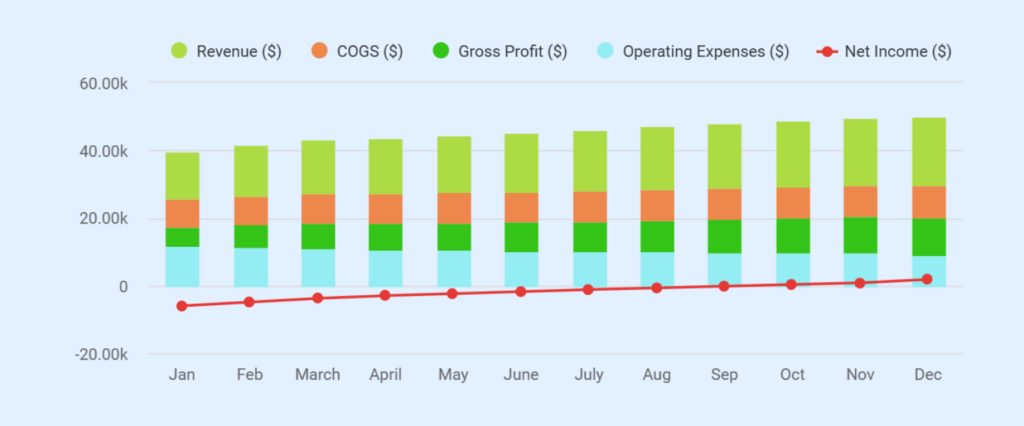
| Month | Revenue | COGS | Gross Profit | Operating Expenses | Operating Income (Before Depreciation & Interest) |
|---|---|---|---|---|---|
| January | $14,000 | $8,200 | $5,800 | $11,800 | -$6,000 |
| February | $15,000 | $8,400 | $6,600 | $11,500 | -$4,900 |
| March | $16,000 | $8,600 | $7,400 | $11,200 | -$3,800 |
| April | $16,500 | $8,700 | $7,800 | $10,800 | -$3,000 |
| May | $17,000 | $8,800 | $8,200 | $10,600 | -$2,400 |
| June | $17,500 | $8,900 | $8,600 | $10,400 | -$1,800 |
| July | $18,000 | $9,000 | $9,000 | $10,200 | -$1,200 |
| August | $18,500 | $9,100 | $9,400 | $10,100 | -$700 |
| September | $19,000 | $9,200 | $9,800 | $10,000 | -$200 |
| October | $19,500 | $9,300 | $10,200 | $9,900 | $300 |
| November | $20,000 | $9,400 | $10,600 | $9,800 | $800 |
| December | $20,500 | $9,500 | $11,000 | $9,200 | $1,800 |
| Total | $198,000 | $103,000 | $95,000 | $127,500 | -$32,500 |
Balance Sheet
| Category | Year 1 | Year 2 | Year 3 |
|---|---|---|---|
| ASSETS | |||
| Cash & Cash Equivalents | $23,000 | $8,000 | $44,600 |
| Prepaid Expenses & Deposits | $6,000 | $5,000 | $4,000 |
| Leasehold Improvements (Net) | $45,000 | $36,000 | $27,000 |
| Furniture, Toys & Equipment (Net) | $31,000 | $24,000 | $17,000 |
| Technology & Office Equipment (Net) | $10,000 | $8,000 | $6,000 |
| Total Assets | $115,000 | $81,000 | $98,600 |
| LIABILITIES | |||
| SBA Loan Balance (Long-Term) | $180,000 | $158,000 | $134,000 |
| Accounts Payable & Accrued Expenses | $0 | $0 | $0 |
| Total Liabilities | $180,000 | $158,000 | $134,000 |
| OWNER’S EQUITY | |||
| Owner Capital Contribution | $24,000 | $24,000 | $24,000 |
| Retained Earnings | -$89,000 | -$101,000 | -$59,400 |
| Total Owner’s Equity | -$65,000 | -$77,000 | -$35,400 |
| Total Liabilities + Equity | $115,000 | $81,000 | $98,600 |
Cash Flow Statement
| Category | Year 1 | Year 2 | Year 3 |
|---|---|---|---|
| Cash Flow from Operating Activities | |||
| Net Income | -$65,000 | -$11,000 | $42,600 |
| Depreciation (Non-Cash) | $18,000 | $18,000 | $18,000 |
| Net Cash from Operations | -$47,000 | $7,000 | $60,600 |
| Cash Flow from Investing Activities | |||
| Capital Expenditures | -$86,000 | $0 | $0 |
| Net Cash from Investing | -86,000 | $0 | $0 |
| Cash Flow from Financing Activities | |||
| Owner Capital Contribution | $24,000 | $0 | $0 |
| SBA Loan Proceeds | $216,000 | $0 | $0 |
| Loan Principal Repayment | -$16,300 | -$17,300 | -$18,400 |
| Net Cash from Financing | $223,700 | -$17,300 | -$18,400 |
| Net Change in Cash | $90,700 | -$10,300 | $42,200 |
| Beginning Cash Balance | -$67,700 | $23,000 | $8,000 |
| Ending Cash Balance | $23,000 | $8,000 | $44,600 |
Loan Repayment Plan
The loan will be repaid over a structured 10-year term using predictable monthly payments. Here’s the detail:
| Source | Amount | Percentage |
|---|---|---|
| SBA 7(a) Loan | $216,000 | 90% |
| Owner Cash Injection | $24,000 | 10% |
| Total Sources | $240,000 | 100% |
Use of Funds
| Use of Funds | Amount |
|---|---|
| Lease Security Deposit & Initial Rent | $18,000 |
| Leasehold Improvements (Child-Safe Buildout) | $55,000 |
| Classroom Furniture, Toys & Learning Materials | $42,000 |
| Licensing, Permits & Inspections | $8,000 |
| Technology, Software & Office Setup | $7,000 |
| Initial Marketing & Enrollment Launch | $10,000 |
| Working Capital Reserve (4–5 Months) | $100,000 |
| Total Uses | 240,000 |
Loan Assumptions
- Loan Type: SBA 7(a) Term Loan
- Loan Amount: 216,000
- Term: 10 years
- Interest Structure: Prime + SBA spread (modeled declining interest)
- Annual Debt Service: 31,200
- Approx. Monthly Payment: 2,600
- Repayment Type: Fully amortizing
- No balloon, no early payoff
Repayment Schedule
| Year | Annual Payment | Interest Portion | Principal Portion | Ending Balance |
|---|---|---|---|---|
| Year 1 | $31,200 | $14,900 | $16,300 | $199,700 |
| Year 2 | $31,200 | $13,900 | $17,300 | $182,400 |
| Year 3 | $31,200 | $12,800 | $18,400 | $164,000 |
| Year 4 | $31,200 | $11,700 | $19,500 | $144,500 |
| Year 5 | $31,200 | $10,500 | $20,700 | $123,800 |
| Year 6 | $31,200 | $9,200 | $22,000 | $101,800 |
| Year 7 | $31,200 | $7,800 | $23,400 | $78,400 |
| Year 8 | $31,200 | $6,200 | $25,000 | $53,400 |
| Year 9 | $31,200 | $4,400 | $26,800 | $26,600 |
| Year 10 | $31,200 | $1,600 | $29,600 | $0 |
The Quickest Way to turn a Business Idea into a Business Plan
Fill-in-the-blanks and automatic financials make it easy.

Upmetrics
Upmetrics is the #1 business planning software that helps entrepreneurs and business owners create investment-ready business plans using AI. We regularly share business planning insights on our blog. Check out the Upmetrics blog for such interesting reads. Read more