A beautiful location and a few luxury tents aren’t enough to make a glamping business work. Before welcoming your first guest, you’ll need to prepare the land, install utilities, and secure permits. And all of this costs money.
If you’re seeking funding, your business plan needs to show what it will cost to open, how much guests will pay, and whether bookings can cover expenses during slower months.
That’s what this sample for Fernhallow Glamping, a fictional six-unit retreat near Shenandoah National Park in Virginia, shows. It covers how the business plans its setup costs, seasonal bookings, and finances.
Use this example as a starting point for your own plan.
Executive Summary
Fernhallow Glamping is a new six-unit glamping retreat on 16 acres outside Luray, Virginia, opening on Saturday, May 1, 2027. Its address is the Fernhallow Service Building, 2186 Thistlecrest Lane, Luray, VA 22835. The site will have:
- Four Ridge Domes for couples, open all year
- Two Family Safari Tents for families and small groups, open from April through November
- A private bathroom, a kitchenette, a fire ring, and a mini-split for heat and air conditioning in every unit
A service building will provide laundry, storage, and facilities for day-to-day operations.
Why Luray
The land has been in Natalie Greer’s family for decades, and it sits about 15 minutes from the Thornton Gap entrance to Shenandoah National Park. The park drew 1,682,152 recreation visits in 2025, and most of Fernhallow’s guests will drive about two hours from the Washington, DC, area.
Its main guests will be couples on weekend getaways, friends visiting the park and nearby wineries, and families travelling during the summer.
Domes are projected to average $239 per night in Year 1 and safari tents $205, with higher prices on weekends and in October.
Natalie, the owner, spent 11 years in hotel operations in Northern Virginia. Her vision is for Fernhallow to be the first place DC-area couples and families book when they want to see the park without sleeping on the ground.
Occupancy & Earnings
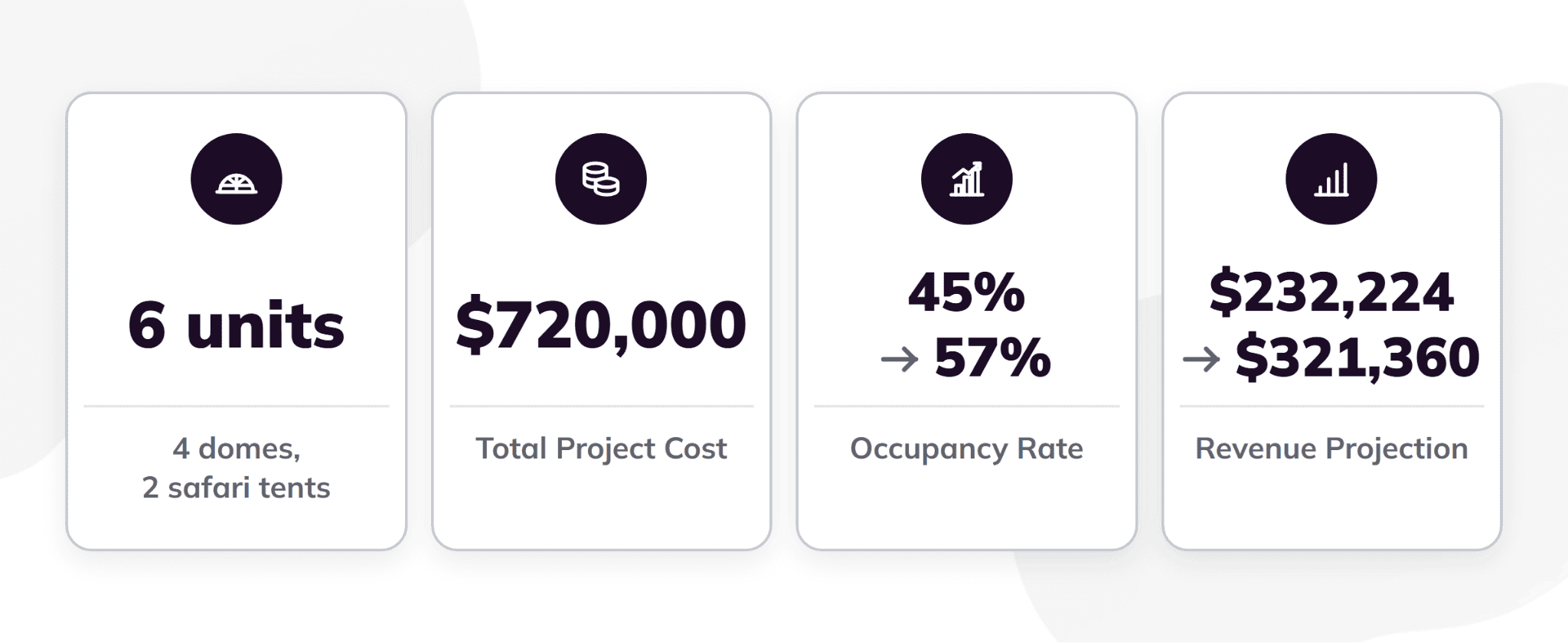
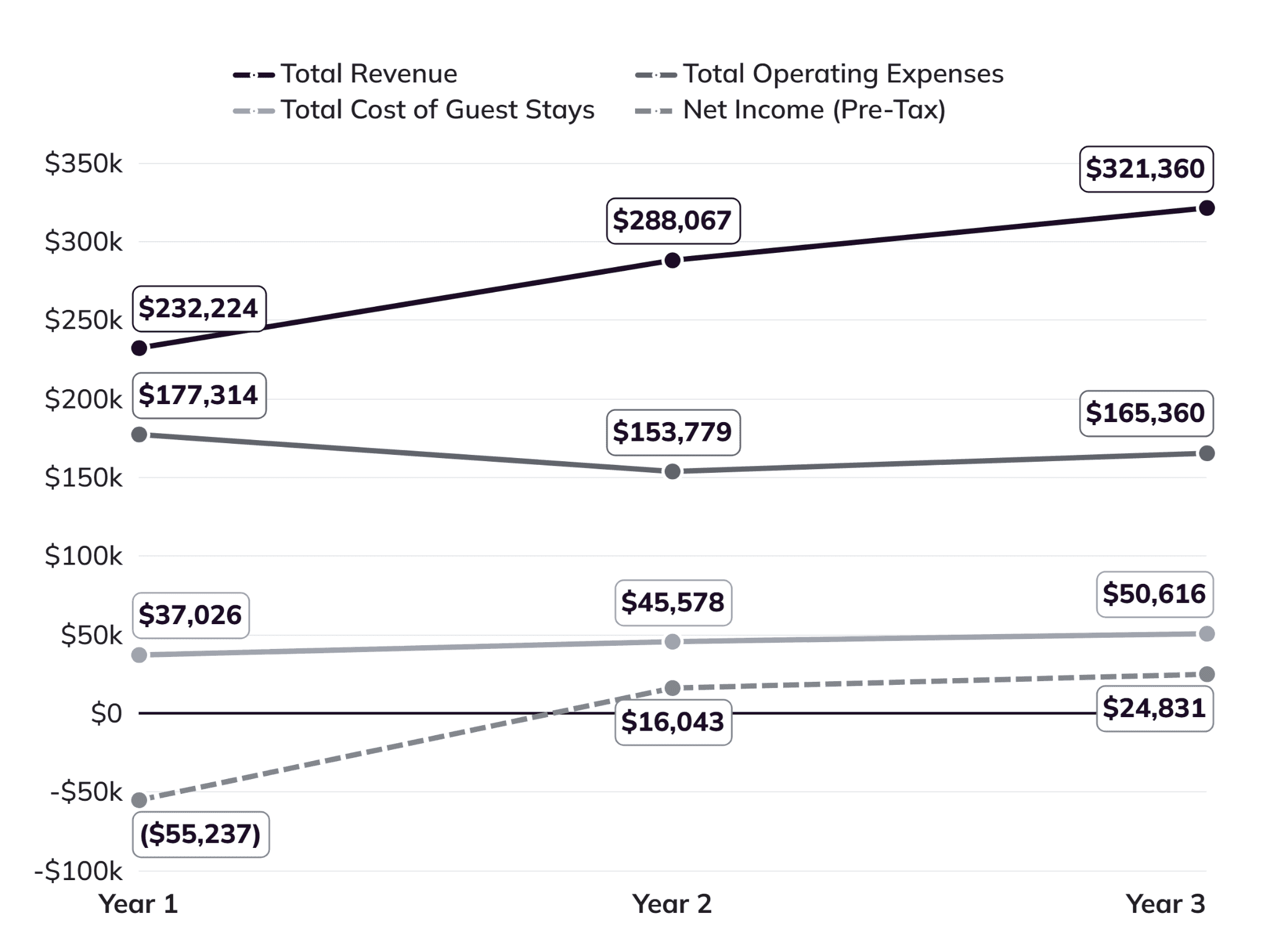
Occupancy rises from 45% in Year 1 to 57% in Year 3, and revenue grows from $232,224 to $321,360. Year 1 ends with a pre-tax loss of $55,237, including $35,238 of one-time launch and loan costs. Fernhallow then earns $16,043 in Year 2 and $24,831 in Year 3.
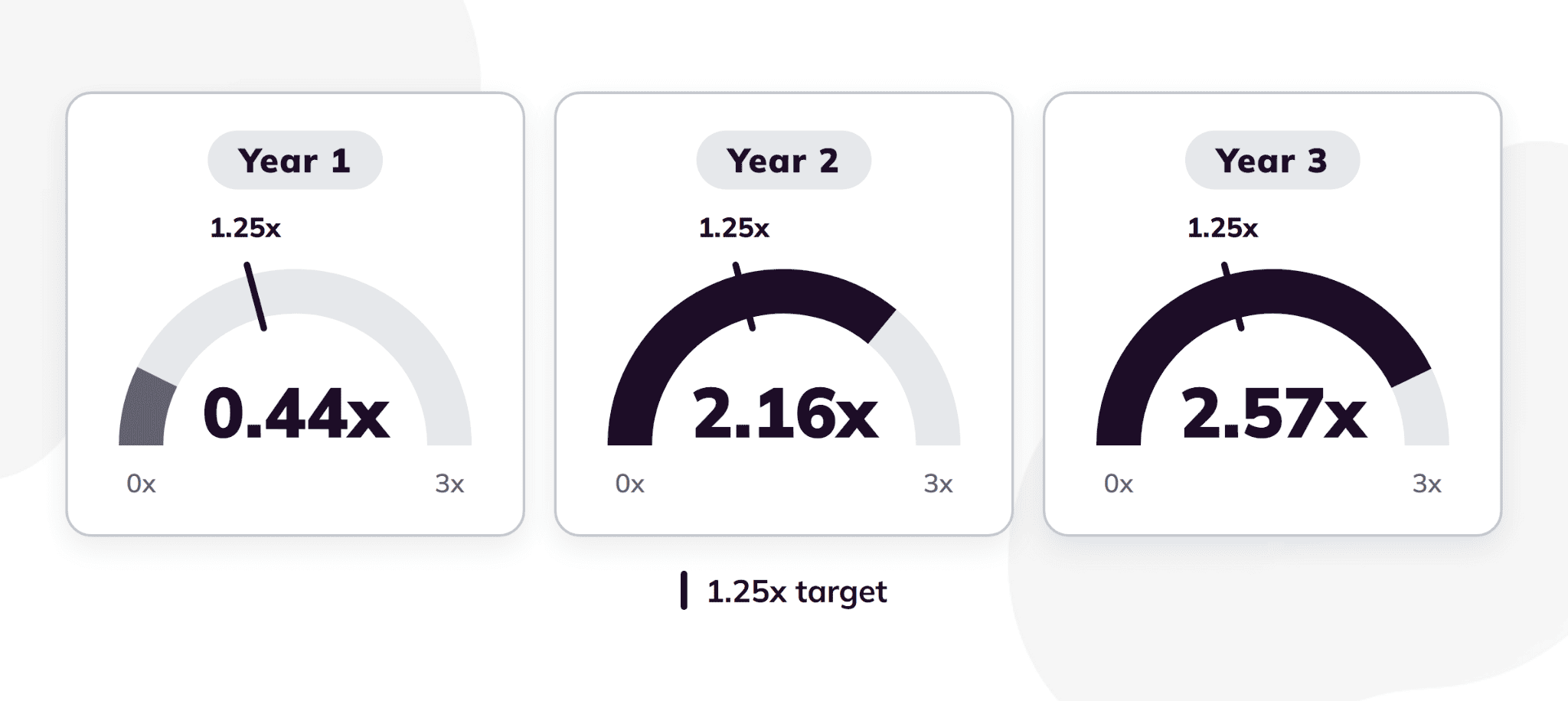
Earnings cover the loan payments 2.16 times in Year 2 and 2.57 times in Year 3. In Year 1, they cover them only 0.44 times, and the cash reserve pays the gap.
The four domes will remain available through winter, while the two safari tents close from December through March. This reduces winter capacity and makes cash management especially important during the first year.
Natalie will consider adding two more domes after Year 3, using business cash only if the existing units meet their occupancy, cash reserve, and debt-service targets.
USDA Loan Request
Fernhallow is seeking a $425,000, 25-year USDA Business & Industry guaranteed loan from Calderwick Bank at a proposed 8.50% interest rate.
Natalie will contribute $110,000 of savings and family-owned land valued at $185,000, bringing the total project value to $720,000, subject to lender acceptance of the land contribution.
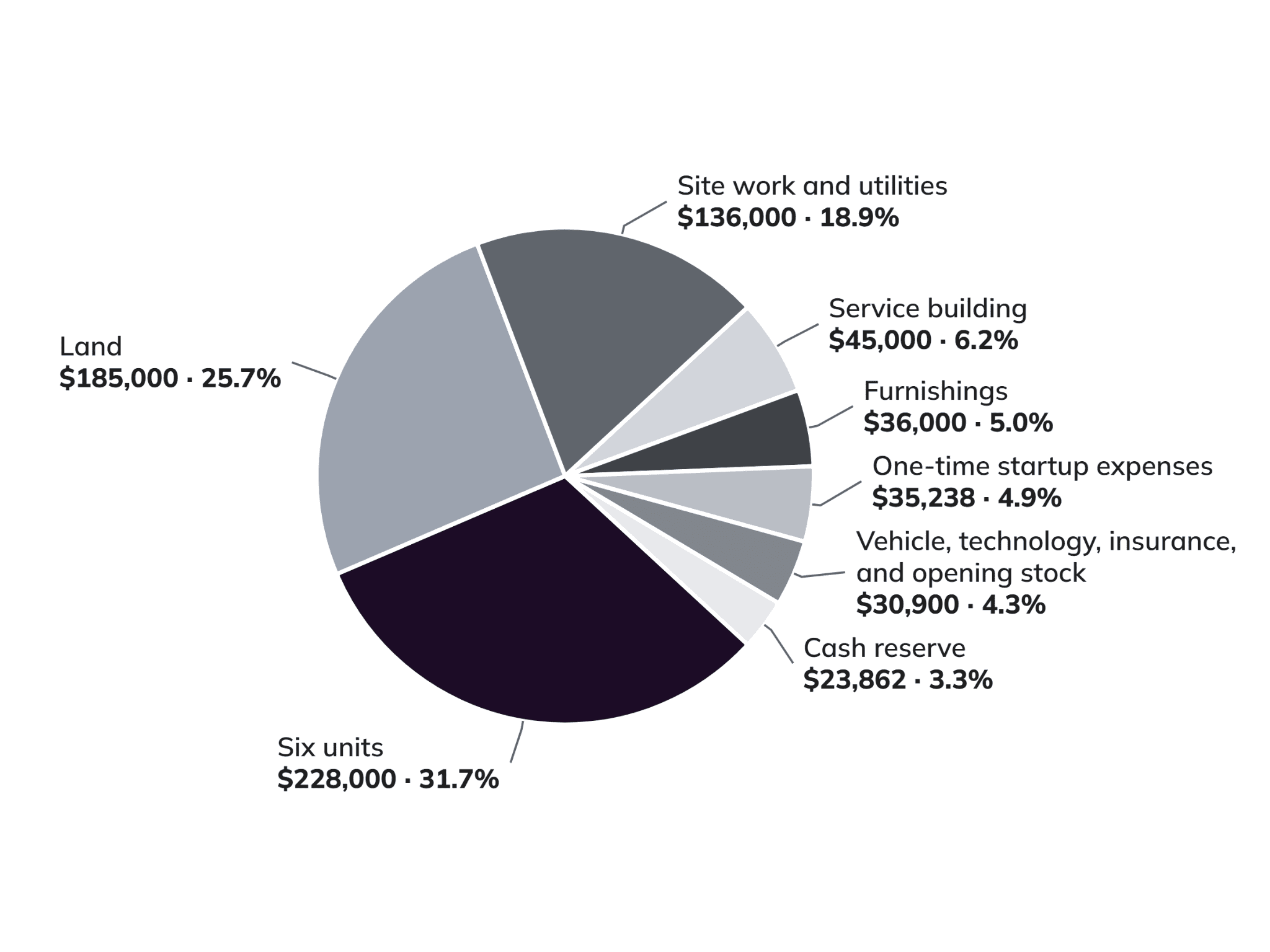
The loan and Natalie’s cash contribution provide $535,000 for development and startup expenses. The funding will cover:
| Use of Funds | Amount |
|---|---|
| Six glamping units | $228,000 |
| Site work and utilities | $136,000 |
| Service building | $45,000 |
| Furnishings | $36,000 |
| Launch, permits, and loan costs | $35,238 |
| Vehicle, technology, insurance, and opening stock | $30,900 |
| Opening cash reserve | $23,862 |
| Total cash funding required | $535,000 |

Company Overview
In September 2026, Page County approved a special use permit for Fernhallow Glamping to develop a campground with up to 12 sites on Natalie Greer’s land. The business still needs to complete construction and obtain the required health and operating approvals before opening.
Fernhallow’s mission is to give guests a quiet, comfortable stay close to the park, with a private bathroom, a warm bed, and a fire at every unit.
Owner Experience & Business Structure
Natalie has worked in hotels for 11 years, all in Northern Virginia. She started at the front desk and became rooms division manager at a 220-room hotel in Arlington. There she managed the housekeeping and front office teams and set room rates with the revenue manager.
In summer 2025, Natalie also worked weekends at a Blue Ridge glamping site to learn how a small outdoor lodging business operates.
Fernhallow Glamping is a Virginia single-member limited liability company (LLC) from July 2026. The LLC keeps business debts and guest claims separate from her personal assets. She contributed the 16 acres to it at their 2026 appraised value of $185,000.
For its first three years, Fernhallow will rent furnished units only. It won’t offer RV or tent sites, a restaurant, or events, because each would need more staff, more parking, and additional county approvals.
Property & Site Layout
Natalie inherited 16 acres of her grandparents’ farm in 2024. The land is gently sloping former pasture with a wooded ridge, and it faces the Blue Ridge to the east, with frontage on a state road.
She lives in the family farmhouse on the next parcel, about 300 yards away. Page County requires an operator on site at any campground with five or more sites, and her home meets that rule.
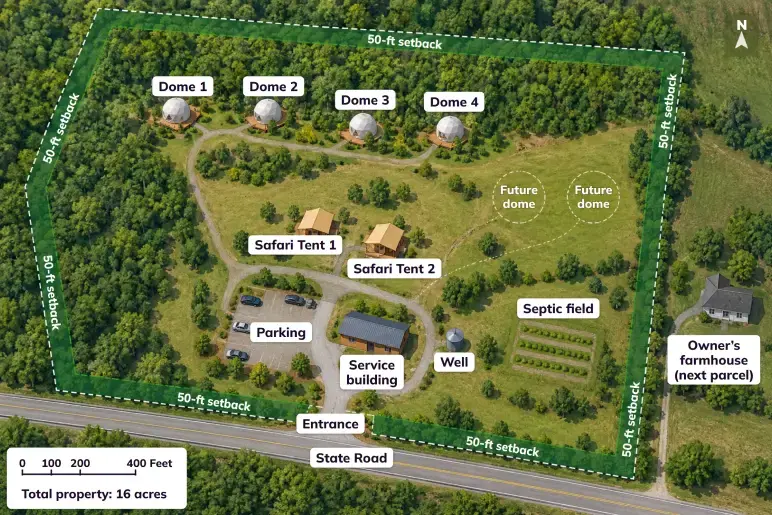
The four domes sit along the wooded edge, at least 100 feet apart, and each faces the view. The two safari tents sit together in the open meadow, closer to parking, which helps families carrying gear. The service building, parking, and the well sit near the entrance.
About 40% of the land stays open meadow and woods, above the county’s 30% minimum for a site this size. Natalie will also grade two pads for future domes. Here’s how the units and buildings sit on the land:
Growth Targets
After opening, Natalie will focus on guest satisfaction, direct bookings, and building enough cash to support future expansion. She has set these next goals:
- Fernhallow opens on May 1, 2027, after the health department inspection.
- The loan closes in November 2026, and building runs through April 2027.
- By May 2028, the goal is 100 guest reviews averaging 4.8 stars or better.
- In Year 2, direct bookings should bring in more than half of lodging revenue.
- In October 2029, Natalie decides on two more domes, to open by May 2030.
Market Analysis
Most of Fernhallow’s guests will come from the Washington, DC, area for a weekend in the Shenandoah Valley and nearby attractions. Its location gives visitors easy access to the area while offering a more comfortable alternative to traditional camping.
Market Demand & Industry Size
As mentioned earlier, Shenandoah National Park drew about 1.7 million visits in 2025. Fernhallow sits about 15 minutes from the park’s Thornton Gap entrance and close to Luray Caverns, so guests have plenty to do in every season.
Since most guests come from the DC area, Fernhallow’s ads target Northern Virginia, DC, and Maryland. Weekend stays have a two-night minimum, which suits guests who drive in on Friday evening.
Newer campers also want more comfort. Glamping accounted for 29% of all camping experiences in 2025, and 31% of new campers chose glamping. This is why every Fernhallow unit has a real bed and a private bathroom, plus heat and air conditioning.
U.S. glamping revenue reached an estimated $994.5 million in 2025, with a CAGR of 11.59% during 2026-2034.
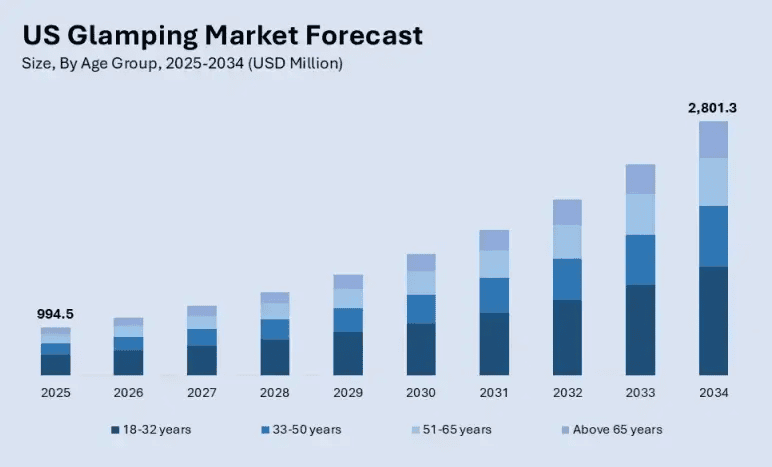
Fernhallow’s own forecast is based on local demand, with occupancy rising from 45% in Year 1 to 57% in Year 3.
Who Stays at Fernhallow
Fernhallow plans for three groups of guests. Each wants something a little different from a stay:
(1) Weekend couples
Couples visiting Shenandoah for a quiet getaway want privacy, comfortable accommodations, and scenic views. Fernhallow’s year-round Ridge Domes offer private decks, bathrooms, and outdoor fire tables.
(2) Friends and hikers
Small groups visiting the park and nearby wineries want a comfortable place to return to after a day out. They can book two domes together or share a safari tent.
(3) Families
Parents traveling with children need extra sleeping space, private facilities, and room to enjoy the outdoors. Fernhallow’s Family Safari Tents offer bunk beds, a porch, and pet-friendly accommodations.
Weekend couples matter most. They fill most dome nights, and the domes bring in about 67% of Year 2 revenue. On weeknights, Fernhallow markets the domes to remote workers and retirees, who can travel midweek.
Seasonal Demand and Occupancy
Shenandoah’s tourism follows a clear seasonal pattern.
In 2025, the park drew 329,565 visits in October, about one in five for the whole year, and only 11,989 in January.
Fernhallow’s bookings are expected to follow a similar pattern. The domes are about 74% full in October 2027 and 82% full in October 2028. Summer stays steady, with families filling the safari tents. The domes are only about 23% full in January 2028, and the tents close from December through March.
The chart below shows how full the domes and tents are each month in Year 1:
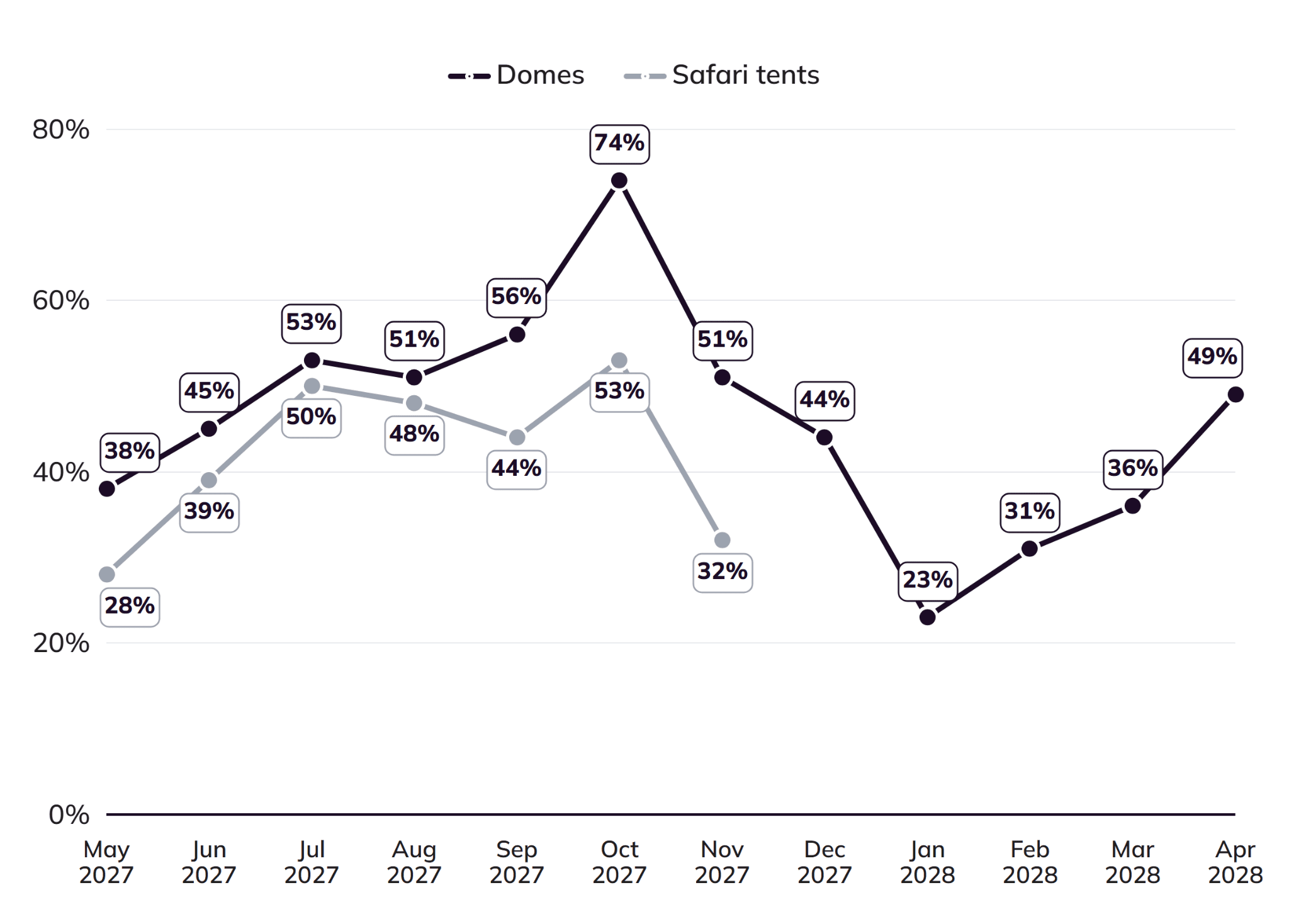
Weekend demand is also stronger than weekday demand. In Year 1, the domes are 80% full on Friday and Saturday nights but only 32% full from Sunday through Thursday.
To manage these changes, Fernhallow will charge higher rates on peak weekends, promote weekday stays to travelers with flexible schedules, close the safari tents in winter, and maintain a cash reserve for slower months.
Competitive Analysis
Guests visiting Shenandoah National Park already have plenty of places to stay around Luray.
Fernhallow’s direct competitors are other glamping sites near Luray and across the Shenandoah Valley. Its indirect competitors are cabin rentals, family campgrounds with cabins, and hotels and motels in town.
Here’s how the main types of lodging near Luray compare:
| Accommodation Type | Typical Price per Night | Where It’s Stronger | Where Fernhallow Wins |
|---|---|---|---|
| Premium glamping domes | $140–$350 | Long review histories, and some have hot tubs | Mid-range prices, plus family tents |
| Budget yurts and canvas tents | $100–$185 | Lower prices | A private bathroom, heat, and AC in every unit |
| Cabin rentals | $150–$300 | Full kitchens and room for bigger groups | Feels like camping, with space between units and open views |
| Family campgrounds with cabins | $90–$185 | Pools and kids’ activities | Quiet, adults-only domes |
| Hotels and motels in Luray | $110–$200 | Daily housekeeping and a walkable town | The outdoor setting, a private fire, and dark skies |
Prices are typical nightly rates before taxes and fees.
Fernhallow sits in the middle of this market. It offers more comfort than the budget yurts and tents, and it charges less than the premium domes. It is also the only option here with both adults-only domes and pet-friendly family tents, each with a private bathroom.
Other options still win on some points. The premium domes have hot tubs and years of reviews, family campgrounds have pools, and cabins have bigger kitchens. Fernhallow’s guests will choose it for privacy, comfort, and a fair price close to the park.
Accommodations & Pricing
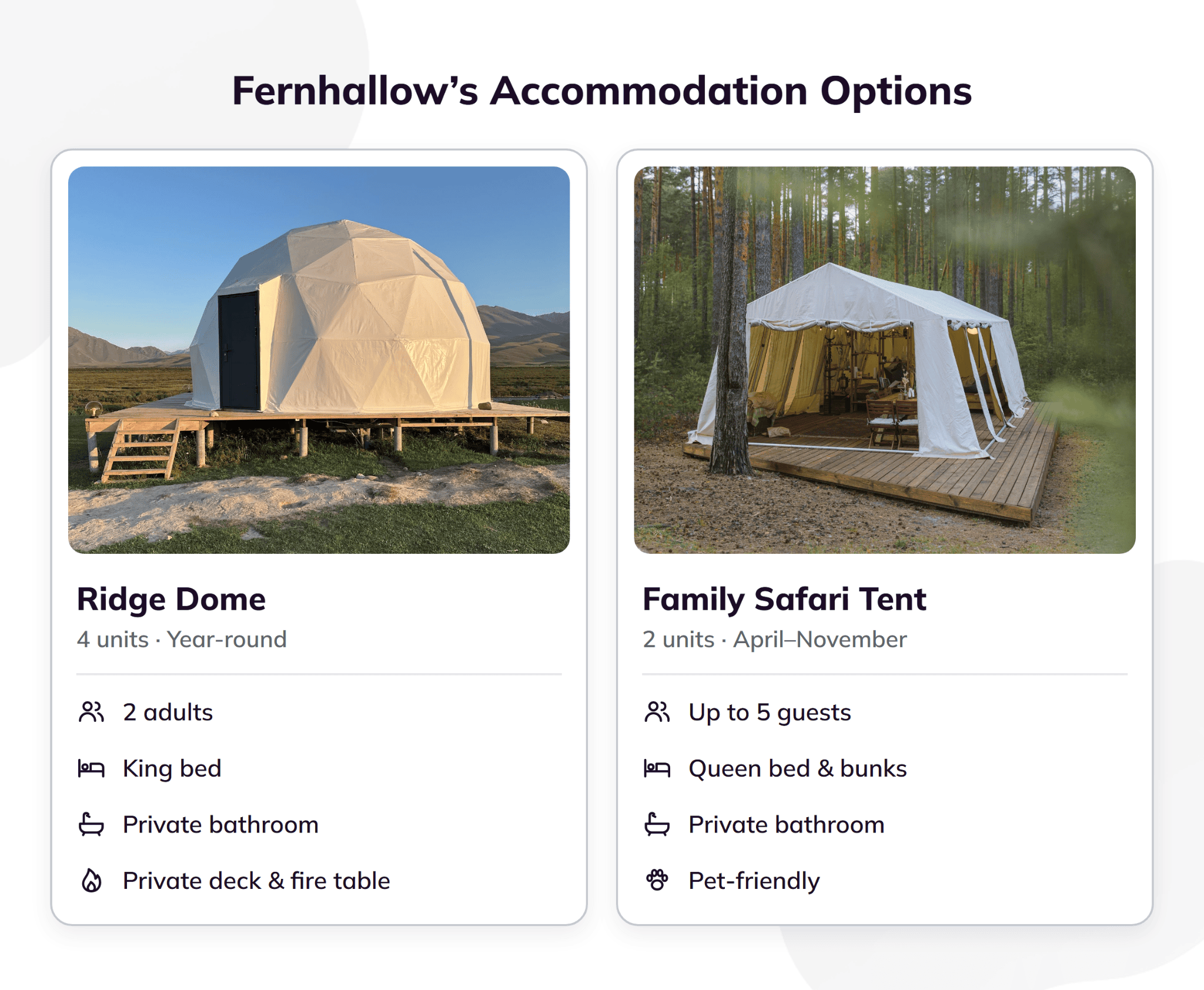
Fernhallow offers two kinds of stays: four Ridge Domes for couples and two Family Safari Tents for families and small groups.
Here’s what each one includes:
Ridge Domes
The Ridge Domes are for couples and adult friends. Each is a 20-foot insulated dome on a raised deck, with a king bed, a private bathroom with a shower, and a kitchenette. A large window faces the Blue Ridge.
The deck has a propane fire table and a fire ring. Guests also get Wi-Fi, keyless entry, and two parking spaces. Insulation and a ductless mini-split keep the domes warm in January. This lets them stay open all year.
Family Safari Tents
The Family Safari Tents are for families with kids and groups of up to five. Each 16 × 20-foot canvas tent sits on a deck and has a queen bed, a bunk nook with two twin beds and a trundle, a private bathroom with a shower, a mini-split, and a kitchenette.
A covered porch, a fire ring, and a picnic table sit outside, and pets are welcome. The tents close from December through March because canvas loses heat in Shenandoah Valley winters.
Rates by Season
Nightly rates depend on the night of the week and the season:
| Night | Ridge Dome | Family Safari Tent |
|---|---|---|
| Sunday–Thursday | $195 | $169 |
| Friday–Saturday | $289 | $249 |
| October weekends and holidays | $319 | $279 |
| January–March weeknights | $179 | Closed |
Weekend stays need two nights, and every stay adds a $45 cleaning fee. All rates are before taxes.
Add-Ons & Stay Policies
Guests can add these extras to any stay:
- Firewood bundle, kiln-dried or cut in Page County: $12
- S’mores kit: $14
- Breakfast basket for two, with local eggs, bread, jam, and coffee: $38
- Late checkout until 1 PM, when the next guest allows: $40
- Pet fee in the safari tents: $35 per stay
Check-in starts at 4 PM, and check-out is at 11 AM. Guests get a full refund if they cancel at least 14 days before arrival, and 50% after that.
Site Development & Permits
Before Fernhallow can open, Natalie has to turn 16 acres of pasture into a site with a road, power, water, and septic. The work takes about six months and needs approvals from Page County and the Virginia Department of Health.
Site Work & Utilities
Site work and utilities cost $136,000, and the service building adds $45,000. Together, that’s $181,000, close to the $228,000 Fernhallow spends on the six units themselves.
Entrance and road
A commercial entrance off the state road, approved by the Virginia Department of Transportation (VDOT), leads to an all-weather gravel road. Each unit gets two parking spaces at the edge of the site, with a short gravel path to the door.
Power
Buried electric lines run from the road to every unit, the service building, and the well. Each unit has its own meter base and a ductless mini-split.
Water
A drilled well with a pump and pressure tank feeds every unit. Virginia’s campground rules require a water test every year.
Septic
A private soil evaluator designed the septic system for eight units, and the two future domes will need no new septic permit. The septic design also set where each unit could go.
Service building
Virginia requires at least two toilets, two sinks, and two showers at a campground, even when every unit has its own bathroom. Fernhallow’s service building meets that rule and also holds the laundry, linen storage, and a maintenance bay.
Internet and lighting
Fixed wireless internet comes with a satellite backup. All path lights are full cut-off fixtures that shine down, as the county requires, which also keeps the night sky dark for guests.
These costs come from local contractors’ estimates and the electric cooperative’s guidance, not final bids. If the well or septic costs more, the $23,862 cash reserve covers the difference.
Permits & Approvals
Fernhallow’s special use permit from Page County covers a campground of up to 12 units in the A-1 Agricultural district. The county’s campground rules shaped the whole design.
Those rules call for at least 10 acres, units of 400 square feet or less, stays under 30 days, a 50-foot planted buffer, and lights that shine down.
The Virginia Department of Health approves the well, septic, and site plans, inspects the site before opening, and issues the campground permit. Fernhallow renews that permit every year, along with a new well test.
The county building office issues the building permits, and VDOT approves the entrance. Fernhallow also collects Virginia’s 5.3% sales tax and Page County’s 10% lodging tax on every stay.
Build Schedule
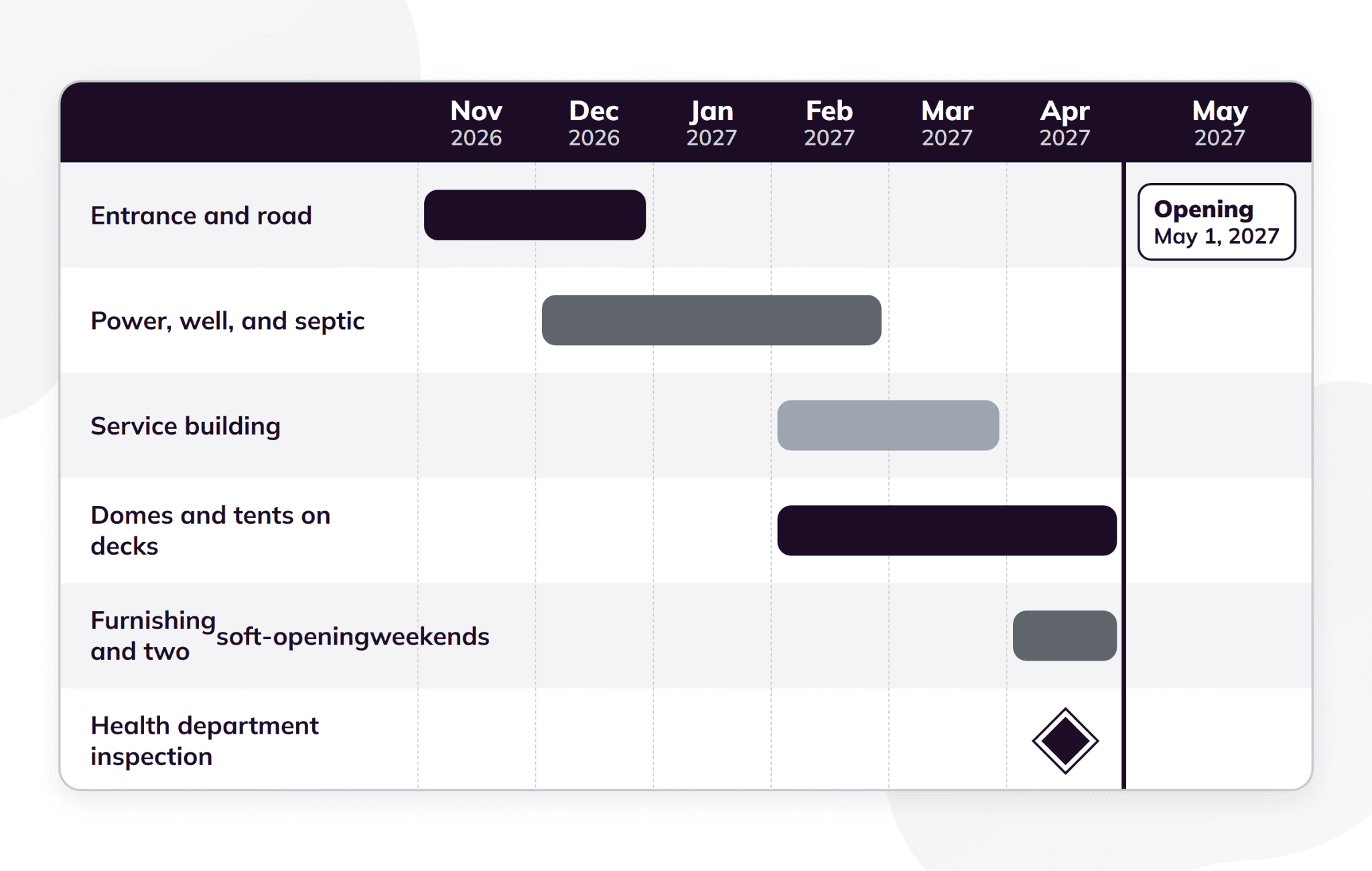
Site work runs from November 2026 to February 2027. This lets the heavy equipment finish before spring rains.
The units and service building go up from February to April 2027. Winter work can slip, and April serves as a buffer month before the May 1 opening.
Here’s the build schedule from loan closing to opening day:
Marketing & Sales Strategy
Fernhallow’s marketing starts on the booking sites where glamping guests already search. Over time, it will move more guests to its own website and put extra effort into filling weeknights and winter.
Launch Season
Fernhallow’s listings go live on Airbnb, Hipcamp, and Glamping Hub in February 2027, with professional photos and video. Bookings open for stays from May 1.
Two soft-opening weekends in April host friends, family, and three travel writers or creators who cover Virginia trips. For the first 60 days, guests get a third midweek night free.
A new listing with no reviews is hard to book, so Natalie will ask every early guest to leave one. Launch marketing costs $9,500, and the brand and booking website cost $6,500.
Marketing Channels
After launch, Fernhallow will reach guests through these channels:
- Booking sites: Airbnb, Hipcamp, and Glamping Hub bring in most first-time guests. Their fees run about 15.5% of each booking.
- The Fernhallow website: Direct bookings carry no booking-site fee, and the website is the home for returning guests and gift cards.
- Instagram and Pinterest: Photos of the domes at sunrise and short videos, with paid posts aimed at Northern Virginia, DC, and Maryland.
- Google: Search ads and a Google Business Profile for searches like “glamping near Shenandoah.”
- Local partners: Wineries and river outfitters refer guests, and Fernhallow guests get 10% off with them.
- Email: A monthly note to past guests about open midweek and winter dates.
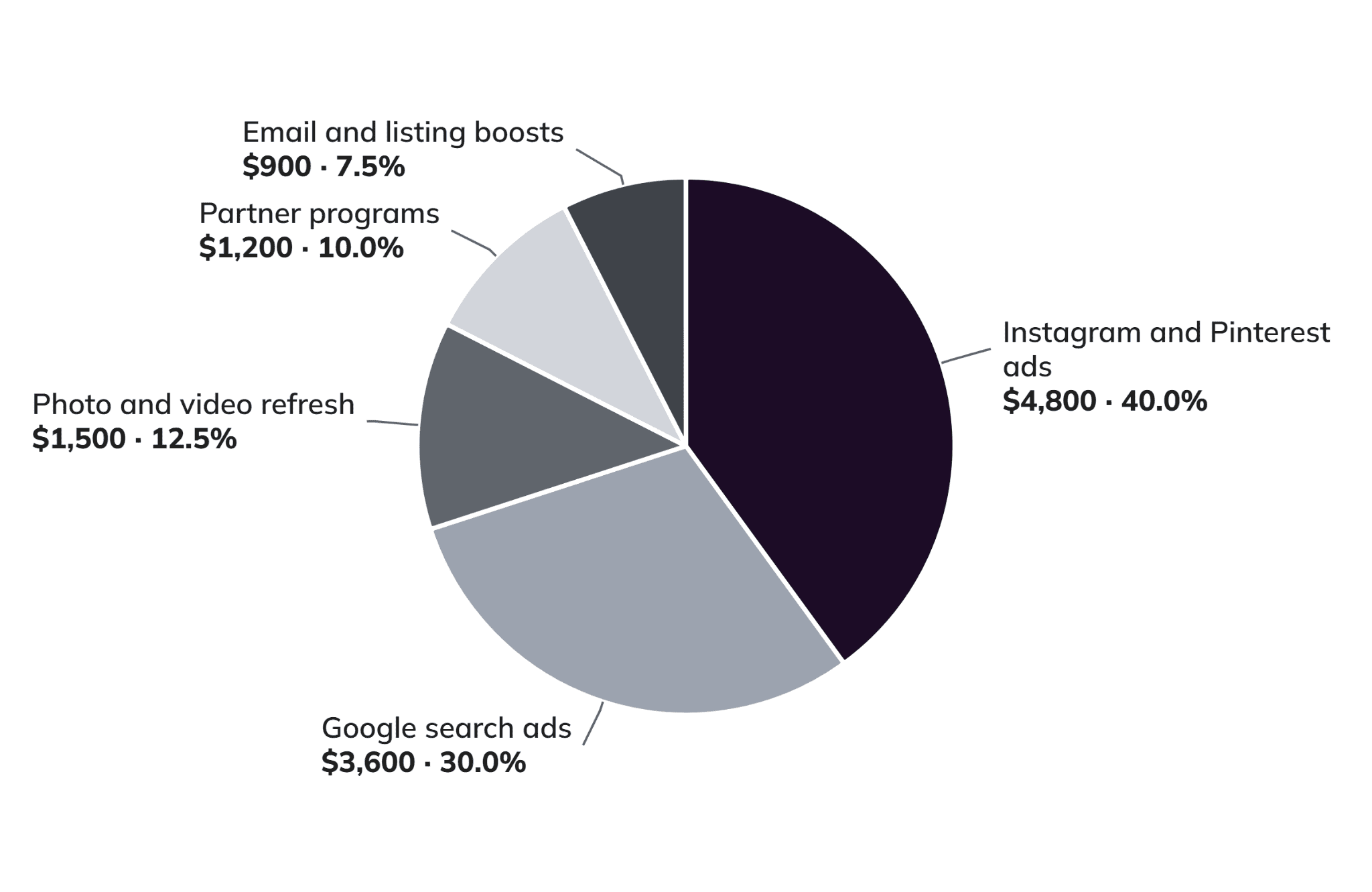
Ongoing marketing costs $12,000 in Year 1 and $11,000 in Year 2. Here’s how the Year 1 budget is split:
Direct Booking
Direct bookings grow from 50% of lodging revenue in Year 1 to 58% in Year 2 and 64% in Year 3. Each stay that moves from a booking site to the website saves about 12 percentage points in fees.
Natalie moves guests over in a few simple ways. A card in every unit shows the website and a QR code, and returning guests get 10% off when they book directly. Fernhallow sells gift cards only on the website, and the email list keeps past guests in touch.
Fernhallow will keep its booking-site listings, because they bring in most first-time guests.
Weeknights & Winter
Weeknights and the winter months are the hardest to fill. To book more of them, Fernhallow offers:
- “Stay three, pay two” on Sunday–Thursday nights from November through April
- A remote-work package with fast Wi-Fi, a desk, and late checkout for two to four weeknights
- Winter weekend packages with a breakfast basket and firewood included
- Gift cards for winter stays, promoted in November and December
- Winter tasting weekends with partner wineries
Natalie tracks occupancy by night of the week every month and moves ad money to midweek dates first.
Operations Plan
Fernhallow runs on a weekly schedule set by guest check-ins and check-outs, and on a yearly calendar set by the seasons. With Natalie living next door, someone is on site every night.
Guest Arrival & House Rules
Guests check themselves in from 4 PM, using a door code sent the morning they arrive. Natalie or the guest host greets them in person when they can. Each unit has a printed and digital guide with parking, quiet hours, fire rules, a trail map, and emergency numbers.
Quiet hours run from 10 PM to 8 AM. Fires stay in the fire ring or on the fire table, and pets stay in the safari tents. Guests check out by 11 AM.
Turnovers & Weekly Schedule
Sunday and Monday are the busiest days, when most weekend guests check out. Friday is the main arrival day. A turnover takes about 2 hours for a dome and 2.5 hours for a safari tent, including linens, which the team washes in the service building.
Because most checkouts fall on Sunday and Monday, Natalie schedules housekeepers each week by the number of stays checking out.
Tuesday and Wednesday go to maintenance, grounds work, and a weekly walk of every deck, path, fire ring, and mini-split filter. Thursday is for weekend prep: firewood, add-on orders, and guest messages.
Staffing
Fernhallow starts with a small team:
- Natalie Greer, owner: Works five days a week on guest messages, check-ins, bookings and rates, the books, and maintenance. Her salary is $38,000 in Year 1, $44,000 in Year 2, and $50,000 in Year 3.
- Guest host and groundskeeper: Works 12 hours a week, covering Natalie’s two days off, plus mowing and snow clearing.
- Housekeepers: Two or three part-timers work on turnover days.
The guest host and housekeepers earn $17.00 per hour in Year 1, $17.75 in Year 2, and $18.50 in Year 3. All staff are W-2 employees.
Seasonal Calendar
Fernhallow’s operating schedule changes with the seasons. All six units are available during the warmer months, while only the four insulated domes stay open through winter.
The calendar below shows how the team prepares for these changes:
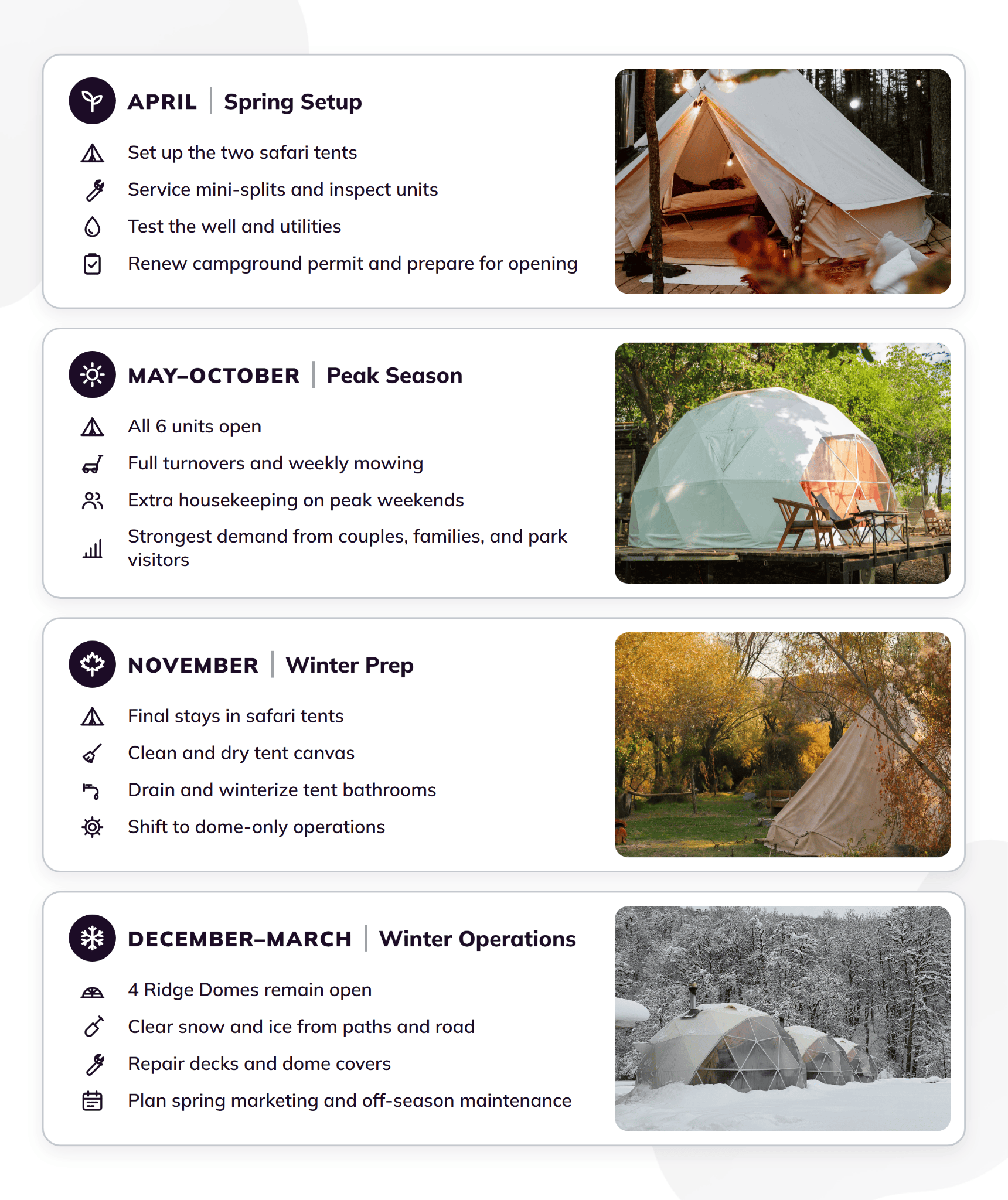
Before winter, the team will clean and store the safari tent canvas, winterize their bathrooms, and prepare the domes and access roads for colder weather. Snow clearing, maintenance, and spring marketing continue during the slower months.
Guest Safety & Insurance
Every unit has smoke detectors, a fire extinguisher, and a first aid kit. Fire rings have spark screens, and guests get a notice whenever a burn ban is in place. The guest guide covers ticks and wildlife and gives directions to the hospital in Luray, about 15 minutes away.
In high winds, tent guests move to the service building. One phone number reaches Natalie or the guest host day and night. Insurance covers the property, general liability, workers’ compensation, and the utility vehicle, at $11,400 in Year 1.
Growth & Expansion Plan
Natalie designed Fernhallow to grow from six units to as many as twelve, one phase at a time. The county permit allows 12 units, and the septic system has room for eight. Each phase has a test it must pass before Natalie spends money on it:
- Phase 1, opening May 2027: Four Ridge Domes and two Family Safari Tents, with the road, power, well, septic, and service building, funded by the loan, Natalie’s cash, and her land.
- Phase 2, built January–March 2030: Two more Ridge Domes on pads graded in Phase 1, opening in May 2030. They cost $92,000, paid from cash with no new debt.
- Phase 3, 2031–2032: Up to four more units, a small covered pavilion, and a second septic field, funded by a new loan sized from actual results. This phase sits outside these projections.
Natalie will decide on Phase 2 in October 2029, based on the 12 months to September 2029.
All four tests must pass: dome occupancy of 55% or more, Friday and Saturday dome occupancy of 85% or more, Year 2 debt coverage of 1.75 times or more, and at least $50,000 of cash left after the build.
Phase 3 needs two full years of results, with the new domes at least 50% full in their first year.
Phase 2 adds domes because the first six units already pay for the road, well, septic, service building, and Natalie’s time. Each new unit adds income with little new fixed cost.
In Year 2, a dome is expected to bring in $56,623 and a safari tent $30,796, mainly because the domes stay open all year.
The projections count the domes’ cost and depreciation in Year 3 but no revenue, since they open in May 2030. If the tests fail, the build waits a year and the cash stays in the business.
Financial Plan
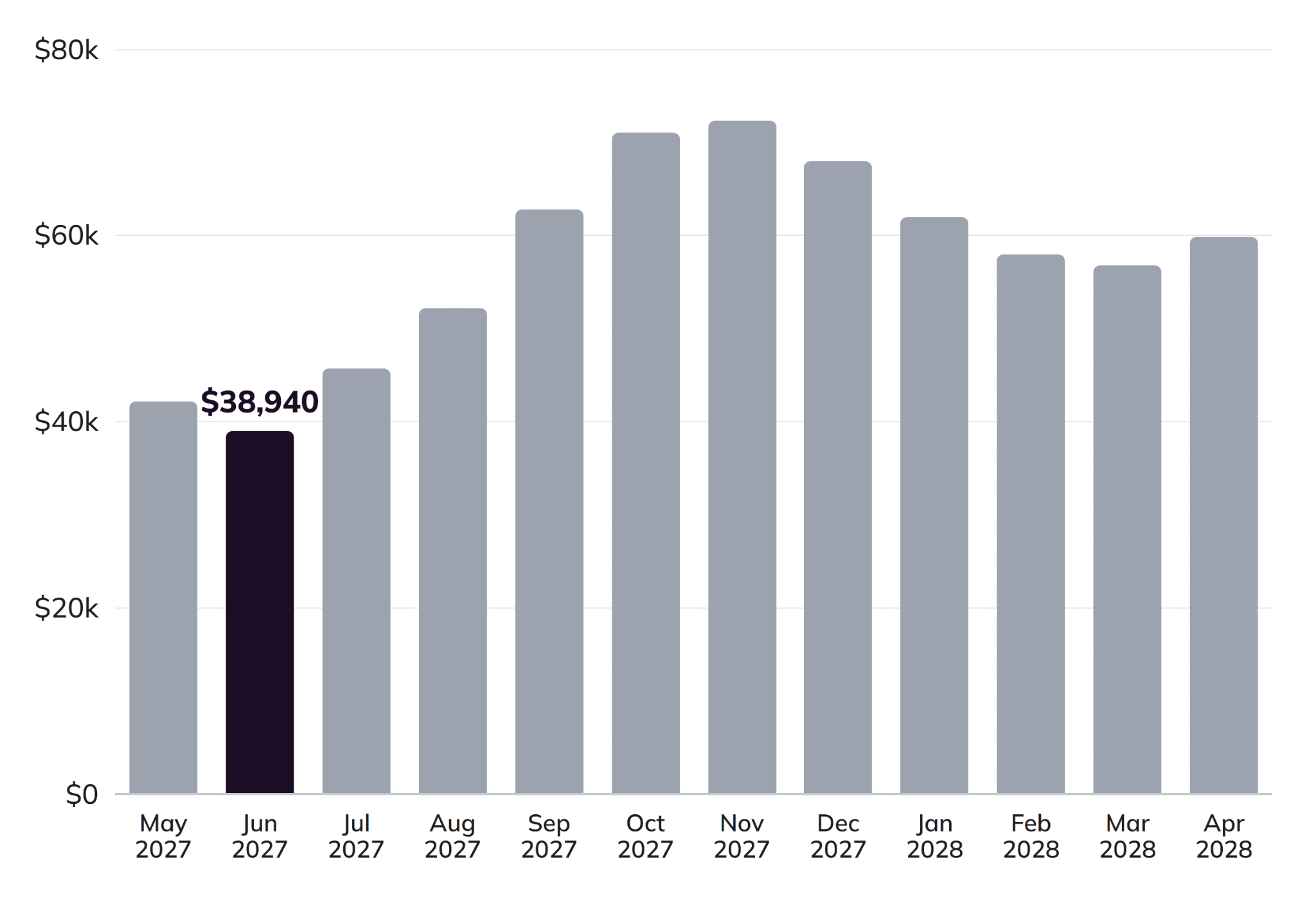
Fernhallow Glamping needs $720,000 to open: a $425,000 USDA-guaranteed loan from Calderwick Bank, $110,000 of Natalie’s savings, and the land she owns. It expects a loss in Year 1 and a profit from Year 2 on, with cash lowest in June 2027 at $38,940.
Startup Costs
| Category | Amount |
|---|---|
| Units & Site | |
| Six units with decks, bathrooms, and mini-splits | $228,000 |
| Site work and utilities | $136,000 |
| Service building | $45,000 |
| Furnishings | $36,000 |
| Utility vehicle and trailer | $10,000 |
| Wi-Fi, camera, laptop, and smart-lock hub | $6,000 |
| One-Time Startup Expenses | |
| USDA guarantee fee | $10,838 |
| Launch marketing | $9,500 |
| Brand and booking website | $6,500 |
| Permit fees | $3,800 |
| Legal and accounting setup | $2,800 |
| Training and soft-opening weekends | $1,800 |
| Other Startup Needs | |
| First-year insurance | $11,400 |
| Opening stock of amenities and add-ons | $3,500 |
| Cash reserve | $23,862 |
| Cash Needed to Open | $535,000 |
| Land (16 acres, contributed by Natalie) | $185,000 |
| Total Project Cost | $720,000 |
Financial Assumptions
| Assumption | Year 1 | Year 2 | Year 3 |
|---|---|---|---|
| Dome nights open (4 units) | 1,464 | 1,460 | 1,460 |
| Dome occupancy | 46% | 54% | 58% |
| Dome nights booked | 673 | 788 | 847 |
| Dome average rate per night | $239 | $246 | $253 |
| Safari tent nights open (2 units) | 428 | 488 | 488 |
| Safari tent occupancy | 42% | 50% | 54% |
| Safari tent nights booked | 180 | 244 | 264 |
| Safari tent average rate per night | $205 | $211 | $217 |
| Total occupancy | 45.1% | 53.0% | 57.0% |
| Stays (2.1 nights on average) | 406 | 491 | 529 |
| Cleaning fee per stay | $45 | $45 | $50 |
| Add-on spend per night booked | $19 | $20 | $21 |
| Amenities cost per night booked | $9.50 | $9.80 | $10.10 |
| Housekeeping hours | 1,167 | 1,353 | 1,433 |
| Housekeeper and guest host pay per hour | $17.00 | $17.75 | $18.50 |
| Payroll taxes (share of wages) | 9% | 9% | 9% |
| Direct bookings (share of lodging revenue) | 50% | 58% | 64% |
| Booking site fee | 15.5% | 15.5% | 15.5% |
| Card and booking engine fee (direct bookings and add-ons) | 3.2% | 3.2% | 3.2% |
| Loan interest rate (prime + 1.50%) | 8.50% | 8.50% | 8.50% |
| Loan payment per month | $3,422.22 | $3,422.22 | $3,422.22 |
| USDA annual guarantee fee (share of guaranteed balance) | 0.55% | 0.55% | 0.55% |
Projected Profit & Loss
| Category | Year 1 | Year 2 | Year 3 |
|---|---|---|---|
| Revenue | |||
| Ridge Domes | $160,847 | $193,848 | $214,291 |
| Family Safari Tents | $36,900 | $51,484 | $57,288 |
| Cleaning fees | $18,270 | $22,095 | $26,450 |
| Add-ons | $16,207 | $20,640 | $23,331 |
| Total Revenue | $232,224 | $288,067 | $321,360 |
| Cost of Guest Stays | |||
| Amenities and add-on goods | $15,397 | $19,402 | $21,720 |
| Housekeeping wages | $19,843 | $24,015 | $26,510 |
| Housekeeping payroll taxes | $1,786 | $2,161 | $2,386 |
| Total Cost of Guest Stays | $37,026 | $45,578 | $50,616 |
| Gross Profit | $195,198 | $242,489 | $270,744 |
| Gross Margin | 84.1% | 84.2% | 84.2% |
| Operating Expenses | |||
| Owner salary | $38,000 | $44,000 | $50,000 |
| Guest host wages | $10,608 | $11,076 | $11,544 |
| Payroll taxes (owner and guest host) | $4,375 | $4,957 | $5,539 |
| Booking site and card fees | $20,716 | $23,033 | $23,480 |
| Utilities | $14,400 | $15,000 | $15,600 |
| Marketing | $12,000 | $11,000 | $11,500 |
| Insurance | $11,400 | $12,000 | $12,600 |
| Repairs and maintenance | $6,000 | $7,500 | $9,000 |
| Accounting, payroll, and legal | $4,200 | $4,400 | $4,600 |
| Booking software and website hosting | $3,600 | $3,700 | $3,800 |
| Real estate tax | $3,450 | $3,450 | $3,700 |
| Grounds supplies | $3,000 | $3,100 | $3,200 |
| Trash pickup and septic pumping | $2,700 | $2,800 | $2,900 |
| Internet and phone | $2,640 | $2,700 | $2,760 |
| Vehicle fuel and upkeep | $2,400 | $2,500 | $2,600 |
| USDA annual guarantee fee | $1,987 | $1,963 | $1,937 |
| Annual permits | $600 | $600 | $600 |
| One-time startup expenses | $35,238 | $0 | $0 |
| Total Operating Expenses | $177,314 | $153,779 | $165,360 |
| EBITDA | $17,884 | $88,710 | $105,384 |
| Depreciation | $37,193 | $37,193 | $45,574 |
| Interest expense | $35,928 | $35,474 | $34,979 |
| Net Income (Pre-Tax) | ($55,237) | $16,043 | $24,831 |
| Net Margin | (23.8%) | 5.6% | 7.7% |
Projected Balance Sheet
| Category | Opening | Year 1 | Year 2 | Year 3 |
|---|---|---|---|---|
| Assets | ||||
| Cash | $59,100 | $59,908 | $111,738 | $87,283 |
| Inventory | $3,500 | $1,266 | $1,595 | $1,785 |
| Prepaid insurance | $11,400 | $0 | $0 | $0 |
| Land | $185,000 | $185,000 | $185,000 | $185,000 |
| Net property and equipment | $461,000 | $423,807 | $386,614 | $433,040 |
| Total Assets | $720,000 | $669,981 | $684,947 | $707,108 |
| Liabilities | ||||
| Guest prepayments | $0 | $10,357 | $14,873 | $18,290 |
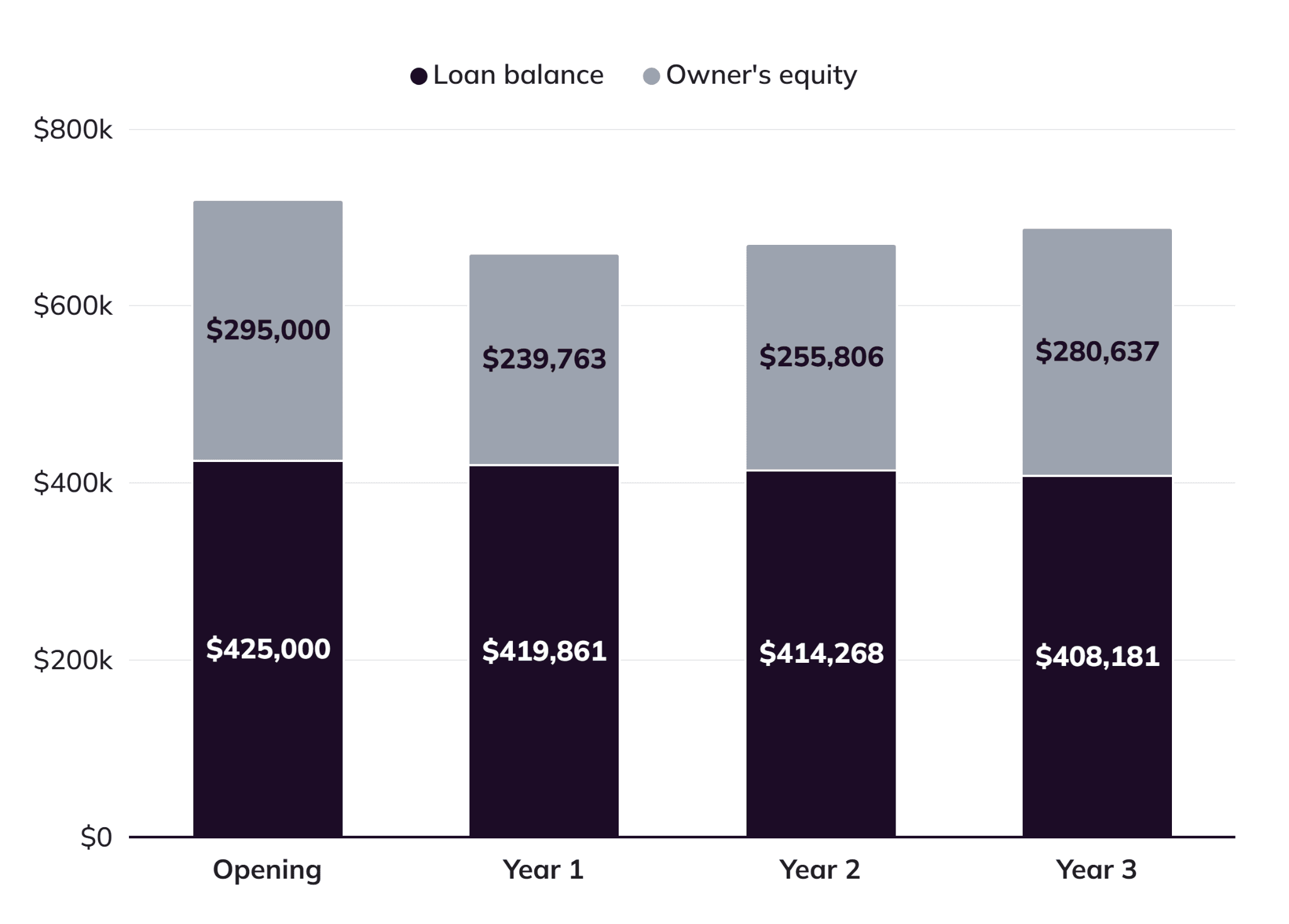
| USDA-guaranteed loan | $425,000 | $419,861 | $414,268 | $408,181 |
| Total Liabilities | $425,000 | $430,218 | $429,141 | $426,471 |
| Equity | ||||
| Owner investment (cash and land) | $295,000 | $295,000 | $295,000 | $295,000 |
| Retained earnings | $0 | ($55,237) | ($39,194) | ($14,363) |
| Total Equity | $295,000 | $239,763 | $255,806 | $280,637 |
| Total Liabilities & Equity | $720,000 | $669,981 | $684,947 | $707,108 |
Projected Cash Flow
| Category | Year 1 | Year 2 | Year 3 |
|---|---|---|---|
| Beginning Cash | $59,100 | $59,908 | $111,738 |
| Operating Activities | |||
| Net income (pre-tax) | ($55,237) | $16,043 | $24,831 |
| Depreciation | $37,193 | $37,193 | $45,574 |
| Change in inventory | $2,234 | ($329) | ($190) |
| Change in prepaid insurance | $11,400 | $0 | $0 |
| Change in guest prepayments | $10,357 | $4,516 | $3,417 |
| Net Cash from Operations | $5,947 | $57,423 | $73,632 |
| Investing Activities | |||
| Phase 2 domes | $0 | $0 | ($92,000) |
| Net Cash from Investing | $0 | $0 | ($92,000) |
| Financing Activities | |||
| Loan principal repayment | ($5,139) | ($5,593) | ($6,087) |
| Net Cash from Financing | ($5,139) | ($5,593) | ($6,087) |
| Net Change in Cash | $808 | $51,830 | ($24,455) |
| Ending Cash | $59,908 | $111,738 | $87,283 |
Break-Even Analysis
| Metric | Value |
|---|---|
| Yearly fixed costs (Year 2, before depreciation and interest) | $130,746 |
| Average revenue per night booked (Year 2) | $279.13 |
| Variable cost per night booked (Year 2) | $66.48 |
| Contribution per night booked (Year 2) | $212.65 |
| Break-even nights booked per year (Year 2) | 615 |
| Break-even occupancy (Year 2) | 32% |
| Break-even revenue per year (Year 2) | $171,623 |
| Break-even revenue per month (Year 2) | $14,302 |
| Nights booked to also cover loan payments (Year 2) | 808 |
Loan Repayment & Debt Coverage
| Category | Year 1 | Year 2 | Year 3 |
|---|---|---|---|
| Interest | $35,928 | $35,474 | $34,979 |
| Principal | $5,139 | $5,593 | $6,087 |
| Total loan payments | $41,067 | $41,067 | $41,067 |
| Ending loan balance | $419,861 | $414,268 | $408,181 |
| EBITDA | $17,884 | $88,710 | $105,384 |
| Debt coverage (EBITDA ÷ loan payments) | 0.44x | 2.16x | 2.57x |
Risk Analysis
Fernhallow plans for four risks that could hurt a small glamping site in its first years.
A slow first season
Fernhallow expects only 45% occupancy in Year 1. Earnings cover the loan payments 0.44 times in Year 1, or 1.29 times before one-time costs, and the $23,862 reserve pays the gap. In Year 1, month-end cash never falls below $38,940.
Site costs run over
The well, septic, and power costs are estimates, not final bids. The cash reserve and the April buffer month absorb overruns, and Phase 2 waits if cash runs short.
Bad weather or a park closure
Storms, wildfire smoke, or a road closure can empty a weekend. Fernhallow offers free rebooking in these cases, moves tent guests to the service building in high winds, and insures every structure.
Dependence on booking sites
A fee increase or a change in how listings rank would hurt. As more returning guests book on the website each year, this risk gets smaller.
The Quickest Way to turn a Business Idea into a Business Plan
Fill-in-the-blanks and automatic financials make it easy.


Vinay Kevadia
Vinay Kevadiya is the founder and CEO of Upmetrics, the #1 business planning software. His ultimate goal with Upmetrics is to revolutionize how entrepreneurs create, manage, and execute their business plans. He enjoys sharing his insights on business planning and other relevant topics through his articles and blog posts. Read more