Executive Summary
SocialLoop Marketing helps small businesses win on social media. We create content, schedule posts, and manage accounts so business owners can focus on running their business.
SocialLoop Marketing is a home-based social media marketing services business located at 615 South Congress Avenue, Austin, Texas. The company is operated and is fully owned by Millie Brown.
Services focus on:
- Content planning
- Posting
- Basic engagement tracking
- Clear monthly reporting
The goal is simple: maintain a steady online presence that supports business growth.
Outsourcing social media has proven results, as studies show that 78% of businesses that outsource social media management experience higher engagement and improved conversion rates. SocialLoop Marketing provides this support in a structured and affordable way designed for small businesses.
However, the company doesn’t serve large enterprises and also avoids managing political advertising, influencer talent, or fully paid media campaigns. This narrow scope keeps operations simple, costs low, and service quality high.
The Problem
Most small businesses recognize the importance of social media but struggle to manage it effectively. The reasons:
- Owners are busy running daily operations
- Posting becomes inconsistent
- Messaging lacks focus
- Results are hard to track
Hiring a full-time marketer is not realistic for many small operators. Agencies often charge more than small businesses can afford and offer packages that include services clients don’t need.
Our Solution
SocialLoop Marketing fills the above-mentioned gap by offering simple, budget-friendly, and transparent social marketing services. We operate on a clear monthly retainer model and provide structured content execution with measurable performance reporting.
Our business handles all social media platforms, such as Facebook, Instagram, TikTok (limited scope), X, and LinkedIn. Besides, we also provide services on account creation and organization, monthly content, schedules, and basic account monitoring.
These services allow business owners to stay active on social media without daily stress or time pressure. Also, we maintain posting consistency, which improves brand clarity, and provide simple performance insights so owners understand what works.
Moreover, with clear structure, scheduled execution, and ongoing monitoring, our services remove confusion and help businesses build a steady online presence.
Target Market
SocialLoop Marketing’s target customers include:
- Local service businesses
- Solo founders
- Small ecommerce brands
- Professional service providers
Business Model
SocialLoop marketing is a service-based company with monthly retainers. Revenue comes from predictable client payments rather than one-off projects. Each client engagement has defined outputs, which limit scope creep and protect margins.
There are no performance-based contracts or revenue-sharing arrangements. This keeps expectations clear and billing straightforward.
The model allows us to focus fully on execution quality and long-term client relationships rather than short-term performance pressure.
Financials
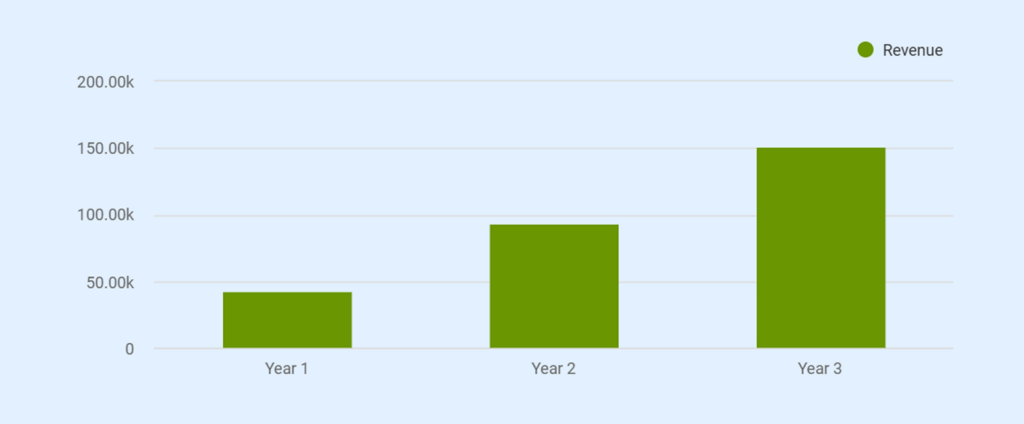
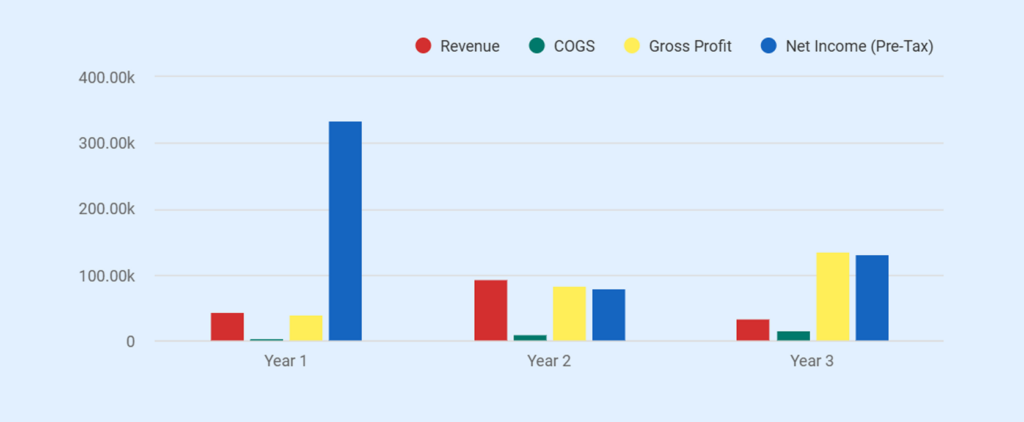
SocialLoop Marketing demonstrates good financial results of minimal investment rates and low overhead. It becomes a profitable business in the first year, and it accumulates healthy cash reserves within three years.
| Item | Year 1 | Year 2 | Year 3 |
|---|---|---|---|
| Average active clients | 6 | 12 | 18 |
| Average monthly retainer (USD) | $600 | $650 | $700 |
| Annual revenue (USD) | $43,200 | $93,600 | $151,200 |
Funding Request
The business is seeking a term loan of $2,500 from Chase Bank. The loan will be used to pay for software subscriptions, business registration, website setup, and to keep some cash as an initial operating buffer.
- Term: 24 months
- Interest rate: 12% fixed
- Repayment: Monthly principal and interest
- Collateral: None
- Guarantee: Personal guarantee by the owner
The loan is structured to be fully repaid by the end of Year 2.
Company Overview
SocialLoop Marketing addresses a common gap faced by small businesses. The company delivers practical social media management services that small businesses can rely on month after month. The service approach is structured, repeatable, and easy for clients to understand.
- Primary Address: 615 South Congress Avenue, Austin, TX 78704, USA
- Operational Model: 100% home-based, remote operations
The business is structured as a single-member LLC. We chose the LLC structure for three practical reasons:
- To protect personal assets by separating them from business liabilities
- To offer simple tax treatment
- To improve client trust, as clients trust registered businesses more than sole proprietors.
Owner’s Background
Maria Thompson has more than 5 years of experience in managing social media and content planning. Maria has worked in the past as a social media coordinator at a local marketing agency in Austin, where she handled small business accounts and assignments. She subsequently served as a content strategist at a local retail brand, where she accumulated experience in content marketing over a period of 3 years.
Maria began SocialLoop Marketing after she realized that there were numerous small businesses that required very straightforward and regular social media services as opposed to costly agency packages. Therefore, she established SocialLoop Marketing to bridge that gap by providing clear, affordable, and practical services to small business proprietors.
What We Do
SocialLoop Marketing handles five fundamental activities:
1) Content Creation: Posts, graphics, and captions are developed to match the client’s brand voice and business goals.
2) Strategic Planning: A 30-day content calendar is prepared with clear posting schedules, themes, and hashtag use to maintain consistency and purpose.
3) Account Management: Scheduling, basic engagement, and ongoing account activity are handled to keep client profiles active even during busy periods.
4) Performance Tracking: Key metrics such as followers, engagement, reach, and clicks are reviewed monthly, and the strategy is adjusted based on results.
5) Client Reporting: Monthly reports explain what performed well, what needs improvement, and the actions planned for the next cycle.
Ownership and Management
Millie Brown is the owner and operator of the whole business. She makes all the internal and external decisions.
This owner-managed model enables quick decision-making, close cost management, and uniform service delivery. The owner acts as a decision-maker without delays, allows control of costs by not spending on payroll and HR, and retains profitability with a minimal number of clients.
All clients are treated equally, and responsibility is always transparent since the owner is the main person in charge of delivery and outcomes.
Startup Summary
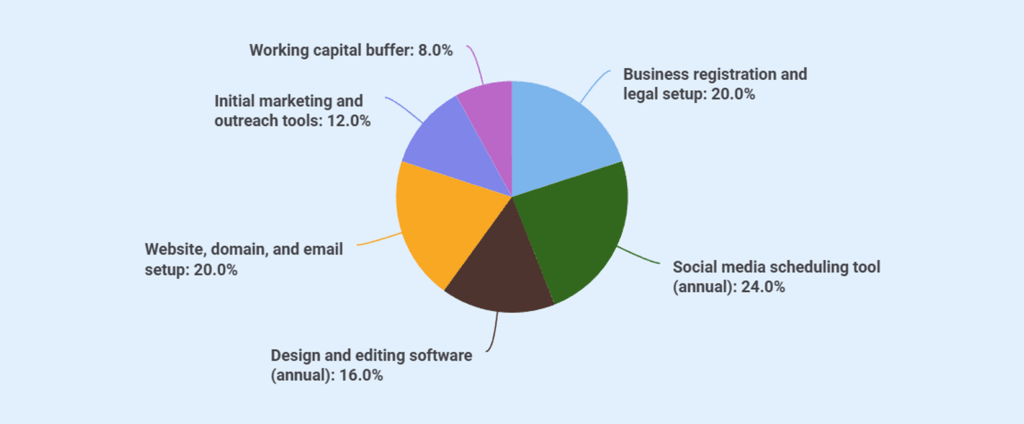
The following table summarizes the one-time startup costs required to launch operations and begin serving clients. These expenses cover only essential setup items and exclude payroll and equipment purchases.
| Category | Cost (USD) |
|---|---|
| Business registration and legal setup | $500 |
| Social media scheduling tool (annual) | $600 |
| Design and editing software (annual) | $400 |
| Website, domain, and email setup | $500 |
| Initial marketing and outreach tools | $300 |
| Working capital buffer | $200 |
| Total Startup Costs | $2,500 |
Market Analysis
Social media has emerged as one of the most relevant marketing tools to small businesses in the country and the locality today.
In the United States, there are 33 million small businesses, and the great majority of them use social media to promote their products and services. Notably, 93.79% of small businesses utilise social media, and 56 %of small businesses intend to spend more on social media advertising.
Importantly, Austin was named the fastest-growing city for small businesses in 2026, and the city is home to approximately 42,000 small businesses, which equals about 170 small businesses per 100,000 residents. This dense and expanding business base creates a highly competitive digital environment where standing out online is critical.
Moreover, the local market is shaped by three clear conditions:
- Single-owned or a small business team
- Strong competition for attention on social platforms
- Limited time and skill among owners to manage content daily
This creates steady demand for affordable, hands-on social media management rather than large agency contracts.
Target Customer Profile
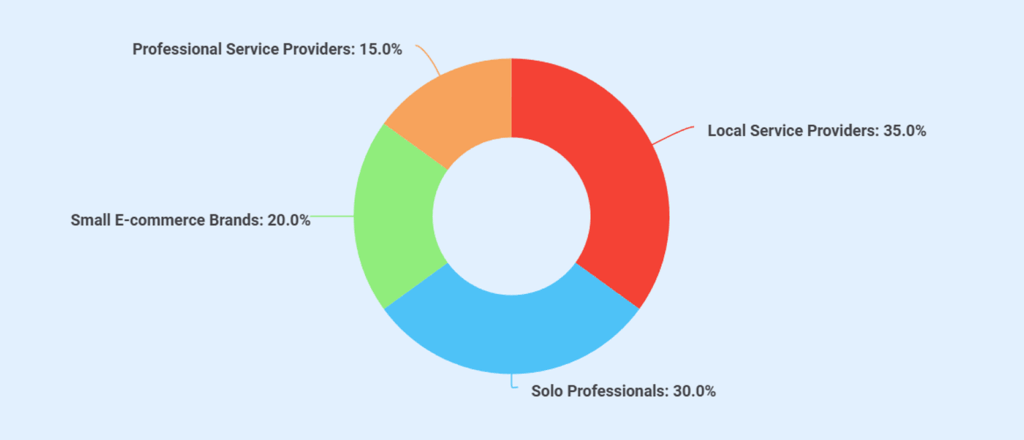
SocialLoop Marketing serves four specific types of customers:
| Segment | Share of Target Market | Who They Are | Why They Need Social Media |
|---|---|---|---|
| Local Service Providers | 35% | Plumbers, Electricians, HVAC technicians, Landscapers, Contractors, Handyman services |
To stay visible in local searches, build trust through regular posts, and generate inbound leads without relying only on referrals |
| Solo Professionals | 30% | Consultants, Coaches, Freelance designers, Photographers, Real estate agents, Financial advisors |
To build personal credibility, stay top-of-mind with prospects, and support lead generation through consistent content |
| Small E-commerce Brands | 20% | Shopify, WooCommerce, Etsy, Amazon | To drive product awareness, support launches and promotions, and maintain engagement between sales cycles |
| Professional Service Providers | 15% | Lawyers, Accountants, Insurance agents, Medical practices, Therapists |
To educate audiences, establish authority, and maintain a compliant, professional online presence |
Competitors
The Austin market includes several established digital marketing agencies serving different client segments. Most competitors focus on larger budgets and bundled services, which creates space for a simpler, small-business-focused provider.
Direct Competitors:
Here’s a list of businesses that we’ll compete directly with:
1) Blackhawk Digital Marketing
The company works mainly with mid-sized and large companies. It sells many digital services in one package. These packages cost a lot and suit big brands. Small businesses usually do not need this much help or expense.
2) Faceplant Creative
They focus on video and visual content. It works best for brands that spend heavily on creative work. The process takes time, planning, and money. Many local service businesses do not need this level of production to stay visible online.
3) Bennett Creative
The firm builds content around short videos for social platforms. Its work often needs video shoots and client involvement. This raises cost and effort. Business owners who want simple posting and do not want to be on camera find this model hard to use.
4) 787 Social
The firm serves luxury and lifestyle brands. It offers close, hands-on service for fashion, beauty, and food brands. Its pricing and niche focus make it a poor fit for service businesses, B2B firms, and solo owners.
5) Giant Noise
The Giant Noise mixes social media with public relations work. It runs campaigns for hotels, events, and cultural brands. These projects need bigger budgets and longer timelines. Most small businesses only want steady social media support, not full campaigns.
Most competitors charge between $1,500 and $6,000 per month. They bundle services, lock clients into contracts, and limit owner access. This leaves a clear gap for simple, affordable, small-scale social media management designed specifically for small business owners.
Indirect Competitors:
Our indirect competitors are as follows:
1) Freelancers
They often offer lower pricing and flexible arrangements. However, service quality can vary, availability may be inconsistent, and long-term reliability is not always guaranteed.
2) DIY Platforms
Platforms such as Buffer, Hootsuite, or Canva allow business owners to manage their own posting themselves. While affordable, they require time, planning, and strategy that many small business owners struggle to maintain consistently.
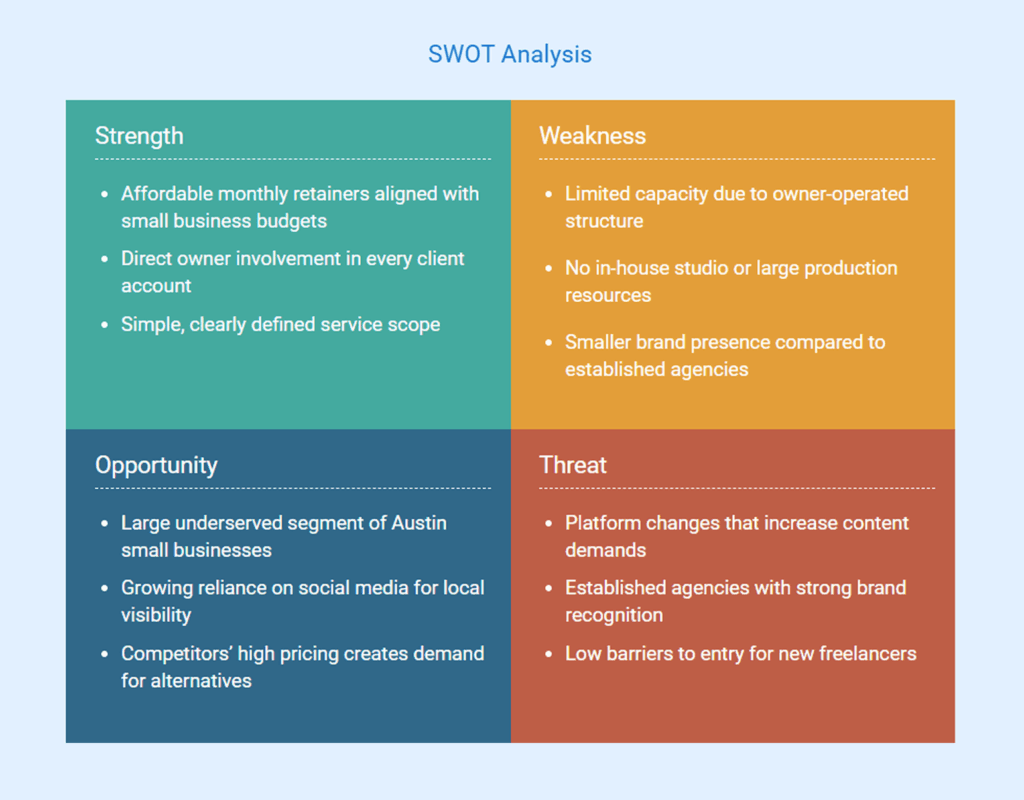
SWOT Analysis
Differentiate
SocialLoop Marketing LLC stands apart by keeping services simple, affordable, and focused on what small businesses actually need. Here’s what makes us different from others:
- Focuses only on social media management, not bundled marketing services
- Designed for small businesses with limited budgets
- The owner manages every client account directly
- No account managers or junior staff
- Clear monthly pricing with no hidden costs
- Month-to-month agreements, no long contracts
- Practical content focused on business visibility, not viral trends
- Simple reporting that clients can understand
- Low overhead keeps pricing affordable and service consistent
Services Offered
SocialLoop Marketing LLC provides straightforward social media management services designed specifically for small businesses. We handle the daily work of creating content, scheduling posts, and monitoring engagement so business owners can focus on running their companies.
Service Packages
Here’s the list of services we offer:
| Service Package | Monthly Price (USD) | What’s Included | Best For |
|---|---|---|---|
| Single Platform Management | $500 | 12-15 posts per month, content calendar, scheduling, basic engagement tracking, monthly summary | Solo owners starting with one key platform |
| Two Platform Management | $750 | 20-24 posts per month across two platforms, planning, scheduling, and reporting | Local service businesses needing wider reach |
| Three Platform Management | $1,200 | 30-36 posts per month, full content planning, scheduling, platform performance summary | Growing businesses with multiple audiences |
| Add-on: Short-form Video Editing | $200–$300 | Simple reels or short videos using provided clips | Businesses testing video without full production |
| Add-on: Basic Ad Creative | $150 | Static creatives and captions (no ad spend management) | Clients running ads independently |
Platform Support
We are promoting the most appropriate social media platforms that small businesses use nowadays. Each platform is operated depending on its audience, content style, and purpose of the business.
- Instagram: For brands, local service businesses, solo founders, and creators, using feed posts, Stories, and Reels.
- Facebook: For local businesses, service providers, and community-focused brands, using posts, Stories, and event updates.
- LinkedIn: For company pages, solo founders, and professional service providers, using posts and articles.
- TikTok: For brands, ecommerce stores, and personal brands, using short-form videos.
- X (Twitter): For brands, founders, and professionals, using tweets and threads for real-time updates and conversations.
Service Delivery Process
Our service follows a clear monthly system. Each step keeps work organized, approvals simple, and results consistent.
Step 1: Business Intake
We start by understanding the client’s goals, audience, services, and brand tone. We gather key details such as target market, offers, content assets, and competitor references. After confirming the scope and platforms, we lock the direction before creating content.
Step 2: Monthly Content Planning
We prepare a 30-day content calendar with defined themes, post topics, and formats. The plan balances promotional and value-based posts and aligns with the client’s business priorities.
Step 3: Review and Approval
The full calendar is shared for approval in one place. The client reviews, suggests edits if needed, and confirms the plan. Once approved, no major changes are made during the cycle.
Step 4: Scheduling and Publishing
Posts are formatted and scheduled in advance using professional tools. We check captions, visuals, and timing to ensure accuracy and consistency.
Step 5: Monthly Reporting
At the end of the month, we share a simple performance summary. The report covers engagement trends, top posts, and next-month improvements.
This cycle repeats every month to maintain steady output and predictable results.
Operation Plan
Our operations plan outlines how SocialLoop Marketing LLC runs daily. The model is simple, remote, and built to support steady client work without operational strain.
Business Operations Model
SocialLoop Marketing LLC operates as a fully remote, owner-managed business. All services are delivered online using standard digital tools. There is no physical office, no walk-in traffic, and no in-person service delivery.
This structure keeps overhead low, allowing the business to remain profitable with a small number of clients.
Operating Hours and Schedule
We operate on a structured weekday schedule to ensure consistent delivery and timely client communication.
- Monday to Friday: 9:00 AM – 6:00 PM
- Saturday and Sunday: Closed
All core work, updates, and client communication are handled during business hours. Requests received outside these hours are addressed on the next working day.
Daily Operational Activities
Each day follows a simple structure, so work doesn’t feel rushed or messy. Tasks are mainly divided into four main areas.
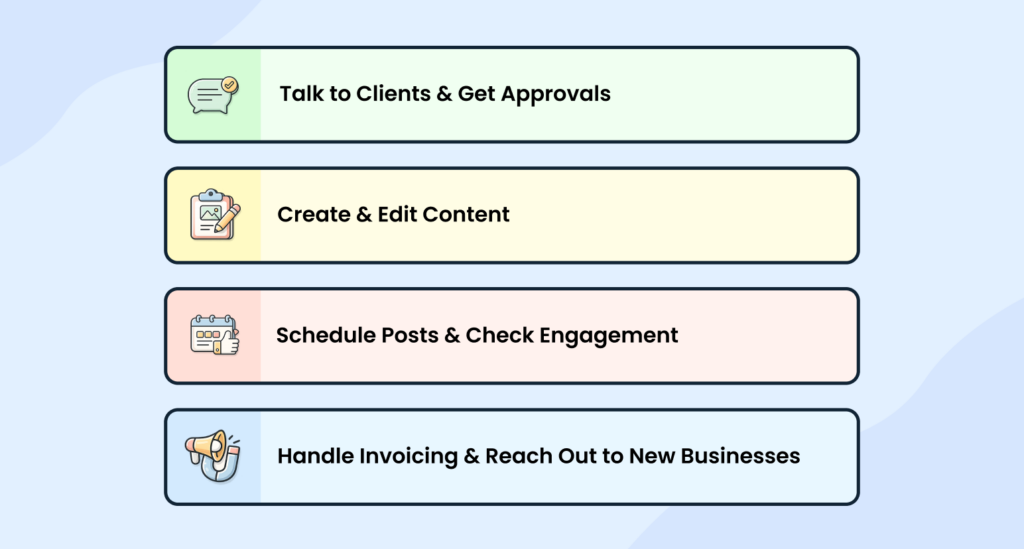
Operations are done during normal weekday hours, which makes communication easy and keeps routines stable. Importantly, we create content in batches instead of one post at a time. Batching saves time and reduces mistakes. A clear routine keeps work organized and prevents last-minute stress.
Quality Control Measures
We keep quality high by following simple rules. Every post goes through a review before scheduling. Clients approve content before it goes live. We follow the same formatting style for each brand to keep things consistent.
We review performance once a month to see what works and what needs improvement. Clear service boundaries stop extra tasks from piling up, and step-by-step processes help us deliver steady results without confusion.
Tools and Technology
The business uses a small set of reliable tools to manage work efficiently.
| Tool Category | Tool Name | Cost | Purpose |
|---|---|---|---|
| Social Media Scheduling | Later or Buffer or PostFast | $100 per month | Schedule and publish posts across all platforms |
| Graphic Design | Canva Pro | $13 per month | Create social media graphics and visual content |
| Project Management | Notion or Trello | $0 (free tier) | Track client work, content calendars, and tasks |
| Communication | Google Workspace | $6 per month | Professional email, file storage, and documents |
| Invoicing | Wave or QuickBooks | $0–$15 per month | Client invoicing and expense tracking |
| Video Editing | CapCut or DaVinci Resolve | $0 (free tier) | Edit short-form videos for add-on services |
| Analytics | Native platform analytics | $0 (included) | Track performance metrics across platforms |
| Writing Assistant | Grammarly | $12 per month | Check grammar and clarity in all copy |
The owner uses her existing laptop, internet, and mobile phone to manage all client work. These devices support content creation, scheduling, communication, and engagement monitoring. No additional hardware purchases are required at launch.
Staffing and Capacity
The business is owner-operated with no employees. All strategy, content, scheduling, and reporting are handled internally by Millie Brown. Moreover, the owner also undertakes external responsibilities that include:
- Accounting
- Management
- Client retention
- Meetings
Freelancers may be used only when:
- A client requests design or video support beyond the scope
- Work can be billed or absorbed without affecting margins
There is no fixed payroll expense.
Scalability Approach
Growth is managed by adding clients gradually. New clients are accepted only when capacity allows service quality to remain consistent. If demand increases, the business can raise prices slightly, limit the number of platforms managed per client, or add freelance support only when needed. This approach allows the business to grow in a controlled way without increasing operational risk.
Marketing Plan
The marketing plan focuses on steady client acquisition without high spend or complex campaigns. The goal is to attract small businesses that already understand the value of social media and are looking for reliable help.
Marketing Channel
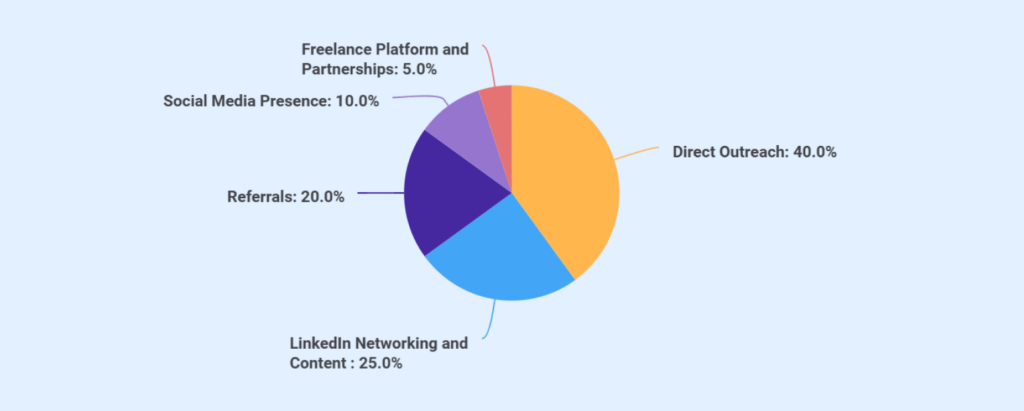
Our marketing strategy uses a focused mix of channels, each selected for reach, cost control, and direct access to decision-makers. The following outlines how we approach each channel to attract and convert small business clients.
Direct Outreach (40%)
Our main source of new clients is direct outreach. This involves individualized emails, LinkedIn messages, and one-to-one targeting of local businesses. The messages are designed according to the type of business and existing social media. The goal is to start a conversation, not push a hard sale.
LinkedIn Networking and Content (25%)
The foundation of long-term visibility with founders, consultants, and service providers is achieved on LinkedIn. Consistent posting, critical remarks, and personal interaction will build trust in the long run. It is a channel that helps in inbound leads and builds trust before the initial conversation.
Referrals (20%)
Referrals increase in a natural manner as the number of clients increases. When the clients are satisfied, they recommend the service to others, and this reduces the cost of acquisition and enhances conversion rates. Although the referrals don’t necessitate any expenditure, time is spent on relationship management, follow-ups, and ensuring the quality of services.
Own Social Media Presence (10%)
The business uses its own social media profiles as live proof of work. Every post reflects how content is planned, written, and scheduled for clients. Prospects can see the style, consistency, and clarity before making contact. Real examples build trust and help business owners understand exactly what they will receive.
Freelance Platform and Partnerships (5%)
Constant visibility is aided through local business groups, online freelance platforms (Freelancer, Upwork, and Fiverr), and alliances with web designers or consultants. Such relations generate indirect referrals without advertisement fees.
Conversion Approach
The conversion process is designed to be simple and fast for small business owners. Every lead begins with a short intro conversation to understand the business and its goals.
Millie Brown then reviews the client’s current social media presence to identify gaps and quick wins. Based on this review, we recommend a clear package that matches the business’s needs and budget.
Once the client agrees, onboarding starts immediately with a structured intake and account access. This approach shortens the sales cycle, removes confusion, and makes it easy for clients to move forward without delay.
Financial Plan
The financial plan outlines how the business generates revenue, controls costs, and maintains a positive cash flow while meeting its loan obligations. All projections are based on conservative assumptions and a low fixed-cost operating structure.
Financial Assumptions
| Item | Assumption |
|---|---|
| Average monthly retainer (Year 1) | $600 per client |
| Average monthly retainer (Year 2) | $650 per client |
| Average monthly retainer (Year 3) | $700 per client |
| Client ramp – average active clients | Year 1: 6; Year 2: 12; Year 3: 18 |
| Freelance support cost | 10% of revenue, variable |
| Owner compensation | No salary or draws modeled in Years 1–3 |
| Software subscriptions | $1,200 per year total |
| Internet and phone allocation | $600 per year |
| Marketing spend | $1,200 per year, flat |
| Insurance and misc admin | $500 per year |
| Office rent | None (home-based) |
| Loan amount | $2,500 |
| Loan term | 24 months |
| Interest rate | 12.0% fixed |
Source of Finance
| Source | Amount (USD) |
|---|---|
| Term loan – Chase Bank, N.A. | $2,500 |
| Owner cash contribution | $0 |
| Total Sources of Funds | $2,500 |
Income (P&L) Statement
| P&L Item (USD) | Year 1 | Year 2 | Year 3 |
|---|---|---|---|
| Revenue | |||
| Retainer revenue | $43,200 | $93,600 | $151,200 |
| Total Revenue | $43,200 | $93,600 | $151,200 |
| Cost of Goods Sold (COGS) | |||
| Freelance support (10% of revenue) | $4,320 | $9,360 | $15,120 |
| Total COGS | $4,320 | $9,360 | $15,120 |
| Gross Profit | $38,880 | $84,240 | $136,080 |
| Gross margin | 90% | 90% | 90% |
| Operating Expenses | |||
| Software subscriptions | $1,200 | $1,200 | $1,200 |
| Internet and phone | $600 | $600 | $600 |
| Marketing | $1,200 | $1,200 | $1,200 |
| Insurance and misc admin | $500 | $500 | $500 |
| Total Operating Expenses | $3,500 | $3,500 | $3,500 |
| EBITDA | $35,380 | $80,740 | $132,580 |
| Depreciation | $767 | $767 | $767 |
| Operating Income (EBIT) | $34,613 | $79,973 | $131,813 |
| Interest expense | $204 | $108 | $0 |
| Net Income (Pre-Tax) | $34,409 | $79,865 | $131,813 |
Cash Flow Statement
| Cash Flow Item | Opening (Pre-Y1) | Year 1 | Year 2 | Year 3 |
|---|---|---|---|---|
| Operating Activities | ||||
| Net income (pre-tax) | $0 | $34,409 | $79,865 | $131,813 |
| Depreciation (non-cash) | $0 | $767 | $767 | $767 |
| Change in working capital | $0 | $0 | $0 | $0 |
| Net Cash from Operations | $0 | $35,176 | $80,632 | $132,580 |
| Investing Activities | ||||
| Capital expenditures | ($2,300) | $0 | $0 | $0 |
| Net Cash from Investing | ($2,300) | $0 | $0 | $0 |
| Financing Activities | ||||
| Loan proceeds | $2,500 | $0 | $0 | $0 |
| Principal repayments | $0 | ($1,188) | ($1,312) | $0 |
| Net Cash from Financing | $2,500 | ($1,188) | ($1,312) | $0 |
| Net Change in Cash | $200 | $33,988 | $79,320 | $132,580 |
| Beginning cash balance | $0 | $200 | $34,188 | $113,508 |
| Ending Cash Balance | $200 | $34,188 | $113,508 | $246,088 |
Balance Sheet
| Balance Sheet Item | Opening (Pre-Y1) | Year 1 | Year 2 | Year 3 |
|---|---|---|---|---|
| Assets | ||||
| Cash | $200 | $34,188 | $113,508 | $246,088 |
| Startup intangibles (gross) | $2,300 | $2,300 | $2,300 | $2,300 |
| Accumulated depreciation | $0 | ($767) | ($1,534) | ($2,300) |
| Net intangibles | $2,300 | $1,533 | $766 | $0 |
| Total Assets | $2,500 | $35,721 | $114,274 | $246,088 |
| Liabilities | ||||
| Term loan payable | $2,500 | $1,312 | $0 | $0 |
| Total Liabilities | $2,500 | $1,312 | $0 | $0 |
| Equity | ||||
| Retained earnings (cumulative) | $0 | $34,409 | $114,274 | $246,088 |
| Total Equity | $0 | $34,409 | $114,274 | $246,088 |
| Total Liabilities + Equity | $2,500 | $35,721 | $114,274 | $246,088 |

Amortization
| Item | Opening (Pre-Y1) | Year 1 | Year 2 | Year 3 |
|---|---|---|---|---|
| Beginning balance | $0 | $2,500 | $1,312 | $0 |
| Principal repaid | $0 | $1,188 | $1,312 | $0 |
| Interest expense | $0 | $197 | $72 | $0 |
| Ending balance | $2,500 | $1,312 | $0 | $0 |
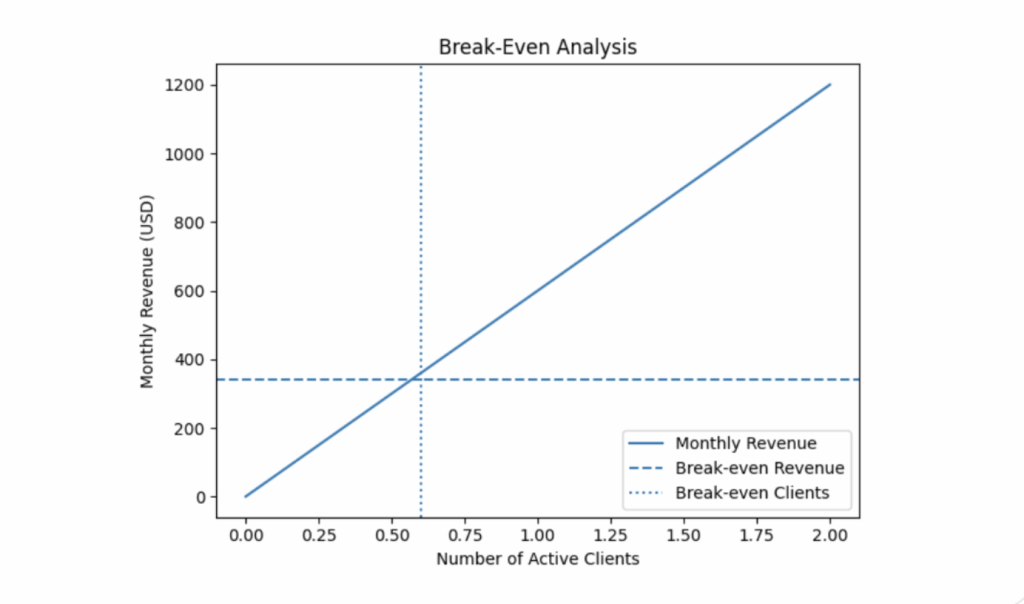
Break-Even Analysis
| Item | Amount |
|---|---|
| Average monthly retainer (Year 1) | $600 |
| Variable cost ratio (freelance support) | 10% |
| Contribution margin | 90% |
| Annual fixed operating costs (cash) | $3,500 |
| Annual interest expense (Year 1) | $197 |
| Total annual fixed cash costs | $3,697 |
| Annual break-even revenue | $4,108 |
| Monthly break-even revenue | $342 |
| Break-even clients (Monthly) | 0.6 clients |
Loan Repayment Plan
- Loan amount: $2,500
- Term: 24 months
- Interest rate: 12% fixed
- Repayment method: Monthly principal and interest
Loan is fully repaid by the end of Year 2, with no debt outstanding in Year 3.
| Item | Opening (Pre-Y1) | Year 1 | Year 2 | Year 3 |
|---|---|---|---|---|
| Beginning loan balance | $0 | $2,500 | $1,312 | $0 |
| Principal repaid | $0 | $1,188 | $1,312 | $0 |
| Interest paid | $0 | $197 | $72 | $0 |
| Total debt service | $0 | $1,385 | $1,384 | $0 |
| Ending loan balance | $2,500 | $1,312 | $0 | $0 |
The Quickest Way to turn a Business Idea into a Business Plan
Fill-in-the-blanks and automatic financials make it easy.

Upmetrics
Upmetrics is the #1 business planning software that helps entrepreneurs and business owners create investment-ready business plans using AI. We regularly share business planning insights on our blog. Check out the Upmetrics blog for such interesting reads. Read more