Executive Summary
Silverline Jewelry Co. LLC is a small, online jewelry brand that sells a curated selection of sterling silver, gold-plated, and vermeil jewelry, along with a limited number of solid gold pieces.
The business operates without a physical retail storefront and sells directly to customers through its e-commerce website, with additional exposure through occasional local pop-up events.
Silverline is organized into a single-owner business to have close control over overheads, quality of products, and complexity of operations. Tim David, the founder, does everything to run the business smoothly. Responsibilities include:
- Product sourcing
- Inventory management
- Order fulfilment
- Customer service
- Marketing
At Silverline, the products, such as rings, necklaces, bracelets, and earrings, are sold between $30 and $150. We do not offer any custom work, resizing, engraving, or repairing. The average order value is projected to be approximately $85 in Year 1, increasing to about $90 and $95 in Years 2 and 3, respectively. Gross margins are expected to average between 48 and 50%.
The company will have evident seasonality in sales, as most sales will be registered around the holiday season in the fourth quarter and the lowest in the first quarter. The monthly volume of orders will grow slowly due to the increase of brand recognition as a result of the marketing campaign and the development of repeat buyer behaviour.
Business Model
Silverline Jewelry Co. follows a direct-to-consumer sales approach, allowing the business to control pricing, branding, and customer relationships without relying on intermediaries.
At Silverline, we sell jewelry that is ready to be shipped on the online shopping platform and receive payment during the checkout stage, no wholesale, no subscriptions, or credit cards.
The online sale of products is the main source of revenue, and a small portion of supplementary revenue comes from a few local pop-up events held each year. The purpose of using pop-ups is to gain brand recognition and determine existing demand, rather than serving as a standard sales channel.
Target Audience
Silverline Jewelry Co. serves customers who value simple design, consistent quality, and fair pricing. These buyers are comfortable shopping online and prefer independent brands over mass-produced or luxury jewelry.
Our core customer group is as follows:
- Everyday wear buyers
Adults purchasing jewelry for regular use who prefer practical, wearable designs over statement or occasion-only pieces.
- Gift purchasers
Customers buy jewelry for birthdays, holidays, and seasonal occasions, especially active during year-end periods.
- Mid-price conscious shoppers
Buyers who avoid low-cost fashion jewelry and high-end luxury brands, seeking quality materials at reasonable prices.
Funding Amount
Silverline Jewelry Co. is seeking a $45,000 small business term loan from a traditional U.S. lender to fund startup inventory, launch expenses, and working capital.
| Term | Detail |
|---|---|
| Loan amount | $45,000 |
| Loan term | 5 years |
| Interest rate (assumed) | 8.5% fixed |
The business will take a $45,000 small business term loan as the primary source of startup capital, with the owner contributing an additional $4,000 in personal funds. Together, these two sources fully finance the online store’s total startup costs of $49,000, with the loan covering the majority of launch and operating needs and the owner contribution supporting initial cash stability.
| Source | Amount | Share |
|---|---|---|
| Small business term loan | $45,000 | 91.80% |
| Owner cash contribution | $4,000 | 8.20% |
| Total | $49,000 | 100% |

Financials
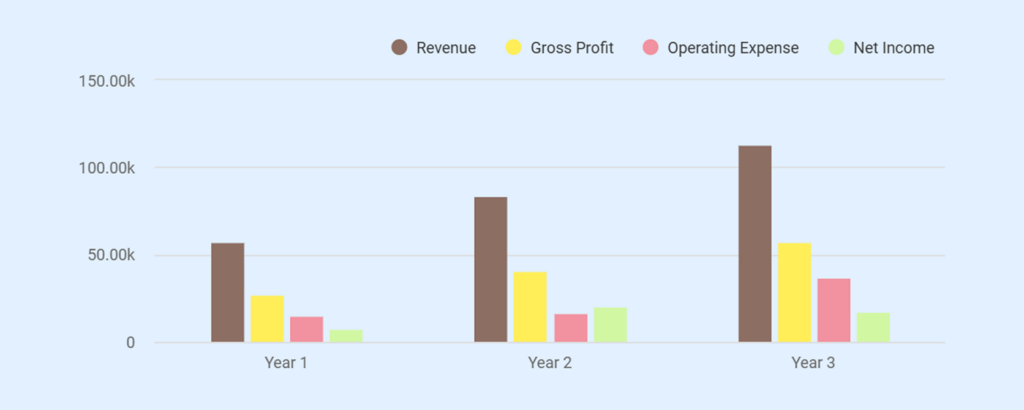
Silverline Jewelry Co. is organized to break even early and sustain a consistent profitability because of the low costs of operation (low fixed costs). The sales forecast indicates that the store will make about $57,000 of revenue in the first year, $84,000 in the second year, and $113,400 in the third year. As the number of orders via the internet goes up, so will customer awareness of the company and brand. Gross margins are below 50%, and this shows a controlled inventory source and stable prices.
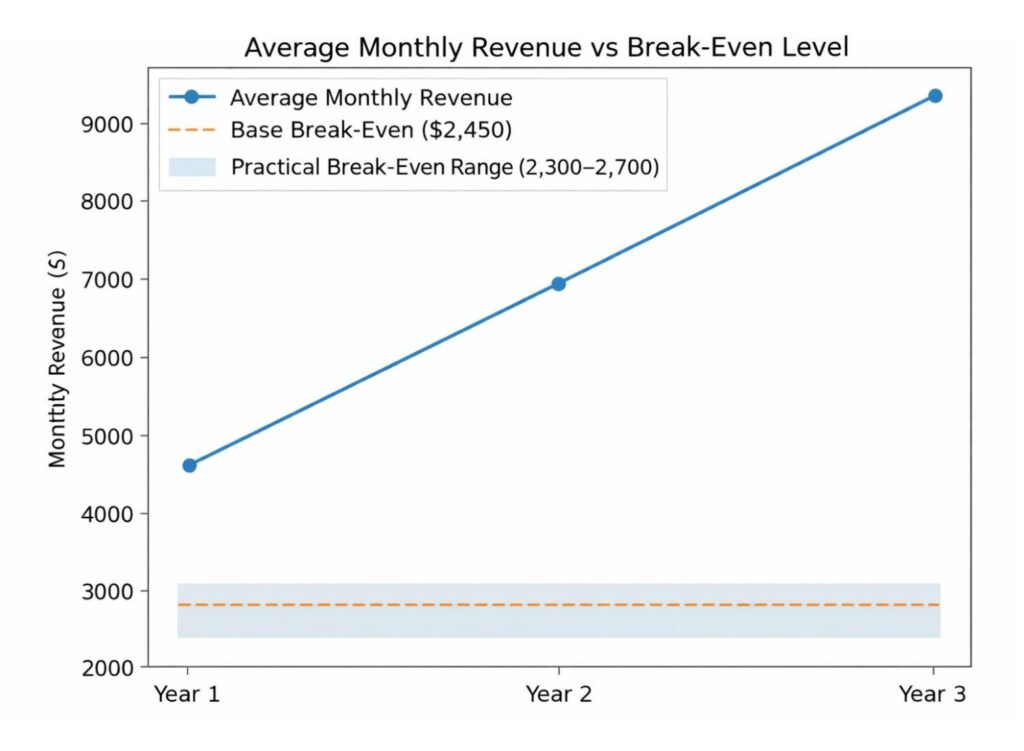
Break-even is within the range of $2,300 to $2,700 in revenue or between 45-55 orders per month at the prices $85 in Year 1. This is achieved early in the business lifecycle, with profitability driven by a steady flow of orders and consistent inventory turnover rather than rapid sales growth. The business will produce positive working cash flow over all the forecast years.

Don’t spend weeks on your first draft
Complete your business plan in less than an hour
Company Overview
Silverline Jewelry Co. is a single-member limited liability company registered in New York, USA. It operates as an online-only jewelry brand selling directly to consumers through its e-commerce website, with limited participation in local pop-up markets. All operations are managed by the owner from a non-retail workspace, with no physical storefront or showroom.
Our product range includes rings, necklaces, bracelets, and earrings. Importantly, we don’t offer custom designs, resizing, engraving, or repair services. This narrow scope keeps our operations predictable and limits fulfillment complexity.
Ownership
Silverline is fully owned and operated by a single founder, Tim David. The owner manages sourcing, inventory purchasing, order fulfilment, customer service, marketing, and financial oversight. No employees or contractors are planned during the early operating period.
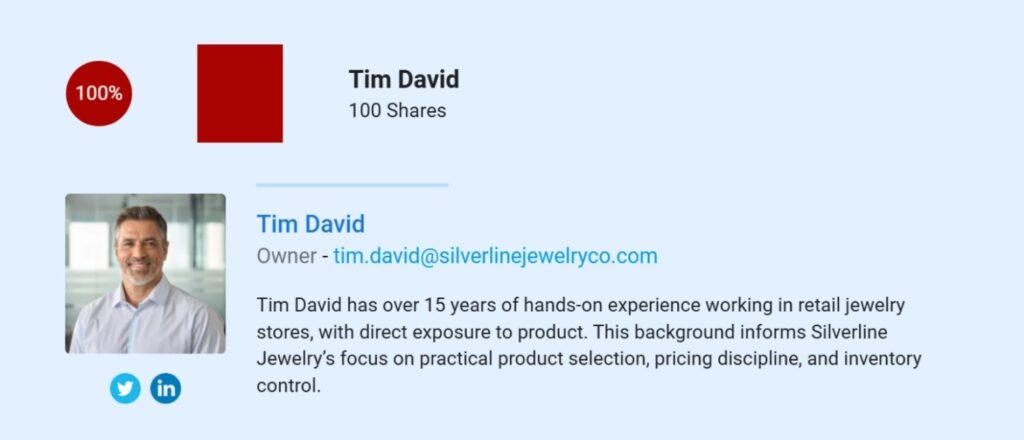
The owner-operated structure enables tight cost control and swift decision-making.
Legal Structure and Compliance
Silverline Jewelry operates as an LLC (Limited Liability Company), providing liability protection while maintaining tax simplicity. Business income is reported on the owner’s personal tax return.
The company complies with New York State business registration requirements, collects and remits New York sales tax on applicable transactions, and uses resale certificates when purchasing inventory for resale.
In addition, the business follows consumer protection and return policy disclosure rules, which are required for online sellers to clearly inform customers about pricing, refunds, and return conditions. This compliance helps reduce disputes, chargebacks, and customer complaints.
The company also complies with data privacy and payment security standards for e-commerce transactions. This is necessary to protect customer payment information, prevent fraud, and maintain trust when processing online orders.
The business operates without employees or leased retail space and follows only standard e-commerce, consumer sales, and insurance requirements.
Operating Approach
Silverline Jewelry is built around inventory control, cash discipline, and manageable growth. The business prioritizes steady sell-through over rapid assortment expansion or trend-based launches. Inventory is purchased in small batches and replenished only after proven demand, reducing cash tied up in slow-moving stock.
The operating approach favors simplicity and consistency. Product offerings remain focused, pricing remains stable during the first two years, and marketing spend increases only in line with revenue growth. This philosophy supports early break-even and reduces reliance on external funding beyond the initial loan.
Short-Term Goals
The short-term focus is on establishing stable operations, reaching break-even early, and validating demand without overextending capital or inventory. At Silverline, we aim to:
- Launch the e-commerce store with a focused collection of core jewelry SKUs and complete initial inventory deployment.
- Reach monthly break-even at approximately $2,300–$2,700 in revenue within the first operating year.
- Build average monthly order volume to 45–55 orders in Year 1 and 70–80 orders in Year 2.
- Maintain an average order value of approximately $85 in Year 1 and $90 in Year 2.
- Generate positive operating cash flow while meeting all scheduled loan repayments without owner compensation.
Long-term Goals
The long-term objective is to sustain profitability, improve efficiency, and support owner income while preserving a lean operating structure.
- Sustain annual revenue growth to approximately $113,000+ by Year 3 through consistent online sales.
- Introduce a modest owner draw beginning in Year 3, supported by stable EBITDA margins.
- Improve inventory turnover through demand-based restocking and reduced slow-moving stock.
- Increase average order value to approximately $95 by Year 3 without raising base prices aggressively.
- Preserve an owner-operated structure with controlled growth and no permanent retail expansion.
Products & Pricing
Silverline Jewelry is an online retailer of ready-to-wear jewelry that is used on a daily basis. The product line is based on simple, long-lasting items in the form of sterling silver, gold-plated, and vermeil, although there is a limited quantity of solid gold items.
Jewelry Collection
Price is set in the mid-range to ensure that it strikes a balance between quality and repeat buying without being based on the luxury positioning or the discount-based sales.
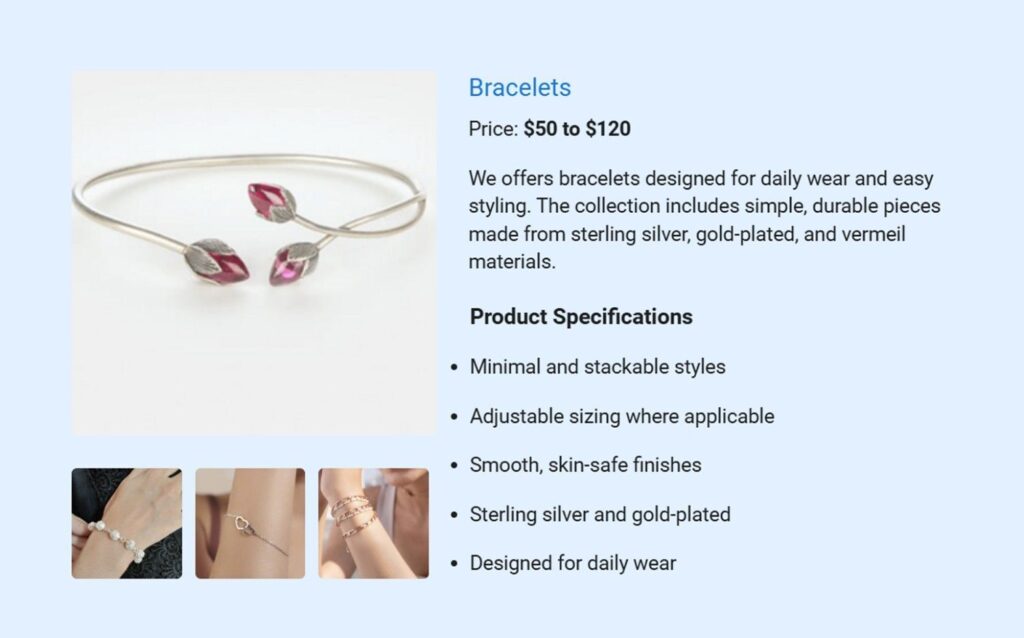
Bracelets: Everyday Wear Bracelets
Bracelets focus on repeat-friendly designs that sell steadily across seasons, allowing inventory to move without trend dependency.
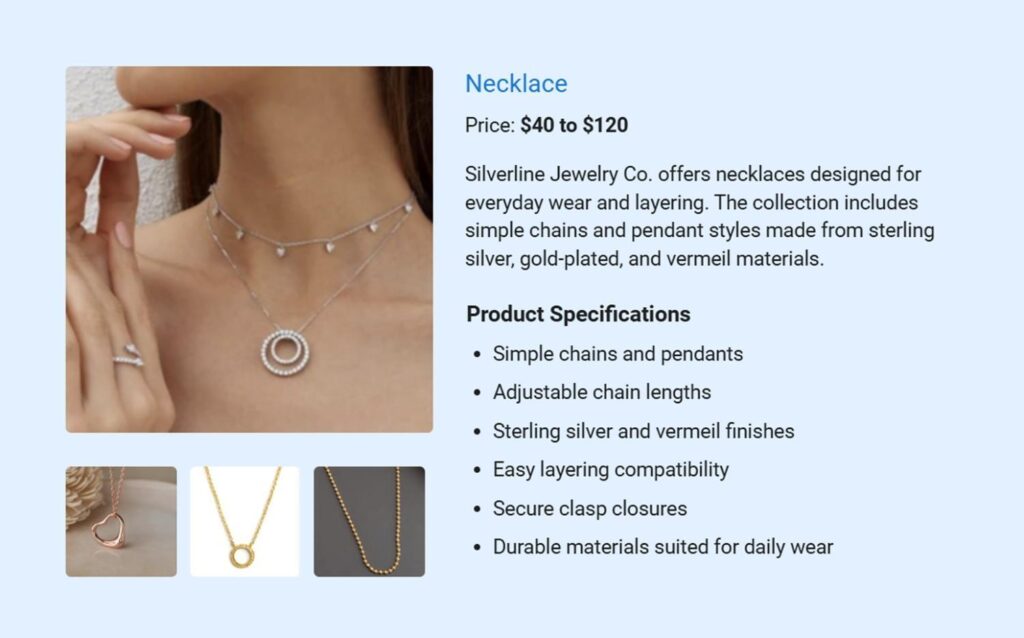
Necklaces: Layer-Ready Chain Designs
Necklaces anchor the product mix by supporting a higher average order value through layering and gifting, without increasing SKU complexity.
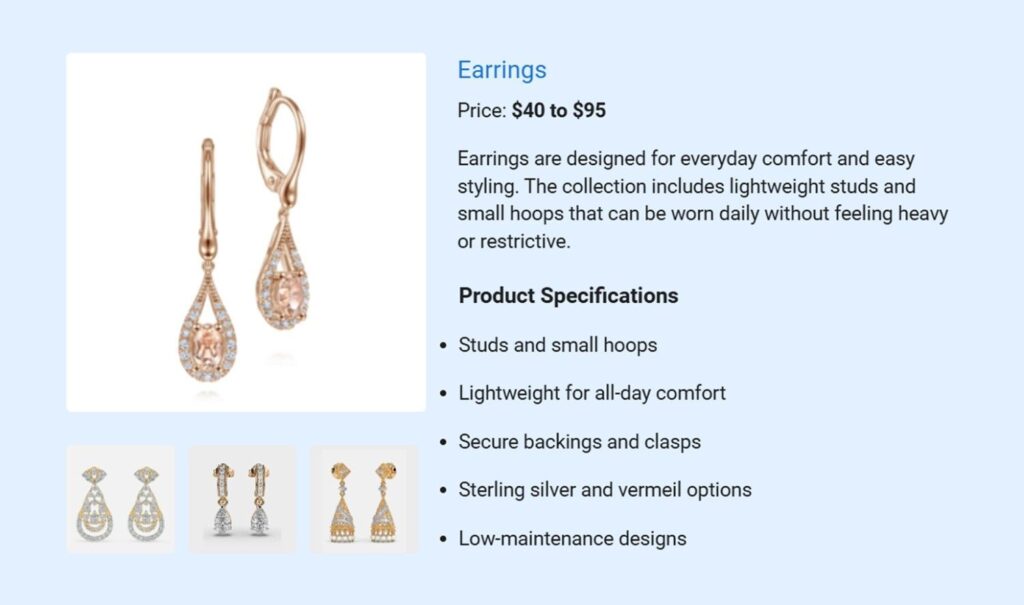
Earrings: Lightweight Stud Essentials
Earrings provide an entry-price category that attracts first-time buyers and supports customer acquisition without heavy material cost exposure.
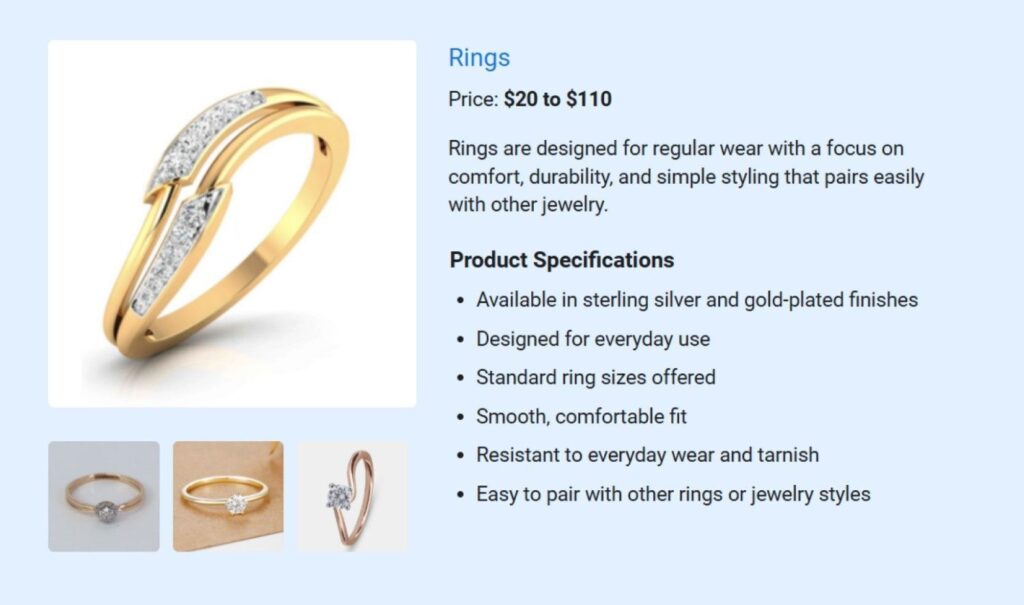
Rings: Timeless Band Styles
Rings are designed with limited styles and standard sizing to reduce inventory risk and simplify fulfillment while maintaining consistent demand.
Silverline’s product and pricing structure is intentionally designed to support repeat purchases, gifting behavior, and low operational risk rather than one-time, occasion-driven sales. The focus on everyday jewelry categories such as necklaces, bracelets, earrings, and standard-sized rings encourages customers to return over time while keeping inventory simple and predictable.
The absence of custom sizing, engraving, or made-to-order products reduces fulfillment complexity and return risk, which is critical for an online-only model. This approach helps maintain stable margins, controlled inventory levels, and consistent customer expectations, strengthening both business credibility and lender confidence.
Suppliers and Sourcing
Silverline Jewelry Co. LLC sources finished jewelry from a small group of established suppliers offering sterling silver, gold-plated, vermeil, and limited solid gold pieces. Inventory is purchased in small batches to control quality and limit cash exposure.
To mitigate risks against supply disruptions, we have multiple suppliers and have stock of important products. The lead time buffers are to be used on orders to handle shipping delays.
In case of a supplier challenge, restocking is held back, available stock is given priority, and sourcing is changed to alternative suppliers. This would secure the cash flow and would not require emergency-based purchasing.
Customer Experience Approach
Silverline will focus on ensuring an easy and efficient purchase process that will lead to customer trust and subsequent business. The customer experience is addressed in the following way:
- Showing clear images of the products and giving the right expectations of what to receive before buying.
- Placing ship orders fast to minimize waiting and dissatisfaction.
- Jewels should be delivered in secure packaging.
- Timely reply to customer queries and concerns.
- Be transparent with no undercharges on checkout.
- Deal with returns and exchanges fairly and fairly.
Market Overview
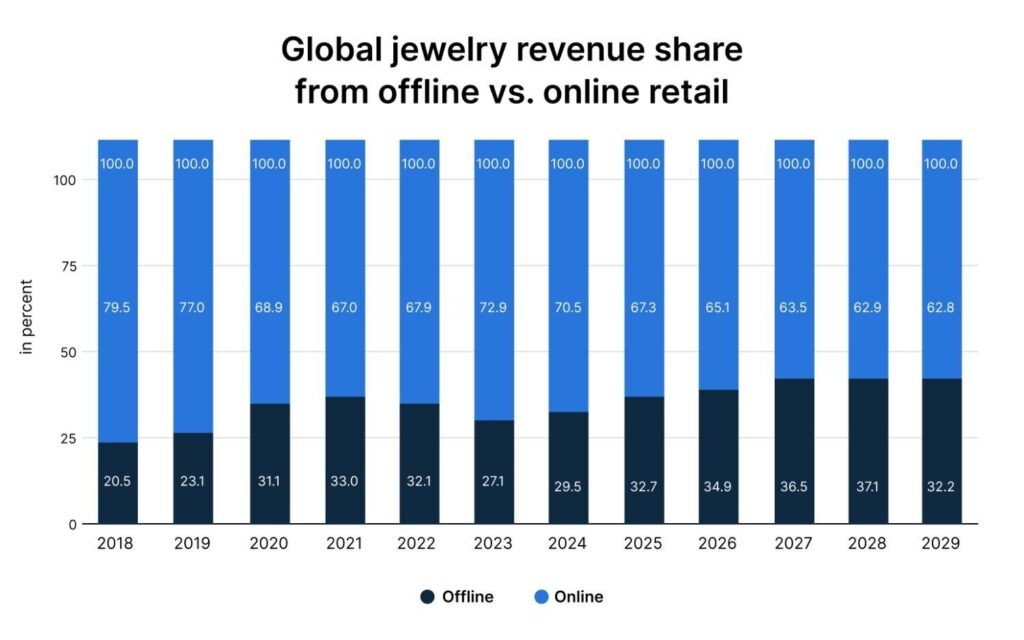
The jewelry market in North America has a good scale and definite online growth, which is suitable for digital first jewelry brands. The region is estimated to hold approximately 25% of the total worldwide jewelry market, estimated to be about $87 billion in 2025, of which the United States will make an estimated contribution of almost $78 billion. This concentration indicates stable and constant consumer demand.
In addition, U.S. consumers expend an average of $240 annually on jewelry, which is very high compared to the rest of the world. Interestingly, the online jewelry sales were up to $16.8 billion in 2025, and it has become nearly 21.5% of the retail sales of jewelry. This is 185% higher than in 2019, and this indicates that the act of buying jewelry online is now a mainstream activity.
Key E-commerce Jewelry Sales Statistics:
| Channel | Share of Online Jewelry Sales |
|---|---|
| Mobile commerce | 43% |
| Social commerce | 28% |
| Other online channels | 29% |
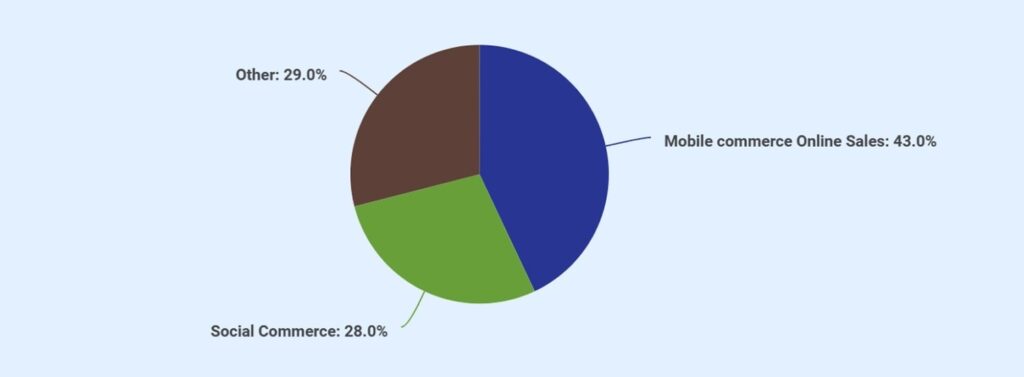
This change directly endorses the business model of Silverline Jewelry Co. LLC. Being an online exclusive brand, the company enjoys the rising demand digitally without the high fixed cost of having a brick and mortar store. Its mid-priced product line appeals to a broad group of buyers who can comfortably afford the products. As the online jewelry market grows, the business can expand steadily without needing to compete aggressively for market share.
Customer Segment
Our jewelry company serves a small number of online customer segments. These groups are selected because they fit the online-only model, support consistent purchasing behavior, and align with mid-priced jewelry products.
The following customer segments are targeted:
1) Online-First Jewelry Buyers
These clients are at ease with shopping online and making purchases without having to visit physical shops. They have confidence in product images, reviews, and detailed descriptions. This is why e-commerce is the appropriate avenue to use when the company targets them.
2) Style-Conscious Everyday Wear Customers
The high-fashion group doesn’t purchase jewelry only on occasion; they purchase jewelry to wear on a daily basis. They like simple, comfortable designs that they can wear regularly, hence repeat purchase and predictable, unwavering demand.
3) Gift Buyers
Silverline also sells jewelry as gifts for birthdays, holidays, and seasonal occasions. The fourth quarter is the most active time period for gift buyers because of the holiday events like Christmas and end of year festivals. This coincides with the period of the year when the business has the best sales.
4) Mid-Income Shoppers Seeking Value
This type of audience will desire fine jewelry at affordable prices and will not be drawn to cheap fashion jewelry and expensive luxury brands. Silverline’s pricing and material choices align well with these expectations.
5) Local Pop-Up Shoppers
It’s in markets and seasonal events that these customers get to know the brand. Pop-ups are useful in gaining trust, receiving feedback, and introducing the brand to new buyers who can come out and purchase online.
Each customer segment supports steady sales, manageable order volume, and controlled growth without adding fixed costs or operational complexity.
Competitive Analysis
The business operates in a competitive online jewelry market alongside established direct-to-consumer and e-commerce-focused brands. The competitors below represent the primary alternatives customers consider when shopping for mid-priced and fine jewelry online.
| Competitor | Core Strength | Best At |
|---|---|---|
| Mejuri | Strong brand presence | Everyday fine jewelry and repeat buyers |
| Blue Nile | Large product range | High-value diamond and engagement jewelry |
| Quince | Direct pricing model | Affordable fine jewelry with low markups |
| Aurate | Ethical sourcing focus | Sustainable and ethically made jewelry |
| Brilliant Earth | Strong ethical positioning | Conflict-free and traceable materials |
Positioning
Silverline Jewelry Co. LLC competes on focus, reliability, and everyday value rather than scale or luxury branding.
| Dimension | Approach |
|---|---|
| Product focus | Curated everyday jewelry instead of large catalogs |
| Pricing | Mid-range pricing without luxury markups |
| Quality | Durable materials suited for regular wear |
| Inventory | Small-batch restocking based on demand |
| Brand tone | Simple, calm presence with no aggressive selling |
| Customer trust | Clear product details and fair policies |
This positioning suits customers who prefer simple, well-made jewelry and a focused shopping experience. It encourages repeat purchases by avoiding excessive choice and brand-driven pricing.
Market Challenges
The most significant market challenges currently affecting the online jewelry industry are as follows:
High Competition
Online jewelry sales are increasingly popular, and many brands sell jewelry online, which makes it harder to stand out. Customers compare prices and designs quickly, so brands must stay focused and clear about what they offer.
Customer Trust Barrier
Some buyers hesitate to purchase jewelry online without seeing it in person. In fact, 62% of consumers say trust plays a major role when deciding whether to buy from a brand.
Seasonal Demand Swings
Holiday periods are the high point in jewelry sales, and the first months of the year are the decline period. Cash and inventory are the other aspects that businesses need to handle to ensure that they are not overbought during slow periods.
Market Trends
Here are the 3 most recent trends shaping the online jewelry industry:
The increase in demand for everyday jewelry: The emerging customers use the basic jewels that they can use in their daily lives instead of the expensive occasion jewelry. This facilitates the repetition of purchases rather than a single purchase.
Mobile and social shopping: Customers are increasingly finding out and purchasing jewelry via mobile phone and social media. Product pictures and short videos are very powerful sources of impact on purchases.
Preference for independent brands: Many buyers choose smaller brands over large chains to avoid mass-produced designs. They value unique collections and direct communication with the brand.
Marketing & Sales Plan
Silverline Jewelry follows a controlled marketing approach with a clearly defined monthly budget. In Year 1, the business allocates approximately $600 per month to marketing activities, with gradual increases only as revenue grows.
Marketing Channels
The monthly marketing budget will be spent across a small set of focused channels designed to drive traffic, support conversions, and encourage repeat purchases while keeping costs under control.
| Marketing Channel | Purpose | Estimated Monthly Spend |
|---|---|---|
| Paid Social Ads (Instagram / Facebook) | Drive targeted traffic to product pages | $250 |
| Google Search Ads | Capture high-intent buyers searching for jewelry | $150 |
| Email Marketing Tools | Retain customers and promote new arrivals | $75 |
| Content Creation (photos, short videos) | Support ads and organic visibility | $75 |
| Pop-Up Promotion & Materials | Promote seasonal in-person events | $50 |
| Total Monthly Marketing Budget | $600 |
This channel mix is designed to attract first-time buyers while supporting repeat purchases over time. By encouraging customers to return, the business reduces reliance on constant new customer acquisition, helping keep marketing costs stable and improving long-term customer value.
Popup and Offline Marketing
At Silverline, we employ the pop-up markets and events as a support for sales and exposure media, but not as a main source of revenue. The events enable the customers to view and simultaneously test the jewelry, which serves to create customer trust and brand recognition.
We also attend a few (pop-up) events every year, so as to limit expenses and time investment. During these occasions, Tim David is able to gather customer ratings, create an email list, and persuade customers to buy online in the future instead of depending on same-day sales.
Pop-ups are chosen based on the quality of foot traffic and cost efficiency. This would help raise brand awareness and sell online at a low fixed cost that would be required to have a permanent retail outlet.
Sales Channels
Silverline Jewelry uses simple and direct sales platforms that align with how modern customers prefer to shop for jewelry. All sales channels support steady demand while avoiding additional costs or operational strain.
The following channels are used to sell products:
E-commerce Website (Direct Channel)
The company’s website is the main sales point as the customers can browse goods, make orders, and pay online. This channel gives complete control of pricing, branding, and customer experience at a cheaper cost than when selling via marketplaces or even retail stores.
Social Media Traffic (Support Channel)
Social media will facilitate referring customers to the site. Product posts, photos, and short videos generate interest and lead the shopper to the online store without the need for face-to-face interaction.
Email Marketing (Retention Channel)
Email is used to maintain contact with current customers and advertise upcoming or seasonal deals. This channel assists in making repeat purchases at a low cost as well as maintaining stability in the monthly sales.
Pop-Up Markets (Secondary Channel)
The pop-up events will enable customers to see and touch the jewelry. These events help build trust and brand recognition and often lead to repeat online purchases, without the cost of operating a physical retail store.
All the sales channels mentioned above are designed to build up constant demand, a predictable quantity of orders, and to maintain a manageable operating cost.
Sales Conversation Process
The business tracks only the most essential metrics needed to run an online business efficiently. The focus stays on numbers that directly affect sales, cash flow, and marketing decisions, making it manageable for a single owner.
Here’s how we process our sales:
- Attract potential customers through paid ads, social media posts, and pop-up exposure.
- Direct traffic to focused product pages with clear images, pricing, and descriptions.
- Build trust through transparent materials, sizing details, and return policies.
- Encourage purchase with a smooth, distraction-free checkout experience.
- Confirm orders immediately with tracking and delivery updates.
- Follow up after delivery to support repeat purchases and referrals.
Such a process reduces friction at each step, supports customer confidence, and improves conversion rates while remaining easy to manage within an owner-operated business.
Customer Acquisition Cost (CAC) Management
The company monitors customer acquisition costs to ensure marketing spending remains efficient. By focusing on repeat purchases and email-based retention, Silverline reduces long-term dependence on paid advertising, helping keep CAC at a sustainable level for an owner-operated business.
As brand awareness increases, a larger share of sales is expected to come from returning customers and direct traffic rather than paid channels. This allows marketing spend to remain stable as order volume grows, supporting stronger unit economics and reducing pressure on advertising budgets.
Sales Performance Tracking
We only monitor the key measurements that are necessary to operate an online business effectively. It is not complicated because it only focuses on numbers that directly influence sales, cash flow, and marketing decision-making.
| Area | Key Metrics Tracked |
|---|---|
| E-commerce Website | Website visits, conversion rate, average order value |
| Paid Ads | Cost per click, cost per order |
| Social Media | Website link clicks, basic engagement |
| Email Marketing | Open rate, clicks, sales generated |
| Pop-Up Events | Sales per event, email sign-ups |
| Overall Performance | Monthly revenue, repeat purchase rate |
Operations
Silverline Jewelry Co. runs on a simple, owner-managed operating structure. The model focuses on efficiency, cost control, and predictable daily workflows.
Owners’ Working Hours
Silverline is structured to operate within a realistic, owner-managed workload. We limit product range and order volume to ensure consistent execution without overextension.
| Activity Area | Estimated Weekly Time |
|---|---|
| Order packing and shipping | 6–8 hours |
| Customer inquiries and support | 3–4 hours |
| Marketing and content creation | 8–10 hours |
| Inventory tracking and admin tasks | 2–3 hours |
| Total weekly commitment | 19–25 hours |
Daily Workflow
| Time Block | Activity | Description |
|---|---|---|
| Morning | Order review and processing | Review new orders, verify payments, and prepare items for packing and shipment. |
| Mid-morning | Packing and dispatch | Pack jewelry securely, generate shipping labels, and hand off packages to carriers. |
| Early afternoon | Customer communication | Respond to customer emails, order questions, and return or exchange requests. |
| Mid-afternoon | Inventory check | Update inventory levels, review sell-through, and note restocking needs. |
| Late afternoon | Marketing and content | Schedule posts, review ad performance, and update product listings if needed. |
| End of day | Admin and review | Track daily sales, review metrics, and plan next-day priorities. |
Inventory Management
Silverline Jewelry Co. LLC manages inventory carefully to protect cash flow and avoid overstocking. Here’s how we manage our inventory:
- Purchase inventory in small batches based on proven demand.
- Track stock levels after every sale to prevent overselling.
- Reorder only fast-moving products with consistent sell-through.
- Carry unsold inventory forward instead of discounting quickly.
- Limit total SKU count to keep inventory simple and controlled.
- Review inventory performance regularly to adjust buying decisions.
Supplier and Sourcing Management
We, at our Silverline Jewelry, use a structured sourcing approach to maintain product quality while reducing supply and cash flow risks.
| Area | Approach |
|---|---|
| Supplier selection | Work with established jewelry suppliers with consistent quality records |
| Order size | Place small-batch orders to limit cash exposure |
| Quality control | Inspect products on arrival before listing for sale |
| Supplier dependency | Avoid reliance on a single supplier for core items |
| Backup sourcing | Maintain alternate suppliers for key product categories |
| Disruption response | Pause restocking and shift focus to available inventory |
Shipping and Logistics
All the purchased jewelry is packed with protective pouches, cushioning material, and rigid mailers to prevent damage during transit. Each package includes order details and tracking information to keep customers informed.
Packaging materials average approximately $3 per order and are included in COGS. Shipping carrier charges are calculated at checkout and passed directly to customers. Our business does not subsidize shipping during the early stages to protect margins.
Shipping Partners and Use Cases:
| Shipping Partner | Primary Use | Billing Method |
|---|---|---|
| USPS First-Class Mail | Lightweight domestic orders | Pay-per-shipment |
| USPS Priority Mail | Faster delivery and insured shipments | Pay-per-shipment |
| UPS Ground | Higher-value or bulk shipments | Account-based billing |
| FedEx (backup) | Time-sensitive or insured orders | Account-based billing |
Customer Support
Customer service is email-only and handled directly by Tim David. All inquiries receive a response within 24 to 48 working hours.
Common customer inquiries include:
- Sizing questions
- Order status updates
- Return requests
- Product availability checks
This support model fits the projected order volume of 60 to 70 orders per month during the first year and remains manageable for a solo operator.
If inquiry volume increases, response time per inquiry is reduced through templated replies and expanded frequently asked questions. It allows support quality to remain consistent without adding staff.
Technology
Silverline uses simple, reliable technology tools to sell products, process payments, and manage daily operations. The focus is on systems that are easy to manage, cost-effective, and scalable without adding complexity.
| Technology | Purpose |
|---|---|
| Shopify | E-commerce storefront, product listings, and checkout |
| Shopify Payments | Secure credit and debit card processing |
| PayPal / Digital Wallets | Alternative payment options for customers |
| Email Marketing Tool | Customer communication and order follow-ups |
| Inventory Tracking Tools | Monitor stock levels and restocking needs |
| Analytics Dashboard | Track sales performance and website activity |
| Photo Editing Tools | Edit product images for clarity and consistency |
| Video Editing Tools | Create short product and promotional videos |
| Canva | Design marketing visuals, banners, and social content |
Return Policy
Silverline Jewelry Co. has a transparent and fair return policy to minimize the reluctance of customers to make purchases online and establish trust in it. The customers can request return within 14 days of delivery of unused goods in original condition and packaging.
The items returned should not be worn, damaged or modified. Earrings cannot be refunded because of hygienic and safety considerations except when they are damaged or defective. Custom work is not offered, which simplifies return handling.
Customers are responsible for return shipping costs unless the item arrives damaged or incorrect. Refunds are processed after inspection and issued to the original payment method.
Financial Plan
The following statements and projections are intended to help lenders evaluate the profitability, the financial health of Silverline, and its ability to meet the financial obligations.
Financial Assumptions
| Item | Assumption |
|---|---|
| Average order value (AOV) | $85 Year 1; ~$90 Year 2; ~$95 Year 3 |
| Monthly orders (Year 1) | 45–55 orders/month |
| Monthly orders (Year 2) | 70–80 orders/month |
| Monthly orders (Year 3) | 95–110 orders/month |
| Pop-up events | 4–6 per year, small contribution to total revenue |
| Revenue seasonality | Q4 stronger (holidays), Q1 weakest |
| Pricing changes | None assumed in first 2 years |
| Inventory cost (% of sales) | 45–50% of revenue |
| Packaging & shipping materials | $3.00 per order |
| Payment processing fees | 2.9% + $0.30 per transaction |
| Loan amount | $45,000 term loan |
| Loan term | 5 years |
| Interest rate (assumed) | 8.5% fixed |
Startup Costs
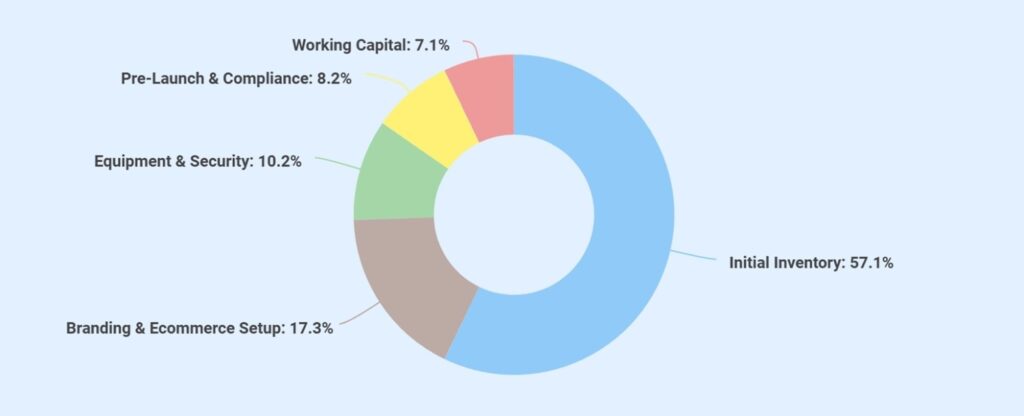
Total startup costs for Silverline Jewelry Co. are $49,000. The majority of startup funding is allocated to initial jewelry inventory, followed by website development, branding, photography, and essential equipment and compliance costs.
Here’s the detailed information on startup costs:
| Category | Cost |
|---|---|
| Initial Inventory (Capitalized as Inventory) | |
| Launch jewelry inventory (mixed SKUs) | $28,000 |
| Subtotal (Inventory) | $28,000 |
| Branding & E-commerce Setup | |
| Website design & setup | $4,000 |
| Product photography & content | $3,000 |
| Logo & brand assets | $1,500 |
| Subtotal (Branding & Setup) | $8,500 |
| Equipment & Security (Capitalized) | |
| Secure storage safe | $2,500 |
| Photography equipment & lighting | $1,500 |
| Packaging equipment | $1,000 |
| Subtotal (Equipment) | $5,000 |
| Pre-Launch & Compliance | |
| Business registration & licenses | $1,000 |
| Insurance deposits | $1,500 |
| Legal & accounting setup | $1,500 |
| Subtotal (Pre-Launch) | $4,000 |
| Working Capital (Opening Cash) | $3,500 |
| Total Startup Costs | $49,000 |
Profit and Loss Statement (3 Years)
| Income Statement | Year 1 | Year 2 | Year 3 |
|---|---|---|---|
| Revenue | |||
| Online Jewelry Sales | $51,000 | $75,600 | $102,600 |
| Pop-Up Event Sales | $6,000 | $8,400 | $10,800 |
| Total Revenue | $57,000 | $84,000 | $113,400 |
| Cost of Goods Sold (COGS) (inventory, packaging, processing fees, shipping insurance) |
|||
| Jewelry Inventory Cost | $26,500 | $38,000 | $49,500 |
| Packaging & Shipping Materials | $1,800 | $2,500 | $3,200 |
| Payment Processing Fees | $1,700 | $2,500 | $3,300 |
| Total COGS | $30,000 | $43,000 | $56,000 |
| Gross Profit | $27,000 | $41,000 | $57,400 |
| Gross Margin | 47.4% | 48.8% | 50.6% |
| Operating Expenses (OPEX) | |||
| Marketing & Advertising | $7,200 | $8,400 | $9,600 |
| E-commerce Platform & Tools | $1,800 | $1,900 | $2,000 |
| Insurance | $1,440 | $1,500 | $1,560 |
| Accounting & Admin | $1,800 | $1,800 | $1,900 |
| Internet & Phone | $1,200 | $1,250 | $1,300 |
| Pop-Up Booth Fees & Travel | $1,500 | $2,000 | $2,500 |
| Owner Compensation | $0 | $0 | $18,000 |
| Total Operating Expenses | $14,940 | $16,850 | $36,860 |
| EBITDA | $12,060 | $24,150 | $20,540 |
| EBITDA Margin | 21.2% | 28.8% | 18.1% |
| Depreciation | $1,000 | $1,000 | $1,000 |
| EBIT | $11,060 | $23,150 | $19,540 |
| Interest Expense | $3,800 | $3,100 | $2,400 |
| Net Income (Pre-Tax) | $7,260 | $20,050 | $17,140 |
Cash Flow Statement
| Cash Flow Statement | Year 1 | Year 2 | Year 3 |
|---|---|---|---|
| Operating Activities | |||
| Net Income (Pre-Tax) | $7,260 | $20,050 | $17,140 |
| Add: Depreciation (non-cash) | $1,000 | $1,000 | $1,000 |
| Change in Inventory | ($2,000) | ($3,000) | ($3,500) |
| Change in Payables & Accruals | $0 | $0 | $0 |
| Net Cash from Operations | $6,260 | $18,050 | $14,640 |
| Investing Activities | |||
| Capital Equipment Purchases | $0 | $0 | $0 |
| Net Cash from Investing | $0 | $0 | $0 |
| Financing Activities | |||
| Bank Loan Proceeds | $45,000 | $0 | 0 |
| Owner Cash Contribution | $4,000 | $0 | 0 |
| Loan Principal Repayment | ($8,500) | ($8,500) | ($8,500) |
| Owner Distributions | $0 | $0 | $0 |
| Net Cash from Financing | $40,500 | ($8,500) | ($8,500) |
| Net Change in Cash | $46,760 | $9,550 | $6,140 |
| Beginning Cash | $3,500 | $50,260 | $59,810 |
| Ending Cash | $50,260 | $59,810 | $65,950 |
Spreadsheets are exhausting & time-consuming
Build accurate financial projections w/ AI-assisted features
Balance Sheet
| Balance Sheet | Year 1 | Year 2 | Year 3 |
|---|---|---|---|
| ASSETS | |||
| Cash | $50,260 | $59,810 | $65,950 |
| Inventory | $30,000 | $33,000 | $36,500 |
| Total Current Assets | $80,260 | $92,810 | $102,450 |
| Equipment & Setup (Gross) | $5,000 | $5,000 | $5,000 |
| Accumulated Depreciation | ($1,000) | ($2,000) | ($3,000) |
| Net Fixed Assets | $4,000 | $3,000 | $2,000 |
| TOTAL ASSETS | $84,260 | $95,810 | $104,450 |
| LIABILITIES | |||
| Current Portion of Term Loan | $8,500 | $8,500 | $8,500 |
| Long-Term Term Loan | $28,000 | $19,500 | $11,000 |
| Total Liabilities | $36,500 | $28,000 | $19,500 |
| EQUITY | |||
| Owner Capital Contribution | $4,000 | $4,000 | $4,000 |
| Retained Earnings | $43,760 | $63,810 | $80,950 |
| Total Equity | $47,760 | $67,810 | $84,950 |
| LIABILITIES + EQUITY | $84,260 | $95,810 | $104,450 |
Break-Even Analysis
| Metric | Value / Range |
|---|---|
| Monthly Fixed Operating Costs (OPEX) | $1,200 – $1,350 |
| Marketing & Advertising | $600 |
| E-commerce Platform & Tools | $150 |
| Insurance | $120 |
| Accounting & Admin | $150 |
| Internet & Phone | $100 |
| Pop-up Fees (averaged monthly) | $125 |
| Average Fixed Costs Used | $1,250 / month |
| Variable Cost Ratio (COGS % of Revenue) | 49–51% |
| Jewelry inventory cost | 45–47% |
| Packaging & shipping materials | 3–4% |
| Payment processing fees | 3% |
| Contribution Margin | 49–51% |
| Base Monthly Break-Even Revenue | $2,450 |
| Practical Break-Even Range | $2,300 – $2,700 |
| Annualized Break-Even Revenue | $27,600 – $32,400 |
| Avg. Monthly Revenue (Year 1) | $4,750 |
| Avg. Monthly Revenue (Year 2) | $7,000 |
| Avg. Monthly Revenue (Year 3) | $9,450 |
Loan Repayment Plan
Silverline Jewelry Co. LLC services its term loan through fixed annual principal repayments, supported by positive operating cash flow from Year 1 onward. Interest expense declines steadily as the loan balance amortizes.
| Item | Year 1 | Year 2 | Year 3 | Year 4* | Year 5* |
|---|---|---|---|---|---|
| Opening loan balance | $45,000 | $36,500 | $28,000 | $19,500 | $11,000 |
| Principal repayment | $8,500 | $8,500 | $8,500 | $8,500 | $11,000 |
| Interest expense | $3,800 | $3,100 | $2,400 | $1,700 | $900 |
| Ending loan balance | $36,500 | $28,000 | $19,500 | $11,000 | $0 |
The Quickest Way to turn a Business Idea into a Business Plan
Fill-in-the-blanks and automatic financials make it easy.

Upmetrics
Upmetrics is the #1 business planning software that helps entrepreneurs and business owners create investment-ready business plans using AI. We regularly share business planning insights on our blog. Check out the Upmetrics blog for such interesting reads. Read more