Executive Summary
Pulse District is a downtown Nashville nightclub for adults aged 21 and over who want late-night entertainment and DJ music. The club operates from a leased space at 512 East Main Street, Suite A, located on one of the city’s busiest nightlife streets with heavy weekend traffic. The focus is on DJ music nights and themed parties in a well-managed and controlled environment.
The venue operates as a mid-size nightclub with a fire code–approved occupancy capacity of about 400 guests. It offers general admission and a small VIP lounge with bottle service for groups seeking more privacy. The club does not offer full table service, live concerts, food service, or hookah.
The nightclub uses a limited weekly schedule to focus on the busiest nights. This helps keep staffing simple and avoids extra labor costs on slow days. The setup supports steady service while keeping operating costs under control. Our operating schedule covers:
| Category | Details |
|---|---|
| Operating Days | Thursday through Saturday, with occasional special event Sundays |
| Operating Hours | 9:00 PM to 2:30 AM |
| Staffing Approach | Staff are scheduled only on operating nights to control costs |
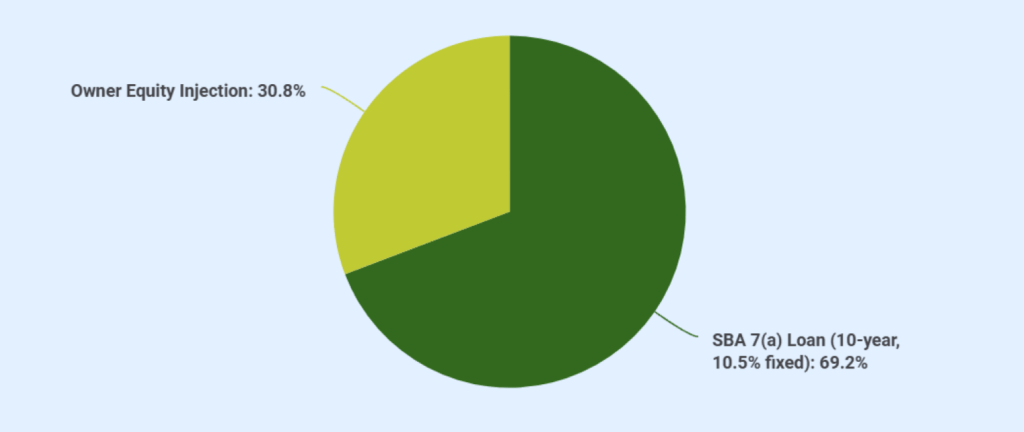
The Pulse District is seeking $650,000 in startup funding. It will be financed with a $450,000 bank loan and $200,000 owner’s equity. These funds will cover costs like lease deposits, building plans, interior design, bar equipment, liquor inventory, licenses, marketing, and working capital.
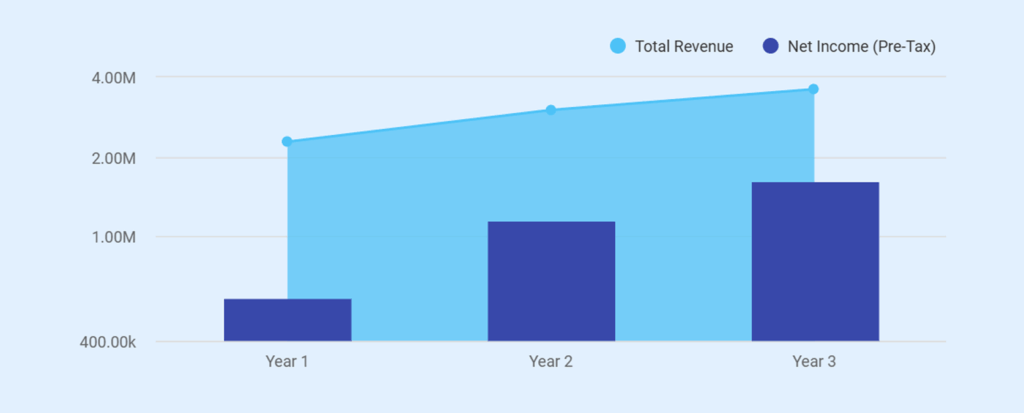
Based on conservative projections, Pulse District Nightclub is projected to have total revenue of $2.27 million in year 1, $3.00 million in year 2, and $3.60 million in year 3.
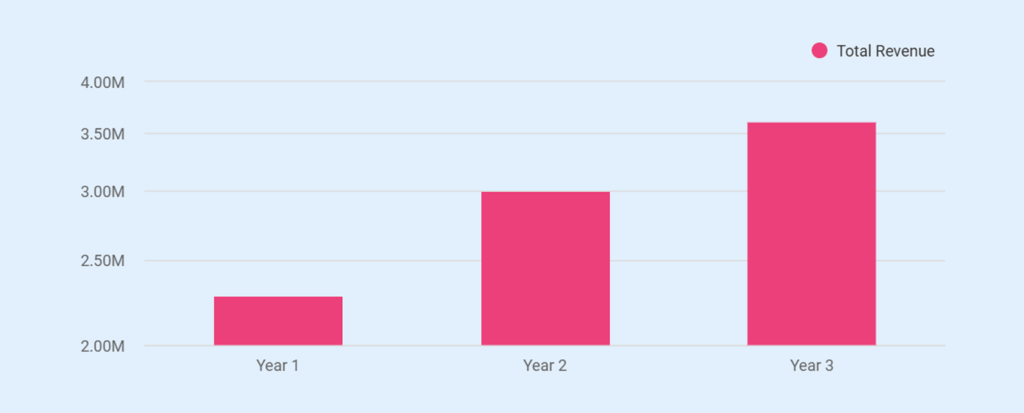
These projections estimate average guest spending on the bar, consistent VIP table reservations, and major event nights. It is also based on a targeted marketing strategy designed to attract a steady attendance.

Business Overview
Pulse District Nightclub is located in a bustling downtown nightlife area at 512 East Main Street, Suite A, Nashville, TN 37203. The venue operates as a single-member LLC registered in Tennessee.
Ownership
Pulse District Nightclub is owned and run by Marcus Reynolds. He handles daily operations, makes key decisions, and ensures compliance with all legal regulations. Marcus has experience in the nightlife industry, including event planning, DJ booking, vendor management, and compliance with laws.
Business Model
The business generates income through general admission cover fees, bar alcohol sales, and VIP bottle service, which are limited to the planned DJ events and themed nights. The club operates on Thursday through Saturday evenings and does not provide food service, live concerts, or hookah. Event programming, staffing, and vendor relationships are all managed internally to keep a streamlined, cost-effective operation.
Mission
The mission of Pulse District Nightclub is to provide a consistent, DJ-led nightlife experience with reliable programming, transparent service, and a safe late-night environment. The nightclub focuses on maintaining stable operations, compliance, and repeatable experiences, rather than experimenting with new programming. We even offer a premium VIP experience along with our regular events for exclusive guest service.
Future Goals
Short-Term Goals (Year 1)
- Keep average venue use at 50–55% without needing to fill the space each night.
- Grow repeat customers by 20% through steady DJ nights and themed events.
- Target an average of 210 guests per night during Year 1.
- Improve social media activity by 15% to bring in more guests
Long-Term Goals (Years 2–3)
- Raise average venue use to 60–65% by Year 3 to increase profits.
- Increase profits by 10–15% from Year 2 to Year 3 by selling more drinks and VIP bottle service.
- Keep 90% or more customers returning by offering a steady and enjoyable experience.
- Maintain stable cash flow with a 22–25% profit margin by Year 3 to support steady growth.
Regulatory Compliance
The owner of Pulse District Nightclub follows all required local and state regulations to operate legally and safely.
Licensing and Permits needed:
- State and city liquor licenses
- Entertainment permits
- Fire department occupancy approval
- Music licensing agreements (ASCAP, BMI)
Age Verification and Entry Control:
- ID verification required for all guests
- ID scanning systems used at entry
- Trained security staff manage entry and crowd flow
- Incident logs maintained for documentation and review
Insurance Coverage:
- General liability insurance
- Liquor liability insurance
- Assault and battery coverage
- Workers’ compensation coverage
Crowd and Noise Management:
- Capacity monitored in line with fire code limits
- Structured crowd control procedures
- Noise control measures to reduce complaints
- Ongoing compliance monitoring to minimize regulatory risk
Business Offering
Pulse District Nightclub offers a range of drinks and VIP services that provide an exceptional experience for general admission guests and VIP clients.
General Admission
General admission requires an entry fee on DJ nights and event nights. The cover charge varies by event, with prices typically ranging from $10–$25. Special events can have higher cover charges, ranging from $30 to $50.
VIP Bottle Service Packages
Pulse District offers VIP bottle service for guests who want something special.
- Booth package: Comes with reserved seating, mixers, and security.
- Bottle prices: Range from $150 to $400, depending on the drink (vodka, tequila, whiskey, champagne).
VIP bottle service is a big part of our revenue. We plan to increase VIP tables from 4 in Year 1 to 6 in Year 3, which will help bring in more money.
Alcohol Offerings
Pulse District Nightclub provides a selection of alcohol offerings to suit all guests:
- Spirits by the bottle: Available for core liquor brands.
- Beer and canned beverages: A selection of beers and canned beverages.
- Limited mixed drinks: Available from the regular bar menu.
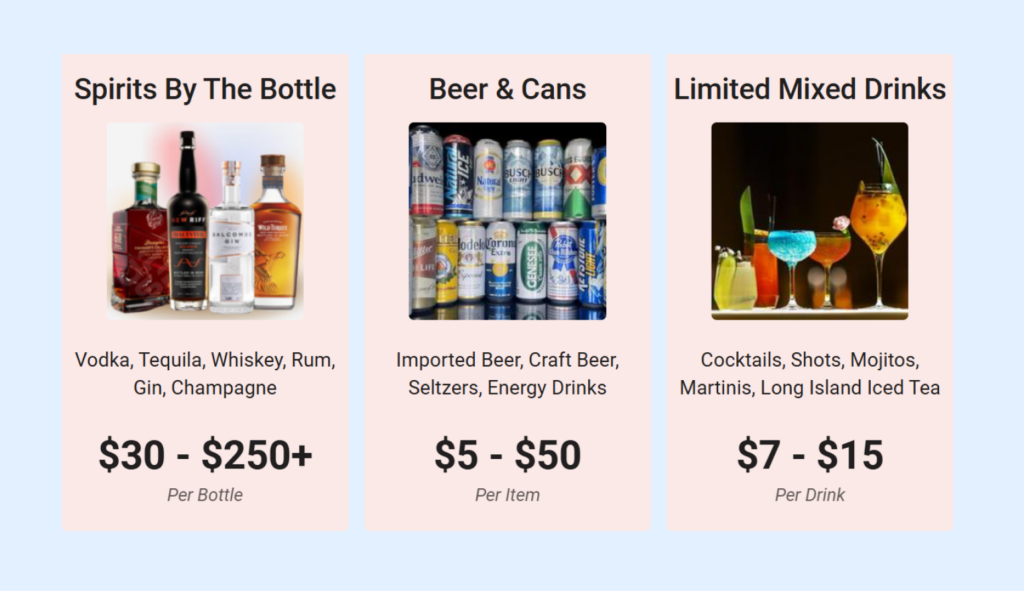
The alcohol offering remains focused on simplicity. It includes core brands and keeps inventory costs manageable. The bar sales per guest are projected to increase by 5–10% annually as event attendance rises.
Capacity and Systems Used
Pulse District can accommodate approximately 350-450 guests based on the fire code. The club uses Square POS (Point of Sale) Systems to track inventory and wristband ID scanners. This keeps operational procedures running smoothly and safely. The guest entry systems help with additional security and ensure the flow of guests into the club is efficient.
Explicit Exclusions
Pulse District does not serve food, only packaged snacks. It keeps the focus on drinks and entertainment. This approach allows the venue to deliver a great bar and nightclub experience without the need for full food service. This simplifies operations and keeps costs under control.
Service Model
Pulse District Nightclub has a general admission policy that lets guests enter, use the main dance floor area, and enjoy all DJ performances and bar service. There is also the option of purchasing VIP Bottle Service for smaller groups, which includes reserved seating, bottle service, and more limited privacy than an average nightclub.
Pulse District operates between Thursday and Saturday, with some Sundays having special events. Entrance gate admission fees (cover charge) vary based on the type of event and guest numbers for every night. The club features multiple DJs every night to keep the nightlife entertaining through its ongoing event schedules.
Customer Experience Approach
Pulse District Nightclub focuses on providing a great customer experience that helps build trust and keep guests coming back:
- Clear pricing and event details: Entry fees and VIP bottle service prices are shown clearly before customers purchase.
- Efficient service: Staff members are trained to keep wait times short and provide fast, friendly service at the bar and VIP areas.
- Safe environment: Both general admission and VIP areas are monitored to ensure safety and comfort for everyone.
- Customer support: Staff quickly respond to customer questions and concerns, maintaining a positive relationship with guests. They also handle ticket returns and exchanges fairly.
- Fast communication: Pulse District makes sure customers receive clear and quick information about event changes or special offers.
Market Analysis
Industry Outlook
The global pubs, bars, and nightclubs market is projected to grow by approximately $34.5 billion between 2024 and 2029, at an estimated 5.1% compound annual growth rate. This growth reflects continued demand for in-person social and nightlife experiences, particularly in urban entertainment districts.
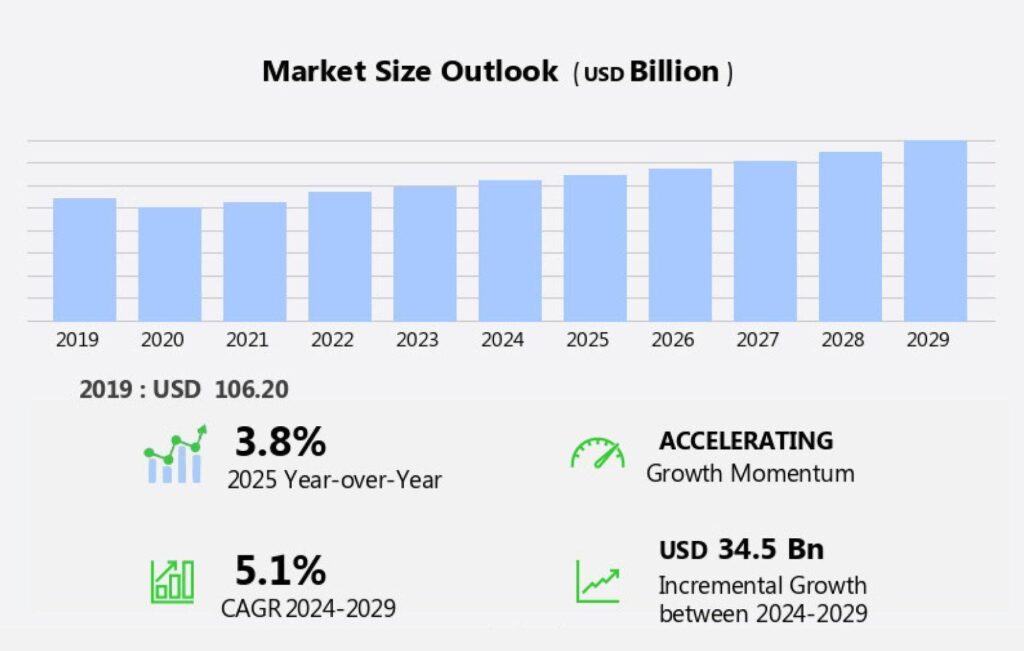
While off-premise alcohol sales and at-home options have increased, nightclubs continue to attract customers because they provide live music, shared energy, and in-person social interaction that cannot be replicated at home.
Pulse District Nightclub meets this demand by structuring its weekly schedule around live DJ performances and themed music nights suited to downtown Nashville’s tourism and local nightlife patterns.
Local Market Insights for Nightlife
Nashville’s downtown has about 2.1 million residents, and it’s also one of the top destinations for business meetings in North America. The city hosts thousands of corporate events and conferences each year. This makes Pulse District a great place for early-evening networking or private corporate events before the nightlife crowd arrives.
The young professional demographic (aged 23 to 38) in this corridor is the core of the weeknight business. These aren’t walk-in customers. But they plan and reserve for premium social experiences. They want a venue like Pulse District with good service, a classy atmosphere, and reliable entertainment. Because they’re booking ahead, they tend to spend more per visit.
Nashville also draws 17.5 million visitors each year. Many of those visitors come for business or to enjoy upscale nightlife. Pulse District can easily cater to these premium tourists. These guests want a memorable, special night out and are willing to spend more for a great experience.
Further, the city’s nightlife is popular among social groups who prefer reserved seating and personalized service. This helps grow spending per guest, making Pulse District a great fit for Nashville’s demand for high-end nightlife.
Target Demographics
Pulse District Nightclub serves guests aged 21 and over, with a primary focus on adults between 23 and 38 years old. Core customer segments include:
- Young professionals who live or work in the downtown area
- Tourists seeking late-night, DJ-led club venues
- Local nightlife patrons who attend clubs regularly
- Small groups celebrating birthdays, social gatherings, or weekend outings
Customer Needs and Behavior
| Customer Segment | Primary Needs | Typical Behavior |
|---|---|---|
| Young Professionals | Music-focused nightlife and social atmosphere | Visit on weekends; arrive after 10 PM |
| Tourists | Easy walk-in access and a recognizable club setting | Bar-hop; respond to visible crowd activity |
| Regular Nightlife Patrons | Consistent DJs and predictable event nights | Return weekly; follow themed programming |
| Social Groups | Group entry options and VIP seating | Reserve tables; higher per-visit spending |
Pulse District’s focus on DJ-led programming, controlled venue capacity, and limited VIP service is designed to meet these needs without relying on a single customer group.
Local Trends
The following trends are helpful to the growth and success of the Pulse District Nightclub:
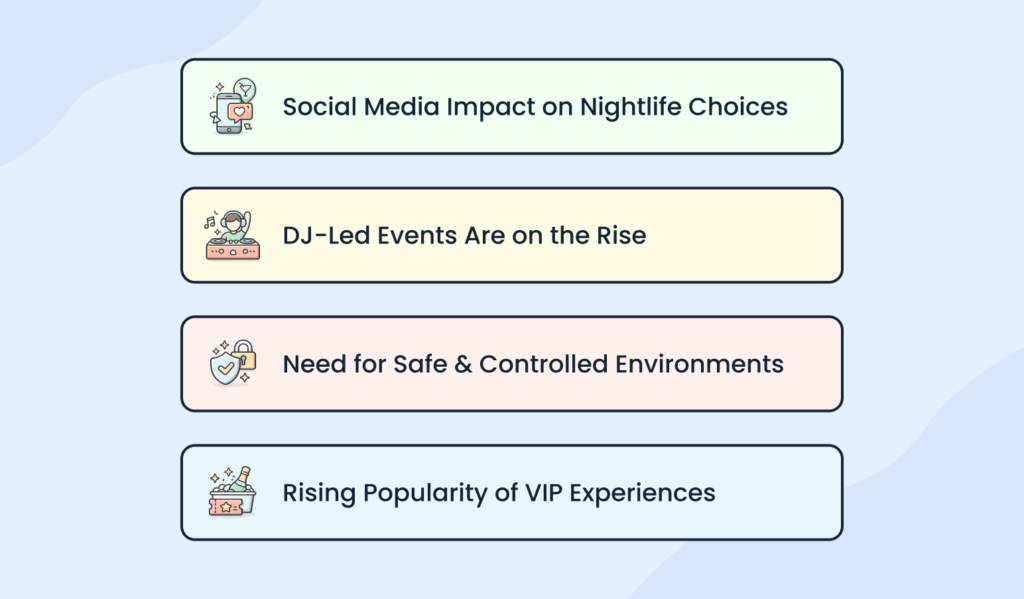
1) Social media impact on nightlife choices
People are increasingly finding places to go out through Instagram and TikTok. More guests are choosing venues based on their online presence and are excited to share fun experiences with their friends. Pulse District can make the most of this by posting about its events and vibrant atmosphere, attracting guests who love to show off their nights out.
2) DJ-led events are on the Rise
There’s a growing trend for people to spend their nights at DJ-led events, where they can enjoy different music and a lively, social atmosphere. Pulse District fits perfectly into this trend. It focuses on high-energy, music-driven nights that are becoming more popular in the city.
3) Need for safe & controlled environments
As Nashville’s nightlife grows, there’s a bigger need for venues that can manage crowds and keep everyone safe. Pulse District meets this need by prioritizing crowd control and creating a secure, fun space for guests. This focus on safety is becoming a key factor in people’s nightlife choices.
4) Rising popularity of VIP experiences
There’s an increasing demand for VIP experiences, like bottle service and reserved seating. Pulse District can position itself by offering a premium, VIP-focused experience. This not only caters to groups looking for privacy and high-end service. But it also boosts revenue per guest.
Market Opportunity
Nashville’s downtown has a lot of foot traffic, tourists, and young professionals, creating a steady, recurring demand for DJ-led nightlife. This demand supports a mid-size nightclub venue that focuses on regular, weekly DJ events rather than the need for big concerts or food service models.
Pulse District Nightclub will meet this demand by offering events with controlled capacity, themed DJ nights, and VIP seating. Located between busy tourist bars and large concert venues, Pulse District will provide a true nightclub experience, bringing client excitement and fun without the complexity of big concerts or food service.
Competitive Analysis
Key Competitors
Pulse District Nightclub is a DJ-focused nightclub that competes with other similar venues and late-night spots within the vibrant downtown Nashville corridor.
| Competitor | Location | Strengths | Weaknesses | Comparison to Pulse District |
|---|---|---|---|---|
| Play Dance Bar | Downtown Nashville | Established DJ-focused nightclub, attracts both locals and tourists | Overcrowded and less personal experience | Operates in the same corridor and targets a similar nightlife audience |
| The Office Lounge | Downtown Nashville | Late-night bar and lounge-style venue | Less focused on live music or DJ events, smaller crowd | Offers nightlife service, but is not positioned as a mid-size DJ nightclub |
| District-area DJ Clubs | Within a 0.5-mile radius | Multiple DJ-driven nightlife venues, high foot traffic | More chaotic and impersonal service | Compete for downtown foot traffic and weekend demand, mainly attracting walk-in customers. |
These venues target the same customers and mostly get foot traffic on weekends. They serve walk-in guests looking for nightlife in downtown, competing for the same crowd during busy hours.
Competitive Position
Pulse District Nightclub stands out in downtown Nashville. Here’s why:
- It’s a mid-sized venue that offers a more personal and manageable experience compared to larger clubs.
- The club focuses more on live DJ music and events for a fun, energetic atmosphere that sets it apart from traditional bars
- General admission + VIP bottle service mix attracts both walk-in guests and smaller groups without feeling overcrowded.
- Excellent service management helps keep things simple and manage costs while making it an affordable yet premium choice for guests.
Marketing & Promotions Strategy
Pulse District Nightclub uses a simple, event-based marketing strategy to bring in weekend guests and encourage them to return. The focus is on practical promotion while keeping marketing costs steady and under control.
Brand Positioning
Pulse District Nightclub is not just another nightlife venue in downtown Nashville. It’s a go-to place for those seeking an energetic and high-quality nightlife experience.
Our brand is built around vibrant DJ-led events, where music takes center stage and creates a fun and memorable atmosphere.
What makes Pulse District unique is the consistent experience. We’re not here for big one-off events. Instead, we focus on regular DJ nights and themed events, so people always know what to expect. And that’s what keeps people coming back.
Pulse District also focuses on a curated selection of drinks and VIP services that make guests feel special without any overcomplications. So it’s building a loyal community around music, fun, and exclusivity.
Marketing Channel
Our marketing strategies focus on specific nightclub events and activities that help generate weekend crowds without going over the budget or spending millions on advertising.
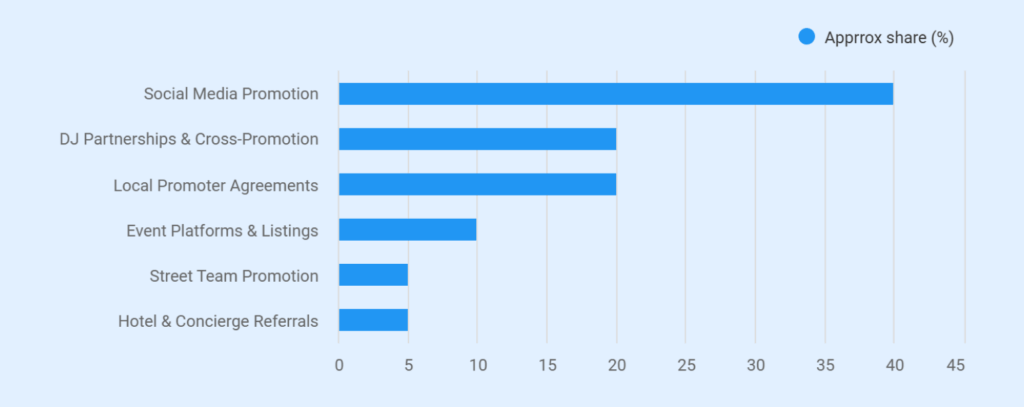
On average, this nightclub’s monthly marketing budget is approximately $6,000. It’s spent on local promotions, online marketing, and DJ partnerships to support weekly events and maintain consistent attendance.
| Marketing Channel | Approx. Share (%) | Purpose / Notes |
|---|---|---|
| Social Media Promotion | 40% | Instagram-based promotion for DJ nights, themed events, and weekly schedules. |
| DJ Partnerships & Cross-Promotion | 20% | Promotion through contracted DJs and guest performers’ social channels. |
| Local Promoter Agreements | 20% | Promoter-led guest list building and nightlife outreach. |
| Event Platforms & Listings | 10% | Event discovery platforms used by tourists and weekend visitors. |
| Street Team Promotion | 5% | Limited physical promotion in nearby nightlife areas. |
| Hotel & Concierge Referrals | 5% | Informal referrals for tourists seeking club venues. |
Customer Retention Strategy
At Pulse District, we focus on giving guests a good experience, so they want to come back. We do not rely on heavy discounts. Instead, we keep things consistent and enjoyable each week.
We encourage repeat visits by:
- Hosting regular DJ nights and themed events so guests know what to expect
- Keeping the venue safe with visible security and strict ID checks
- Providing fast and friendly service at the bar and in VIP areas
- Using our POS system to understand guest visits and spending
- Introducing fresh event themes to keep the experience interesting
- Creating a fun atmosphere that leads to word-of-mouth referrals
Overall, we build loyalty and steady repeat traffic by staying consistent and focused on guest experience.
Performance Measurement and Metrics
Pulse District Nightclub tracks key performance indicators (KPIs) to monitor marketing effectiveness, sales execution, and operating stability. These include:
| Metric | Description |
|---|---|
| Average nightly attendance | Tracks the number of guests attending each night. |
| Average bar spend per guest | Measures how much each guest spends on drinks on average. |
| VIP tables sold per night | Monitors how many VIP tables are sold each night. |
| Total revenue per operating night | Total revenue generated by the venue each night of operation. |
| Monthly marketing spend relative to attendance trends | Tracks marketing spend in relation to guest attendance to ensure effective spending. |
On Monday morning, the owner reviews four results from the previous week: average guests per night, average bar spending per guest, VIP tables sold per night, and total revenue per operating night. These numbers show how the nightclub performed during the week.
Marketing expenses are reviewed each month and compared with actual attendance levels. If $6,000 is spent on marketing and attendance does not increase for six consecutive weeks, the marketing plan is changed or improved.
All sales are recorded through the Square POS system, and it shows transactions in real time. This allows management to track revenue during operating hours and decide whether more bar staff are needed on high-attendance days.
Operations Plan
Our operational strategy follows a simple and consistent setup. The nightclub runs DJ music nights, themed events, and limited VIP bottle service. Only guests who are 21 and over are allowed to enter. The venue does not serve food, host live concerts, or operate during the daytime. All activities take place on busy nightlife nights with planned staffing and basic compliance steps.
The club operates with general admission, bar service, and a small VIP section within a fixed-capacity venue. Each night focuses on smooth guest entry, fast bar service, and visible security. This helps reduce long lines, crowding, service delays, and safety issues. This approach also helps control labor, manage inventory, and ensure a consistent guest experience.
Daily Operations Cycle
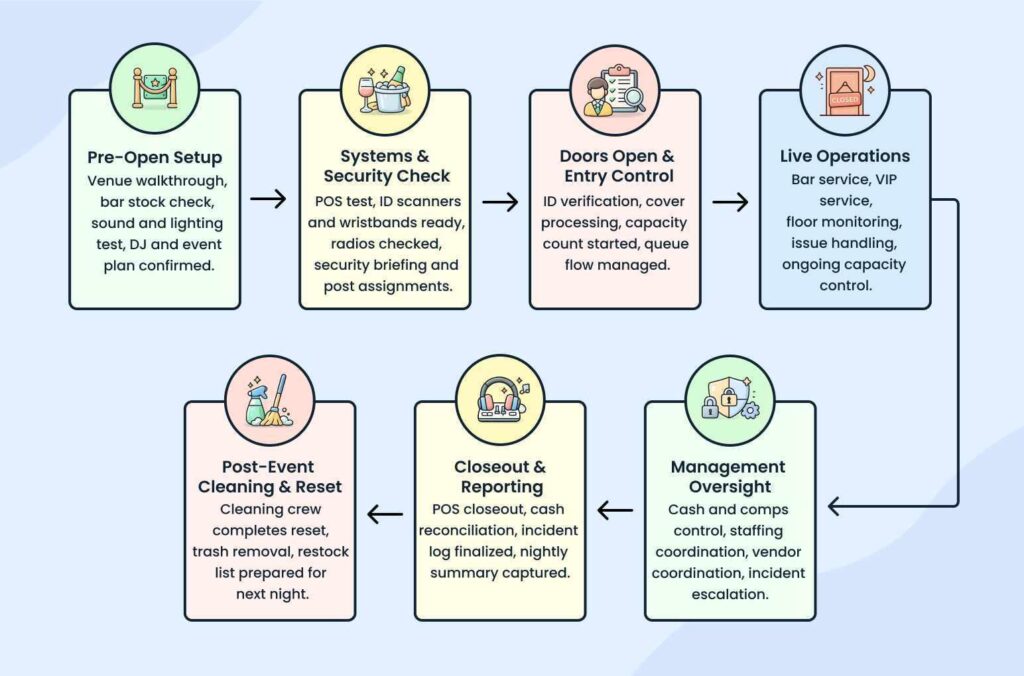
Daily operations begin a few hours before opening. The management team, together with lead staff members, conducts a walkthrough of the venue space. The team checks bar supplies while testing the sound system and setting up the lighting. The DJ schedule and event plans are confirmed. Security staff are scheduled according to crowd size and fire code limits to maintain safety and operational efficiency.
Key Timing for Operations:
- 6 PM: Staff members arrive at the venue to check all supplies, along with sound & light equipment.
- 7 PM: Security staff arrive to monitor guests and maintain public safety.
- 9 PM: The venue opens to welcome guests for the start of the event.
Before the doors open, bartenders set up their work areas and stock spirits, beer, mixers, and glassware. They also check that the payment system is working properly. ID scanners, wristbands, and entry controls are tested to ensure smooth age verification and admission. Security staff members are briefed on expected attendance, entry procedures, and response protocols.
During operating hours, staff members handle guest entry, bar service, VIP seating, and floor supervision. Management handles all cash operations together with staff coordination, and issue resolution to ensure the night runs smoothly.
At closing, the venue follows a structured shutdown process that includes POS system termination, inventory verification, incident documentation, and post-event cleaning by the contracted cleaning team.
Event Night Workflow
Standard DJ nights follow a consistent operating process, while themed events require additional coordination. On higher-traffic nights, staffing levels increase according to predefined tiers for bartenders and security. DJs are hired per event and scheduled to perform during peak crowd periods.
VIP bottle service is managed by floor staff and security, who control access to the VIP area. Staff ensures seating, bottle service, and guest activity are organized to avoid crowding and slow service. After busy nights, management reviews the event and adjusts staffing or guest flow for future improvements.
Here’s what our VIP pre-booking process involves:
- Advance Booking: VIP reservations are made 24–48 hours in advance to ensure availability and smooth operation.
- Deposit: A deposit is required to secure the reservation, which will be applied to the final bill.
- Cancellation Policy: Cancellations must be made 24 hours before the event for a full refund; otherwise, the deposit is non-refundable.
Vendor and Service Providers
Pulse District Nightclub depends on external service providers for security, DJ services, alcohol supply, and cleaning operations. It does not employ in-house security staff and relies on a third-party licensed security company. The contracted company supplies trained personnel responsible for guest safety, crowd control, and incident response. This company also maintains its own liability insurance coverage.
DJs are hired separately for each event. Selection is based on the event format and expected attendance. There is no permanent DJ rotation. DJs are chosen based on their experience working in venues with a similar capacity.
Alcohol is purchased from licensed distributors under net-7 to net-14 payment terms. The inventory is limited to core liquor categories, including vodka, tequila, whiskey, champagne, and standard beer brands. No extended product range is maintained.
After each operating night, a contracted cleaning crew performs post-event cleaning and prepares the venue for the next operating day. Accounting, legal compliance, and licensing requirements are managed by established external professionals.
Bar, Sound, and Systems Management
Bar operations prioritize a limited and standardized alcohol menu to simplify inventory management and reduce waste. Alcohol purchases are made on short payment terms, with inventory levels adjusted based on weekly traffic patterns. POS systems track sales in real time, allowing performance review by night and event type.
Sound, lighting, and DJ booth systems are checked before each night the club is open. The checks make sure the sound is clear, the lights work properly, and all equipment is ready. This helps avoid problems during busy hours.
Scheduling and Resource Allocation
The club is open from Thursday through Saturday. Special events are added only when needed. Staff numbers are based on how many guests are expected, not on sales goals. Bartenders, security staff, and DJs are scheduled for each event to avoid extra labor costs on slow nights. This helps keep costs low while maintaining steady service and rule compliance.
Management and Staffing Plan
Leadership Structure
Pulse District Nightclub LLC is a single-owner-managed business, and the Owner is directly responsible for all major operational, regulatory compliance, and financial decisions.
Marcus Reynolds – Owner and Managing Member (100% ownership)
As the owner of Pulse District, Marcus oversees all core business activities such as coordinating leases, overseeing buildouts, developing relationships with vendors, programming events, etc. Though this is his first venue ownership, Marcus brings significant prior experience in nightlife promotion and venue operations support. His expertise includes event coordination, DJ booking, staffing management, and familiarity with compliance procedures within the nightlife industry.
Staffing Plan
The nightclub uses a mixed staffing model that combines fixed management roles with event-based staff. This structure allows labor costs to adjust based on attendance levels and operating nights while keeping fixed payroll limited.
| Role | Compensation | Type | Key Responsibilities |
|---|---|---|---|
| General Manager | $65,000 per year | Full-time | Oversees operations, compliance, and financial control |
| Bar Manager | $55,000 per year | Full-time | Oversees bar service, inventory, and service speed |
| Bartenders (6–8 per night) | Hourly plus tips ($15 per hour) | Part-time | Prepare and serve beverages during operating hours |
| Security Staff (6–8 per night) | Per-event contract rate ($30 per hour) | Third-party contract | Conduct ID checks and manage crowd control |
| DJs | Flat fee per event ($900/night) | Contract | Provide music programming and manage event pacing |
| Cleaning Crew | Per-event service fee ($450/night) | Contract | Perform post-close cleanup and venue reset |
Staffing Schedule and Coverage
The nightclub operates primarily from Thursday through Saturday, from 9:00 PM to 2:30 AM. Staffing levels are aligned with peak entry times, bar demand, and closing procedures. Management is present on all operating nights to ensure smooth operations. Bar and security staffing levels increase as attendance rises to maintain service speed and ensure guest safety.
Staffing Levels by Event Size
| Event Type | Staffing Level | Operational Focus |
|---|---|---|
| Low Attendance Night | 1 GM, 1 Bar Manager, 6 Bartenders, 6 Security | Controlled entry and steady bar service |
| Average DJ Night | 1 GM, 1 Bar Manager, 7 Bartenders, 7 Security | Crowd flow management and bar throughput |
| High Attendance Night | 1 GM, 1 Bar Manager, 8 Bartenders, 8 Security | Entry control, service speed, and safety monitoring |
Training and Internal Standards
At Pulse District, we make sure every staff member understands how the club operates before running an event. Training covers ID checks, alcohol service rules, incident reporting, safety procedures, and general venue policies so everyone follows the same standards.
All staff who serve alcohol are required to hold a valid Alcohol Service Certification in line with local regulations. This supports responsible service and legal compliance.
Training is refreshed every six months to keep employees up to date with procedures and expectations. Staff are also trained on proper cash handling, and all sales are recorded through the POS system to reduce mistakes and prevent loss.
Team members know how to respond to issues during an event. If a situation escalates, they are trained to involve management or contact authorities when necessary. Security staff follow the licensed security firm’s procedures along with venue rules, and DJs and event staff follow clear schedules to ensure each night runs in a consistent and organized manner.
Financial Plan
The financial plan summarizes the expected financial performance of the Pulse District Nightclub based on defined operating assumptions, start-up costs, and current expense structure. It will present projected revenues, cash flow, and how funds will be used to show how the business will operate, support ongoing expenses, and fulfill financial commitments over time.
Key Operating and Financial Assumptions
At Pulse District Nightclub, the financial projections are based on conservative operating assumptions that reflect the size of the venue, the DJ-focused nightlife model, and the limited operating schedule (Thursday-Saturday). These assumptions provide the basis for revenue, expense, and overall financial performance calculations detailed in the following sections of the business plan.
| Item | Assumption |
|---|---|
| Operating nights per year | 156 (Thurs–Sat × 50 weeks + 6 Sunday specials) |
| Bar Sales – avg spend per guest | $32 (Y1), $34 (Y2), $36 (Y3) |
| Cover Charges – blended average | $20 per paying guest (85% of guests pay cover) |
| VIP Bottle Service – avg per table | $1,200 per table per night |
| VIP tables per night | 4 (Y1), 5 (Y2), 6 (Y3) |
| Venue capacity (fire code) | 400 guests |
| Average nightly attendance | 200 (Y1, 50%), 260 (Y2, 65%), 300 (Y3, 75%) |
| Annual guest volume | 31,200 (Y1), 40,560 (Y2), 46,800 (Y3) |
| Alcohol pour cost | 22% of Bar Sales + VIP Bottle Service revenue |
| Owner draw | $0 (Y1), $48,000 (Y2), $60,000 (Y3) |
Funding Source
| Sources of Funds | Amount |
|---|---|
| SBA 7(a) Loan (10-year, 10.5% fixed) | $450,000 |
| Owner Equity Injection | $200,000 |
| Total Sources | $650,000 |
Startup Costs & Use of Funds
| Category | Cost | Accounting Treatment |
|---|---|---|
| Leasehold Improvements | ||
| Interior buildout (demo, framing, drywall, flooring) | $145,000 | Fixed Asset – 10-yr depreciation |
| Electrical & lighting installation | $55,000 | Fixed Asset – 10-yr depreciation |
| Plumbing & restroom buildout | $30,000 | Fixed Asset – 10-yr depreciation |
| HVAC upgrades | $25,000 | Fixed Asset – 10-yr depreciation |
| VIP section buildout | $20,000 | Fixed Asset – 10-yr depreciation |
| Subtotal Leasehold Improvements | $275,000 | |
| Sound & Lighting Equipment | ||
| Professional sound system | $45,000 | Fixed Asset – 5-yr depreciation |
| Lighting rig | $20,000 | Fixed Asset – 5-yr depreciation |
| Subtotal Sound & Lighting | $65,000 | |
| Bar Equipment & Furniture | ||
| Bar construction | $35,000 | Fixed Asset – 7-yr depreciation |
| Refrigeration | $18,000 | Fixed Asset – 7-yr depreciation |
| Furniture | $15,000 | Fixed Asset – 7-yr depreciation |
| Subtotal Bar Equipment & Furniture | $68,000 | |
| POS & Security Systems | ||
| Square POS terminals & hardware | $8,000 | Fixed Asset – 5-yr depreciation |
| Security cameras, ID scanners, wristbands | $12,000 | Fixed Asset – 5-yr depreciation |
| Subtotal POS & Security | $20,000 | |
| Total Capitalized Fixed Assets | $428,000 | |
| Prepaid Expenses | ||
| Prepaid rent (first + last month) | $60,000 | Prepaid – expensed in Year 1 |
| Prepaid insurance (3 months) | $9,600 | Prepaid – expensed in Year 1 |
| Liquor license (state + city) | $5,000 | Prepaid – expensed in Year 1 |
| Entertainment permit + fire approval | $2,000 | Prepaid – expensed in Year 1 |
| Music licensing setup (annual) | $3,000 | Prepaid – expensed in Year 1 |
| Subtotal Prepaid Expenses | $79,600 | |
| Refundable Deposits | ||
| Lease security deposit | $30,000 | Non-current asset – never expensed |
| Initial Inventory | ||
| Opening alcohol stock | $35,000 | Current asset – flows to COGS |
| One-Time Pre-Launch Expenses | ||
| Legal fees | $6,000 | Expensed – startup cost |
| Branding & logo design | $4,000 | Expensed – startup cost |
| Pre-opening marketing | $8,000 | Expensed – startup cost |
| Staff recruitment & training | $3,000 | Expensed – startup cost |
| Subtotal Pre-Launch Expenses | $21,000 | |
| Cash Reserve (Working Capital Buffer) | $56,400 | Opening cash – not an expense |
| TOTAL USE OF FUNDS | $650,000 |
Profit & Loss Statement (3 Years)
| Line Item | Year 1 | Year 2 | Year 3 |
|---|---|---|---|
| REVENUE | |||
| Bar Sales | $998,400 | $1,379,040 | $1,684,800 |
| Cover Charges | $530,400 | $689,520 | $795,600 |
| VIP Bottle Service | $748,800 | $936,000 | $1,123,200 |
| Total Revenue | $2,277,600 | $3,004,560 | $3,603,600 |
| COST OF GOODS SOLD | |||
| Alcohol Costs (22% of Bar + VIP) | $384,384 | $509,309 | $617,760 |
| Total COGS | $384,384 | $509,309 | $617,760 |
| GROSS PROFIT | $1,893,216 | $2,495,251 | $2,985,840 |
| Gross Margin % | 83.1% | 83.1% | 82.9% |
| OPERATING EXPENSES | |||
| General Manager Salary | $65,000 | $66,950 | $68,959 |
| Bar Manager Salary | $55,000 | $56,650 | $58,350 |
| Owner Draw | $0 | $48,000 | $60,000 |
| Payroll Taxes & Benefits | $14,400 | $14,832 | $15,277 |
| Bartender Wages | $90,090 | $90,090 | $90,090 |
| Security Staffing | $196,560 | $196,560 | $196,560 |
| DJ Fees | $140,400 | $140,400 | $140,400 |
| Cleaning Services | $70,200 | $70,200 | $70,200 |
| Rent + CAM | $360,000 | $360,000 | $360,000 |
| Insurance | $38,400 | $38,400 | $38,400 |
| Marketing & Promoter Fees | $72,000 | $78,000 | $84,000 |
| Software / POS Subscriptions | $7,800 | $7,800 | $7,800 |
| Music Licensing | $6,000 | $6,000 | $6,000 |
| Utilities | $54,000 | $54,000 | $54,000 |
| Miscellaneous / Supplies | $18,000 | $18,000 | $18,000 |
| Pre-Opening Expenses | $21,000 | $0 | $0 |
| Total Operating Expenses | $1,208,850 | $1,245,882 | $1,268,036 |
| EBITDA | $684,366 | $1,249,369 | $1,717,804 |
| Depreciation | $54,214 | $57,214 | $59,214 |
| EBIT | $630,152 | $1,192,155 | $1,658,590 |
| Interest Expense | $46,023 | $43,108 | $39,878 |
| Net Income (Pre-Tax) | $584,129 | $1,149,047 | $1,618,712 |
Spreadsheets are exhausting & time-consuming
Build accurate financial projections w/ AI-assisted features
Cash Flow Statement (3 Years)
| Line Item | Year 1 | Year 2 | Year 3 |
|---|---|---|---|
| CASH FROM OPERATIONS | |||
| Net Income | $584,129 | $1,149,047 | $1,618,712 |
| Add back: Depreciation | $54,214 | $57,214 | $59,214 |
| Working Capital Changes: | |||
| (Increase)/Decrease in Inventory | $20,216 | ($4,805) | ($4,171) |
| (Increase)/Decrease in Prepaid Expenses | $79,600 | $0 | $0 |
| Increase/(Decrease) in Accounts Payable | $14,784 | $4,805 | $4,171 |
| Total Working Capital Changes | $114,600 | $0 | $0 |
| Cash from Operations | $752,943 | $1,206,261 | $1,677,926 |
| CASH FROM INVESTING | |||
| Startup: Leasehold Improvements | ($275,000) | $0 | $0 |
| Startup: Sound & Lighting Equipment | ($65,000) | $0 | $0 |
| Startup: Bar Equipment & Furniture | ($68,000) | $0 | $0 |
| Startup: POS & Security Systems | ($20,000) | $0 | $0 |
| Startup: Initial Inventory | ($35,000) | $0 | $0 |
| Startup: Prepaid Expenses | ($79,600) | $0 | $0 |
| Startup: Lease Security Deposit | ($30,000) | $0 | $0 |
| Startup: Pre-Opening Expenses | ($21,000) | $0 | $0 |
| Growth Capex | $0 | ($15,000) | ($10,000) |
| Cash from Investing | ($593,600) | ($15,000) | ($10,000) |
| CASH FROM FINANCING | |||
| SBA Loan Proceeds | $450,000 | $0 | $0 |
| Owner Equity Injection | $200,000 | $0 | $0 |
| Loan Principal Repayment | ($26,877) | ($29,792) | ($33,022) |
| Owner Distributions | $0 | $0 | $0 |
| Cash from Financing | $623,123 | ($29,792) | ($33,022) |
| NET CHANGE IN CASH | $782,466 | $1,161,469 | $1,634,904 |
| Beginning Cash | $0 | $782,466 | $1,943,935 |
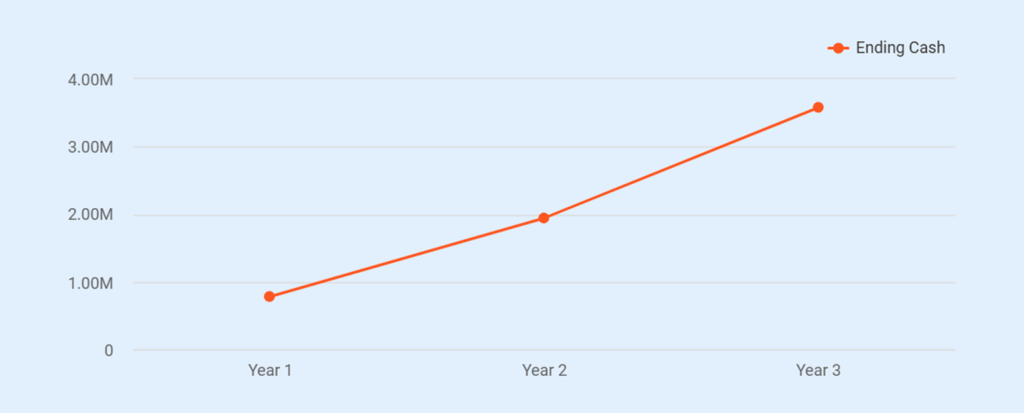
| Ending Cash | $782,466 | $1,943,935 | $3,578,839 |
Balance Sheet (3 Years)
| Line Item | Day 0 | Year 1 | Year 2 | Year 3 |
|---|---|---|---|---|
| ASSETS | ||||
| Current Assets | ||||
| Cash | $56,400 | $782,466 | $1,943,935 | $3,578,839 |
| Accounts Receivable | $0 | $0 | $0 | $0 |
| Inventory | $35,000 | $14,784 | $19,589 | $23,760 |
| Prepaid Expenses | $79,600 | $0 | $0 | $0 |
| Total Current Assets | $171,000 | $797,250 | $1,963,524 | $3,602,599 |
| Non-Current Assets | ||||
| Lease Security Deposit | $30,000 | $30,000 | $30,000 | $30,000 |
| Gross Fixed Assets | $428,000 | $428,000 | $443,000 | $453,000 |
| Less: Accumulated Depreciation | $0 | ($54,214) | ($111,428) | ($170,642) |
| Net Fixed Assets | $428,000 | $373,786 | $331,572 | $282,358 |
| Total Non-Current Assets | $458,000 | $403,786 | $361,572 | $312,358 |
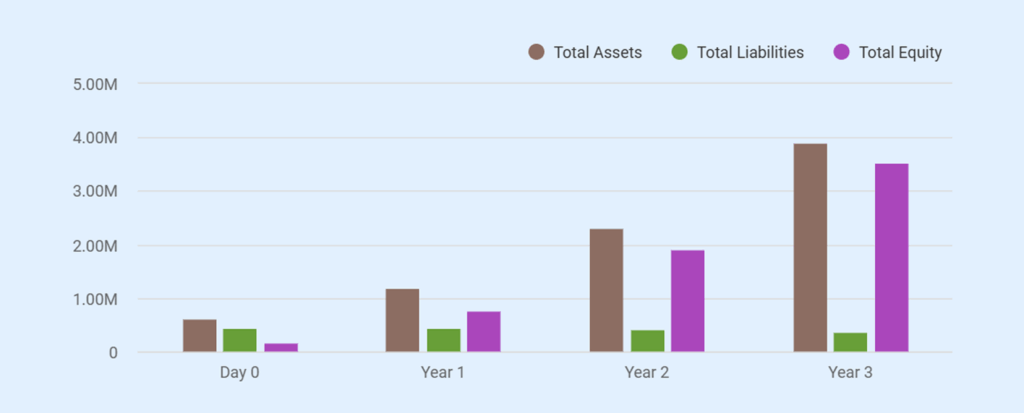
| TOTAL ASSETS | $629,000 | $1,201,036 | $2,325,096 | $3,914,957 |
| LIABILITIES | ||||
| Current Liabilities | ||||
| Accounts Payable | $0 | $14,784 | $19,589 | $23,760 |
| Current Portion of Loan | $26,877 | $29,792 | $33,022 | $36,614 |
| Total Current Liabilities | $26,877 | $44,576 | $52,611 | $60,374 |
| Long-Term Liabilities | ||||
| Long-Term Loan | $423,123 | $393,331 | $360,309 | $323,695 |
| Total Long-Term Liabilities | $423,123 | $393,331 | $360,309 | $323,695 |
| TOTAL LIABILITIES | $450,000 | $437,907 | $412,920 | $384,069 |
| EQUITY | ||||
| Contributed Capital | $200,000 | $200,000 | $200,000 | $200,000 |
| Retained Earnings | ($21,000) | $563,129 | $1,712,176 | $3,330,888 |
| Total Equity | $179,000 | $763,129 | $1,912,176 | $3,530,888 |
| TOTAL LIABILITIES + EQUITY | $629,000 | $1,201,036 | $2,325,096 | $3,914,957 |
Break-Even Analysis
| Metric | Value |
|---|---|
| Total Fixed + Semi-Fixed Costs (Annual) | $1,288,087 |
| Total Fixed + Semi-Fixed Costs (Monthly) | $107,341 |
| Variable Cost (COGS) as % of Revenue | 16.9% |
| Contribution Margin % | 83.1% |
| Monthly Break-Even Revenue | $129,171 |
| Annual Break-Even Revenue | $1,550,052 |
| Break-Even Guests Per Night | ~136 |
| Break-Even Capacity Utilization | 34% |
| Year 1 Actual Revenue | $2,277,600 (147% of break-even) |
| Year 2 Actual Revenue | $3,004,560 (194% of break-even) |
| Year 3 Actual Revenue | $3,603,600 (232% of break-even) |
Loan Summary
| Loan Detail | Value |
|---|---|
| Loan Amount | $450,000 |
| Interest Rate | 10.5% fixed |
| Term | 10 years |
| Monthly Payment | $6,075 |
| Annual Payment | $72,900 |
| Total Interest Over Life | $279,000 |
| Total Repaid | $729,000 |
The Quickest Way to turn a Business Idea into a Business Plan
Fill-in-the-blanks and automatic financials make it easy.

Upmetrics
Upmetrics is the #1 business planning software that helps entrepreneurs and business owners create investment-ready business plans using AI. We regularly share business planning insights on our blog. Check out the Upmetrics blog for such interesting reads. Read more